
Audio-book Review
By Chet Yarbrough
(Blog:awalkingdelight)
Website: chetyarbrough.blog
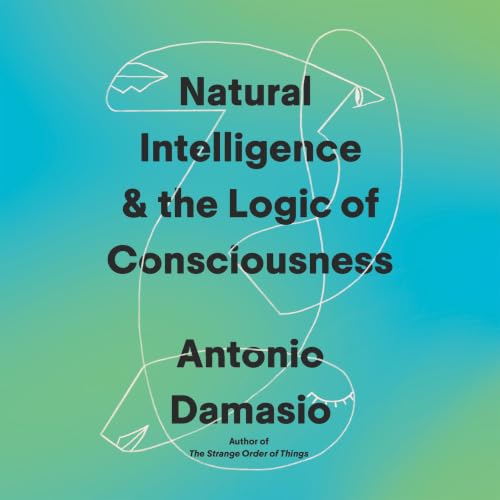
Natural Intelligence & the Logic of Consciousness
Author: Antonio Damasio
Narrated by: Julian Morris

Antonio Damasio (Portuguese neuroscientist, Professor of Psychology, Philosophy, and Neurology at the University of Southern California.)
This is an abstruse book to read or listen to because of the writer’s complex theory of emotions in human evolution. Professor Damasio’s research, education, and thought leads him to believe that consciousness comes from the emotions of human life. He argues that Descartes’ belief that “I think. therefore, I am” is wrong. Damasio suggests the correct phrase should be “I feel. therefore, I am”.
In contrast to Descartes, Damasio believes emotion, alone, made humans who they are.
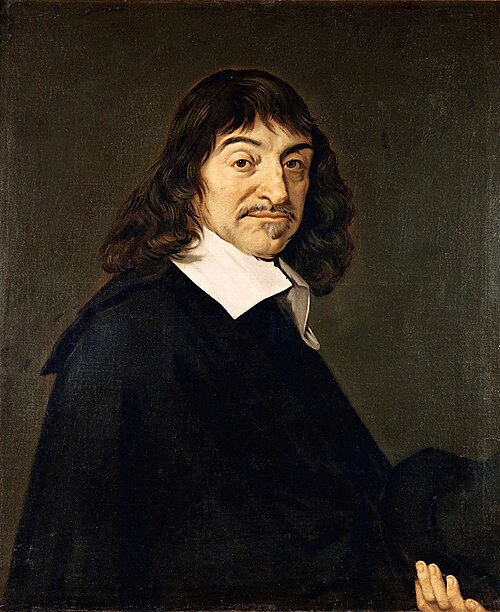
René Descartes (A French philosopher 1596-1650.) believed thought, alone, made humans who they are.
To Damasio, feelings precede and determine human life’s reasoning abilities. He argues our biological being comes from feeling (not mind or thought) that conditions human belief and bodily existence. Damasio argues temperature change, blood glucose levels, blood pressure, and blood pH are thermostats of a human being’s bodily existence. He argues changes in emotion affect the thermostats of life that inform and educate the brain to remember and act as human beings.

Why do humans get angry? Why do we love? Why do we hate? Why are we sad or happy? (Damasio argues emotions change the thermostats of being)
To reinforce Damasio’s argument, he writes of a patient who retains his reasoning ability and IQ but is unable to decide to act because of a lack of emotional feeling. Like Artificial Intelligence, without emotional input, a brain may understand facts but fail to use them without emotional context. Damasio argues human evolution began with emotions that trained the mind in ways that changed the thermostats of the living; i.e., whether humans, elephants, apes, dogs, or cats.
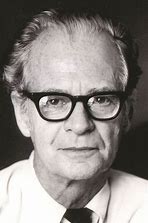
B. F. Skinner, Harvard Psychologist and founder of the Operant Conditioning movement seems to have believed something similar to Damasio’s theory.
Damasio argues that consciousness and feeling evolve based on a life’s ability to regulate their “thermostats”. A newborn possesses feelings from the moment of birth and begins learning about life from emotions that garner responses of others and affect the thermostats of an infant’s body and mind. One may ask oneself, how is that different from A.I. that creates operational decisions based on remembered facts and historical results without emotional stimulation. If one accepts the author’s theory, A.I. only presents a false flag because mere facts have no emotional content. The irony of Damasio’s theory is that A.I. decisions are as likely to be as wrong or right as one informed by human emotion. The point is that wrong or right decisions are possible whether informed by historical facts or human emotions. That is not to deny Damasio’s theory of evolution through emotion but seems to make the end result of human or animal decisions as easily good or bad for advancing life.
One comes away from Damasio’s theory about the critical importance of emotion with as much skepticism as one has of A.I. as the savior or end of humankind. Of course, that is not the importance of the author’s theory. His theory simply makes one wonder whether emotion was and is the driver of human evolution, and our reasoning, decision-making, and consciousness.
It seems his theory shows more of a threat than benefit to humanity. Damasio’s theory may explain why history is filled with so much human tragedy. If emotion is the source of human evolution and knowledge, one doubts humans will ever achieve broad societal peace.


