
Books of Interest
Website: chetyarbrough.blog
Politics Without Politicians (The Case for Citizen Rule)
Author: Hélène Landemore
Narration by: Hélène Landemore
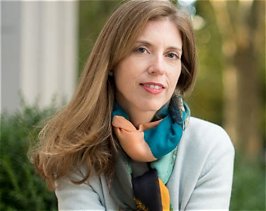
Hélène Landemore, (French professor of political science at Yale University. Received a PhD from Harvard with a thesis on the idea of collective intelligence.)
Hélène Landemore has a radical idea to replace professional politicians like those leading America, Great Britain, and her home country of France by a random selection of citizens to become their government’s legislators. Landemore is obviously an accomplished and well-educated person, but her idea of reform is a problem of scale and the faults of human nature. The complexity of managing any form of nation-state’ government requires more than inexperienced leaders whether elected or arbitrarily chosen. Her weak example is the ancient government of Athens. The size of Athen’s population was miniscule in comparison to today’s democratic countries. Athens is hardly a reasonable comparison to 21st century democracies. However, Landemore notes a fundamental truth about modern democracies.
The fundamental truth of Landemore’s political idea is better representation of the population needs to be created for democracy to survive and prosper.
Governance certainly requires more than deliberation. However, the solution cannot be arbitrary selection of representatives. There have to be fundamental qualifications for those who can represent their economic constituencies. They cannot have a criminal record, and their qualifications must conform to the characteristics of the constituency which they represent.

Capability and accountability become murkier with elected representatives that are inexperienced.
As popularly elected managers of people and bureaucracies, one’s ability to be re-elected may be the best measure of qualification for office. The length of a representative’s term would be limited based on equal representation and an age limit based on an annual mental competency assessment by a board of physicians beginning at age 65. One may argue voter representation would improve over time with popular re-election by those who continue to vote for the person they have chosen to represent their needs, subject to the age 65 competency assessments. This is a controversial issue but with the availability of social security in America, this seems a responsible way of assuring competent constituent representation.
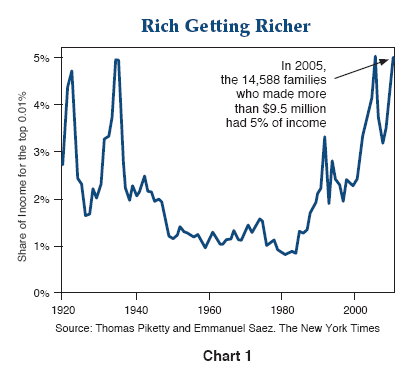
One should keep in mind that ambition is not always bad because people like Lincoln, FDR, Mandela, and Havel were driven personalities. However, poor representative elections of the mostly financially secure and privileged undermines equal representation. Professional politicians elected by wealthy supporters encourage corruption, self-serving legislation, and detachment from the general population. But critics argue that in large societies some form of political specialization is unavoidable, just as medicine requires doctors and law requires lawyers. The question may not be whether politics can exist without politicians, but how politicians can be more representative of all; i.e., including the rich, poor and those who have chosen to be or are inadequately educated.
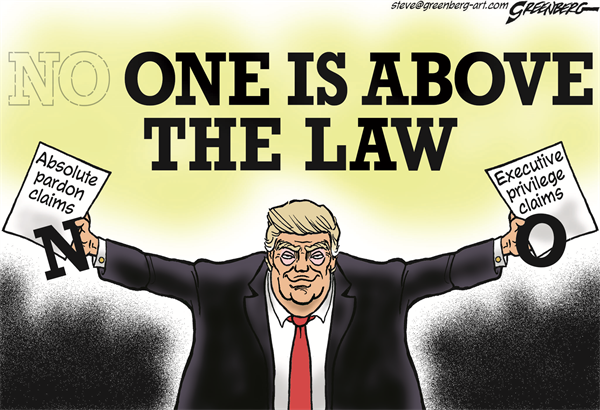
Presidents can be corrupt, self-serving, and detached. In theory, checks and balances by a wider swarth of Congressional representatives would counter polices of a corrupt President.
Scaling of a more representative body would be the greatest challenge to democracies like America, Great Britain, and France. Potential elected representatives who know or can learn how to assemble interested participants in governance must represent their constituency. The big “ask” of these new representatives is that they also work to gain some understanding of foreign policy, government military action, budgets, international trade, and pandemic management. Legitimacy of a constituency representative would be tied to elections that are central to the demographic interests they represent. One way for America to become more representative is to increase the size of the House of Representatives. The limit of 435 members was created in 1929 when the population was 1/3rd of what it is today.
Fairer representation of all is the preeminent goal of democratic governance. Trump is the antithesis of that goal.

One remains skeptical of Landemore’s solution, but America and other purported democracies need to wake up to unequal representation in government rule. The strongest single objection to Landemore’s political idea is in a method of election and government policy creation that offers fairer representation of all nation-states’ citizens. Her fundamental truth is that today’s professional politicians fail to represent the diversity of democracies’ citizens.


