
Books of Interest
Website: chetyarbrough.blog
THE RUSSIAN ECONOMY (A Very Short Introduction)
Author: Richard Connolly
Narration by: John Pruden
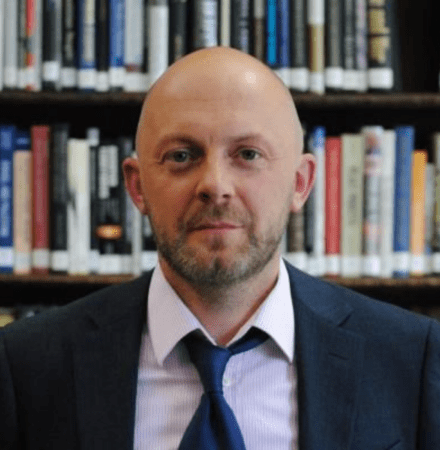
Richard Connolly (British author, Associate fellow at the Centre for New American Security (CNAS) in Washington D.C., former director of the Centre for Russian, European and Eurasian Studies at the University of Birmingham.)
Richard Connolly offers a brief and informative overview of Russia’s economic growth from the days of Stalin through today. He explains Russia’s economy has grown into a blend of state control and market demand that became the 20th century’s USSR. The common objective of every Russian leader since the 1917 revolution is stabilization of the country and any territory they rule. From the early days of Lenin and Stalin there is the goal of transitioning Russia from an agrarian lifestyle to an industrial power that could compete with other nations. In the process of that decision and from the spoils of WWII Russia became the USSR.
The goal of industrializing Russia for what became the U.S.S.R. is to create a powerful nation-state, by any means necessary, to compete with and/or dominate other nations. The shortest road for an agrarian nation to become an industrial power is dictatorship which fit the personality of Lenin’s successor, Joseph Stalin.
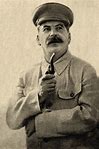
Joseph Stalin (1878-1953, General Secretary of the Communist Party 1922-1952.)
Stalin is a born martinet. He views Russia’s agrarian workers without concern for human or economic cost to turn their labor to industry with the intent of creating a military/industrial power. He redirects Russia’s people to work for the betterment of the state. At the same time, Stalin transitions farm laborers to industrial workers managed by government apparatchiks. Five-year plans are created by the government. Those who fail to achieve five-year plan goals are punished. Agriculture is forcibly collectivized and controlled by the government. The methodology Stalin uses to industrialize Russia is repeated in countries Russia claims after World War II.

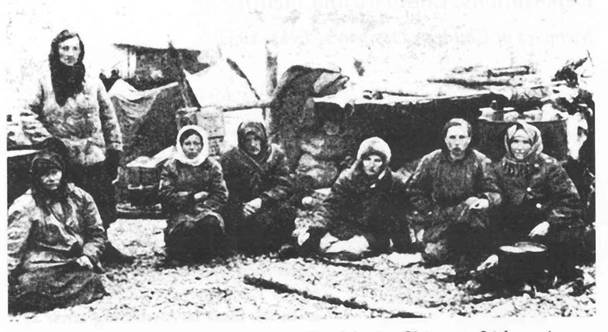


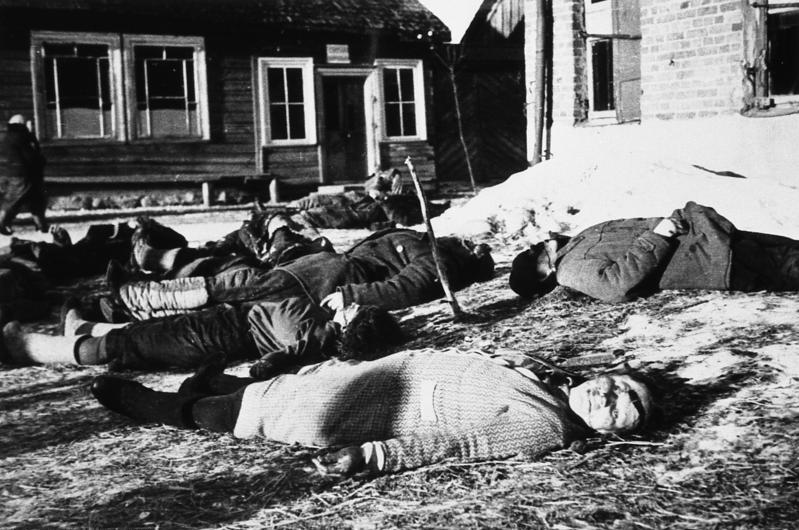
The hardship one hears in traveling to Poland and the Baltics opens one’s eyes to the terrible experience their citizens endure from Stalin’s rule. The revenue from agricultural and mineral production goes to the State for purchase of machinery to industrialize Russia and newly acquired territories after the defeat of Nazi Germany in WWII. Thousands die of starvation because of Stalin’s ambition. Economic independence is not tolerated, either in agriculture or industry. Stalin focuses on steel, coal, and machinery to transform the economy. Living standards of workers is of no concern with goals that must be met. Profitability, consumer needs, and human life are sacrificed with the singular goal of maximizing industrial production.

The Soviet economy advanced because of Stalin’s political goals. Stalin’s goals are state security and survival. Human cost is no concern. Those who opposed Stalin’s goals were either suppressed, tortured, or killed as enemies of the State. Stalin rules for 29 years, from 1924 until his death in 1953. Stalin achieves enormous strategic economic gains by building a heavy-industrial, militarized economy that gave Russia, then the USSR, great-power status. Despite his methodology and the duplicity of Stalin’s early support of Hitler in WWII, Russia became a critical world power with the defeat of Nazi Germany. For that success, the world owes some measure of gratitude for an amoral and inhumane tyrant.
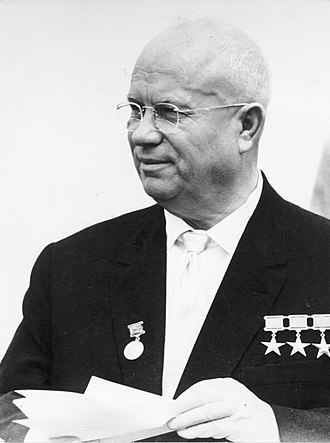
Nikita Khrushchev (1894-1971, Secy. of the communist party 1953-1964)
When Khrushchev came to power after Stalin’s death, he shifts Stalin’s model of governance to a more sustainable, technologically oriented system for Russia to remain a superpower. Khrushchev rebalances the Soviet economy in a way that keeps Russia militarily competitive and capable of global engagement. He shifted the economy toward science, technology, and space exploration. One is reminded of Russia’s Sputnik moment. Technology became a core component of economic power. Khrushchev moves Russia toward consumer welfare to illustrate his belief in the superiority of socialism. Connolly suggests Khrushchev began raising the living standards of the Russian people. The Soviet Union became more of an international partner by aiding other countries, selling arms to other countries, and using trade and technical assistance as a geopolitical influencer. Brezhnev solidified the vision of socialism as a stable and predictive governmental system. However, the Russia economy became less dynamic in the modernizing world. In the 1980s, the Russian economy falters.
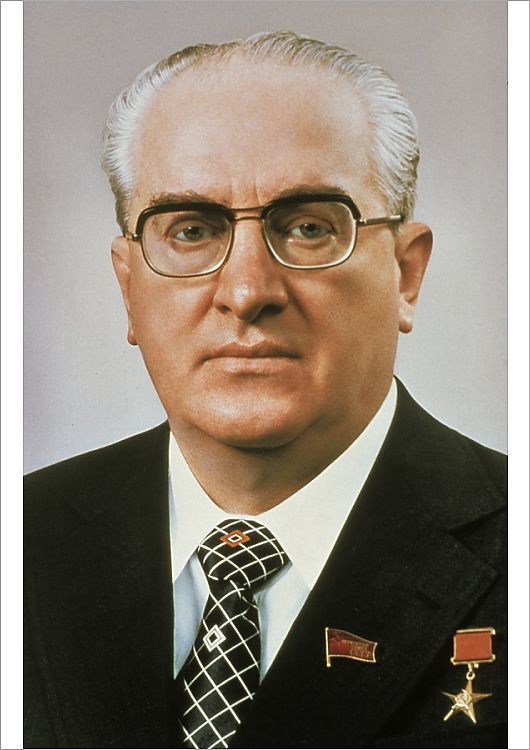
Yuri Andropov (1982-1984 General Secretary of the Central Committee of the Communist Party, born in 1914-died in 1984.)
When Brezhnev dies in 1982, Yuri Andropov becomes the General Secretary of the Communist Party. In his short tenure, he revives discipline in governance of Russia by fighting corruption and trying to improve Russia’s economy. Andropov’s tenure is short, approximately 15 months. Andropov wished Mikhail Gorbachev to succeed him, but the Politburo chose Chernenko who only served for 13 months.
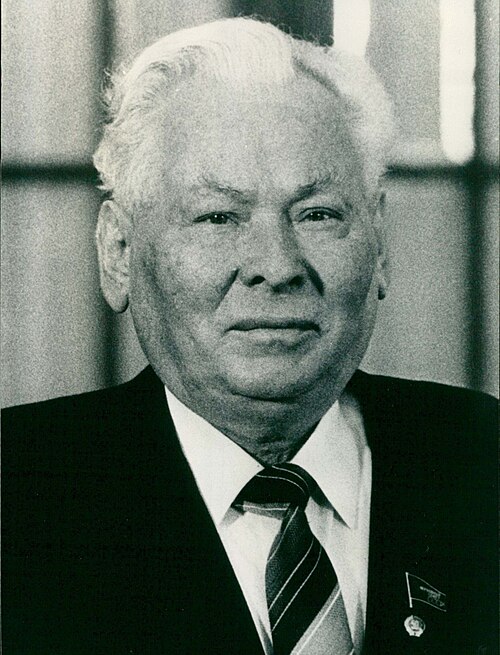
Konstantin Chernenko (General Secretary of the Communist Party 1984-1984, born in 1911-died in 1985.)
Chernenko’s successor is Mikhail Gorbachev. Gorbachev transformed the USSR. He ended the Cold War and reduced hostility toward the West. He received the Nobel Peace Prize in 1990. On the one hand he democratized Soviet politics but on the other he unintentionally triggered the collapse of the U.S.S.R. Gorbachev’s replacement is Boris Yeltsin who effectively dismantled Russia’s planned economy and opens Russia to global markets. His short tenure is chaotic, but it creates a foundation that leads to Putin’s reign.

“The Russian Economy” is written before Putin invades Ukraine. Putin reasserts the Russian government’s control over the economy.
Energy, defense, and finance are state controlled. In a sense, Putin returns to something like the rule of Stalin. Putin chooses to reorient Russia toward Asia rather than the United States. Putin rebuilt Russia’s wartime military capabilities. However, Connolly argues Putin fails to diversify or modernize Russia’s economy. He has successfully created a durable, state-centered model of government with geopolitical power, but economic prosperity seems, at best, a faltering work in progress. Connolly believes Russia will be able to withstand pressure from the West with its nuclear capability and economic power. Connolly believes Russia will survive its present semi-isolation. Connolly believes the State will remain the central actor in Russia’s future with (at least a near term) orientation toward Asia rather than the West.

 REVIEWS AND VIEWS OF LIFE