

Books of Interest
Website: chetyarbrough.blog
Homeland (The War on Terror in American Life)
By: Richard Beck
Narrated By: Patrick Harrison

Richard Beck (Born in 1987, received a BA from Harvard in 2009, Masters Degree in music from the University of North Texas, and Doctorate in performance and pedagogy from University of Iowa.)
On September 11, 2001, Richard Beck was 14 years old, living in a suburb of Philadelphia. In remembering life before 9/11, Beck looks at that tragedy as a reminder of life and America’s struggle to become a free and independent nation. “Homeland” uses the tragedy of 9/11 as an introduction to what might be interpreted as American Cowboyism.
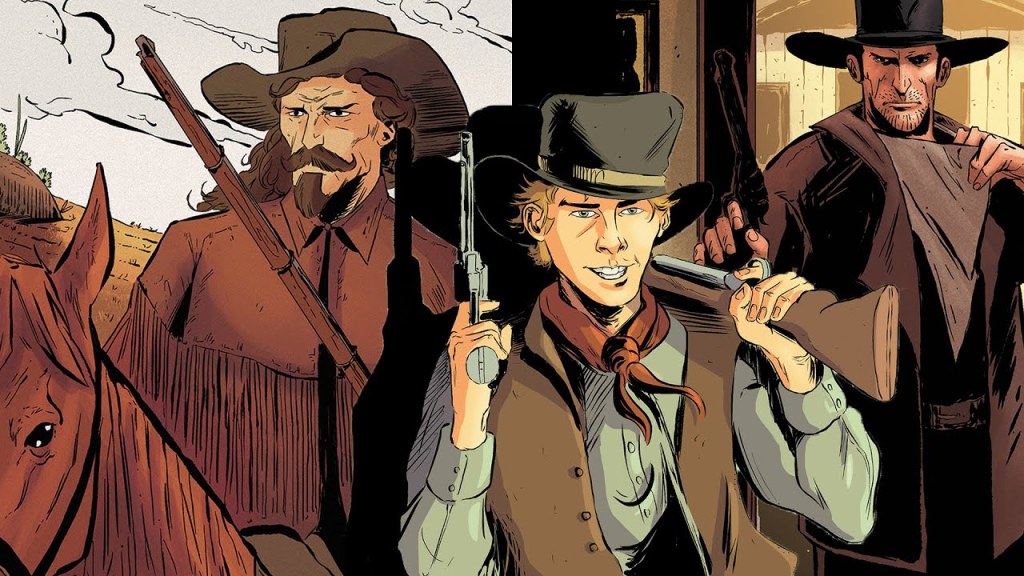
Beck suggests the myth of American cowboys exemplifies who and what American society has been and will always be.
His recollection of 9/11’s news coverage is a distortion of reality. The reaction of the fire department, rather than heroic, is characterized as a matter of clean-up and ducking from falling debris and bodies, not of climbing stairs or entering buildings engulphed in fire and nearing collapse. Beck suggests like the myth of cowboys ridding America of Indian savages, expanding, and conquering the West, that firemen and rescuers did little to save workers in the towers collapse.

Beck’s history smacks of not being there but watching tv, reading echo chamber books, and listening to and watching news of the 9/11 tragedy.
Heroism is being there when the planes hit the towers, when smoke and debris were choking firefighters and police trying to cordon the area from surrounding businesses and people. This is the same fault Beck has of writing of unreasonably lionized frontiersmen and later leaders of America and the mistakes made by America’s leaders in the Civil War, Korea, Vietnam, Cambodia, Iraq, Iran, and Afghanistan. Horrible things have happened in America’s history that have been caused by humans who are not gods but fallible, self-interested strivers for a better life. The meaning of life in America evolves just as it does in every country of the world. No society is proud of their failures, but failures are part of being human. Obviously, it is how we overcome failures that makes society.
Beck’s inference that Martin Luther King’s “…arc of the moral universe is long but bends towards justice” as a false observation breaks a listener’s heart.
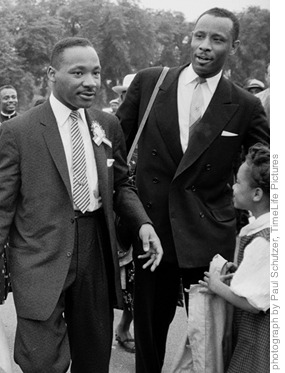
Many would disagree because life for native Americans, women, non-white minorities, and the white majority have improved over the years since the founding of American democracy. This is not to say, there are not miles to go for America to realize equality-of-opportunity for all its citizens.

Beck uses the great tragedy of Gaza and Israel’s occupation and murder of innocents as a primary example of American Democracy’s failure.
There is little to argue that Israel is crossing a Rubicon of regret for their slaughter of Palestinians in Gaza. Palestine has as much right to exist as the nation of Israel.
America’s position has been to support Israel because they are a bastion against systems of government that have little to no interest in equality of opportunity for all. The author fails to appreciate America’s guilt for turning away Jewish immigrants fleeing Europe during WWII when six million Jewish people were slaughtered in concentration camps.
Beck’s history disregards and diminishes the history of Jewish ethnicity that has given so much to societies’ advance of science, literature, and political theory.

This is not to argue Israel is right in thinking that ridding Hamas or Hezbollah leaders can be accomplished with ethnic cleansing while murdering innocent bystanders. No one can kill an idea. Ideas come from human beings who believe, rightly or wrongly, they are being victimized. Israel is making the same mistake Nazi’s made when they began exterminating Jews in WWII.








 REVIEWS AND VIEWS OF LIFE