SOCIAL BLINDNESS

Criminal imprisonment, gun control, and drug addiction solutions are elusive, just as America’s eradication of discrimination is, at best, only a work in progress.

Books of Interest
 Website: chetyarbrough.blog

Locking Up Our Own (Crime and Punishment in Black America) 

By: James Forman Jr.

Narrated By: Kevin R. Free

James Forman Jr. (Author, professor of law and education at Yale Law School)

James Forman Jr. argues Washington D.C. is a multi-ethnic democratic example of what is wrong with the American penal system, gun control, and an addiction crisis. Forman offers an eye-opening recognition of America’s social blindness. The 2019 estimated population of Black residents in D.C. is approximately 44%. Forman suggests D.C. constitutes a representative sample of what has happened and is happening to Black Americans in “Locking Up Our Own”.
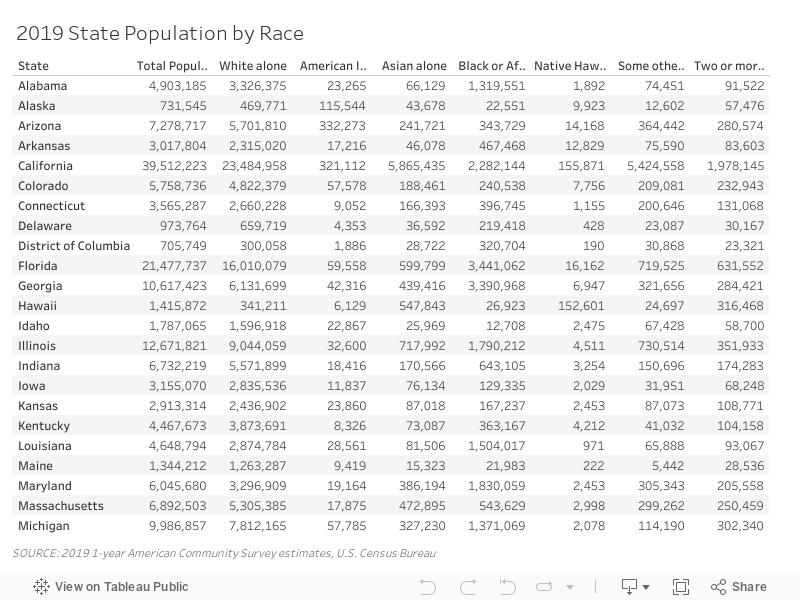
Forman addresses three social issues with Washington D.C.s’ effort to legislate against the consequences of crime associated with a Black population’s gun possession, and drug addiction. America’s history of Black discrimination is well documented. The issues of gun control and drug addiction are top-of-mind issues in all American communities. What makes Forman’s book interesting is his analysis of what he argues is a nascent conservative movement in Black American society.

Forman’s argument is based on statistics and the history of Black discrimination. The American incarceration rates for Black citizens are six times higher than for white citizens. Today’s statistics show 33% percent of the prison population is Black when it is only 12% of the U.S. adult population. White prisoners account for 30% of America’s prisoners but amount to 64% of the adult population.

The fundamental issue of Forman’s book is that more Black Americans are being imprisoned for crimes of addiction and theft than those committed by white Americans.

Forman uses Washington D.C. as evidence for a Black conservative movement because of its high percentage of Black residents. He notes D.C.’s effort to legislate gun control and regulate drug addiction are arguably more restrictive than other parts of the country. Firearms must be registered with the police department. A permit is required to purchase a firearm. Concealed weapons require a license. Assault weapons are banned. Magazine capacities are limited. Safe storage requirements are mandated. In the case of addiction, the “Office of National Drug Control Policy”, ONDCP is established in D.C. The program is instituted to provide funding to support communities heavily impacted by drug trafficking. A “Drug-Free Communities Program” offers grants to community coalitions to prevent youth substance abuse. The city expands Naloxone access to citizens to reverse opioid overdose.

Forman explains these policies are supported by D.C. residents in the face of national opposition to gun control. Forman notes the proactive drug control programs of D.C.

The obvious irony of D.C.’s policies is that they do not reflect what white America promotes but suggests Black America is likely more victimized by lax gun controls and drug regulation. White America needs to get on board.

Several chapters of Forman’s book explain the difficulties of integrating minorities into local police forces.

Police department managers opened their hiring practices to Blacks based on growing Black neighborhoods and belief that police services would be improved with officers who would be more racially and culturally suited to understand policing in minority neighborhoods. Forman recounts 1940s through the 1960s police force integration. He notes police department integration is fraught with discriminatory treatment of Black recruits.

Of course, the idea of crime in a Black neighborhood being better understood by Black officers is just another form of discrimination.

Crime is crime, whether in a minority neighborhood or not. Relegating Black police to Black neighborhoods only reinforces racial discrimination. Integrating the police only became another example of racial discrimination in America. Paring white and Black policemen on petrol became difficult. Getting white and Black policemen to work together becomes even more problematic when promotions are denied qualified Black officers. As with all organizations, police promotions were based on experience and standardized testing. What police departments would typically do is promote white officers over Black officers whether their experience rating or test scores were better or not.

The irony of white resistance to gun control and ineffective drug addiction policies has had an adverse impact on Black-on-Black crime.

The culture created in formally white police departments adversely condones harsh treatment of minorities. Black officers buy into a police department’s culture and begin discriminating against Black residents in the same way as white policemen.

The 2003 brutal beating and killing of Tyre Nichols by 5 Black Police Officers.

Drug addiction is the scourge of our time. Its causes range from the greed of drug company executives to poor policy decisions by the government to escapist and addictive desires of the public. Addictive drugs are the boon and bane of society. On the one hand, they reduce uncontrollable pain and anxiety; on the other they are often addictive, causing incapacity or death.

Discrimination can only be ameliorated with education, understanding, and governmental regulations that are consistent with the rights written in the American Constitution.

Criminal imprisonment, gun control, and drug addiction solutions are elusive, just as America’s eradication of discrimination is, at best, only a work in progress. Guns in the hands of American citizens are not guaranteed except as noted in the Constitution which infers “A well-regulated Militia…” is the only reason for “…people to keep and bear Arms…” How many more school children have to be killed by guns before the lie of American gun rights is dispelled.

The last chapters of Forman’s book address his experience as a public defender in Washington D.C. This is the weakest part of his story, but it points to the theme of an incarceration system in America that is broken. Prisons are not meant to reform criminals. They are overcrowded, violent, understaffed and, most damagingly, lack rehabilitative programs for re-education and vocational training that could reduce recidivism and return former prisoners to a socially productive society.

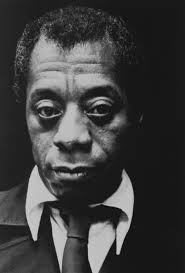
JAMES BALDWIN

James Baldwin’s “The Fire Next Time” gives advice that resonates with the troubles of the world today.

Books of Interest
 Website: chetyarbrough.blog

The Fire Next Time

By: James Baldwin

Narrated By: Jessie Martin

James Baldwin (Author, 1924-1987, African American writer and civil rights activist.)

“The Fire Next Time” consists of two brief essays by James Baldwin that are seminal works on the equality of all human beings. Published in 1963, the first essay is “My Dungeon Shook” which is advice to a young black American. The second, “Down at the Cross…” is a criticism of Catholic and the Nation of Islam religions.

The first is a message to Baldwin’s nephew about white America’s prejudice toward black Americans.

He is telling his nephew to reject white America’s stereotypical view of black Americans. Baldwin tells his nephew to embrace who he is as a human being, neither better nor worse, and to pursue life and living with the truth of his being.

RELIONS OF THER WORLD

“Down at the Cross” is a criticism of religion, particularly the Christian and Nation of Islam faiths. Baldwin argues that both diminish the truth of God by feeding the flames of anti-spiritualism and social inequality.

Baldwin argues through love and understanding of differences among religions and races, the divisiveness of inequality can be erased.

The fundamental point of Baldwin’s writing is that NOI offers a part of what black America needs by instilling self-respect and identity. However, he criticizes NOI’s separatism as counterproductive and extreme. Baldwin advocates love and understanding among all human beings.

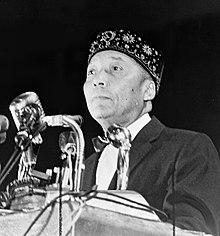
Elijah Muhammad (1897-1975, Religious Leader of NOI)

Elijah Muhammed’s advance of the Nation of Islam (NOI) is credited for advocating black empowerment, but Baldwin implies that empowerment mitigates against belief in the equality of all human beings.

Baldwin evolves to a more humanist view of life and declines to take a prominent role either in the Nation of Islam, or the Pentacostal religion he left twenty years earlier. James Baldwin’s “The Fire Next Time” gives advice that resonates with the troubles of the world today.

FRANTZ FANON

Frantz Fanon decried colonization and racism to promote individual dignity and family reconnection in his psychiatric practice

Books of Interest
 Website: chetyarbrough.blog

The Rebel’s Clinic” The Revolutionary Lives of Frantz Fanon

By: Adam Shatz

Narrated By: Terrence Kidd

Adam Shatz (Author, editor, professor at Bard College)

Adam Shatz introduces Frantz Fanon to listeners. Fanon was a Black Frenchman, born in the colony of Martinique, an island in the Lesser Antilles of the West Indies. Fanon may be classified in many ways but first and foremost one understands he would want to be known as a Frenchman, i.e., a Black individual of French heritage.

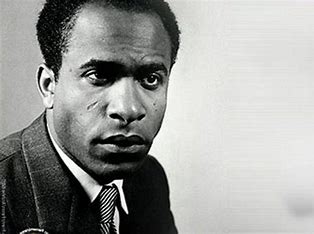
Frantz Fanon (1925-1961, graduated from the University of Lyon in France.)

Shatz tells the story of Fanon’s life. Fanon is educated as a psychiatrist who was influenced by Aimé Césaire, a leader of a movement titled Négritude. Négritude was a protest against French colonial rule and assimilation in the early to mid-twentieth century. Fanon lives life by asserting himself as a Black Frenchman with a sense of Black cultural pride.

After an affair with Michele Weyer in college, a daughter is born. The daughter becomes Mirelle Fanon Mendes-France.

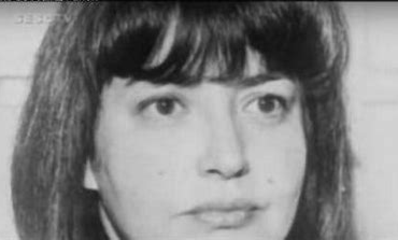
Mirelle Fanon Mendes-France (Born in 1948 to Michele Weyer and Frantz Fanon.)

Fanon later marries Marie-Josephe Duble in 1952. Duble was an intellectual, a journalist, and liberation fighter who died in 1989. Fanon and Duble have a son named Olivier who is thought to be engaged with his father’s legacy. Weyer’s and Fanon’s daughter is a scholar and member of the Frantz Fanon Foundation who also works with a United Nations Working Group on African Descent.

Fanon marries a Marie-Josephe Duble. Duble, aka Josie, married Fanon in 1952.

Shatz explains how much more Fanon was than a psychiatrist. Some suggest Fanon was a Marxist because of his anti-colonial beliefs but Fanon’s philosophy extended far beyond Marxist belief in society as an economic class struggle. Fanon was equally concerned about sexism, racism, and colonialism. He embraced a form of humanism. Fannon believed in self-identification as an acculturation process. He considered himself a Black Frenchman, born on a French colonialist island in the West Indies. His life experience as a minority in a colonial country led him to become a practicing psychiatrist in Algeria.

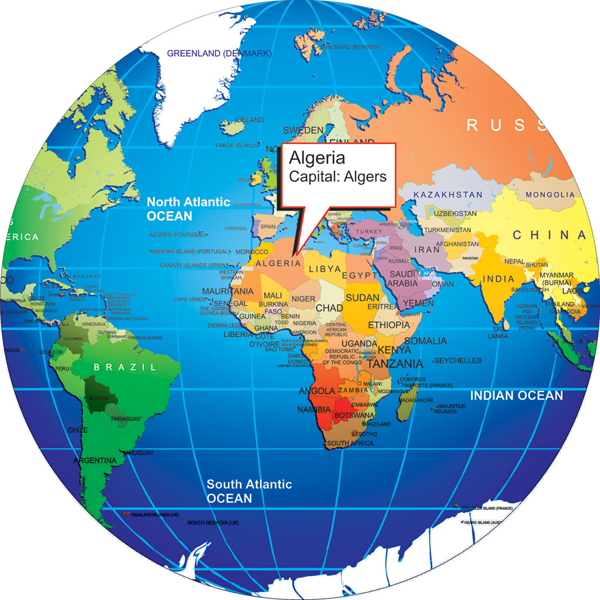
In the 1950s, Algeria was largely populated by Muslim Arabs with a minority of European nationalities.

Arabs in Algeria were poorly treated at a hospital Fanon joined in 1953. He gradually improved their treatment by opening doors to their ethnic identify. Algeria began a fight for independence in 1954. The movement was for social democracy within an Islamic framework that would offer equal citizenship for all citizens of the country. Fanon did not align himself with any religion in what became a violent conflict between French colonization and those who identified themselves as Algerian.

Fanon conflated imperialism and colonialism with racism by institutionalizing control over another based on cultural and/or racial bias.

Shatz shows who Fanon became in the way he treated his patients in Algeria. Fanon argued mentally troubled patients needed to be reconnected to their families and community rather than institutionalized.

Fanon’s focus was on the psychological impact of human torture and the tit for tat revenge of French occupiers and the Algerian resistance.

Fanon was sympathetic to the Arab desire for freedom and independence for citizens of a country searching for its own identity. Shatz shows Fanon abhorred colonization and its social restrictions. Shatz infers he equally abhorred the revolution’s leaders and followers who tortured and murdered non-combatants, including children. What happened in Algeria reminds one of today’s daily slaughter of children and non-combatants in Ukraine and Gaza.

Algeria became an independent nation in 1962 with its own government, culture, and identity. Its ethnic and cultural identity remains the same today as then. It is considered a Muslim country with a majority being Sunni Muslims whose practices play a prominent role in their daily life.

Frantz Fanon dies at the age of 36 from leukemia in 1961, 7 years after the Algerian uprising.

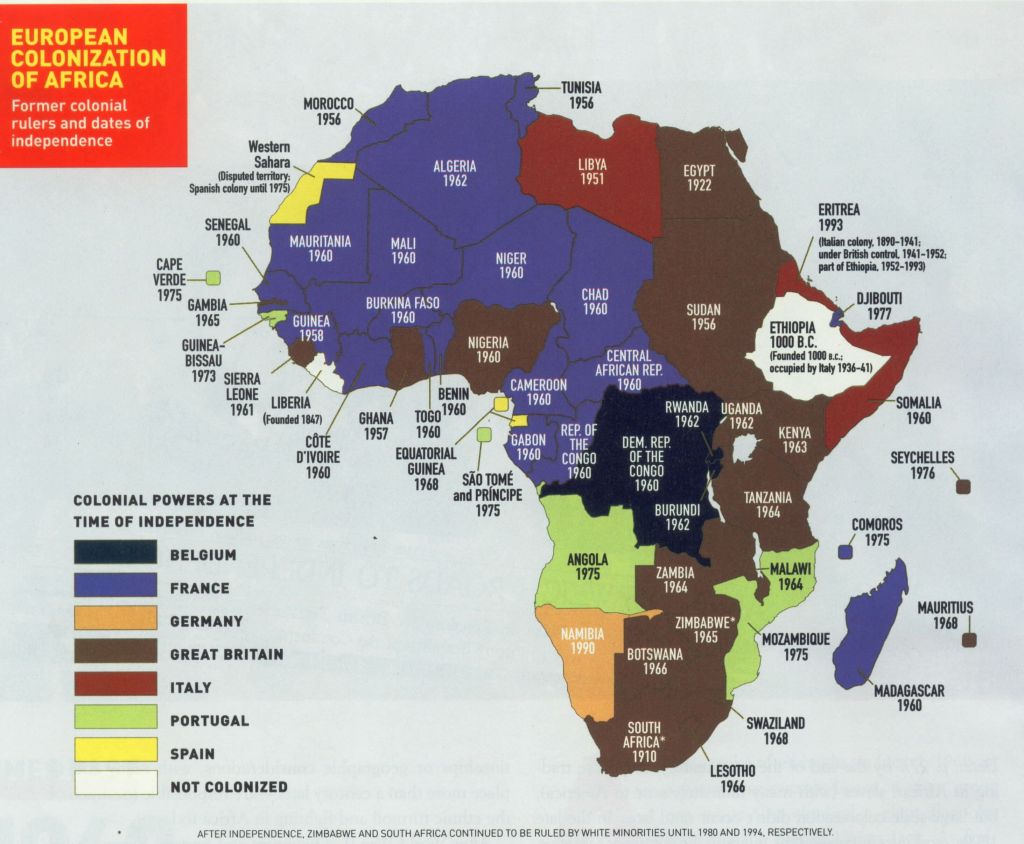
An interesting point in the biography of Fanon is that he recognizes himself as Black in a country that does not commonly describe themselves as people of color but as Algerian Arabs, Berbers, or Europeans. Fanon grows to believe he is Algerian but identifies himself as Black. Black is a broader category of race that makes his story applicable to a wider world but magnifies real-world discrimination based on the color of one’s skin rather than the truth of equal humanness. Of course, as the author notes, the color of skin in Africa is predominantly black and became a frontier for colonization between 1884 and the 1960s.

AFRICA BECAME THE FRONTIER FOR COLONIZATION BETWEEN 1884 AND THE 1960s.

Shatz infers Fanon fought the good fight. He decried colonization and racism to promote individual dignity and family reconnection in his psychiatric practice. He wrote about and aided people who were different, underserved, and underrepresented. He wrote two books about his life experience to explain why colonialization and racism were culturally wrong and socially destructive. “Black Skin, White Masks” was published in 1952, and “The Wretched of the Earth” in 1961.

BELIEF IS NOT ENOUGH

“Believing” is not enough. The nature of humanity needs to change,

Books of Interest
 Website: chetyarbrough.blog

“Minor Feelings” (An Asian American Reckoning)

By: Cathy Park Hong

Lectures by: Cathy Park Hong

Cathy Park Hong (Author, writer, poet, and professor, graduate of Oberlin College with an MFA from Iowa Writers’ Workshop.)

“Minor Feelings” is a mild representation of a social malady that plagues humanity. Ethnic differences, social hierarchy, and political power create and embolden nation-state’ inequality. It seems in the history of the world, with the exception of most Asian and African countries, the white race rules society. This seems odd when only 16% of the world’s population is white.

Hong offers a memoir of her life in America. Born in Los Angeles, California, Hong notes experiencing discrimination between white Americans and Asians.

Hong acknowledges discrimination within, as well as outside, ethnic cultures by recounting her somewhat comic effort to seek help from a Korean therapist for a recurrent facial tic. The therapist said Hong should seek help from someone else without explaining why. Of course, one wonders if that classifies as discrimination or therapeutic professionalism.

Mosaic of children from around the world, including, Kayapo, Indian, Native American, Inuit, Balinese, Polynesian, Yanomamo, Cuban, Tsaatan, Moroccan, Mongolian, Karo, Malagasy, and Pakistani.

All humans have a tendency to generalize ethnic qualities based on human difference. Those differences can range from the obvious to the miniscule but have the common failing of not seeing the humanity of every human being. Hong notes how Asians are generalized by many ethnic groups, including Asians according to Hong, as industrious, intelligent, and hard working without recognizing the individual. Whether generalization about an ethnicity is true or not, the individual’s success or failure is diminished by generalization.

In what was called social studies in the 1960s, I remember our teacher asking if we were prejudiced. No one commented.

Then, the Social Studies teacher asked the class if any of the boys had asked an Asian girl if she had been asked to go to the prom with them. No one answered but I, for one, felt guilty about not even thinking of it. Though the teacher inappropriately asked the question, he demonstrated how America is as ignorant about Asian discrimination in the 1960s as Hong illustrates in “Minor Feelings”. (Parenthetically, the teacher’s question was even more inappropriate and hurtful because the Asian girl was in the class.)

The truth is every nation-state’ political structure, whether white, off-white, or black, discriminates against whomever is not part of the government in power. In China it is the Han, in Russia it is Aryan Russians, in India it is the Indo-Aryans, in Botswana it is the Tswana. Each of these ethnicity’s discriminate against minorities not in power.

This is not meant to diminish the truth of what Wong explains about her life experience. “Minor Feelings” is a difficult book to read or listen to because it offends many Americans who believe they look at every person as an individual. However, “believing” is not enough. The nature of humanity needs to change.