HUMAN INTROSPECTION

Brianna Weist philosophical book is worth listening to as a guide but not as an authority of how one should live their life.

Books of Interest
 Website: chetyarbrough.blog

101 Essays That Will Change the Way You Think 

AuthorBrianna Wiest

Narration by: Abby Craden

Brianna Wiest (Author, earned a BA in English and received an Honorary Doctorate in Literature from Elizabethtown College.

This is an odd book because it is written by someone who is not a psychologist, psychiatrist or therapist but presumes to know how one can understand themselves, think differently and become a more psychologically heathy human being. “101 Essays…” has become a popularly read and listened to book by the public. Of course, one can take her observations like one would take the meaning of many non-fiction authors who have a point of view about life and living. They are called philosophers.

One finds Wiest’s essays make sense, but her formal education makes one uncomfortable with her expressed beliefs.

On the other hand, what formal education was there for Socrates? (A. I. generated image of Socrates as a young man.)

a youthful Socrates in ancient Athens, standing in a sunlit agora, wearing simple Greek robes, with thoughtful expression and strong features, classical style portrait

Weist is straight forward in her opinions, and she taps into a human wish for one to be psychologically and physically as good as they can be. Changing “…the Way You Think” is no easy task but the idea of consciously understanding ourselves is an oxymoron that limits one’s ability to change. We are as likely to lie to ourselves about who we are or what we believe as to have a true understanding of ourselves.
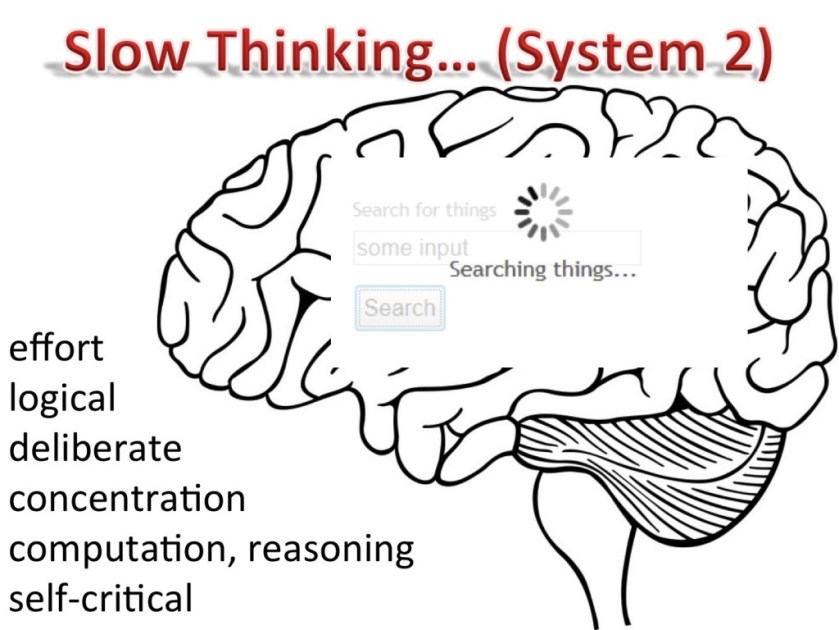
Daniel Kahneman is a renowned psychologist and Nobel laureate.  He is an American citizen that served in the Israeli military and used his education, research, and experience to write “Thinking Fast and Slow”.  His observations explore many aspects of human decision-making.

Weist logically argues one can become a better human being by changing the way they think. She is not acting as a clinical psychologist but as a philosopher of life and how one may make the most of it. If one understands Weist from that perspective, she is like Marcus Aurelius, Soren Kierkegaard, or Simone de Beauvoir. She has a philosophical point of view but not necessarily a happier or more fulfilling life.

The meaning of experience on one’s life is often too opaque for one’s understanding without the help of others.
Weist writes we should see what hurts others and ourselves and quit doing those hurtful things by changing our mind. This seems a good idea but denies the subjectivity and the unique experiences in one’s life. Many people are unable to understand the impact of experience on their lives. They are unable to change the way they think because they are unable to understand how or why an experience has affected their lives. Only with the help of a qualified psychologist, psychiatrist, or trained therapist can most people objectively understand themselves to constructively change their mind.

Nevertheless, Weist philosophical book is worth listening to as a guide but not an authority on how one should live their life. Most human beings are not introspective enough to find their way through life without the help of a person trained to elicit what we do not know about ourselves. On the other hand, it appears Weist has a genius beyond her years of life.


HEALTH

“This is Your Brain on Parasites” is a bad book title but McAuliffe has written an interesting book about physical and mental health, and the treatments being researched in the 21st century.

Books of Interest
 Website: chetyarbrough.blog

This is Your Brain on Parasites (How Tiny Creatures Manipulate Our Behavior) and Shape Society

By: Kathleen McAuliffe

Narrated By: Nicol Zanzarella

Kathleen McAuliffe (Author, science journalist who has published in The New York Times, The Atlantic, and Smithsonian. Received an M.A. in natural science from Trinty College Dublin.)

Kathleen McAuliffe apprises the public of the importance of personal health along with a somewhat bizarrely titled book “This is Your Brain on Parasites”. McAuliffe’s book is about the science of health and its maintenance. The idea of a parasite in one’s brain seems unworthy of a book because of the creepy implication of possession. However, McAuliffe refers to a physician and several research scientists that have found evidence of brain parasites that effect animal and human behavior.

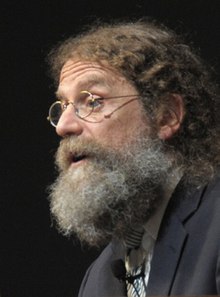
Dr. Robert Sapolsky, a neuroscientist and professor at Stanford studied what is called a Toxoplasma gondii parasite. It forms cysts in brain tissue that are shown to affect human behavior. People who have developed the cysts have shown symptoms of risk-taking behavior, and mental dysfunction like schizophrenia.

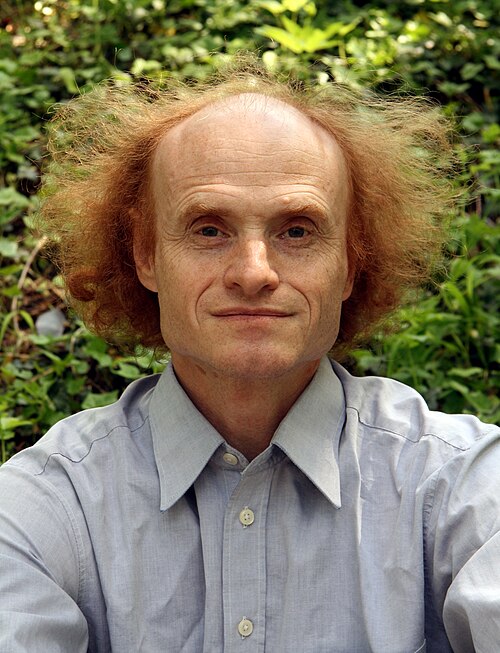
Dr. Jaroslav Flegr is a parasitologist, evolutionary biologist and professor of biology at the Faculty of Science, and professor at Charles University in Prague.

McAuliffe meets with a Czech scientist, Dr. Jaroslav Flegr, who conducted research showing the Toxoplasma gondii parasite in cat feces can infect the brain of a human being. The author meets other American research scientists that show how parasites infect animal brains whose behavior is affected in ways that are not natural to their species. A parasite being the source of a diseased brain has implications for treating mentally dysfunctional patients that may have a parasitic infection.

What McAuliffe’s book implies is the importance of washing one’s hands when handling pets, or their fecal material.

“This is Your Brain…” reminds one of the importance of hygiene when replenishing a bird feeder or filling an animal feeding trough to avoid possible parasites.

As most know, Kennedy is not a believer in vaccination despite a growing measles epidemic and the proof that vaccination works. McAuliffe does believe there are circumstances where a child crawling across the floor of a clean house gathers some immunity naturally but that un-common pathogens require uncommon vaccination.

Two other subjects mentioned by McAuliffe is natural and science made vaccinations and the benefits they provide humanity. This is a particularly timely suggestion considering Trump’s appointment of Robert F. Kennedy Jr. (a confessed anti-vaxxer) as the Secretary of Health and Human Services.

McAuliffe notes how research is showing how certain microbes can remove calories from food and how certain drugs can reduce hunger among overweight patients. She reflects on the intersection of microbiology and human health.

Another interesting examination by McAuliffe is the science research being done on gut microbiomes, a community of microorganisms in human digestive systems.

The research on microbiomes has resulted in effective weight loss drugs that have become popular medications for people struggling with weight gain.

“This is Your Brain on Parasites” is a bad book title but McAuliffe has written an interesting book about physical and mental health, and the treatments being researched in the 21st century.