
Books of Interest
Website: chetyarbrough.blog
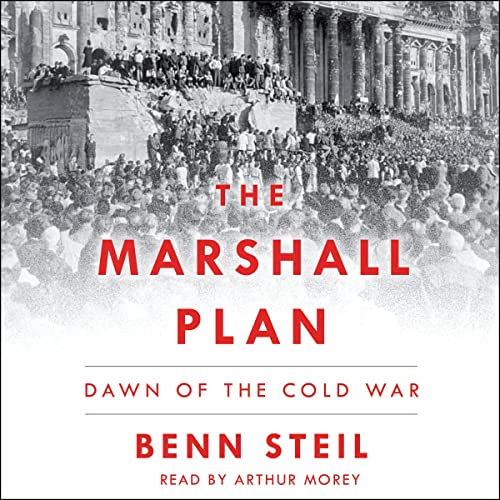
“The Marshall Plan” (Dawn of the Cold War)
By: Benn Steil
Narrated by: Arthur Morey

Benn Steil (Author, American economist, senior fellow and director of international economics at the Council on Foreign Relations.)
Along with an excellent history of America’s “…Marshall Plan”, there is an underlying message about two fundamental forms of government, i.e., one is democratic, and the other is authoritarian. By democratic, the point is not to suggest an idyllic understanding of American Democracy or Russian Authoritarianism. America and Russia have experienced government leadership that has been both authoritarian and democratic in the last 248 years.
One can justifiably argue America’s authoritarianism was experienced during the four years of the Trump administration (2017-2021).
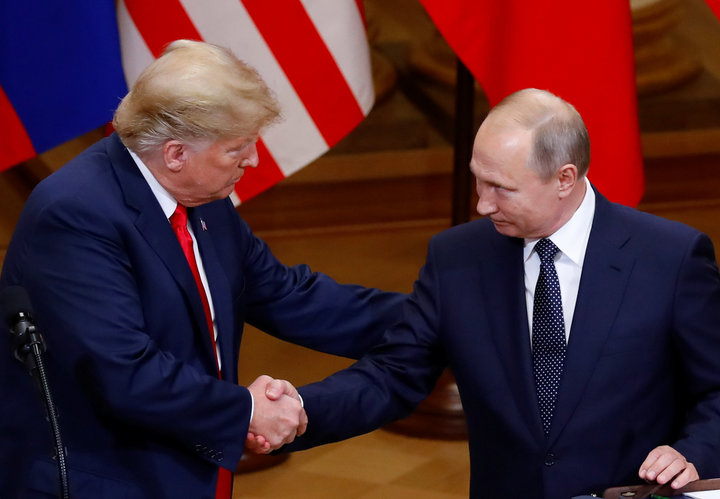
In contrast Russia’s democratic experience was with Mikhail Gorbachev between 1985 and 1991. Before and after Gorbachev, democratic experience in Russia has been limited and largely authoritarian. What history of “The Marshall Plan” shows is the superior value of American democracy’s checks and balances that limit the power of authoritarian leadership by preserving deliberations of the many as opposed to the one. Trump is not the first U.S. President that was an authoritarian.

George Catlett Marshall Jr. (1880-1959, American army officer and statesman, became Secretary of State and Secretary of Defense during the Truman administration.)
History of “The Marshall Plan” shows the resilience of democratic versus authoritarian governance. Steil shows “The Marshall Plan” is created in a boiling cauldron of disagreement among branches of the American government. The conflicts between American political parties and departments of government hammered out a plan that improved the economies of both America and Europe after the war. America became the economic hegemon of the world as Russia’s economy collapsed in the early 60s.


One might argue the success of China came as a result of the more inclusive economic decision-making policies of Deng Xiaoping after Mao Zedong’s death. With Deng’s opening the economy to market-oriented reforms in 1978, worker efficiency and productivity created an economic boom in China. China’s danger today is the autocratic rule of Xi Jinping. His one-man rule nearly collapsed the economy during Covid 19. America certainly suffered from Covid, but Trump’s authoritarian character was mitigated by political resistance to unilateral Presidential decision-making.
Steil explains how Molotov delayed negotiations on “The Marshall Plan” with a clear understanding that only one person, Joseph Stalin, made decisions in Russia.

Steil notes “The Marshall Plan” is singularly disparaged and reviled by the Russian government. That disparagement is directed by one person, Joseph Stalin. There is no one to oppose the autocratic rule of Stalin’s leadership. Stalin’s opposition was either sent to the Gulag or murdered. A more balanced power structure in Russia could have taken advantage of “The Marshall Plan” but by singular fiat of one person (Stalin) implementation was impeded after WWII. The errors inherent in communism and authoritarian rule are being recreated by Putin in the 21st century.

What Steil shows is that many elected officials in America fought the principles of “The Marshall Plan”. However, the constant back and forth of government policy arguments in Congress aided European recovery after the war in a way that stabilized Europe and monumentally improved the economic growth of America.
Autocracies can certainly improve their economic growth at a pace that is superior to governments ruled by democratic ideals. However, autocracies have a much greater risk of following the wrong path because of their singular focus on one person’s decisions.
With an autocrat’s decision-making process, economic growth is either stultified or accelerated by one person’s decision. The give and take of democracies offer the benefit of different policy maker’s perspectives that may slow policy decisions but ultimately improve the odds of forward economic growth.

However, it is more than the availability of natural resources that made America economically successful. It is the give and take of a democratic process that protects America from the giant missteps that can come from autocratic rule. America has had some good to great rulers, but it has also had some ignorant, bigoted autocrats that offered minimal support for the ideals of freedom and equality. Checks and balances are the strength of American democracy. Presidents can make a difference, but they cannot destroy America’s future.
Ben Steil’s history of “The Marshall Plan” is not limited to an explanation of how important and difficult it is for America to pass important and consequential legislation.


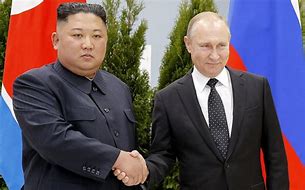
The last chapters of Steil’s history of the Marshall Plan explains why Russia, China, and North Korea resent American encroachment on their spheres of influence. From the era of Stalin, Mao, and Kim Jong II, there has been a growing concern over the expansion of America’s sphere of influence. Steil explains how the Marshall Plan has morphed into a deepening concern about NATO expansion in Europe. As noted in an earlier, the Marshall Plan is created to aid recovery of countries that were impacted by WWII’s destruction. In reality it aided America to become the hegemon of the world. Because of the economic stimulus that revived the countries damaged by WWII, America created new markets for their industrial growth and international trade.
NATO is viewed as another vehicle for America’s economic growth and ideological threat to Putin, Xi, and Kim Jong Un’s control of their countries.

NATO is viewed as another invidious way for America to expand their influence and power. That seems an unfair evaluation of NATO. NATO is a military defense plan saying one country within NATO that is attacked by another country is an attack on all NATO countries. Every nation that has managed to become an independent country should be able to pursue there own interests.
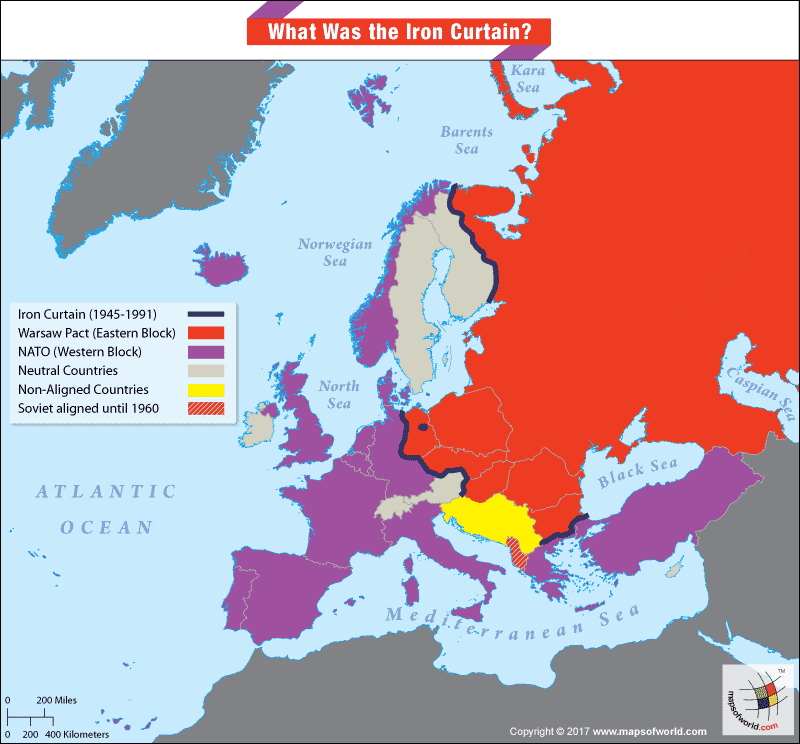
The iron curtain is rusting but its characteristic strength remains a barrier to international cooperation.
The rusting of the iron curtain comes from the tears of societies ruled by authoritarians. The authoritarians are leaders who believe their way of life is threatened. NATO is viewed as a trojan horse at the front gates of non-aligned countries.
One decries Putin’s slaughter of Ukrainians in an unjust war. Life of innocents have no value to today’s Russian leadership that believes their power and way of life is threatened.

The real-politic of authoritarian’s desire for stability and power outweigh the value of human life. The same is seen in the plight of Palestinians who are not part of the October 7th’ terrorists’ killings and kidnappings but are in the way of Israel’s retaliation against Hamas.
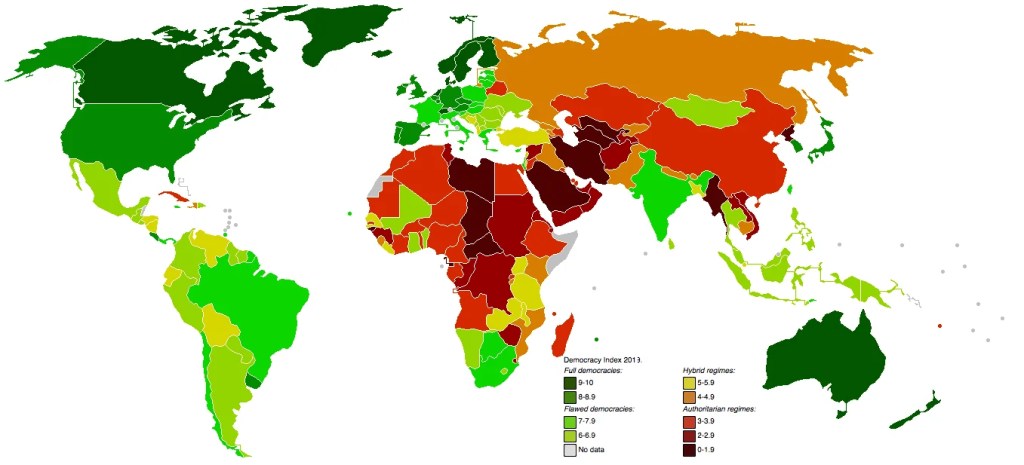
In my amateur opinion, China, Russia, North Korean, or other authoritarian governments have a right to rule their countries as they wish. Their citizens are the key to every leader’s longevity. NATO is an effort to offer freedom of choice to established independent countries but if the citizens of a country support their leaders, there is little NATO, or any alliance can do, except to support the sovereignty of all nations.

NATO is not an American Marshall Plan but a bulwark for nation-state self-determination.
Steil argues George Kennan is right in suggesting NATO expansion would be “the most fateful error of American policy in the entire post-Cold War era”. Kennan believed it would inflame nationalist beliefs and reinvigorate the Cold War. And so, it has–as evidenced by Russia’s invasion of Ukraine, China’s expressed intention and action toward Taiwan, and North Korea’s armaments support of Russia.


 REVIEWS AND VIEWS OF LIFE