RE-ELECTION

We may be surprised by what Trump will do in four more years. The million or more voters who put him over the top deserve what good or bad comes from their choice.

Books of Interest
 Website: chetyarbrough.blog

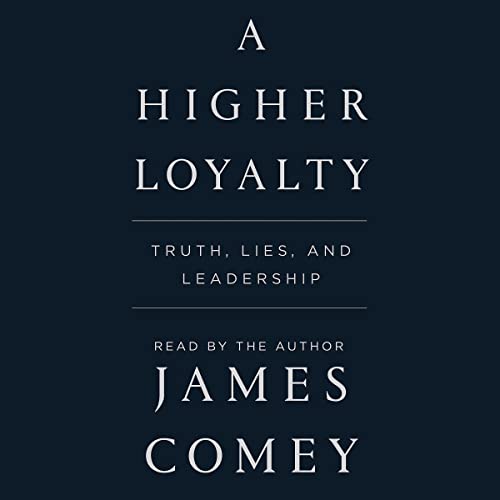
A Higher Loyalty: Truth, Lies, and Leadership

By: James Comey

Narrated By: James Comey
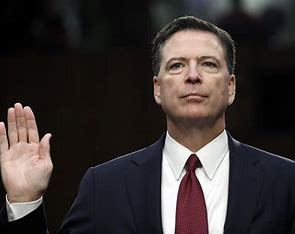
James Comey (Author, director of the FBI from 2013 to 2017, fired by then President, Donald Trump.)

With the re-election of Donald Trump, it seems time for a review of James Comey’s book to better understand his perspective on the soon-to-be new/old leader of America. This review is admittedly biased. On the other hand, Comey’s and this book-reviewer’s mutual bias are reinforced by comments of other Americans who personally served in Trump’s first administration.
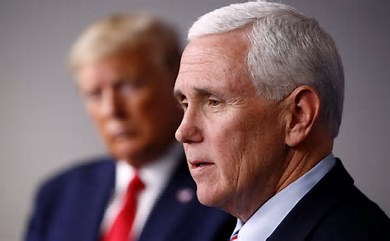
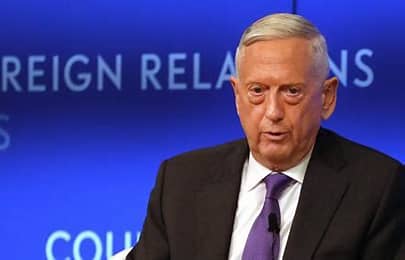
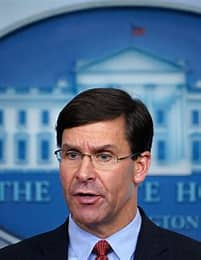
Mike Pence, Rex Tillerson, Jim Mattis, Mark Esper, William Barr, and John Kelly, were all former officials of President Trump’s first administration. As is widely known, all of these officials have guarded, if not negative, opinions about Trump’s position as the leader of the “free world”. What “freedom” is there when his former chief of staff categorizes Trump as a fascist?

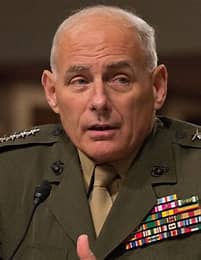
John Kelly (Trump’s chief of staff from 2017-2019.)

Mike Pence refused to endorse Trump in his 2020 run for re-election. Rex Tillerson called Trump “pretty undisciplined” in 2018 and counseled Trump to not violate the laws of the land. The former Defense Secretary, Jim Mattis, warned Trump about “militarizing our response” to protests against the government. He is quoted to have said “Never did I dream that troops …would be ordered under any circumstance to violate the Constitutional rights…of fellow citizens.” Mark Esper, who succeeded Mattis, said January 6th’s run on the capitol “…threatens our democracy”. William Barr, Trump’s former Attorney General, said Donald Trump shouldn’t be near the Oval Office. John Kelly, Trump’s former chief of staff, notes Trump fits the definition of a fascist. We should remind ourselves–a fascist is a dictator who believes in centralized autocracy, militarism, suppression of opposition, nationalism, and economic control. “What freedom is there in an America led by a fascist”? America has chosen to re-elect Trump despite the aforementioned concerns by people who worked in his administration.
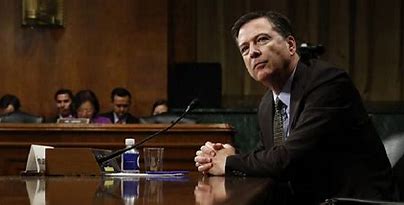
James Comey is fired by Trump for several reasons.

Comey is fired by Trump for several reasons. One, he mishandled the investigation of Hillary Clinton’s use of private email. He refused to admit the president was a part of the FBI’s investigation into Russia’s involvement in the 2016 presidential campaign. Additionally, Comey refuses, at the request of Trump, to drop the investigation into former National Security Advisor Michael Flynn. Trump dismisses Comey in 2017. (Ironically, Michael Flynn pled guilty in 2017 for making false statements to the FBI. President Trump pardoned him in 2020.) As a result, Trump’s Attorney General Jeff Sessions and Deputy Attorney General Rod Rosenstein recommended the firing of Comey.

The Attorney General Jeff Sessions and Deputy Attorney General Rod Rosenstein recommended the firing of Comey.

Comey’s biography is about his life from childhood to adulthood. The first chapters are about his parents and siblings. He recounts a burglary incident in his home when only he and a younger brother are in the house. The burglar enters the house with a gun and threatens both boys while looking for money and valuables. Though James grows to be six feet eight inches tall, he is not big when this incident occurs. He and his brother are naturally frightened. James tells the burglar where to look for money that he might find in the house. The boys are locked in a basement bathroom and the burglar leaves but sees the boys trying to escape through the bathroom window. The burglar returns. James runs to the neighbor’s house for help but the burglar escapes before the police arrive.

Comey notes he was bullied when in grade school.

The bullying eventually stops, and one wonders if it was because of his growth spurts or because of his ability to adjust to the social environment in which he lived. He had teachers and employers during his school years that became character models for him in life. He writes of incidents that he feels became examples that led him to become the person he became. From the perspective of this listener/reader, they were experiences that made Comey an ideal bureaucrat. This is not to demean bureaucratic positions but to suggest Comey matured to be a believer in systematic analysis of human behavior.

James Comey became an ideal bureaucrat for the Federal Government because he was a believer in systematic analysis before developing institutional policy or taking consequential action.
Comey starts his professional life as an attorney. His big break comes from the George W. Bush administration when he is offered the position of the U.S. Attorney for the Southern District of New York. Ironically, he went to work for Rudy Giuliani, an unprincipled but popular mayor of New York. Giuliani became President Trump’s personal lawyer and was later convicted for defamation. (Birds of a feather?) Bush asked Comey to serve as Deputy Attorney General for the U.S. government. He was confirmed by the Senate in 2003. In 2013, Barack Obama appointed James Comey as the Director of the Federal Bureau of Investigation.
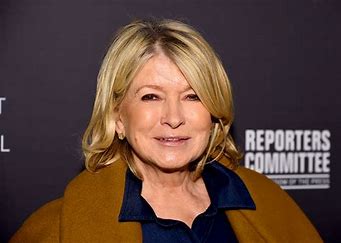
A disturbing chapter in Comey’s book is his prosecution of Martha Stewart for insider trading.

Comey tries to negotiate a deal with Stewart to keep her out of jail if she would plead guilty. She refuses and Comey orders continuation of the prosecution. Stewart was convicted and sentenced to five months in a minimum-security prison. There is a “holier than thou” sense of Comey’s action but his side of the story is that fame and wealth are no excuse for illegal behavior. This is a feeling one may or may not agree with because fame and wealth should not be a license to violate the law. (The obvious irony is that President Trump will escape punishment for his law breaking because of re-election.) In Comey’s opinion, when Stewart would not plead guilty, she became the author of her own punishment.

Scooter Libby (American lawyer and former chief of staff to V.P. Dick Cheney.)
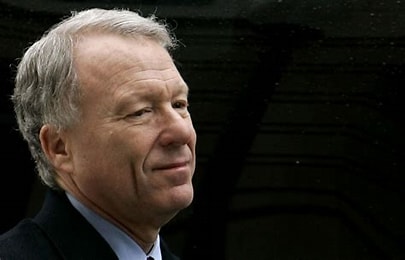
Scooter Libby’s prosecution brings up another incident that tests Comey’s character more than the effect of a person’s wealth and fame. Comey’s advance in the Federal Government came from the Republican Party led by Bush. Libby is indicted for lying to the FBI about divulging the name of a CIA officer (Valerie Plame). Libby is convicted because of Comey’s investigation despite his political appointment by the Bush administration. One might argue that Comey refuses to bias FBI’ investigations based on fame, wealth, or political affiliation with these investigations. That seems apparent, considering the title of his biography, i.e. “A Higher Loyalty”.

Comey’s biography offers insight to what Trump may or may not succeed in doing when he assumes office. Like the administration of George W. Bush, the bureaucracies of America’s government will have some influence on Trump’s agenda.

THE FOLLOWING IS TAKEN FROM THE AP INFO ABOUT TRUMP’S PLANS:

  • to empower the National Guard and domestic police forces to deport an estimated 11 million unauthorized immigrants,
  • leave abortion laws to the discretion of the American States with no federal mandate,
  • restructure the Food and Drug administration,
  • eliminate taxes on earned tips, eliminate taxes on social security income, and reduce taxes on corporations from 21% to 15%,
  • create tariffs of 10 to 20 percent on foreign goods,
  • reinstitute the 2020 executive order requiring the federal government buy “essential” medications only from U.S. companies,
  • block purchases of “any vital infrastructure” in the U.S. by Chinese buyers,
  • roll back societal emphasis on diversity and legal protection for LGBTQ citizens and Title IX civil rights protections for transgender students,
  • reduce the role of federal bureaucrats and regulations across the country,
  • target elimination of the federal Dept. of Education to promote privatization of schools, while increasing regulations on what can be taught in schools,
  • repeal and replace the Affordable Care Act,
  • deny the existence of global warming while discouraging fuel efficiency standards and incentives for fuel conservation,
  • make it harder for companies to unionize and discourage unionization dues payments,
  • withdraw from world affairs with a non-interventionist military policy while increasing defense spending for a missile defense shield.

Comey explains how overreaction to 9/11’s attack led to growing suspension of human rights in America.

Abu Ghraib prisoner abuse.

Legislation drawn by the Bush administration condoned CIA’ torture of foreign nationals and anti-American demonstrators. That proposed legislation was opposed by the Attorney General’s office and did not get passed. However, the CIA and some military personnel got ahead of government policy decision in their actions at Abu Ghraib and Guantanamo Bay. The Bush administration did not give up on their desire to allow torture.

Undoubtedly, some actions will be taken before Congressional or bureaucratic approvals but there is hope for restraint based on what the Attorney General’s office (John Ashcroft) objected to when it became aware of the CIA’s actions. The threat of mass resignation by the Attorney General’s office made Bush reconsider what his staff proposed to Congress. One presumes, there will be similar bureaucratic resistance to Trump’s extreme policy recommendations.

Alberto Gonzales (80th U.S. Attorney General from 2005-2007.)
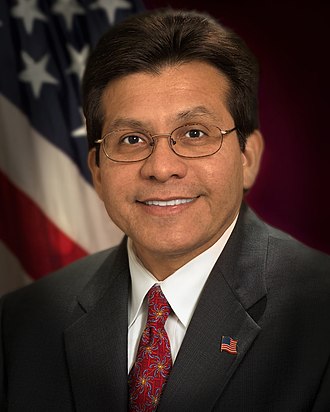
However, despite objections to the torture system practiced by the CIA, Bush’s administration chose a new Attorney General, Alberto Gonzales. In that Presidential choice, bureaucratic policy changed, and torture became an acceptable form of interrogation. Changing bureaucracy leadership is the modus vivendi for Donald Trump’s threat to American Democracy and what can happen in the next four years.

Comey seems a decent person. He is no hero. He is obviously intelligent with a conscience that one would expect from a moral, if not always effective, attorney. Trump is a threat to American democracy but there have been many threats to democracy in our history. We may be surprised by what Trump will do in four more years. The million or more voters who put him over the top deserve what good or bad comes from their choice.
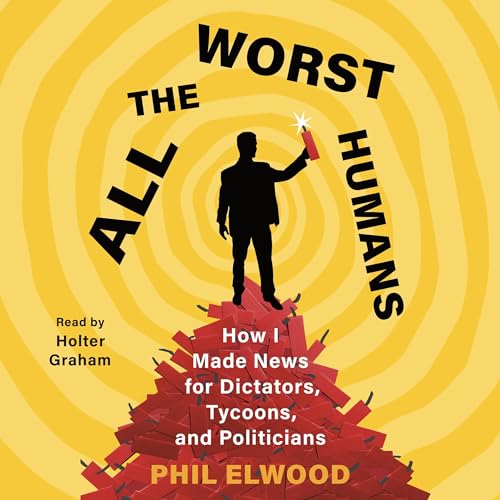
SPINNERS

“All the Worst Humans” is a macabre but revealing look into the darkest corners of public relations.

Books of Interest
 Website: chetyarbrough.blog

All the Worst Humans (How I Made News for Dictators, Tycoons, and Politicians)

By: Phil Elwood

Narrated By: Holter Graham

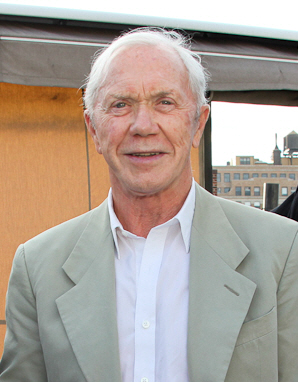
Phil Elwood (Author, public relations operative, graduate of Georgetown University with graduate studies at the London School of Economics.)

“All the Worst Humans” is a macabre but revealing look into the darkest corners of public relations. It is an anecdotal story, with a ring of self-effacing truth by Phil Elwood who specializes in spinning news about morally corrupt people and bad events. A listener is skeptical of Elwood’s integrity because of the nature of what he does for a living. Elwood manipulates societies understanding by spinning the facts of current events to hide what truth there is in history.

The truth of history is purposeful or a choice and spin of facts to recreate a past that always has more facts than can be or are reported.

Reputable historians certainly try to accurately report the facts of history, but truth is malleable based on the facts that are chosen. Though Elwood profiles himself harshly as a troubled human being, he is like a disreputable historian who spins facts that have little to do with truth. Elwood’s job is to make facts tell a kind of “truth” that makes bad people and/or events look good or at least better than bad.

Elwood’s self-effacing story admits his weakness for alcohol and addictive drugs.

Elwood manages to become an intern for Congressional representatives like Senator Daniel Moynihan after failing to graduate from college. He corrects his college failure with the help of his congressional contacts to enter Georgetown University where he earns a college degree.

Elwood leaves his Congressional internships and the contacts they entailed to become a success as a public relations operative.

He becomes an operative who spins facts to change the public’s perception of people and events. Elwood is an “operative” because he contacts legitimate media writers/broadcasters and political influencers to change their minds about people and events that are or will become news of the day.

Elwood’s story begins with an FBI phone call that asks for the correct number of his and his wife’s apartment address.

He arranges for a meeting with the FBI in an hour after the call, purportedly to allow his wife time to leave with some of the files in their apartment. This is a puzzling beginning to a wild explanation of Elwood’s life. One is unsure of how much of what is written is spinning the truth of who Elwood is and what he believes. One wonders if Elwood’s story is just an entertaining vignette of a complex and intelligent writer, a public relations expert, or writer of fiction. (A brief review of the internet shows Elwood is not only a graduate of Georgetown University, but did graduate work at the London School of Economics.)

Peter Brown (American-based English businessman who became part of the Beatles’ management team.)

After Elwood’s stint as a congressional intern, he is hired by a public relations firm headed by a former Liverpool Beatles’ assistant, a man named Peter Brown. Brown became an officer of Apple Corps, the Beatles management company. Brown was instrumental in arranging the wedding of John Lennon to Yoko Ono in Gibraltar which is made famous in Lennon’s song “The Ballad of John and Yoko”.

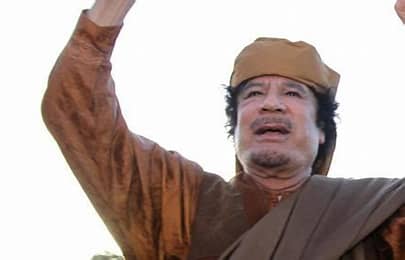
Elwood offers examples of work that he does as an operative for Brown’s company. Brown, or someone from his office, calls Elwood to “baby sit” Libyan executives who work for Muammar Gaddafi in a trip to Las Vegas.

Elwood explains they carried millions of dollars in suitcases they kept in their hotel room. They lost thousands of dollars at the gaming tables and used Elwood to arrange private plane trips and ferry suitcases of money to pay their gambling bills and travel expenses. Elwood feared for his life and was relieved to see them off in their private jets after steering them away from what could have been a public scandal in Las Vegas.

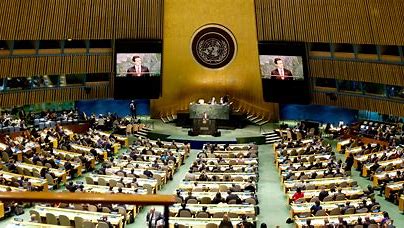
Elwood explains how he is ordered by Brown to use his contacts in Congress and news publications to make Gaddafi look more like a statesman than thug in his 2009 United Nations Speech.

Elwood was tasked to make Gaddafi look humanitarian rather than venal by arranging interviews and media engagements that would emphasize his role as a revolutionary, not authoritarian leader. There seem to have been some successes but the speech at the UN and the debacle over a tent on Trump’s property made Elwood’s public relations effort a failure. Elwood is eventually fired by Brown and leaves with a sense of enmity toward Brown.

Elwood eventually slips into another morass when asked by his new public relations employer to make Nigeria look better than the Boko Haram kidnappers who took 276 schoolgirls from a Government Girls Secondary School.

Elwood is unsure of what he can do despite travelling to Nigeria to convince the government they needed to act in a way that looked like they were concerned. Elwood admits he fails and that the appearance of Malala Yousafzai, the Pakistani activist who was nearly assassinated by Pakistani thugs, entered to insist Nigeria must do something. Elwood is fired again.

In another incident where Elwood is working as a public relations operative, he consults with Antigua after the United States threatened to prosecute Antigua for online gambling services.

The Antiqua leader worries that it would destroy tourism in his country if they fought America’s threat. Elwood explained the loss of revenue from online gambling far exceeded tourism income and that he would plant a story in the media about restraint of trade as being un-American. Elwood suggests to the Antiqua government that they take America on with a complaint to the World Trade Organization. Antiqua follows the advice, and successfully remains an online gambling mecca. But Elwood, despite his successful spin of the facts loses the account and is fired again.

Elwood then slips into a very gray world where money is being laundered by the Israeli government.

Elwood becomes a conduit for the laundered money and is contacted by the FBI. The story comes full circle, and its ending adds to the value of Elwood’s story. Public relations are a sophisticated way of muddling the truth. Being smart is two edged when it comes to the truth. Ignorance is not bliss but spinning the truth can kill you or put you in jail.

Elwood considers suicide because of his dodgy reputation and fear of losing his marriage. Through treatment with ketamine, Elwood recovers some level of mental health. Treatment with ketamine is an ironic fact in view of the recent death of the comedic actor Matthew Perry. In a twist of fate, Elwood is spinning the benefit of ketamine while its use is being abused by the public today.

DRAWING THE LINE

A reader/listener will come to their own conclusions about Ms. Fox’s epilogue. Where does one draw the line?

Books of Interest
 Website: chetyarbrough.blog

The Talented Mrs. Mandelbaum” The Rise and Fall of an American Organized-Crime Boss

By: Margalit Fox

Narrated By: Saskia Maarleveld

Margalit Fox (Author, copy editor for the New York Times.)

Fox writes a memoir of America’s equivalent of Fagin in Dicken’s “Oliver Twist”. Mrs. Mandelbaum, like Fagin, created a school of crime for New York City street-dwellers in the mid-nineteenth century. An interesting insight by Fox is how people slip into crime. Mrs. Mandelbaum makes a living for her family in New York by becoming a fence for merchandise collected on New York’ streets. Like any sales business the key was buying low and selling high. Street merchandise is cheaper than store merchandise because of lower overhead and, of course, theft.

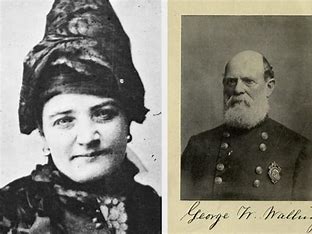
The Chief of Police of New York City at the time (pictured to the far right) considered the criminal Fredericka “Marm” Martha Mandelbaum an admirable businesswoman.

Fox notes the Mandelbaum family emigrated from Germany in 1850. Mrs. Mandelbaum’s husband, Wolf Israel Mandelbaum, made a living as a peddler in Germany. Martha Mandelbaum sees similar opportunity in New York City. She becomes a fence, a kind of peddler, for New York city street’ merchandise. However, Mrs. Mandelbaum recognized that the quality and quantity of merchandise she fenced could be improved by theft. She created a school like Dicken’s Fagin to teach the craft of theft. Her “school” began teaching young acolytes the art of pickpocketing and petty theft. She began building a criminal empire that evolved into financing bigger crimes like fabric store theft, jewelry store theft, and most lucrative of all, bank robbery.

Mandelbaum provided financing for specialized research of banking personnel and bank activity for intended bank robberies. She paid for sophisticated tools needed for the robberies, and then brokered robber’s thefts to buyers.

Mandelbaum grew her business into a million-dollar enterprise. She carefully remained in the background of her lucrative business. She became the “Queen of Fences”. In July of 1984, “Marm” Mandelbaum and her son Julius were arrested by Pinkerton agents and taken into custody. She allegedly punched the arresting officer and protested her innocence but went to trial where she was required to post a $10,000 bond after spending a night in jail. She and her son jump bail and cross the border into Canada. They were detained in Canada but without a law allowing extradition, she and her son could not be returned to the United States.

Mrs. Mandelbaum and her son open a store in Canada after contacting many of her associates in New York to explain her plan to sell merchandise out of this new store location. One presumes her associates continued their criminal ways of acquiring New York merchandise and shipping it to Canada for resale.

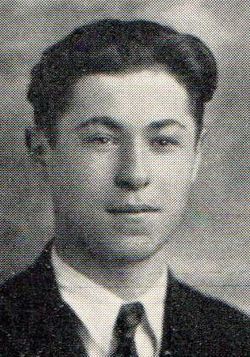
Julius J. Mandelbaum (1905-1988, son of “Marm” Mandelbaum died at age 83 in Long Beach New York.)

Fox’s story takes an interesting turn in an epilogue of her memoir about Mrs. Mandelbaum. “Marm’s” daughter, who was 18, died of pneumonia in New York. Mrs. Mandelbaum risked incarceration by surreptitiously returning to New York for a Jewish funeral for her daughter. She is not arrested and successfully returns to Canada.

Fox infers Mrs. Mandelbaum is as much a victim of her time as she was a criminal.

Fox explains in a Jewish family, women have essential roles in managing households, raising children, and contributing to their communities. In some circumstances, Fox notes Jewish wives engage in business while managing the household. Fox suggests Mrs. Mandelbaum simply carries out those duties in her life in New York.

A reader/listener will come to their own conclusions about Ms. Fox’s epilogue. The question that comes to mind is whether some people died as a result of Mrs. Mandelbaum’s financing of illegal activity, including bank and jewelry robberies. Where does one draw the line?

Mother Mandelbaum died without an exact cause of death at age 68. She was given a grand funeral in New York City that drew community elites, politicians, and undoubtedly, criminal associates.

DEATH ROW

The question raised by “The Sun Does Shine”–is death row a necessary function of society? Anthony Ray Hinton’s life story challenges its efficacy.

Books of Interest
 Website: chetyarbrough.blog

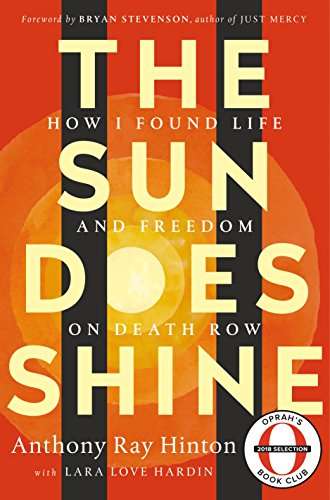
“The Sun Does Shine

By: Anthony Ray Hinton with Lara Love Hardin

Narrated by: Kevine R. Free

Anthony Ray Hinton’s life experience argues the death penalty for any crime should be abolished. Hinton states 1 in 10 people on death row have been wrongfully convicted. He spent 28 years on death row for crimes he could not have committed. His legal representation is poorly executed, in part, because he did not have enough money to pay for his defense.

Anthony Ray Hinton

Hinton’s 1 in 10 ratio of wrongful conviction is questioned but not denied by:

  1. The “Death Penalty Information Center”
  2. DNA evidence that has exonerated sentenced death row prisoners, and
  3. statistical studies that show 1 in 25 criminal defendants sentenced to death have been found innocent.

Hinton’s “The Sun Does Shine” tells of his conviction by an Alabama court for robbery and murder of two fast-food restaurant managers in Birmingham, Alabama.

Appointment of a defense attorney is required by law, but their compensation and the accused’s poverty deny an adequate defense. Hinton’s story shows how the State of Alabama’s law enforcement and judicial system manufactured false evidence to convict and put him on death row.

Hinton’s mother, childhood friend, and religious belief support him through his false imprisonment and pending death by electrocution. His electrocution is postponed because of repeated challenges, but he remains on death row for 28 years. Hinton’s imagination and good will sustain him through his ordeal. He imagines traveling the world, marrying and divorcing beautiful women, and meeting the Queen of England.

He remembers the blinking electric lights and smell of burning human flesh when each prisoner is electrocuted. He recalls the first woman to be electrocuted. He acknowledges many of the death-row’ prisoners committed horrible crimes but suggests they are victims of society because of their upbringing, and/or untreated or incurable mental dysfunctions. Hinton does not believe the guilty deserve execution for what he believes are societies’ failures.

It is the Executive Director of the Equal Justice Initiative, attorney Bryan Stevenson, who comes to Hinton’s aid and eventually gets his case before the U.S. Supreme Court in 2014. Stevenson works on Hinton’s case for over 20 years with numerous blocks thrown up by the Alabama legal system. The original judge in the case insists throughout his life that Hinton was guilty even though falsified evidence convicted him of the crime.

After release, Hinton becomes a world-wide celebrity, acquainted with famous people like President Obama, Queen Elizabeth II, Nelson Mandela, and Oprah Winfrey.

His book suggests he was entertained by some famous actors and billionaires who wished to have his story told to audiences that presumably might affect a change in the American judicial system.

The question raised by “The Sun Does Shine”–is death row a necessary function of society? Anthony Ray Hinton’s life story challenges its efficacy.