LIFE IS LIQUID

Miodownik explains liquids are everywhere and influence every aspect of life on earth. As a scientist, Miodownik explains understanding liquids is understanding life.

Books of Interest
 Website: chetyarbrough.blog

Liquid Rules: The Delightful and Dangerous Substances That Flow Through Our Lives

Author: Mark Miodownik

Narrated By:  Michael Page

Mark Miodownik (Author, British materials scientist.)

Mark Miodownik offers some interesting information about liquids in “Liquid Rules”. It seems Miodownik had some spare time on a long plane trip. Though many know some of what the author explains, it is interesting for listener/readers who don’t think about the importance of liquids in our lives. For example, Miodownik notes how and why Kerosene is the fuel that powers jets.

The qualities of kerosene make it an optimum choice for jet propulsion.

Kerosene is safer to handle because high temperatures are required for ignition which makes it safer than gasoline. It has a low freezing point that allows high-altitude flight where sub-zero temperatures exist. Its viscosity allows it to flow in cold or hot conditions which reduces risk for fuel line’ clogging. Kerosene carries high energy production per unit of volume for longer flights. It is cheaper to refine than other fuels. And most importantly, it is chemically stable which reduces risks of vapor lock or premature combustion.

As Miodownik wings his way across the earth, he casually mentions Susan is a passenger on the same transatlantic flight who is offered a glass of wine.

She suggests wine testing is really a performance art. Her remark is an introduction to Miodownik’s more scientific examination of the sensory and symbolic dimensions of wine tasting. Miodownik explains the role of tannins, taste, and the rituals around drinking a glass of wine. He explains a connoisseur’s way of swirling a glass of wine before his/her nose to sense the bouquet of the libation. One imagines Susan looking askance at Miodownik’s academic review of her off-the-cuff remark. Who is this guy? Is he hitting on me?

Presumably, Miodownik sits back and contemplates the creation of a book about liquids.

Miodownik seems slightly discomfited by his seatmate’s look at him. Does he regret his forwardness in addressing her comment like a nerd? There is a sense of humor and a touch of irony in Miodownik’s choice of subject. One wonders what a woman’s response might be to a person she does not know explaining what she intended when she spoke of wine tasting as an art. In any case, Miodownik has introduced his subject.

As Miodownik’s thoughts move on about a book about liquids, he recalls the invention of ink.

Here is an invention with purpose. He notes the creation of ink that is made to flow predictably, dry quickly, and remain legible for years. The idea of a liquid that makes history, science, and art for the ages, i.e., an eternal gold mine for future generations. Ink reaches back to the caliphs of the Maghreb, rulers of Islamic caliphates in 7th century, northwest Africa. Ink connects with the evolution of the colors of red, green, and blue. From fountain pen writings to pointillist art the creation of ink plays a critical role in modernization of the world.

Water is the foundation of life.

Most know water is an essential need for life as we know it. What is often less thought of is that water is a universal substance that underlies world climate and biological life. Miodownik notes that water is a universal substance that underpins life and the climate systems of the world. It is the vehicle of human metabolism, emotional expression of fear, pain, happiness, and the world’s climate.

Production sweat shops.

Humans produce sweat and a quart of saliva per day. Saliva aide’s digestion, hygiene, health, and emotional expression like crying, anger, or embarrassment. Sweat regulates the bodies temperature. Water plays a role in the advance of technology with the creation of liquid crystal displays (LCDs) and OLEDs that power modern screens in phones and aircraft panels. Digital watches, cell phones, movies and general entertainment are a result of liquid’s existence. The irony of water as a liquid is that it can nurture as well as destroy. It refreshes life through cleaning, and food production, but also floods land, drowns life, and erodes soil upon which life depends. Water is an agent of comfort as well as chaos.

Miodownik explains liquids are everywhere and influence every aspect of life on earth. As a scientist, Miodownik explains understanding liquids is understanding life.

Aside from global warming, Miodownik notes the growing issue of plastics pollution and potable water availability will plague humanity. He argues humanity needs to come to grips with earth’s need for natural sustainability. Roads, houses, food, and potable water need to be designed to renew themselves without introduction of new materials or resources.


THEORY & TRUTH

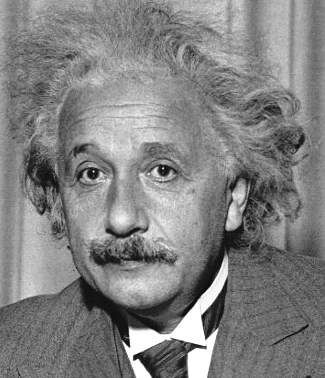
Without a doubt, Einstein was the premier scientist of the 20th century just as Newton was of the 17th. Though their characters were quite different, their thoughts and contributions to the physics of life on earth and in the universe remain world changing.

Books of Interest
 Website: chetyarbrough.blog

The Perfect Theory (A Century of Geniuses and the Battle over General Relativity)

Author: Pedro G. Ferreira

Narrated By:  Sean Runnette

Pedro Ferreira (Anglo-Portuguese cosmologist, professor at the University of Oxford with expertise as theoretical cosmologist and astrophysicist.)

“The Perfect Theory” is a history of physics that revolves around Albert Einstein’s brilliant discoveries in the early 20th century. Einstein believed in general relativity that included gravity and acceleration which he argued is caused by the curvature of spacetime. Einstein implies the equality of mass and energy is a precursor to the proof of general relativity. Ferreira argues that post twentieth century physics’ theories have only contrasted and expanded Einstein’s first discovery of the equivalence of energy and mass, which is a part of a “…Perfect Theory”. Einstein’s theory seems perfect in the sense that it is a foundational theory from which most discoveries about physics have been based. This seems hyperbolic with the experimental proof of Quantum Dynamics (a science theory describing the behavior of particles at atomic and subatomic scales), but the idea of a Quantum world seems only a tentative expansion, rather than refutation of Einstein’s “…Perfect Theory”.

What Ferreira shows is how Einstein‘s general theory of relativity shaped modern theories of cosmology.

Though Einstein believed the universe was an eternal existence, that never expanded or contracted, he had to create a cosmological constant to make that theory work. He began moving away from that belief in the 1930s. Edwin Hubble’s theory of an expanding universe led to the “Big Bang Theory” that turned what Einstein suggested was a vindication of his discomfort with the idea of arbitrarily devising a cosmological constant to make his vision of the universe work. (Interestingly, Einstein remained skeptical of the Big Bang model of the universe’s creation when its expansion was proven.) Edwin Hubble proved through observation and calculation that the universe was expanding rather than static. Later science discovery of “dark energy” is thought to be the engine for expansion which ironically revives the theory of Einstein’s cosmological constant.

Edwin Hubble (1889-1953, American astronomer.)

John Wheeler and Roger Penrose in the 1960s confirmed the existence of black holes based on Einstein’s concept of regions of the universe that would have such strong gravity pull that nothing could escape its attractive force. The belief that nothing could escape was challenged by Stephen Hawking who argued that black holes emit radiation and eventually evaporate. Nevertheless, it is Einstein’s early work that initiated further investigation and theory modification.

Einstein predicted gravitational waves that were not confirmed until 2015 by LIGO’s (Laser Interferometer Gravitational-Wave Observatory) detection. Einstein had predicted gravitational wave existence in 1916 but was uncertain whether they were physically real or just mathematical affects based on his thought experiments about massive accelerating objects, like orbiting planets.

LIGO (Located @ Hanford in the Tri-Cities of Richland, Kennewick, and Pasco in Washington State.)

Ferreira’s book explains how important Einstein’s legacy is in today’s understanding of the Universe, its creation, and possible future.

The most significant curve ball thrown at Einstein’s “…Perfect Theory” of the universe is Quantum Mechanics. Though he grudgingly acknowledged the experimental proof of Quantum Entanglement, he remained skeptical of quantum mechanics and its philosophical implications. The proven predictions of quantum mechanics shake the foundation of what Einstein believed about the universe. Quantum mechanics suggests the universe’s existence, whether it began with a Big Bang or not, is a matter of probability, not predictable certainty. Einstein’s theories were based on a belief in a clockwork universe–where cause and effect would explain everything about the physics of existence.

Though Einstein did not believe in a personal God, he believed in order, harmony, and rationality in a world that has a cause for every effect.

Twenty first century physics’ research owes more to Einstein than any other scientist in history. It is not that Einstein was or is infallible, but his theories are the foundation of physics research. His idea of a static universe may have been wrong, but the story of dark energy makes one wonder if his cosmological constant might have been right. Einstein was skeptical of the Big Bang theory as the origin of the universe despite it being the belief of most scientists today. Though he resisted quantum mechanics unpredictability, he acknowledged its experimental proofs with the caveat that there is an undiscovered law that will return predictability to the physics’ world. What Pedro Ferreira credibly argues is that Albert Einstein provided “The Perfect Theory” to explore truth and falsehood of the physics of the universe.

Without a doubt, Einstein was the premier scientist of the 20th century just as Newton was of the 17th. Though their characters were quite different, their thoughts and contributions to the physics of life on earth and in the universe remain world changing.

SCIENCE

Scientific discovery revealed the theory of evolution, the germ theory of disease, the laws of motion and universal gravitation, the theory of relativity, the discovery of DNA, drugs to cure disease, and quantum mechanics that imply future unpredictability. This is the daunting message of Goldman’s lectures.

Books of Interest
 Website: chetyarbrough.blog

Science in the 20th Century (A Social-Intellectual Survey)

By: The Great Courses

Narrated By: Steven L. Goldman

Professor Goldman received a B.S. Degree in Physics from Polytechnic University of New York and received a Master of Arts and PhD in Philosophy from Boston University.

Professor Goldman offers lectures on transformative scientific discoveries of the 20th century. He begins with great discoveries in physics by Newton, Einstein, Curie, Bohr, Planck, Heisenberg, Dirac and others who broaden a listener’s understanding of the universe, Earth, life, and humanity. He melds science into philosophy which gives a generalist an appreciation of genius and its limitations. From the limitations of microscopes, thermometers, spectroscopes, barometers, and galvanometers, Goldman draws lines between science’s experimentally reproducible facts and philosophy’s speculation.

Newton and Einstein had different understandings of the universe. Newton understood gravity as a force between two masses, subject to earth’s gravitation. Einstein redefined Newton’s gravity as a power exerted throughout the universe and between planets rather than one planet we call earth. Einstein proves the power of gravity is based on forces beyond earth though Newton’s interpretation is predictive of most physics’ phenomena on earth, it fails to predict the effects of time, space, and energy in the universe. Einstein’s discoveries lead to a theory of General Relativity where mass and energy are equal to each other and interchangeable. Newton viewed space and time as absolute while Einstein viewed them as relative. Newton’s physics were simpler to understand while Einstein’s required advanced mathematics that took into consideration the warping of space and time. To Newton, the speed of gravity was a constant while to Einstein, the only constant was the speed of light. To Newton two occurrences could occur simultaneously but Einstein recognized simultaneity is impossible. Any distance between the two occurrences will always be observed at the speed of light which means they cannot have happened at the same time because they cannot be in the same place. The speed of light controls the observation of action. Two occurrences cannot occupy the same space therefor they cannot happen simultaneously.

Professor Goldman explains the many utilitarian uses of great scientific discoveries from so many scientists that names become too numerous to be recalled.

However, without their discoveries, humanity would not have entered the age of Artificial Intelligence and the reality of information as an energy source in the world; not to mention the many scientific discoveries that have improved the lives of 8.2 billion people. (Another side of that story is the number of people killed by WMD, undiscovered cures for disease, and earth’s pollution by humanities use of known and yet to be known discoveries.)

Without fossil fuels, renewable energy, and nuclear power, humanity would still be living in caves, subject to nature’s choice. The importance of information is why we read books, listen to lectures, rely on remembrance of things past, and choose the course of our lives. As Shakespeare noted in The Tempest, “What’s past is prologue”.

Scientific discovery revealed the theory of evolution, the germ theory of disease, the laws of motion and universal gravitation, the theory of relativity, the discovery of DNA, drugs to cure disease, and quantum mechanics that imply future unpredictability. This is the daunting message of Goldman’s lectures.