DISCRIMINATION’S COMPLEXITY

Audio-book Review
By Chet Yarbrough

(Blog:awalkingdelight)
Website: chetyarbrough.com

Invisible Man 

Written by: Ralph Ellison 

Narrated by: Joe Morton

RALPH ELLISON (1914-1994, AUTHOR, CRITIC, SCHOLAR)

RALPH ELLISON (1914-1994, AUTHOR, CRITIC, SCHOLAR)

Few books capture the complexity of discrimination and its societal consequence. Ralph Ellison’s “Invisible Man” is one of the few.  To re-read/listen to Ellison’s book, it seems a biography of its author. 

Ellison was born in Oklahoma City, Oklahoma.  He attends Tuskegee Institute, a black university in Alabama.  He fails to graduate and moves to New York.  He becomes a spokesman and propagandist for the communist party before WWII.  He eschews communism after the war while living in New York.  He becomes acquainted with other writers (like Richard Wright) who expose discrimination and its abomination.  In these details, one sees Ellison as the “Invisible Man”.

JOE MORTON, JR. (AMERICAN STAGE, TV, AND FILM ACTOR, NARRATOR

JOE MORTON, JR. (AMERICAN STAGE, TV, AND FILM ACTOR, NARRATOR)

The intensity and credibility of Ellison’s story is magnified by Joe Morton’s skill as an actor.  Every line reflects an understanding of discrimination and its relevant emotions.  In reading “Invisible Man” much of what Ellison wrote is missed.  Morton offers clarity and visibility to the “Invisible Man”.

In outline, this story follows the path of Ellison’s life.  The hero is expelled from college in his Junior year and moves to New York.  The reason for his expulsion is an aspect of discrimination and its consequence. 

A rich white financial supporter of the university is being shown around by Ellison’s “Invisible Man”. 

Through a series of incidents, the white supporter becomes embroiled in the reality of human poverty in a black community.  His immersion exposes an incestuous relationship with an inference that incest is not limited to the poor; i.e. that it reflects on his personal white life.

The white university benefactor appears overwhelmed by a realization of evil’s equality among men.  A rich white man’s evil is no different from a poor black man’s evil.  He asks the “Invisible Man” to get him a shot of liquor. 

Because they are far from town, the only place for a drink is a seedy bar in the neighborhood.  In trying to please the university’s patron, the “Invisible Man” inadvertently embroils the rich man in a bar fight.  No one is killed but the experience illustrates how discrimination relegates parts of society to a life of poverty, anxiety, and despair.

Upon returning to the University, the patron tells the “Invisible Man” to have the President of the school come see him in his room.  Dutifully, the “Invisible Man” calls the University President and is condemned by him for showing the patron a part of town that shows what it is like to be black in America. All the student had done was what the benefactor asked him to do.

EVERYWHERE IN CHAINS

EVERYWHERE IN CHAINS (A respected black leader (this University President) is saying—if you want to get ahead, you must hide who you are, play by a white man’s rules, and interpret everything a white person says to mean you don’t matter; and act appropriately to reinforce a white man’s stereotype of “Negroes”.)

The University President expels the “Invisible Man” for a mistake he believes he did not make.  The President disagrees.  He tells the “Invisible Man” he made a horrible mistake. 

The University President explains that he should have “shucked and jived” to steer the patron away from the reality of being black in the south. 

The President is telling the Black student he must “play the game”.  This is a statement about the complexity and disastrous effects of discrimination.  Not only white America stereotypes Black America, some Blacks reinforce it.

The “Invisible Man” accepts the expulsion and understands the President’s reasons for expelling him.  He asks the President for letters of recommendation to rich patrons he knows in New York.  The “Invisible Man” plans to get a job in New York that will allow him to come back to the school after a year of exile.  The President agrees and writes several letters, seals them, and tells the “Invisible Man” not to open them.

In New York, all but one letter is delivered to offices of potential white employers.  No job interviews are offered.  With a last letter in hand, the “Invisible Man” insists on seeing the white patron that the letter is addressed to.  He is interviewed by the son of the business owner who offers to show the letter to him. 

The letter is a condemnation of the “Invisible Man” by the Black University President who had no intention of ever allowing him to return to the University.

With no job, no prospects, and dwindling savings, the “Invisible Man” realizes he is screwed; i.e. not only white America denies his existence, but Blacks in power accept cultural rules and screw him as royally as white America.

Dr. Bledsoe, the black University President is saying: “Play the game, but play it your own way, my boy.  Learn how it operates, learn how you operate.”

Both black leaders in power and whites deny equality of opportunity.  There seems nowhere to turn.  That is, until Ellison’s story tells of an eviction of a black family in Harlem. With that eviction story, the “Invisible Man” becomes visible. 

Relying on his education and previous speech-making experience, the “Invisible Man” addresses a crowd around the dispossessed family and sparks a riot in Harlem. Members of “The Brotherhood” are in the audience.  The leader of “The Brotherhood” is impressed by the “Invisible Man’s” ability to motivate the crowd.  The leader offers him a job.  At first, it seems like the dawning of a new life, an opportunity to prosper while doing good for himself and the community.  In the end, it is just another game. Another authority figure telling the invisible man to “shuck and jive”. The only reality is “playing the game” by someone else’s rules.

COMMUNISM IN THE USA

COMMUNISM IN THE USA (The game is the “science” of collectivism; i.e. what is important is not the individual but the collective.  Whomever does not play the game by the rules is to be sacrificed.  He/she is either ostracized, or murdered, if the rules of the collective are disobeyed.  If the collective is challenged by a minority, the minority is sacrificed.  The suicide, or murder of an individual is of no consequence except as it benefits or hurts the collective.)

When riots break out in Harlem, the “Invisible Man” expects “The Brotherhood” to be supportive of the plight of the poor and dispossessed but what he finds is that “The Brotherhood” is happy to see the destruction because it advances their collective objective; i.e. the destruction of the State and its replacement by “The Brotherhood”.  They care nothing for the black community.

Ellison cogently reflects on his life to explain that the individual is of supreme importance, i.e., not the collective, not white culture, not black culture, but only the individual within the whole of humanity. 

Majority rule is as tyrannical as minority rule when it discounts individual freedom.  Blacks playing the game by rules of white culture, or any collective, is as harmful to minorities as slavery.

Choosing to become invisible is not a solution for discrimination but it is a symptom of the American apathetic and un-involved.  Ellison suggests his “Invisible Man” is only in hibernation and will soon awaken to become an involved individual.  2020 may yet prove Ellison was right.

AMERICAN APETITE

If there is a “Cromwell” in Trump’s administration, he/she should appraise King Henry and his emphasis on loyalty of class.  King Henry, like Trump, seems to care little about commoners; except as they benefit his wealth, power, and prestige.

Audio-book Review
By Chet Yarbrough

(Blog:awalkingdelight)
Website: chetyarbrough.blog

Thomas Cromwell: The Untold Story of Henry VIII’s Most Faithful Servant

Thomas Cromwell by Tracy Borman

Written by: Tracy Borman

Narrated by: Julian Elfer

TRACY BORMAN (AUTHOR, BRITISH HISTORIAN)

TRACY BORMAN (AUTHOR, BRITISH HISTORIAN)

HILIARY MANTEL (ENGLISH AUTHOR OF “WOLF HALL” AND “BRING UP THE BODIES”)

While Hilary Mantel wets American appetites for Thomas Cromwell with “Wolf Hall” and “Bring Up the Bodies”, Tracy Borman offers a more British perspective.

“Thomas Cromwell” is shown by Mantel and Borman to be a commoner with an uncommon intelligence.  He rises from a blacksmith’s son to become among the most powerful government administrator of the 16th century.  Cromwell is the consummate power behind the throne of King Henry VIII.  He manages to reform the Roman Catholic church in England, the power of aristocratic government, and the wealth of the British throne; all the while placating a volatile and often shallow King.

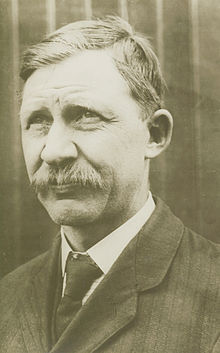
THOMAS CROMWELL AT ESTIMATED AGE IN HIS 40S

THOMAS CROMWELL AT ESTIMATED AGE IN HIS 40S

In the 21st century, one wonders if there is an American equivalent to Thomas Cromwell in President Trump’s administration.  Was it John F. Kelly, his former Chief of Staff?  Whether there is a person behind Trump’s erratic pronouncements, Borman shows that a modern American Cromwell is a mixed blessing.

Borman characterizes King Henry as one who seeks wealth, power, and prestige in every government policy and action. 

Wealth is drawn from confiscation of Roman Catholic Church’ land and wealth.  Power is taken with the King’s appointment as head of a newly formed Church of England.  Prestige is pursued with King Henry’s six marriages–meant to preserve his royal lineage.  It is Borman’s contention that each of these pursuits are largely accomplished through the machination and administration of Thomas Cromwell.

As a commoner, Cromwell is a consummate go-between.  With Cromwell’s personal experience and innate intelligence, he caters to aristocracy while placating, and sometimes aiding English commoners.  Cromwell is tutored by Cardinal Wolsey, King Henry’s former administrator who is also a commoner.  Wolsey is a trusted aide and Roman Church Cardinal who acts as a go-between for the Roman Catholic Church and the King. 

Wolsey sets the table for Cromwell’s rise to power as King Henry becomes disenchanted with Wolsey’s failure to convince the Pope to annul Henry’s first marriage. Though Cromwell does his best to protect Wolsey from the King, Wolsey loses his position, and dies on his way to the Tower of London.

Cromwell hugely increases the wealth and power of King Henry

TRUMP'S TAX REFORM

The King becomes the Catholic Church’s sole leader in England.  With that religious schism, the reformation of Catholicism begins. 

Cromwell cleverly maneuvers his way into the King’s grace by creating a legal justification for the creation of the Church of England. 

On the one hand, Cromwell exhibits the quality of a true believer in denying the abuses of the Roman Catholic Church; on the other, he hugely increases the wealth and power of King Henry.  Henry can have his first marriage annulled.  He marries Anne Boleyn and becomes one of the wealthiest monarchs in the world.  As reward, Cromwell not only becomes wealthy, he is given license to reform English Catholicism.

Cromwell is shown to be enlightened and parochially narrow-minded at the same time.  Cromwell believes the bible should be available to all.  He endorses Tyndales’s New Testament as the first printed edition of the scripture in the English language. Cromwell disavowed Roman Catholic Church indulgences that imply followers may buy their way into heaven.  At the same time, Cromwell believes torture reveals the truth and uses it to convict innocent citizens who justify government policies desired by King Henry.  Anne Boleyn is beheaded based on torture induced confessions and false testimony.  Through Cromwell’s catalogue of lies, King Henry is able to divorce Boleyn and marry for a third time.

However, Borman notes that Cromwell is a protector of women even though he is the perpetrator of injustice to Boleyn.  Borman recounts letters of appeal that acknowledge help given by Cromwell to women abused by men, or left poor by death or divorce of their husbands.

HENRY VIII'S WIVES

With the death of Henry’s third wife, Cromwell arranges a marriage for the King to a German Princess, Anne of Cleaves.  This becomes, in Borman’s history, the beginning of the end for Cromwell’s tenure as the force behind the throne.  King Henry is no longer young, and his physical being has diminished by less exercise and greater weight. His new queen is not to his liking.  Though there may have been some political value to the marriage, there is no physical attraction.  These negatives are compounded by evidence that Queen Anne had been married before and her former husband is killed to facilitate her marriage to Henry.  Cromwell is alleged to have knowledge of the previous betrothal before Anne’s marriage to Henry.

THOMAS HOWARD (3RD DUKE OF NORFOLK, UNCLE OF ANNE BOLEYN)

THOMAS HOWARD (3RD DUKE OF NORFOLK, UNCLE OF ANNE BOLEYN)

King Henry becomes enamored with a potential fifth wife, Catherine Howard, who is the niece of the Duke of Norfolk.  The Duke of Norfolk is a bitter enemy of Cromwell.  Though King Henry soon divorces Catherine Howard (she is beheaded for adultery), the Duke of Norfolk begins a campaign to unseat Cromwell from his favored position with the King.  Though not mentioned by Borman, Henry marries for a sixth time but dies before finding cause to pursue a seventh wife.

In Borman’s final assessment, Cromwell is convicted of treason for failing to protect the King from his marriage to Anne of Cleaves.  However, Borman suggests the underlying cause for Cromwell’s demise is that he was a commoner among aristocrats who resented his power.  In an epilogue Borman notes that history has pictured Thomas Cromwell as villain and savior in different eras.  He is a villain for destroying the power of the Roman Catholic Church.  He is a savior for reforming the transgressions of the church.

THOMAS CROMWELL (1485-1540) DIED AT THE AGE OF 55

THOMAS CROMWELL (1485-1540) DIED AT THE AGE OF 55

Borman’s history of Cromwell resonates to some because it reminds one of Trump’s ascension to President of the United States.  Though Trump is no King, he is an aristocrat of wealth surrounded by many billionaires of the same aristocracy.  Trump seems to have some of the same shallow characteristics of King Henry.  If there is a “Cromwell” in Trump’s administration, he/she should appraise King Henry and his emphasis on loyalty of class.  King Henry, like Trump, seems to care little about commoners; except as they benefit his wealth, power, and prestige.

As Mark Twain said–“History doesnt repeat itself, but it often rhymes.”

AMERICA’S CIVIL WAR

Audio-book Review
By Chet Yarbrough

(Blog:awalkingdelight)
Website: chetyarbrough.blog

The Civil War: A Narrative, Vol. 2, Fredericksburg to Meridian

Written by: Shelby Foote

Narrated by: Grover Gardner

“America’s Civil War”

SHELBY FOOT (AUTHOR AND HISTORIAN)

SHELBY FOOTE (AUTHOR AND HISTORIAN)

Shelby Foote’s history of America’s Civil War is a classic for all who wish to understand the culture and strength of American democracy. America, like most nations, is a diverse country. Societal differences make the United States both strong and weak. Strength comes from limited freedom within a government of checks and balances. Weakness comes from the nature of human beings who violate moral and ethical standards defined by society.

ROY MOORE

ROY MOORE (DEFEATED IN RECENT ALABAMA ELECTION BASED ON ALLEGATIONS OF SEXUAL MISCONDUCT.)
The norms of society are shaped by human experience.  Religion, money, power, and prestige drive Americans to achieve fame and success; as well as infamy and failure.

Foote recounts the interplay between civilian and military leaders in America’s civil war who show how these drives shape American society.  The evil of slavery tangles itself into the Civil War’s human experience.  Slavery is reviled by some; while fully endorsed by others.

Generals, political leaders, and soldier/citizens on both sides of the Civil War demonstrate various levels of good and bad behavior.  Some vie for the money, power, and prestige of command.  Some fight for the glory of God whom they feel is on their side.  Some fight because they are paid to fight.  Some fight because they can exercise power over another.  Some fight for the spoils of war.  Some fight to win the accolade of those who follow their lead.  Others vie for nothing more than the desire to win against an opposing force.

AMERICAN CIVIL WAR

There are heroes and villains in this Civil War.  Foote tells the story of America’s Civil War from his voluminous research and personal perspective.

Foote offers facts that show both sides of the conflict have honorable and flawed leaders.  He, like all human beings, does not escape his own prejudices.  There seem hints of Southern sympathy and ethnic prejudice.  Even the best historians are human; neither omnipresent or omniscient.

The listener/reader judges for themselves based on their own beliefs and experience.  Lincoln, Davis, Stanton, Halleck, McClellan, Mead, Rosencrans, Lee, Grant, Sherman, Longstreet, and Stonewall Jackson are heroes with flaws. Each chose their path which leaves them to historian’s and reader/listener’s judgement. 

All of us are shaped by heritage and experience. All desire a degree of money, power, and/or prestige.

PERSONAL PRIVACY AND FREEDOM

Audio-book Review
By Chet Yarbrough

(Blog:awalkingdelight)
Website: chetyarbrough.com

Data and Goliath: The Hidden Battles to Capture Your Data and Control Your World

Written by: Bruce Schneier

Narrated by: Dan John Miller

BRUCE SCHNEIER (AMERICAN AUTHOR, FELLOW AT THE BERKMAN CENTER FOR INTERNET & SOCIETY AT HARVARD LAW SCHOOL)

Bruce Schneier’s book is about the battles with government and the open market for personal privacy and freedom in the information age. 

The seriousness of the subject is diminished by millions who revel in the knowledge, accessibility, and convenience of the internet. However, Schneier explains how our appreciation and use of the internet threatens privacy and freedom. What is needed is a perfect balance between personal privacy and public utility.

Perfect as an adjective for balance between private use and public utility is oxymoronic.  All human beings are emotionally and intellectually imperfect.  The general public conducts their lives within normative social boundaries.  They are generally not criminal, sexually perverted, or psychologically impaired.  However, all human beings transgress some social boundaries. 

Most individuals feel appropriately guilty for their transgression; suffer the personal and societal consequence, and then get on with their lives.

BARK BEATLE INFESTATION

Like a forest of pine trees being attacked by borer beetles, the internet infects the public; not with malicious intent, but with a hunger for money, power, and prestige.

This loose definition is a fair description of all human beings.  However, Schneier argues that the internet categorizes, spindles, and mutilates human lives in a more public and destructive way than ever before in history.

INTERNET LOGO

The borer beetles of the internet are well-known; e.g. Apple, Microsoft, Facebook, Google, Amazon, the Federal Government, and a host of smaller species.  Some borer beetles can kill a forest, while others benefit nature’s ecology by getting rid of weakened trees to regenerate healthy trees.  Schneier suggests America is at a crossroad where captured data from the general public will either grow into a society’ killer or a humanized friend.

Facebook is in the news today because it is being investigated as a monopoly for predatory acquisition of potential competitors. To some, Facebook is a borer beetle of a diminishing forest of internet companies.

data mining

Schneier suggests or implies government, eleemosynary, and private entities continually gather personal information and mine it for public and private purposes.  The government’s objective is to protect American citizens from crime and terrorism.  Churches, charities, and private industry mine private data, not to commit crime or terror, but to increase donations in the first case and profitability in the second.

CHECKS AND BALANCES

On some level, Schneier suggests there is no harm; no foul.  On another level he argues, surveillance, big data collection, and unregulated invasion of privacy attacks the foundation of democracy.  Though the right to privacy is not explicitly protected by America’s founding documents, Schneier suggests the internet encroaches on the 4th 5th and 9th articles of the Constitution.

Schneier acknowledges the benefits of the internet; e.g. educational opportunity, communication timeliness, shopping convenience, banking access, and interconnectedness.  Every article written in this blog is benefited by information available on the internet. Convenient purchase of consumer goods requires no trips to a local vendor.  The bank writes checks with a few taps at a computer terminal.  A personal Ipad, Iphone, and laptop communicate with each other via Bluetooth with input only required once; on one device.  A wonderful life with no harm, no foul—right?

CYBERBULLYING

Schneier notes there is a price paid for these benefits. Unquestionably, the internet is a great source of valuable information and convenience.  However, it is also a vehicle for illicit activity. The internet reveals personal information about users that embarrass, bully, and sometimes ruin lives.  It disseminates bigotry that recruits like-minded miscreants.  It provides access to bank accounts, credit cards, and other financial instruments for fraudulent use.

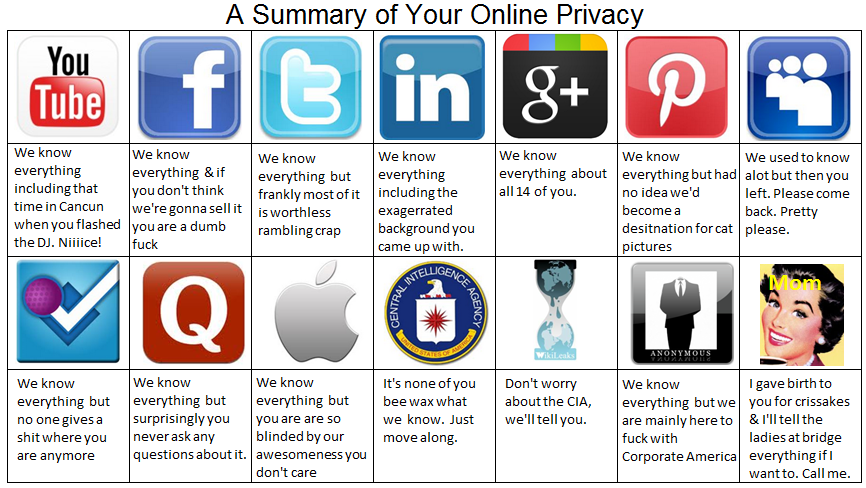
ONLINE PRIVACY

Every purchase made on the internet becomes a factoid in the history of a purchaser.  All of these factoids are accumulated and used by privately owned search-engine companies (like Google, AOL, and Amazon) to profile personal habits and preferences.  That information is sold to retailers for a fee.  Private retailers use that information to customize their sales pitches to consumers.  The retailer adjusts prices according to buyer’ purchasing and income profile. The search engine owner sells the retailer a first position on internet searches.  That first position increases probability that the profiled consumer will purchase from that retailer who has enough information to estimate how much you are willing to pay.  The public is being manipulated by retailers that know where you are, what you buy, and what you are willing to pay, or capable of paying.  Retailers who purchase data from search engine owners can estimate (if not know) your net worth, sexual orientation, educational achievement, and personal preferences.

The internet is a money machine for search-engine owners.  First, the search-engine owner raises revenue by selling personal information and then increases income by selling positions on search-engine advertising web pages.  The retailer benefits by having personal consumer information and a primary position on web-page searches.  It increases the retailer’s odds of being seen on a search and the consumer’s likelihood of purchase. 

CERBERUS, THE GREEK AND ROMAN 3 HEADED DOG THAT PROTECTS THE GATES OF HELL AND ALLOWS NO ESCAPE

The internet is a three-headed dog guarding the entrance to Sartre’s “No Exit” hell.

Schneier implies the consumer is being controlled by Goliath’s data collection.  The David in this hidden battle is the consumer with only hope and a sling shot to defend themselves.

The internet is a supersonic communications vehicle.  There is no waiting for the mail.  Instant messaging and the twitterverse are part of the spindling and mutilating process of the age.  Thinking before one speaks is yesterday’s reality.  Today, even in the race for President of the United States, speaking without thought is commonplace. 

TRUMP AND TWITTER

Internet access provides a forum to convince people of the corruption of society.  With the click of a mouse, fiction competes with truth to lead and mislead the public.  Publicly shared television news programs created by professionals are now created by anyone with access to the internet.  There is no incentive or structure to fact-check reports posted on the internet.

THE INTERNET RECRUITS VIOLENT EXTREMISTS

The internet is a worldwide recruiting vehicle for the extremes of society; some of which fly airplanes into skyscrapers.

Schneier suggests government intrusion into private lives has gone too far as a result of 9/11 and other terrorist events around the world.  Schneier implies that Edward Snowden is a hero; not a traitor. 

Snowden exposed the covert surveillance of the NSA (National Security Administration) in gathering information about private citizens without their knowledge; and without probable cause, or judicial consent.  Schneier argues that big data surveillance, by private enterprise and the government, have colluded to compromise freedom and control of the individual.

EDWARD SNOWDEN

EDWARD SNOWDEN IS A FORMER CIA EMPLOYEE THAT RELEASED CLASSIFIED INFORMATION ON GOVERNMENT SURVEILLANCE OF THE AMERICAN PUBLIC.

Schneier suggests that promulgation of fear, exacerbated by public access to the internet, causes the government to overreact.  He notes how the Prime Minister of Great Britain, David Cameron, stated that he did not want to be accused of not protecting British citizens because of lax surveillance of private citizens. 

This climate of fear pervades the politics of our time.  It is not the first time American abandoned the principles of privacy and freedom.  Schneier notes examples:

  • the “Alien and Sedition Act” passed by Congress and signed by President John Adams,
  • the incarceration of American Japanese during President Roosevelt’s administration, and the McCarthy witch-hunt for communists in the 1950 s. 

He suggests those were mistakes made then and the same mistakes are being made now.

Schneier offers solutions.  He acknowledges the necessity of surveillance but believes government oversight should be strengthened.  Government regulation should require judicial warrants for spying on an individual.  He argues that mass data collection is an unwarranted invasion of privacy that has little value in defeating terrorism.

GOVERNMENT REGULATION OF THE INTERNET AND ITS DIFFICULTIES

Only after the fact, did mass surveillance reveal the Boston marathon bombing perpetrators.  He suggests the same is true for the shoe bomber and the terrorist attack of the disability hospital in California.  Schneier suggests that consumers should know who in the private sector is accumulating their personal information.  Private citizens should have a right to opt out of private sector data collection by any internet user.  He believes a set of rules should be established for government to follow when seeking specific surveillance.  Schneier suggests those rules should be designed for transparency; legislatively adopted, and justified by legislators to their constituency.

Schneier suggests there is credible benefit in accumulating data about medical history of individuals but that this data should be encrypted in ways that limit access to those authorized by the individual.  In general, Schneier is a proponent of encryption to secure the privacy of individuals.

Schneier’s book aptly describes the threats and benefits of big data.  Terrorism is real but its threat cannot become an excuse for denying the privacy and freedom of the individual.  Terrorism is just one of many risks in life.

POLITICS AND ADMINISTRATION

Audio-book Review
By Chet Yarbrough

(Blog:awalkingdelight)
Website: chetyarbrough.blog

The Courage to Act: A Memoir of a Crisis and Its Aftermath

Written by: Ben S. Bernanke

Narrated by: Grover Gardner

Ben Bernanke (Author, Former Chairman of the Federal Reserve.)

THE FEDERAL RESERVE

Politics and administration is a marriage of necessity.  Ben Bernanke writes a “nuts and bolts version” of the role of the Federal Reserve in the United States during the economic crises of 2007.  Bernanke is the chairman of the Federal Reserve during the near collapse of the world economy.  The story Bernanke tells is consistent with most details revealed by Tim Geithner and Henry Paulson (the former Department of the Treasury Secretaries) during the worst part of America’s 2007-2008 global financial crises.

BREAD LINES IN NEW YORK 1933

BREAD LINES IN NEW YORK 1933

What Bernanke adds to Geithner’s and Paulson’s version of events is a more transparent understanding of how American politics and administration dealt with the greatest economic crises since 1929. These three managers, along with elected officials and other public administrators, cussed, discussed, agreed, and disagreed on actions taken to stabilize the American economy.  Without a level of cooperation between politics and public administration, it is entirely possible America would be in the middle of a second great depression.

THE BLACK SWAN

The mortgage crises of 2007 is a “Black Swan” event in American history.  A “Black Swan” is a metaphor for an event that is generally unforeseen that changes the direction of history.

The packaging of real estate and home mortgages of varying levels of security leads to the mistaken belief that housing and commercial land prices will always increase as the economy expands.  This false belief led to sales throughout the world of figurative IEDs (Improvised Explosive Devices”) that bankrupted individuals, corporations, and Nation-State economies.  The shock waves of these instruments of economic mass destruction continue to impact the world economy.

QUANTS

QUANTS–COMPUTER TECHNICIANS WHO CREATED MORTGAGE BACKED DERIVATIVES.

With the advent of computer technology, the added assets in derivative instruments became so complex that individual human judgement of value is clouded.

With each individual asset added to a conglomeration of houses, property, and/or stocks–value changes.  The change is meant to spread risk and increase the financial stability of combined assets.  However, as similarity of combined assets accumulate, the created aggregate becomes more (rather than less) vulnerable to market change.

MORTGAGE RATING COMPANY LOGOS

The rising risk of these combined securities is compounded by “independent” rating agencies.  If vulnerabilities are not clearly understood, sellers of these security conglomerations rely on ratings from analysts that underestimate volatility.  That misunderstanding is harmful, because both sellers and buyers are incentivised to buy and sell a security that is not clearly understood. 

When one of the derivative assets begins to lose value; particularly if the asset is related (like land and vertical construction), all assets in the packaged security are infected by loss of value.

Further, rating companies lose their objectivity.  They may be incentivized by the same companies they are evaluating; or they may be paid for their review productivity rather than the quality of their investigation. Greed takes over both buyer and seller.

Though this explanation of derivatives is undoubtedly too simply described in this review, it is shown in Bernanke’s, Paulson’s, and Geithner’s books to have been a proximate cause for the loss of trillions of dollars in the world economy.

What makes Bernanke’s book interesting is his explanation of how politics and public administration worked together to right America’s sinking economy.  Even today, recovery is not complete but the ship-of-state did not sink.  “Working together” is a qualified description of what happened based on Bernanke’s view.  There were bitter disagreements among elected and administrative agents that could only be resolved with an appreciation and exercise of politics.

Politics have become synonymous with lying and misrepresentation in the modern world.  Some say President Trump exemplifies that belief. 

Democrats were not listening to middle class America.  Politics represent the will of people who are being governed.  Without politics, the best intentions of administration devolve into ineffective and autocratic actions that fail to serve the needs of a country’s citizens.

Not to defend Trump, but his election is a consequence of ignoring the importance of politics in determining what is right or wrong in America’s democracy.

CHECKS AND BALANCES

On many occasions, Bernanke shows how elected officials remind administrators of the real-world impact of their policy actions.  The give and take of politics is the bridge between a bureaucratic idea and citizen impact. 

The Affordable Care Act is not perfect because of politics but modifications made are the result of political input from the constituents of American Democracy.

Those constituents are companies, professions, and individual citizens represented by elected officials who work with government agencies responsible for administration.  It is a messy process, but politics is a bridge between thought and deed that can only be replaced by autocratic dictatorship; i.e. a dictatorship that inevitably has unintended consequences; that ignores politics, and dictates what is good.

Parenthetically, the crises of 2007 is repeatable.  Today’s political climate is to deregulate the economy.  The political intent of deregulation is to unleash capitalism.  However, deregulation gives reign to both good and bad qualities of human nature.  As Mark Twain noted, history does not repeat, but it does rhyme.
The Federal Reserve, the Departments of Treasury, and America’s elected officials successfully saved America from a second Great Depression. 

It is politics; i.e., the political interface between President Bush, President Obama, Treasury Secretaries Paulson and Geithner, Federal Reserve Chairman Bernanke, Senators and Representatives of Congress, and the Supreme Court saved America.

SYMBOL OF WOMEN’S RIGHTS

Audio-book Review
By Chet Yarbrough

(Blog:awalkingdelight)
Website: chetyarbrough.blog

I Am Malala

Written by: Malala Yousafzai

Narrated by: Archie Panjabi

Malala Yousafzai may be narrowly identified as a symbol of women’s rights. That categorization is certainly earned but one is left wondering what will become of this young woman.

Malala lives the life of an old soul–advocating for equal rights at eleven years old and being nearly murdered at 15.   Malala will be 23 years old this July, 2020.

SWAT VALLEY IN PAKISTAN

As most know, Malala is shot in the head by two young Taliban who attacked her school bus in the Swat Valley of Pakistan.  We know they were Taliban because they acknowledged responsibility soon after the attack.

Miraculously, the bullet did not penetrate Malala’s brain but bone fragments from the shock of impact severed a facial nerve and temporarily paralyzed most of her motor functions.

BRAIN RULES

Dr. John J. Medina explains how unbelievably versatile the human brain is by recounting experiences of people who have been severely injured. 

Some recover many of the functions formally managed by parts of the brain that have been damaged.  John Medina notes that eyes do not see; i.e. the brain is the functional source of sight.  He explains the miraculous feats of the brain that manipulate the scenes of life.

Malala is rushed to a hospital in Pakistan and is saved from immediate danger by a competent Pakistani neurosurgeon.  The world is apprised of the attempted assassination and sends messages of support for Malala’s recovery.  In “I Am Malala”, a listener finds that after-care in Pakistan nearly ends Malala’s chance for survival.

MALALA (SHOT AND HOSPITALIZED)

MALALA (SHOT AND HOSPITALIZED)

Somewhat ironically, Great Britain comes to Malala’s aid.  The irony is in the long history of Great Britain’s colonization of Malala’s homeland.  There is historical justification for India/Pakistani’ ambivalence toward the West.  “I Am Malala” touches on that ambivalence.  However, Malala recognizes how important Great Britain’s assistance was in saving her life.

DRONE ATTACK

Malala reminds listeners of the lost lives of her countryman from American drone strikes and the invasion of Pakistani air space; including military action to kill Osama bin Laden. 

On the one hand, Malala shows embarrassment over bin Laden’s successful sanctuary in Pakistan; on the other, she implies America should have worked with the Pakistani government to capture the world’s most notorious terrorist.  There is a whiff of resentment in Malala’s depiction of the West’s treatment of her country but it is ameliorated by her principled stand for education, equal opportunity, and Pakistan’ sovereignty.

MALALA YOUSAFZAI (NOBEL PRIZE, SAKHAROVE PRIZE, SIMONE de BEAUVOIR PRIZE, NATIONAL YOUTH PRIZE WINNER)

MALALA YOUSAFZAI (NOBEL PRIZE, SAKHAROVE PRIZE, SIMONE de BEAUVOIR PRIZE, NATIONAL YOUTH PRIZE WINNER)

“I Am Malala” shows a young girl with great resilience and ambition.  One is left with the impression that Malala will return to Pakistan.  She will attempt to become a leader in her home country.

The message one gets from her book is that Pakistan is a great and beautiful country that can be a partner with the West as an independent and Islamic nation.  Malala is a politician in waiting.  One hopes for her success.

THE DARK SIDE

Audio-book Review
By Chet Yarbrough

(Blog:awalkingdelight)
Website: chetyarbrough.blog

Black Edge: Inside Information, Dirty Money, and the Quest to Bring Down the Most Wanted Man on Wall Street

Written by: Sheelah Kolhatkar

Narrated by: Kaleo Griffith

SHEELAH KOLHATKAR (Author,Staff writter at The New Yorker, covers Wall Street, Silcon Valley, and politics)

SHEELAH KOLHATKAR (Author,Staff writter at The New Yorker, covers Wall Street, Silcon Valley, and politics)

In “Black Edge” Sheelah Kolhatkar masterfully recounts the dark side of capitalism.  The American stock market is a tremendous source of energy (private money) for entrepreneurial capitalism.  At the same time, a poorly regulated stock market pollutes the capitalist ideal.

An obvious example is the stock market Ponzi scheme (a false enterprise offering high returns that really come from later investors) built by Bernard Madoff. He victimizes thousands of people around the world.

After many years of high living, Madoff is caught and presently serves a 150 year prison sentence.

Kolhatkar explains the meaning of black edge information.  She shows how the American stock market becomes a breeding ground for greed.  In the stock market, black edge information is personal notice to private investors of events that effect stock prices.  The information is proprietary and unknown to the public.  The private investor chooses to buy or sell stock before the public knows of an event that will affect stock prices. 

STEVEN A. COHEN (AMERICAN INVESTOR, HEDGE FUND MANAGER, BILLIONAIRE)

STEVEN A. COHEN (AMERICAN INVESTOR, HEDGE FUND MANAGER, BILLIONAIRE)

Steven A. Cohen develops an organization, SAC Capital, that revolves around gathering proprietary information before it is known by the public.  Cohen becomes one of the richest men in the world by using that information. He parleyed that wealth to purchase the New York Mets baseball franchise.

In one sense, this seems a “no harm, no foul” entrepreneurial benefit in capitalist society.  What Kolhatkar infers is that there is harm, and it is foul.  It breeds an organizational philosophy of abuse.  Cohen creates a “dog eat dog” organization that hires and fires people based on revenue made or lost on investment.  Individual traders are compelled to violate the law because they fear losing their high paying jobs. They see their chance of preserving their employment by soliciting black edge information that is not available to the public.  The only criteria for success is money; not family, not friendship, and not society.

One may argue, so what?  Cohen becomes a rich man and is known as a benefactor to charities of his choice based on his accumulated wealth.  Similar arguments can be made for the Koch brothers and their charitable contributions. 

Where is the harm?  Where is the foul?

CARING ABOUT OTHERS

The harm is somewhat inchoate in Kolhatkar’s story of Cohen’s view of life, but lack of care for others seems a part of the harm. 

Capitalism is an economic and political system for trade and industry that allows individuals rather than a collective determine one’s future.  The capitalist ideal’s upside is that people have more freedom.  The downside is unrestricted human nature becomes brutish and unfair.  Some form of governance is needed to provide rule-of-law.  Without rule-of-law, society devolves into an anarchy of individual interests.

THE KOCH BROTHERS (KOCH INDUSTRIES CORPORATE LEADERS)

THE KOCH BROTHERS DAVID (NOW DECEASED) ON THE LEFT AND CHARLES ON THE RIGHT ARE CORPORATE LEADERS WHO SUPPORT THE PRINCIPLE OF LESS GOVERNMENT REGULATION.

Capitalism is not the problem in America.  It is the failure of government agencies, the President, and congress to protect the Health, Education, and Welfare of the people. The simple argument of less government is not the answer.

Lives were ruined by Cohen; i.e. some of his closest associates are abandoned, traders operating as information gophers break the law.  Cohen focuses on making money because it offers power and prestige.  The gap between rich and poor widens because of Cohen’s philosophy of life.  In the end, Cohen is not found guilty of insider trading, but many of his employees lives are ruined.

The story of Steven Cohen is the story of a Trump presidency in the United States.  America loses its way when capitalism is only seen through the prism of wealth.  The “Get out of my way” philosophy of Cohen and Trump are cut from the same cloth.  The difference is–one is more financially successful than the other.

GOVERNMENT

The purpose of the American government is to protect the public through rule-of-law. 

Every day, we see a President denying immigrants the chance for becoming a part of an American Dream that made America great. We see an Education Secretary intent on dismantling our public education system.  We see a congressional and departmental effort to dismantle health care and welfare.  We see Americans being discriminated against because of their sex, race, and religion.

HUMAN NATURE HANDCUFFS

Human nature is not self-regulating. 

Unregulated human nature is brutish.  The checks and balances of the American government are founded on that truth.  When the American government fails to exercise its mandate for the health, education, and welfare of the nation, it diminishes capitalism.  It diminishes a way of life cherished by most Americans.  People like Steven Cohen and Donald Trump are guilty of being human and unruled.

LAUNCHING DRAGONS

Audio-book Review
By Chet Yarbrough

(Blog:awalkingdelight)
Website: chetyarbrough.blog

Elon Musk: Tesla, SpaceX, and the Quest for a Fantastic FutureELON MUSK

Written by: Ashlee Vance

Narrated by: Fred Sanders

ASHLEE VANCE (AUTHOR, JOURNALIST)

Ashlee Vance writes about launching dragons in a biography of Elon Musk.  Like the mythical fire breathing beast that destroys civilizations, Musk’s fire-breathing ambition levels two of the most powerful organizations in the world; e.g. the auto industry and government bureaucracy.

TESLA AND SOLAR CITY (ELON MUSK)

Tesla Motors is the first automobile manufacturer to receive a unanimous vote as the best car of the year.  SpaceX is the first private rocket manufacturer to successfully transport satellites and cargo into space.  The principal behind these extraordinary feats is Elon Musk, a combination of the fictional Tony Stark and a real Thomas Edison.  Not since the 1920s has anyone successfully launched a new automobile manufacturer.  Never in history has a private company launched rockets into space to service the international space station.

TESLA'S SpaceX RE-LAUNCH ROCKET
TESLA’S SpaceX RE-LAUNCH ROCKET

Vance shows that Musk has an optimistic vision of the future of America and the world.  His willingness to risk everything for alternative energy sources, and reduction of carbon-based energy consumption are astounding in the recurrent era of capitalist greed.  Musk’s focus is on transition from traditional industrial methods of production to technological innovation.  His methodology is a combination of traditional cost-based negotiation, vertical business integration, and hard work.  The methods are not new but Musk’s extraordinary intelligence and his personal commitment are reminiscent of great inventor/innovators in history.

ELON MUSK ROLLS THE DICE AGAIN BY PURCHASING SOLAR CITY, THE LARGEST SOLAR CONVERSION COMPANY IN THE U.S.

Vance clearly illustrates that Musk is not perfect but his story will eventually, if not now, be recorded as historically important.  Musk exposes the lie of Trump’s vilification of immigrants.  Musk is born as a South African who comes to America through Canada.  He becomes an American job producer and manufacturer when both are sorely needed to revivify the, largely mythical, American dream.  Musk gives America hope.

Musk faces many obstacles in his life; just as all humans do.  One advantage for Musk is in being white; oh, and being blessed with a prodigious memory, extraordinary cognitive ability, and an immense drive to succeed.  Musk relentlessly pursues what he believes in.  Fortunately, Musk’s natural advantages work toward the best interests of humanity; i.e. a cleaner environment and exploration for colonization of other worlds.

DONALD TRUMP (REPUBLICAN NOMINEE FOR PRESIDENT OF THE U.S. 2016)Trump’s withdrawal from the Paris Climate Accords is reminiscent of ignorant industrial luddites.  Innovators like Musk pursue an opportune future while Trump and others pursue the mythology of the past.  Both Musk’s and Trump’s errors are human, but their consequences are hugely different.  Vance’s biography of Musk shows releasing dragons can benefit society.  Trump’s dragons are only likely to harm society. In history, Musk will be remembered fondly; Trump will be recalled sadly.

TIME IS A MYSTERY

Audio-book Review
By Chet Yarbrough

(Blog:awalkingdelight)
Website: chetyarbrough.blog

Why Time Flies

Written by: Alan Burdick

Narrated by: George NewbernWHY TIME FLIES

ALAN BURDICK (AUTHOR, EDITOR FOR THE NEW YORKER)

Time is a mystery.  Alan Burdick speculates on a definition of time in “Why Time Flies”.  In some respects, Burdick’s story is enlightening; in others, time escapes his and an audience’s understanding.

Time appears to be a construct of mind and consciousness, both of which are equally mysterious.  No one really knows what mind and consciousness are but recent experiments suggest they are a state of being that offers versions of reality; i.e. not objective truth but subjective understanding.  Experiments show that the mind deconstructs what we see and reassembles it to have meaning in an individual’s consciousness.

MIND DECONSTRUCTION AND RECONSTRUCTION OF EVENTS

TIME SEEMS TO SLOW DOWN WHEN IN A CAR CRASH
TIME SEEMS TO SLOW DOWN IN A CAR CRASH

Burdick shows, through recounted experiments, that time does not slow down when we experience traumatic events like a car crash or a bungee jump.  What our mind does is reconstruct an accident or bungee jump through a consciousness that makes it seem time slows down.  Our consciousness remembers or manufactures events as though they occurred in slow motion; i.e. we remember seeing our car flipping over, the top being crushed, and our effort to use a seat belt to steady our movements.  All of this happens within a minute but we remember it in detail as though a slow-motion camera records the accident.

TIME FLOWS IN ONE DIRECTION (You cannot unbreak an egg.)
TIME FLOWS IN ONE DIRECTION (You cannot un-break an egg.)

Burdick notes that time only flows in one direction.  As common experience tells us, we cannot un-break an egg.  Life begins young and grows older.  Through manipulation of images, we can reverse time but we know it is an illusion.

Various experiments show that time can be slowed down as speculated by Einstein, and later proved by others.  The slowing of time is due to the speed of objects in relation to the unchanging and constant speed of light.   Because a human in space is traveling at a faster speed ( in relation to the unchanging speed of light), he/she ages less than a person on earth.  But even in Einstein’s theory, time is never shown to go backward.  That is why time travel to the past is considered impossible.

Burdick notes that time is always now.  It has no past.  It has no future.  Time is “in the moment”.  Burdick’s recognition is not helpful in understanding time.  Time is never clearly identifiable because it is either becoming a history or a future.  How does one define a moment?  It seems to be something between history and future but what is time’s physical marker?  Maybe its consciousness but no one knows what consciousness is and every person’s consciousness is personal and subjective; not universal.

At best, Burdick’s story only deepens the mystery of time.

EVIDENCE

Audio-book Review
By Chet Yarbrough

(Blog:awalkingdelight)
Website: chetyarbrough.blog

 The TrespasserThe Trespasser

Written by: Tana French

Narrated by: Hilda Fay

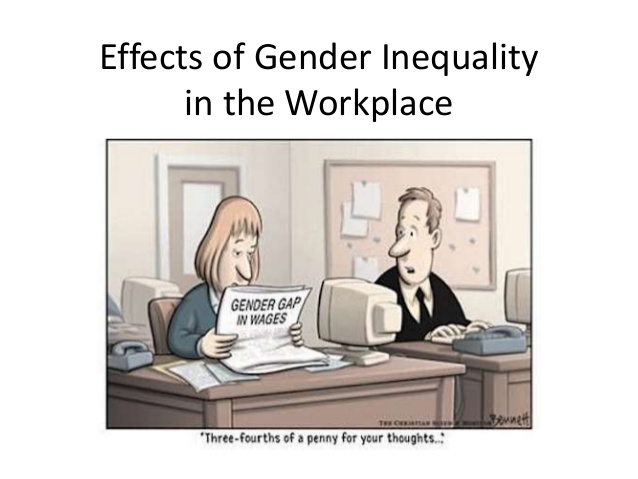
women in man's world
French’s “The Trespasser” offers a glimpse of what it must be like to be a woman in a man’s world.

TANA FRENCH (NOVELIST, ACTRESS BORN IN VERMONT, LIVING IN DUBLIN)

Tana French shows that evidence is the fundamental proof of guilt or innocence.  French’s “The Trespasser” offers a glimpse of what it must be like to be a woman in a man’s world. To be a female detective on a murder squad is a perfect venue for exploring the perfidy of men in power positions.

French’s story shows how power distorts the relationship between the sexes.  In a culture that reinforces male dominance, women use the same tools as men to acquire power; however, with a substantive difference.  Intellect, sex, and prejudice demean women while men reap reward and praise for the same qualities.

BRAGGING ABOUT SEXUAL ASSAULT

BILL COSBY TRIAL
BILL COSBY TRIAL

In modern times, the currency of society’s male domination is apparent in the trial of Bill Cosby.  Regardless of the accuracy of Cosby’s only eligible accuser, 40 other women have independently accused him of sexual impropriety.  Though testimony of these 40 women is not admissible as evidence, their testimony strongly smells of Cosby’s guilt.   If guilty, Cosby represents the guilt of society.  An innocent verdict is no absolution for Cosby but it is a measure of American society’s acceptance of a President’s locker room talk on a bus and behavior in a women’s dressing room.

FEMALE POLICE DETECTIVE
FEMALE POLICE DETECTIVE (In French’s story Conway presumes every male in her squad, and at one point even Moran, plot against her success. This presumption is reinforced by Conway’s experience as a police officer and detective.)

French creates a mystery solved by Detective Antoinette Conway with the help of her partner, Stephen Moran.  Conway presumes every male in her squad, and at one point even Moran, plot against her success. This presumption is reinforced by Conway’s experience as a police officer and detective.  Her gathered prejudice against all men (or at least those in her squad) nearly derails her dogged search for the murderer of a young woman.  French reveals how Conway overcomes her personal prejudice by accepting the truth that men and women are equally good and bad.

A father abandons his wife and daughter.  The abandoned wife seeks answers to the whereabouts of her husband.  The Missing-Persons’ department of the police is asked to investigate.  The father is reported as having died, after living many years with another woman.  The mother dies. The daughter is obsessed with the investigating officer of the Missing Persons’ department because of his ambiguous relationship with her mother.  The daughter plans an elaborate ruse to meet the investigating officer and find out more about her father.  The daughter becomes entangled in a web of relationships; i.e. the Missing-Persons’ officer (who is now the head of a murder department), a close female friend, and a possible new boyfriend.  The daughter is murdered.  Conway’s task is to find the murderer.

In French’s story, the search for suspects, and resolution of the case, are introduced to Conway’s investigation of the murder.  The substance of the story shows women as intellectually strong, and mentally tough as men.  Of course, history, as well as this fictional story, shows many women are as intellectually strong and mentally tough as men; e.g.  Cleopatra, Sojourner Truth, Indira Gandhi, Golda Meir, Benazir Bhutto, Malala Yousafzai, and others.

FAMOUS WOMEN IN HISTORY
FAMOUS WOMEN IN HISTORY (History, as well as this fictional story, shows many women are as intellectually strong and mentally tough as men; e.g.  Cleopatra, Sojourner Truth, Indira Gandhi, Golda Meir, Benazir Bhutto, Malala Yousafzai, and others.

French’s story brings the inequality of human life into the day-to-day life of today’s women.  Conway is characterized as an intelligent, determined, and independent murder detective.  Conway is not perfect.  She carries her own prejudices, but she focuses on evidence to prove her murder cases.