PRACTICAL PHYSICS

Audio-book Review
By Chet Yarbrough

(Blog:awalkingdelight)
Website: chetyarbrough.blog

Physics for Future Presidents: The Science Behind the Headlines

PHYSICS FOR FUTURE PRESIDENTS

4 Star Symbol

By Richard A. Muller

Narrated by Peter Larkin

RICHARD A. MULLER (PROFESSOR OF PHYSICS @ UNIVERSITY OF CALIFNIA, BERKELEY)
RICHARD A. MULLER (PROFESSOR OF PHYSICS @ UNIVERSITY OF CALIFORNIA, BERKELEY)

“Physics for Future Presidents” suggests understanding of practical physics is critical for future Presidents.  Richard Muller’s argument is that Presidents need to know some physics to comprehend the utility of everything from energy, to manned space flight, to satellite surveillance, to terrorist use of nuclear bombs.  Muller is not arguing that future Presidents need to understand the science of physics but the practical limitations of manned space flight, carbon-based energy, satellite intelligence, and weapons of mass destruction (WMD).

Muller begins his book with the modern world’s effort to understand and contain terrorism.  Muller’s book seems apropos based on President Trump’s effort to limit science research, discount CIA and FBI intelligence, and denuclearize North Korea.

TRUMP AND KIM MEETING
President Trump’s effort to limit science research, discount CIA and FBI intelligence, and denuclearize North Korea.

Muller explores the possibility of a terrorist organization building a nuclear bomb and detonating it in the middle of an American City.  He looks at the possibility from three perspectives.  One, difficulty in acquiring fissionable material; two, difficulty of building a nuclear device and three, difficulty in delivering a weapon of mass destruction to a desired location.

Surprisingly, Miller suggests a greater danger is terrorist attack by private planes, loaded with highly flammable fuel.  Or, for a terrorist organization to use chemical and biological agents that directly or indirectly infect population centers.

CHEMICAL ATTACKS
Surprisingly, Miller suggests a greater danger is terrorist attack by private planes, loaded with highly flammable fuel.  Or, for a terrorist organization to use chemical and/or biological agents that directly or indirectly infect population centers.
9.11.01TRADE CENTER ATTACK
Muller reasons a future terrorist attack (with 1000s killed) will be like 9/11, but with a private plane filled with fuel (not a nuclear bomb) flown into a major entertainment event.

Miller believes practical physics will determine the next world terrorist attack.  Miller argues that the simplest plan will have the greatest impact.  (Of course, there is also the implied psychology of terrorism.)  Muller reasons a future terrorist attack (with 1000s killed) will be like 9/11, but with a private plane filled with fuel (not a nuclear bomb) flown into a major entertainment event.

There are a number of counter-intuitive insights in “Physics for Future Presidents”.  Muller believes manned space flight is a waste of money.  He argues that most of the greatest innovations in science have come from unmanned space flight.  Weather satellites, spy satellites, entertainment satellites, global positioning satellites, drones, exploration of planets and the solar system have all come from unmanned space flight.  Muller believes there is a time for manned space flight but not now.  It is too dangerous and produces little new-science.  He implies America should primarily invest in unmanned space flight.

CURIOSITY--FIRST -SELFIE- IN 2015 ON MARS
CURIOSITY–FIRST -SELFIE- IN 2015 ON MARS (Muller believes there is a time for manned space flight but not now.  It is too dangerous and produces little new-science.  He implies America should primarily invest in unmanned space flight.)
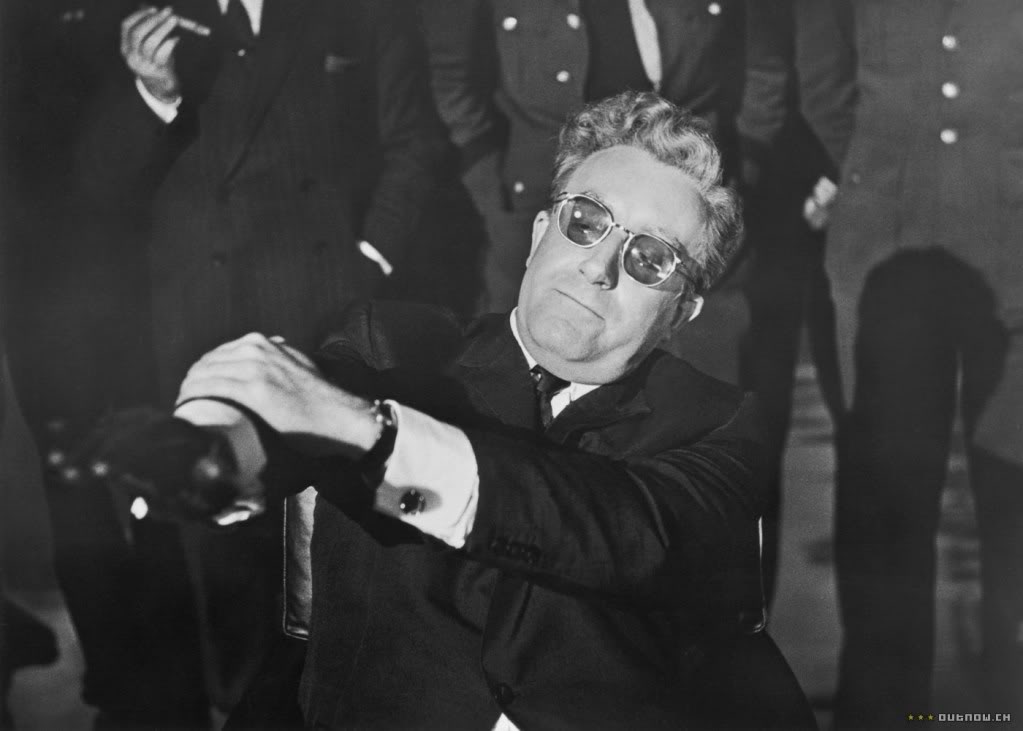
DR. STRANGLOVE
Dr. Strangelove- Richard Muller, at times, seems to stand at the side of fictional character Dr. Strangelove.(Movie titled “How I Learned to Stop Worrying and Love the Bomb)

Richard Muller, at times, seems to stand at the side of fictional character Dr. Strangelove.  He describes historical information about radiation poisoning from nuclear bombs and accidents.  Muller notes that statistical deaths from war (the Nagasaki and Hiroshima bombing), Three Mile Island, and Chernobyl show that deaths from nuclear radiation is small in comparison to terrorist events initiated by simple, practical, and conventional physics.

Muller argues that nuclear power can be used as a fail-safe source of energy by using the latest technology for nuclear power plants.  The latest technology (actually first used in the 1960s by Germany) is a pebble bed reactor (PBR).  It is considered safe because it does not rely on water cooling of the nuclear core in the event of an accident.

PEBBLE BED REACTOR IN WEST GERMANY
PEBBLE BED REACTOR IN WEST GERMANY – Muller argues that nuclear power can be used as a fail-safe source of energy by using the latest technology for nuclear power plants.  The latest technology (actually first used in the 1960s by Germany) is a pebble bed reactor (PBR).  It is considered safe because it does not rely on water cooling of the nuclear core in the event of an accident.
YUCCA MOUNTAIN NUCLEAR WASTE DEPOSITORY NEAR LAS VEGAS, NEVADA
YUCCA MOUNTAIN NUCLEAR WASTE DEPOSITORY NEAR LAS VEGAS, NEVADA (Richard Muller believes Yucca Mountain is an adequately safe repository for nuclear waste that should be reopened.)

This is unlikely to be a popular book in Las Vegas, Nevada. Among other controversial subjects, Richard Muller believes Yucca Mountain is an adequately safe repository for nuclear waste that should be reopened.  His argument largely rests on the science of probability.  Muller infers that natural radiation in Colorado is as toxic as the probability of radiation leaks from stored nuclear waste at Yucca Mountain.

Muller argues that revision of nuclear construction standards in the United States would make construction of pebble bed reactors less expensive than conventional American nuclear facilities.  The added benefit is a safer energy source that reduces the need for carbon based energy supplies that increase global warming.  A large part of Muller’s argument for the use of more nuclear power is based on the generally accepted scientific belief that global warming exists and is most likely caused by human activity.

GLOBAL WARMING
A large part of Muller’s argument for the use of more nuclear power is based on the generally accepted scientific belief that global warming exists and is most likely caused by human activity.

Muller spends a great deal of time explaining that global warming is not a 100% certainty but, in probability terms, is highly likely and largely related to carbon-based energy use.  He notes that use of carbon-based energy is likely to increase with China and India’s continued economic growth.  Muller creates a sense of urgency in creating other sources of energy.  He strongly urges increasing motor vehicle mileage requirements but questions the viability of battery operated vehicles.  Muller believes the costs of battery replacement will drive consumers back to carbon-based energy models.

ELON MUSK ROLLS THE DICE AGAIN BY PURCHASING SOLAR CITY, THE LARGEST SOLAR CONVERSION COMPANY IN THE U.S.
ELON MUSK ROLLS THE DICE AGAIN BY PURCHASING SOLAR CITY, THE LARGEST SOLAR CONVERSION COMPANY IN THE U.S.–Muller sees potential in solar and wind energy production but believes conservation will do more short-term good than any new source of energy.

Muller sees potential in solar and wind energy production but believes conservation will do more short-term good than any new source of energy.  He clearly sees that the cost of energy is the primary driver of technological innovation.  As long as oil and coal are less expensive than other sources of energy, they will remain the primary source of power.  With that realization, Muller insists on technological innovation in conservation because it motivates the consumer to become a part of the energy-crises’.  Consumer’ participation is guaranteed by savings received from use of more energy-efficient devices.

The key to the world’s future is energy.  Muller believes the short-term solution is conservation.  He believes long-term solution revolves around nuclear fission and fusion.  Fusion is a longer term prospect but offers an infinite source of energy.  Fission is shown to work now, with probabilities of failure that can be improved upon.

This circles back to the critical importance of storing nuclear waste.  Muller notes that the fragmented system of nuclear storage in the United States is a bigger risk to the environment than having it located in a limited number of specifically designed storage locations.  Yucca Mountain fits Muller’s criteria for safe storage of nuclear waste.  He acknowledges that nuclear accidents may occur but the probability of an accident at Yucca Mountain is less than the probability of accident at other relatively unsecured and fragmented sites.

PROBABILITYThe physics that Muller insists Presidents must understand is that scientific proof is a matter of probability; not absolute certainty.  Muller warns Presidents to not be misled by cherry-picking fact finders that have objectives that are not related to practical physics.  Even if there is no certainty in science, knowing probabilities offer a basis for informed decision.


TODAY’S LUDDITES

Audio-book Review
By Chet Yarbrough

(Blog:awalkingdelight)
Website: chetyarbrough.blog

The Glass Cage-Automation and Us

By: Nicholas Carr

Narrated by: Jeff Cummings

NICHOLAS G. CARR (AMERICAN WRITER-FORMER EDITOR OF HARVARD BUISNESS REVIEW)

NICHOLAS G. CARR (AMERICAN WRITER-FORMER EDITOR OF HARVARD BUSINESS REVIEW)

The Glass Cage, written by Harvard alumnus Nicholas Carr, ironically places him in the shoes of an uneducated English textile artisan of the 19th century, known as a Luddite.

Luddites protested against the industrial revolution because machines were replacing jobs formerly done by laborers.  Just as the Luddites fomented arguments against mechanization, Carr argues automation creates unemployment and diminishes craftsmanship.

WORKMEN TAKE OUT THEIR ANGER ON MACHINES DURING THE INDUSTRIAL REVOLUTION. (Just as the Luddites fomented arguments against mechanization, Carr argues automation creates unemployment and diminishes craftsmanship.)

Workmen take out their anger on the machines

Carr carries the Luddite argument a step further by inferring a mind’s full potential may only be achieved through a conjunction of mental and physical labor.  Carr posits the loss of physical ability to make and do things diminishes civilization by making humans too dependent on automation.

There is no question that employment was lost in the industrial revolution; just as it is in the automation age, but jobs have been and will continue to be created as the world adjusts to this new stage of productivity.

INDUSTRIAL REVOLUTION

Unquestionably, the advent of automation is traumatic but elimination of repetitive industrial labor by automation is as much a benefit to civilization as the industrial revolution was to low wage workers spinning textile.

The Covid19 pandemic of 2020 will accelerate world’ transition to automation. Though this book is written earlier than the pandemic’s economic consequence, corporations are reevaluating the necessity for office buildings to conduct their business. More and more employees will work from home.

Employment adjustment is traumatic.  The trauma of this age is that work with one’s hands is being replaced by work with one’s brain.  The education of the world needs to catch up with socio-economic change; just as labor did in the 20th century.  To suggest humans do not learn when they cannot fly a plane, build a house, or construct an automobile with their own hands is a specious argument. 

Houses and cars have not been built by one person since humans lived in caves and iron horses replaced carriage horses.  Houses and cars were built by teams of people who worked with their hands but only on specific tasks.  Those teams of people were managed by knowledge workers.

ASSEMBLY LINE WORK

Service and education for society are the keys to the transition from industrialization to automation.

QUANTS

Automation of tasks reduces the mind numbing, low pay work of laborers.  Automation turns manual labor into the development and education of people who design hardware and software to execute tasks that result in more safely flown planes, new houses, new cars, new refrigerators, so on and so on.

Carr suggests that airplane pilots should be given more control over automated planes they fly despite the facts he quotes that clearly show plane crashes kill fewer people today than ever in history.  They are bigger, faster, and more complicated to fly.  The argument that pilots need to learn how to fly a jumbo jet when automation fails is like telling a farmer to pull out his scythe to harvest the wheat because the thresher quit working.

Carr’s argument is that pilots have forgotten how to fly because automation replaced their skill set.  To state the obvious, planes are not what they were 100 or even 10 years ago.

WRIGHT UNPOWERED AIRCRAFT

One might argue that Boeing’s 737 Max mistakes are evidence that Carr is correct in suggesting planes have become too complicated, but it ignores the reality of mistakes have always being made by humans. Humans are preternaturally motivated by self-interest.

Boeing’s leaders made mistakes in not fully analyzing and disclosing risks of 737 changes, and in not adequately training airline pilots on the safety features of the plane.

Carr raises a morality argument for not saving life when an automated machine makes a decision rather than a human being.  One can suggest an example of how an automated machine is more likely to make the right decision than a human.

For example, presume a driver-less car is programmed to save its occupant when an injured bicyclist is laying in the street around a blind curve. A fast moving automated car with a family inside, with mountain cliffs on both sides of the road, will drive over the bicyclist without conscience.  The bicyclist is dead but the car passengers are alive.   If the car is driven by a person, both the cyclist and the family are likely dead. 

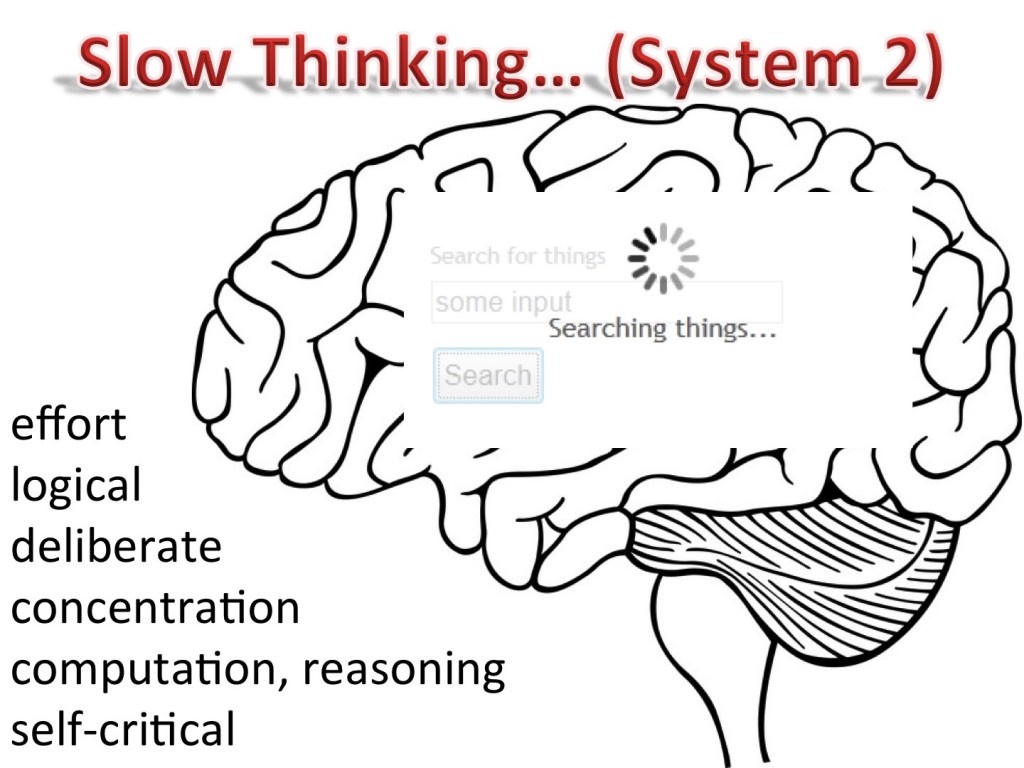
THINKING SLOW
Carr’s argument is that humans need to make their own intuitive decisions.  As pointed out by Daniel Kahneman in “Thinking Fast and Slow”, the primary “think fast” mode in humans is intuition, which is often wrong.

Without doubt, many automation errors (e.g., the 737 Max) have been and will be made in the future, but to suggest automation is not good for society is as false as the Luddites arguments about industrialization.

This period of the world’s adjustment is horrendously disruptive.  It is personal to every parent or person that cannot feed, clothe, and house their family or themselves because they have no job.

Decrying the advance of automation is not the answer.  Making the right political decisions about how to help people make job transitions is what will advance civilization.

AI VS. HUMAN INTELLIGENCE

Audio-book Review
By Chet Yarbrough

(Blog:awalkingdelight)
Website: chetyarbrough.blog

The Island of Knowledge: The Limits of Science and the Search for Meaning 

THE ISLAND OF KNOWLEDGE

Written by: Marcelo Gleiser 

Narration by:  William Neenan

MARCELO GLEISER (BRAZILIAN PHYSICIST AND ASTRONOMER, PHYSICS AND ASTRONOMY PROFESSOR AT DARTMOUTH)

MARCELO GLEISER (AUTHOR, BRAZILIAN PHYSICIST AND ASTRONOMER, PHYSICS AND ASTRONOMY PROFESSOR AT DARTMOUTH)

Marcelo Gleiser believes an A.I. singularity predicted by Ray Kurzweil is a myth of science that will be stranded on “The Island of Knowledge”.  His point is that the nature of science, human cognition, and quantum physics make computers incapable of superseding or equaling human intelligence.  The horizon of the unknown will always be present for human beings, even with computational advances.  Gleiser implies that the computer will only be a tool of humankind to explore the unknown.

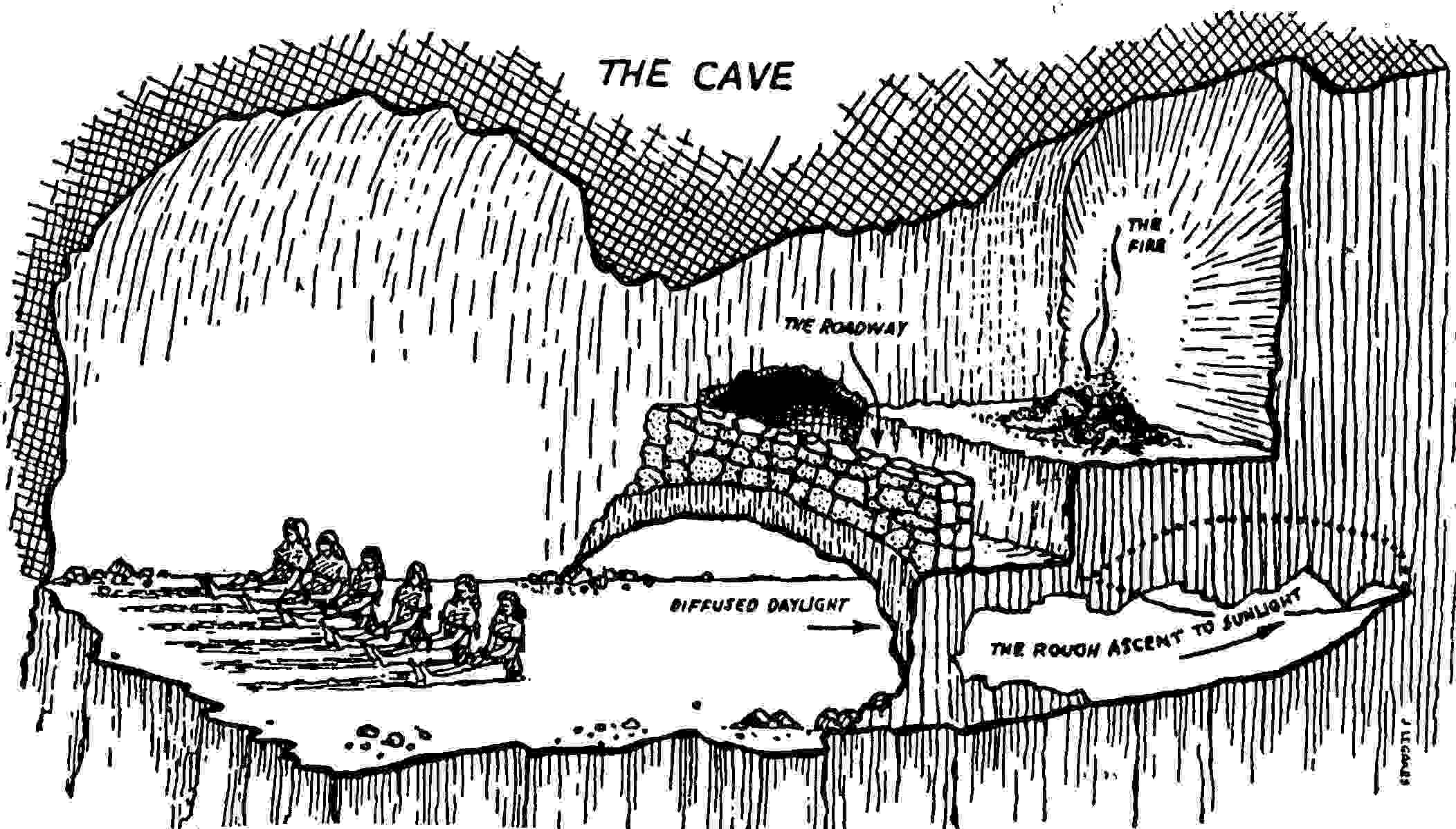
Gleiser notes the nature of science is to explain natural phenomena. Sciences’ explanations create an island of knowledge that is like Plato’s Socratic cave; i.e. a cave for humanity that only reveals shadows of reality.

PLATO'S CAVE

PLATO’S CAVE (Gleiser suggests Sciences’ explanations create an island of knowledge that is like Plato’s Socratic cave; i.e. a cave for humanity that only reveals shadows of reality.

Human beings cannot leave the cave because every scientific discovery only leads to another question about shadows that represent the real thing.  Gleiser prepares one for that conclusion by recounting the history of great scientists like Isaac Newton, James Maxwell, Max Planck, Earnest Rutherford, Albert Einstein, Edwin Schrodinger, Werner Heisenberg, Paul Dirac, and others.  Each of these scientists contributes to “The Island of Knowledge” but each raises more questions about phenomena that remain shadows of nature’s reality.

Gleiser acknowledges that Newton and Einstein sharpen shadowy outlines of nature’s reality but each fails to discover absolute truth.  Newton misses the fundamental truth of time.  Einstein misses the truth of quantum physics.  Newton’s time is relative and Einstein’s presumed certainties are probabilities.

history

Gleiser argues that human cognition is limited by “The Island of Knowledge” because cognition is influenced by the mind’s senses.    For example, history is reported with facts that are selected by the historian.  The facts may be accurate but not all facts of the past are reported and thereby history becomes a shadow of the truth.

In science, experiments do not prove truth; i.e. experiments only eliminate false positives, leaving only another experiment to disprove another presumed truth.  Experiments theoretically get one closer to a truth but the truth remains a shadow because the new truth has to be explored by further experiment.  As Karl Popper notes: “In so far as a scientific statement speaks about reality, it must be falsifiable; and in so far as it is not falsifiable, it does not speak about reality.”

KARL POPPER (1902-1994)

KARL POPPER (1902-1994) Popper suggests there are no verifiable truths; only probabilities.  If so, A.I. (at least) has the potential for improving the odds of factual truth.

THE HOLY GRAIL

Gleiser implies the idea of a Turing Computer that can know the origin of life is as specious as belief in the myth of the Holy Grail.  Gleiser explains that artificial intelligence will never supersede or equal human intelligence because natural phenomena are found to be probabilistic and not defined by yes and no, or ones and zeros.  Artificial Intelligence is a misnomer.

ARTIFICIAL INTELLIGENCE

Finally, Gleiser suggests artificial intelligence will never supersede or equal human intelligence because natural phenomena are found to be probabilistic and not defined by yes and no, or ones and zeros.  Artificial Intelligence is a misnomer in Gleiser’s opinion.

AI is a man-made construct, subject to “The Island of Knowledge” created by human beings.  Gleiser argues there are serious dangers in expansion of AI because it reduces complexity to yes and no answers.  One wonders if Gleiser takes into consideration experiments being conducted with quantum computing.  These experiments are meant to create a neural network that emulates human consciousness but with improved probabilistic calculations.

Gleiser’s implication is that a computer that programs itself becomes a Frankenstein; not a sentient being.  He argues that A.I. creations are likely to disrupt, if not destroy, human life.  He believes A.I. will always be based on shadows of unverifiable truths.

Gleiser implies the idea of a Turing Computer that can know the origin of life is as specious as belief in the myth of the Holy Grail.  He may be right.  Although, Popper suggests there are no verifiable truths; only probabilities.  The Holy Grail is a myth because nothing can ever be absolutly proven.  If so, A.I. seems to have the potential of improving the odds of factual truth.

Gleiser touches on the mysteries of “spooky action at a distance” which challenges Einstein’s dictum that nothing exceeds the speed of light. Gleiser recounts experiments that prove “spooky action at a distance” are real.  

Experiments with “spooky action at a distance” open a new field of inquiry.  This and “string theory” are examples of challenges to belief that human beings will ever have a theory of everything.  A.I. seems a credible tool for further experimentation. whether it is a “Frankenstein” or not. 

Gleiser believes “The Island of Knowledge” is as close as humanity will ever get to a theory of everything and it will always be a shadow of nature’s truth.  Karl Popper would agree.  Gleiser is saying pursuit of truth is important but precise truth is unattainable.  He argues that a final truth will never be found because discoveries of science will only lead to more questions, more experiments, and better tools of measurement. Nature’s truth will always be beyond human understanding; i.e. at best, nature’s truth will only be shadows of reality with sharper outlines.  Humanity may not be capable of escaping the cave to discover the truth of life.

Gleiser is quick to point out that his concept of the human island of knowledge is not meant to discourage scientific exploration.  He believes human beings have an innate desire to understand nature.  Life experience suggests wanting to understand nature is true of all cultures because humanity desires immortality. 

Humans want to think of themselves as the center of the universe; as false as that may be.

OTHER gods

Audio-book Review
By Chet Yarbrough

(Blog:awalkingdelight)
Website: chetyarbrough.blog

The Attention Merchantsthe attention merchants

By Tim Wu

Narrated by Marc Cashman

TIM WU (AUTHOR, PROFESSOR OF LAW AT COLUMBIA )

Not since “The Powers That Be” (published in 1979) has there been a better history of the media industry.  Tim Wu is heir to David Halberstam.  First there were newspapers, then radio, then television, and now the world-wide web.  Wu offers a modern vision of media’s impact on society in “The Attention Merchants”.

Gone are many of the famed “…Attention Merchants” like Bill Bernbach, Neil French, and David Ogilvy.   They were the early influencers; i.e. the copy writers, and agents that created consumer advertising for Sulzberger, Chandler, Hutchins, Paley, and Luce.  They worked for founders of some of the most influential newspaper, radio, television and magazine outlets of the 19th and 20th centuries. They were the “gods” of a newly formed consumer society. Consumers read, watched, and listened to pitches for everything from votes to vitamins to the latest model Cadillac.  Wu shows pitches remain the same, but methods have changed.

DAVID HALBERSTAM'S SEMINAL WORK ON THE MEDIA INDUSTRY (PUBLISHED 1979)
DAVID HALBERSTAM’S SEMINAL WORK ON THE MEDIA INDUSTRY (PUBLISHED 1979)  Gone are many of the famed “…Attention Merchants” like Bill Bernbach, Neil French, and David Ogilvy.  They were the “gods” of a newly formed consumer society. Consumers read, watched, and listened to pitches for everything from votes to vitamins to the latest model Cadillac.

Today’s social, political, and economic consumers are recorded, manipulated, spindled, and controlled by “other gods”.  Modern “…Attention Merchants” are internet entrepreneurs like Amazon’s Jeff Bezos, Google’s Larry Page & Sergey Brin, Microsoft’s Bill Gates & today’s CEO Satya Nadella, Apple’s (now deceased) CEO, Steve Jobs & today’s CEO Tim Cook, Facebook’s Mark Zuckerberg, and Netflix’s Reed Hastings. Television, newspapers, radio, and magazines still capture our attention but not like past “…Attention Merchants”.  Old media are still with us, but computer screens and mobile phones have joined the mix.  Wu shows how the public’s decisions have become less volitional, more manipulated, and addictive as www. sites came into being and technology matured.

INTERNET LOGO
Old media is still with us, but computer screens and mobile phones have joined the mix.  Wu shows how the public’s decisions have become less volitional, more manipulated, and addictive when www. came into being and technology matured.

MARLBORO MAN
Neither smoking or “free” access to information is without harm or cost.  The Marlborough man is dead, and “free” internet information is not free.

Wu recounts how advertising became a critical part of early media’s power, influence, and profit.  Just as advertisers promoted false benefits of smoking in the 20th, internet advertisers promote false benefits of free access to information and entertainment in the 21st century.  Neither smoking or “free” access to information is without harm or cost.  The Marlborough man is dead, and “free” internet information is not free.  “Fake news” has always been in the “…Attention Merchant’s” tool box but Wu shows that a new dimension is created with the rise of “free” information technology.

The internet not only informs the public, i.e., it distracts society, distorts facts, and reveals intimate details of personal lives. Internet users become products, rather than just consumers. Information gathered on consumers is provided to government and sold to private enterprise.

More ominous than media distortion by capitalist manipulators is government-controlled media that distorts truth to justify the Ukraine war.
ukraine bombing

Personal information is used by governments, and private sector businesses to achieve their own purposes.  Power and control become centered on organizations rather than individuals.  Data mining is a new industry. Decisions are less determined by personal being and private belief.  Today, decisions are shaped by a society “under the influence” of government, and private sector’s “…Attention Merchants”.

data mining
Personal information is used by governments, and private sector businesses to achieve their own purposes.  Power and control become centered on organizations rather than individuals.  Data mining is a new industry.

facebook
In this Facebook age, there are few secrets about what one likes and what one is willing to pay for product.

Wu notes how today’s “…Attention Merchants” are different.  Advertisers have always tried to influence individuals.  Advertisers have always told lies or distorted truth to get buyers to buy and believe.  Wu explains the difference.  Now personal information is acquired with confused consent by users of the internet. In this Facebook age, there are few secrets about what one likes and what one is willing to pay for product.

Customers are no longer just consumers.  Wu notes customers have become products.  Customers are sold to the highest bidder without customer awareness or compensation.  Today’s “…Attention Merchants” argue that sales pitches are customized to what the customer wants.  Businesses rationalize access as the customer’s compensation.  Government rationalizes access as a way of staying in touch and understanding the public.  Wu implies both arguments are willful misrepresentations.

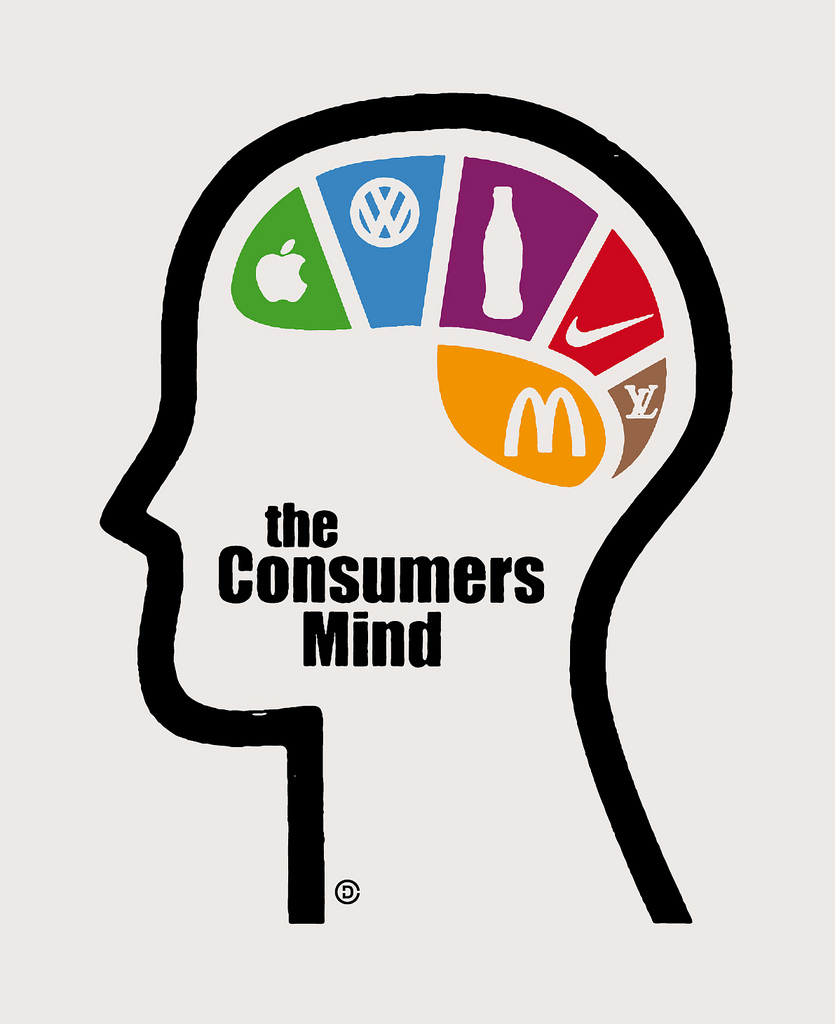
consumer's mind
Consumers have less control over their decisions because “…Attention Merchants” use intimate personal information to seduce conscious and unconscious motivation.

There is a cost to voters and consumers because personal information is being sold without pay for product that enriches “…Attention Merchants”, private enterprise, and government.  The product delivered is the personal information that reveals who we are, what we think, what we desire, and what we are willing to pay.  Consumers have less control over their decisions because “…Attention Merchants” use intimate personal information to seduce conscious and unconscious motivation.

The sinister aspect of Wu’s explanation is that “…Attention Merchants” now have tools that exaggerate the impact of “fake news”.  By knowing intimate beliefs of consumers, “…Attention Merchants” are able to create algorithms that funnel “fake news” that feeds what consumer’s may either accurately or inaccurately believe.  Prejudices and discrimination are reinforced.  The worst characteristics of political populism are reinforced.  “The Attention Merchants” expand control of individual thought so that the course of democratic elections, government policies, or business successes can be unduly influenced by false or misleading information.

wikipedia
The positive aspect of the internet is shown by sites created without advertising input; e.g. Wikipedia and some blogosphere creations abjure advertising as a source of compensation.

Wu notes there are glimmers of hope with a growing recognition of the impact of the internet. The internet broadens human understanding of the world. The positive aspect of the internet is shown by sites created without advertising input; e.g. Wikipedia and some blogosphere creations abjure advertising as a source of compensation.
Exposure of blind spots in acquisition of personal data are currently being exposed in congressional hearings with Facebook CEO, Mark Zuckerberg.  At the same time, Russian interference in American elections is being more seriously investigated.

As Marie Currie is to have said— “Nothing in life is to be feared.  It is only to be understood.  Now is the time to understand more, so that we may fear less.”  Of course, one might remember, she died from the radiation she received from her discoveries.  (Ironically, Marie Currie’s death was found not to be from radiation exposure.  In autopsy, her body radiation levels were within normal range.)

A HACKING OBSESSION

Audio-book Review
By Chet Yarbrough

(Blog:awalkingdelight)
Website: chetyarbrough.blog

Ghost in the Wiresghost in the machine

By Kevin Mitnick, William Simon

Narrated by Ray Porter

KEVIN MITNICK (AUTHOR, IT CONSULTANT, FORMER HACKER)
KEVIN MITNICK (Author, Computer Information Consultant, Former Hacker)—John Waters is supposed to have said, “Without obsession, life is nothing”.  Kevin Mitnick, in the span of 20 years, was convicted four times for computer hacking (exploiting computer system weaknesses).

John Waters is supposed to have said, “Without obsession, life is nothing”.  Kevin Mitnick, in the span of 20 years, was convicted four times for computer hacking (exploiting computer system weaknesses).

Mitnick’s assisted autobiography infers that hacking became Mitnick’s obsession.

“Ghost in the Wires” is a semi-believable story of an extraordinary white-collar criminal that alleges he never financially benefited from spying on people and stealing proprietary software programs from dozens of major corporations and government agencies.  His modus operandi was the lie (euphemistically called social engineering) a telephone, and a computer; all of which he used to hack.

TELEPHONE
Mitnick would “socially engineer” (lie to) company employees.  The employee would release proprietary information without understanding what they were doing.  Mitnick then used that information to steal software or spy on corporate activities.

Mitnick is a quintessential conman.  When he chose an objective like stealing credit information from TRW or making uncharged calls on PacBell’s communication system, he would telephone the “targeted” company.  Mitnick would tell the soon-to-be-victimized; he was a company employee and needed access to their software systems to correct a problem at a branch office.

He would “socially engineer” (lie to) company contacts, who would trustingly release proprietary information.  The contact would release proprietary information without understanding what they were doing.  Mitnick then used that information to steal software or spy on corporate activities. , and allegedly, not use that information to benefit himself.  Mitnick generally criticizes Americans for being too trusting.

Mitnick obsessively researched his target.  He would learn the lingo of the corporation, identify a real employee, assume his identity, and then begin his telephone con with a person that would have access to proprietary information.  Mitnick argues that he was thrilled by the chase and the acquisition of unauthorized information.  He would store the stolen information on remote computer systems that he either hacked into or purchased as rented space.  Mitnick said he never used the information to benefit himself but only pursued it for the joy of hacking.  Really?

human research
Mitnick obsessively researched his target.  He would learn the lingo of the corporation, identify a real employee that he would become, and then begin his telephone con with a person that would have access to proprietary information.

information thief
Mitnick is obviously smart and articulate but wants a listener to believe he lived on $28,000 per year for 2 out of 10 years of life, moved cross-country at least 4 times in 8 years, lost $11,000 cash, borrowed $5,000, went to college, and never lived on the street.

Mitnick is a good storyteller but there are glaring weaknesses in his story.  Mitnick is obviously smart and articulate but wants a listener to believe he lived on $28,000 per year for 2 out of 10 years of life, moved cross-country at least 4 times in 8 years, lost $11,000 cash, borrowed $5,000, went to college, and never lived on the street.  One wonders how he lived and traveled on such a meager income, duping the world and not taking a cent of illegal gotten gains.

Mitnick seems incredibly gullible to believe one of his fellow hackers was not working for the FBI; long before he found corroborating evidence.  Mitnick seems always surprised by the betrayal of his “friends” but keeps going back to the well of friendship.  Is this personal naiveté or social engineering of those who read or listen to his story?

Finally, the competence of the FBI seems exaggerated when Mitnick is caught by a simple search done by Shimomura, a security consultant, when he found that Mitnick was somewhere in Raleigh, North Carolina.  Shimomura simply screened all telephone communication in Mitnick’s area.  Shimomura pinpointed addresses of anyone on the phone for more than 30 minutes at one time.  Mitnick was the only person that fit that criterion.

HACKING
The advent of the internet suggests hackers of the world are capable of doing considerably more damage today than when Mitnick practiced his obsession, e.g., Russian interference with the American election process.

Mitnick’s story makes one uncomfortable on two levels. One, Mitnick reveals tools used by criminals and others who can invade our privacy. And two, one wonders if he/she is being socially engineered by a consummate liar. After all, Mitnick escaped prosecution for 15 years.

The advent of the internet suggests hackers of the world are capable of doing considerably more damage today than when Mitnick practiced his obsession, i.e., Russian interference with the American election process being a prime example.

STEVE WOZNIAK
STEVE WOZNIAK

In the forward to Mitnick’s book, he is praised for his affability by Steve Wozniak (former founder of Apple). One would believe the praise is in part because of Wozniak’s belief in open system software but also because of Mitnick’s software coding expertise and suspect affability.

In Mitnick’s afterword, it appears Mitnick’s life as a criminal made him both famous and financially secure.  One wonders, how much more Mitnick could have accomplished without breaking the law.  After all, Waters implies life is something if you are obsessive.  Without doubt, Mitnick is that.

NUCLEAR POWER

Audio-book Review
By Chet Yarbrough

(Blog:awalkingdelight)
Website: chetyarbrough.blog

Atomic Accidents: A History of Nuclear Meltdowns and DisastersAtomic Accidents

By James Mahaffey

Narrated by: Tom Weiner

Listening to Atomic Accidents, the first thing that comes to mind is point-of-view, second the author’s qualification, and third writing skill.  Mahaffey’s book is historically fascinating, and enlightening.  And happily, Mahaffey writes well.

DR. JAMES MAHAFFEY (AUTHOR)

Doctor James Mahaffey’s professional career is founded on the nuclear industry.  Educated at the Georgia Institute of Technology, Mahaffey holds a bachelor’s degree in physics, a master’s in science, and doctoral in nuclear engineering.

Mahaffey is well versed in the science, engineering, and mechanics of nuclear energy.  Because of education, one presumes Mahaffey is a proponent of the nuclear power industry.  After dissection of several atomic accidents, a listener becomes unsure of Mahaffey’s point of view.  By the end, his point of view is clear.  

nagasaki bombing aftermath
The best known nukes, Big Boy and Little Boy, were dropped on Hiroshima and Nagasaki at the end of WWII.

America has dropped and lost nuclear bombs around the world.  The best known nukes, Big Boy and Little Boy, were dropped on Hiroshima and Nagasaki at the end of WWII.

Less known bomb drops were in peace time.  Nukes were accidentally released on remote military bases, in sparsely populated residential areas, and in the sea.  Some of those dropped in the sea remain unrecoverable.  None of the peace time bombs exploded.

America chose to keep nuclear secrets from Great Britain after WWII because of concern over nuclear bomb proliferation.  Because of America’s secrecy and  lack of cooperation, Mahaffey  suggests design mistakes were made.

In reviewing the history of nuclear energy, Mahaffey notes English scientists and engineers designed graphite nuclear power plants that were inherently dangerous.  Graphite catches fire at high temperatures and is notoriously hard to extinguish.  However, graphite nuclear plants became widely copied throughout the world.

Mahaffey’s stories of nuclear mishaps range from dumb to dumber; i.e. from wind fans that feed graphite nuclear plant fires to technicians that ignore rules of reactor management.  Nuclear accidents seem inevitable and insurmountable.

CHERNOBYL NUCLEAR REACTOR (e.g. A FAMOUS GRAPHITE REACTOR ACCIDENT.)
CHERNOBYL NUCLEAR REACTOR ( Chernobyl is an example of a major graphite nuclear reactor failure.)

Mahaffey explains that the former U.S.S.R. ignored environment in their nuclear bombs race with America.  They dumped plutonium in Russian waters and blew up a graphite nuclear plant that killed Russian workers in a steam explosion.  The explosion contaminated miles of Russian homeland with radioactive fallout.

CHERNOBYL REACTOR DAMAGE

Later, the U.S.S.R. mismanaged Chernobyl’s nuclear facilities and created a nuclear meltdown that reportedly killed over 60 people from radiation and left an area of Russia uninhabitable for generations to come.

FRANCIS GARY POWERS (1929-1977, CAPTAIN IN THE US AIR FORCE, SHOT DOWN OVER RUSSIA IN 1960 AND HELD PRISONER FOR 2 YEARS)
FRANCIS GARY POWERS (1929-1977)

Mahaffey tells the story of the American, Gary Powers, the pilot shot down by the Russians in the 1950s.  Powers is taking aerial pictures of plutonium manufacturing facilities in the U.S.S.R.  Eisenhower is compelled to lie and then apologize to Russia for the clandestine operation.  Mahaffey makes the story interesting by revealing the monumental effort made by the U.S.S.R. to shoot down Powers’ airplane and reassemble plane parts to prove Powers was spying.

FRANCIS GARY POWERS (DIES IN HELECOPTER CRASH WORKING AS KNBC WEATHER PILOT)
FRANCIS GARY POWERS (DIES IN A 1977 HELECOPTER CRASH WORKING AS KNBC WEATHER PILOT)

In the end, Mahaffey discounts the many nuclear accidents and incidents he examines.  His conclusion is that nuclear power can be made probabilistically safe.  Mahaffey argues for the design of nuclear energy facilities that are small and simple to operate.  He suggests that small nuclear power plants be designed and manufactured for specific industrial facilities. 

Rolls Royce is entering the nuclear facilities market in Great Britain.  Small nuclear plants could meet industrial energy demands while limiting environmental carbon emission from other sources of energy Rolls Royce Small Nuclear Plant Production

With small nuclear energy plants, the potential for catastrophic Chernobyl-like’ events would not happen.  The massive underwater earthquake and tsunami would not have decimated Japan’s nuclear energy capability if the power plants had not been so massive and concentrated on the coast.

Mahaffey implies proper design and training for small, simple nuclear energy facilities will mitigate the world energy crises.  Mahaffey infers nuclear accidents are unavoidable, but human and environmental damage is minimized with smaller nuclear energy plants.

Rolls-Royce recently (in November 2021) announced they are getting into the small nuclear reactor business.

Mahaffey explains that radiation is a naturally occurring phenomenon.  He argues that shutting down nuclear waste disposal facilities like Yucca Mountain in Nevada are a mistake.  Many in Las Vegas oppose President Trump’s resurrection of the Yucca Mountain waste site.

Mahaffey’s point of view is that nuclear power accidents will happen but their consequences can be minimized with smaller plants and better planning for treatment of victims when accidents occur.  He believes nuclear energy benefits far out weigh their risks.

The 2020 Presidential election is over.  President Biden’s campaign speaks to America’s gradual transition from fossil fuels to wind, water, and solar power.  That transition is a potential source for thousands of new American jobs.  Mahaffey persuasively argues there should be a place for nuclear energy in that transition.

SOVEREIGNTY

Audio-book Review
By Chet Yarbrough

(Blog:awalkingdelight)
Website: chetyarbrough.blog

The Origins of Political Order: From Prehuman Times to the French RevolutionTHE ORIGINS OF POLITICAL ORDER

Written by: Francis Fukuyama

Narrated by: Jonathan Davis

FRANCIS FUKUYAMA (AMERICAN POLITICAL SCIENTIST, POLITCAL ECONOMIST, AND AUTHOR)
FRANCIS FUKUYAMA (AMERICAN POLITICAL SCIENTIST, POLITICAL ECONOMIST, AND AUTHOR)

Francis Fukuyama’s analysis of state and government formation is both insightful and politically actionable.  In “The Origins of Political Order” and “Political Order and Political Decay” Fukuyama provides a basis for understanding politics and its contribution to society.

THOMAS HOBBES (1588-1679)
THOMAS HOBBES (1588-1679) Hobbes generally considered humankind to be both good and evil with a need for regulation of his/her evil instincts through government.

In previous book reviews, references have been made to Thomas Hobbes’ theory of the nature of man.  Hobbes generally considered humankind to be both good and evil with a need for regulation of his/her evil instincts through government.  He identifies government as “The Leviathan”.  Hobbes suggests “The condition of man…is a condition of war of everyone against everyone”.

PREHISTORIC HUMAN KIND
Fukuyama finds a singular and significant flaw in Hobbes’ observation.  From the beginning of time, humans associated with other humans to survive the brutish nature of life.  He suggests humans are by nature violent with that violence becoming ingrained as a societal meme to cope with the exigencies of life.  Fukuyama goes on to suggest violence and change are intertwined.

Fukuyama finds a singular and significant flaw in Hobbes’ observation.  Though Fukuyama may agree with Hobbes’ view of individual humans, he tempers it by noting humans have always been social beings.  From the beginning of time, humans associated with other humans to survive the brutish nature of life.  He suggests humans are by nature violent with that violence becoming ingrained as a societal meme to cope with the exigencies of life.  Fukuyama goes on to suggest violence and change are intertwined.

The significance of humans as societal creatures is that governments are formed by dominant tribes. Politics is the language of tribes negotiating with each other to preserve status.  However, Fukuyama notes that cultural norms are dramatically different in governments that evolve over time.  These cultural differences play out in the history of Russia, China, France, Great Britain, Italy, America, the countries of Africa, and the Middle East.

world map
Fukuyama notes cultural differences play out in the history of Russia, China, France, Great Britain, Italy, America, the countries of Africa, and the Middle East.

RELIGIOUS BELIEF
A counter-intuitive note by Fukuyama is that religion plays a significant role in civilizing, rationalizing, and establishing state governments.

A counter-intuitive note by Fukuyama is that religion plays a significant role in civilizing, rationalizing, and establishing state governments.  It is counter-intuitive because it seems in the present-day religion is tearing the world apart.  However, in the context of history, the size of tribes within countries hugely increases with the spread of religion.  Religion becomes a cultural phenomenon that ameliorates (but does not eliminate) violence among different tribes within wider territories that evolve into nation-states.

Fukuyama implies nation-state development is a living organism that evolves in the manner of natural selection identified by Darwin in the “Origin of Species”.  Characteristics of effective governments perpetuate themselves through adaptation to respective societal norms.  In other words, every society grows via its own cultural norms which suggests sovereignty should be inviolable.

Fukuyama is saying that American democracy, Chinese socialism, Russian federation, India democracy or any other system of government will be different because of their social history.  In other words, India may be classified as the world’s largest democracy but not as an American democracy because of its different societal norms.

WORLD WIDE WEB
Can the World Wide Web, the growth of science, and recognition of environmental interdependence overcome the nationalist stupidity of government leaders?

In one sense, the complexity of Fukuyama’s theory makes one less optimistic about the future of the world.  What can take the place of religion to meld societies into a common tribe?  Can the World Wide Web, the growth of science, and recognition of environmental interdependence overcome the nationalist stupidity of government leaders?

If Trump, Putin, al-Baghdadi, and Kim Jong-un represent the future, the answer is no.  On the other hand, one may argue survival of humans is dependent on experimentation by governments, enhanced by nation-state societal differences.

Just as one species evolves into an improved human, one species of government may evolve into an improved government (presuming humans survive an interregnum).

RISE AND FALL

Audio-book Review
By Chet Yarbrough

(Blog:awalkingdelight)
Website: chetyarbrough.blog

Asabiyyah: What Ibn Khaldun, the Islamic Father of Social Science, Can Teach Us About the World Today

Written by: Ed West 

Narrated by:  P. J. Ochlan

ED WEST (ENGLISH AUTHOR, JOURNALIST, BLOGGER)

ED WEST (ENGLISH AUTHOR, JOURNALIST, BLOGGER)

IBN KHALDUN (STATUARY SYMBOL OF ISLAMIC HISTORIAN BORN 1332, DIED 1406 AT 73 YEARS OF AGE.)

IBN KHALDUN (STATUARY SYMBOL OF ISLAMIC HISTORIAN BORN 1332, DIED 1406 AT 73 YEARS OF AGE.)

Ed West offers a brief introduction to the life of an ancient historian.  His name is Ibn Khaldun.  Khaldun describes the first known evolutionary theory of human origin.  West also notes this 14th century scholar creates the first known socio/political theory of the rise and fall of civilizations.

Khaldun explains life’s origin as a aggregation of chemicals and minerals that create organic life and, in turn, evolve into different species. 

DESCENT OF MAN

West notes that Khaldun suggests humankind evolved from monkeys. This is four centuries before Darwin’s “Origin of Species”.

Ibn Khaldun is considered by some to be the first person to write foundational theories for modern sociology, economics, and demography.  West notes that Khaldun explains how nations are formed, maintained, and destroyed by sociological, economic, and demographic forces.

Khaldun offers counsel to the great conqueror, Amir Timur (aka Tammerlane), who plans to resurrect the 13th century Mongol empire built by Genghis Khan.  

TIMUR (AKA TAMMERLANE, 1336-1405)

TIMUR AKA TAMMERLANE IS COUNCELED BY IBN KHALDUN  (1336-1405–(Timur is said to have caused the death of over 17 million people in the effort.)

West suggests that Khaldun explains how Timur and other rulers, from the Roman empire to Genghis Kahn to Timur successfully conquered great areas of the known world.  His explanation is “Asabiyyah” (aas-sah-bee-ah), a theory that all successful conquerors establish a social environment that creates solidarity among a group of people sharing understanding, purpose, and achievement.

West explains that Khaldun expands “Asabiyyah” to a theory of civilization’s rise and fall.  Humans proliferate based on family affiliations.  Religion widens family relationships to create tribes. Tribes become a congregation of different families with common beliefs.  Tribes come into conflict and eventual settlements that grow into larger groups based on evolved common beliefs. 

At each step of widening common interest, a leader rises from the ranks.  With an accretion of social ties, villages, towns, and cities are formed with a leader at its head.  As the ties that bind continue to expand, nation-states are formed.

RISE AND FALL OF CIVILIZATIONS

Ibn Khaldun’s explanation is “Asabiyyah”, a theory that all successful conquerors establish a social environment that creates solidarity among a group of people through shared understanding, purpose, and achievement.

West shows that Khaldun goes on to explain how civilizations decline. First, Khaldun notes that sons and daughters of great leaders rarely exceed their parent’s leadership success.  Khaldun posits the current social and scientific belief of “reversion to a mean”. 

REVERSION TO THE MEAN

Each subsequent offspring of a great leader comes closer to the average of a civilization’s population.  Leadership diminishes in succeeding generations.

Second, Khaldun suggests diminished common beliefs lessen a civilization’s cohesion.  Religious differences rise, economic circumstances change, social groups fracture, family ties reassert themselves as ties that are more important than community.  The example that Khaldun gives is Rome’s decline as a world power. West suggests the same may be said of the United Kingdom’s decline.

AMERICAN DREAM

Has the American Dream become a lie few believe in?  Are elected officials withdrawing to their families at the expense of nation-state’ leadership?

West’s “Asabiyyah” makes one think of America.  Does today’s political conflict reflect diminishment of commonly held nation-state belief?  Is the increasing gap between rich and poor destroying the social fabric of America?  Is the divisiveness of former President Trump a reflection of a nation in decline?

Is nationalism dead, or are we crossing a threshold where the principals of nation-state need to be expanded to include a wider community?  Is the next step reflected by the E.U. or some similar congregation of nation-states?

EUROPEAN UNION

According to West, Khaldun believes nationalism is critically important for a civilization to remain strong.  In the time of Khaldun, there was no vehicle for common beliefs except a leader’s influence over conquered nations. 

Today, there is an internet.  It seems the human family may once again be expanded.  Nation-states may not be prepared for “space-ship-earth” but there may be an interim step.

That interim step was tried during the cold war with the U.S.S.R.  It failed.  The E.U. is facing challenges today.

U.S.S.R. BREAK-UP

Trump’s America is regressing from comity to disparity with emphasis on making itself great again.  A leading question today is whether civilizations are competing to be in decline or ascendance?

Of course, leadership is key to any future.  Right now, there seem few leaders that can make civilizations grow beyond their borders. Khaldun seems as relevant today as he was in the 4th and early 5th centuries.

BITCOIN

Audio-book Review
By Chet Yarbrough

(Blog:awalkingdelight)
Website: chetyarbrough.blog

DIGITAL GOLDDigital Gold, Bitcoin and the Inside Story of the Misfits and Millionaires Trying to Reinvent Money

Written by: Nathaniel Popper

Narrated by:  Robert Fass

NATHANIEL POPPER (AUTHOR, NYT'S REPORTER)
NATHANIEL POPPER (AUTHOR, NYT’S REPORTER)

Nathaniel Popper writes a book on the history of bitcoin.  His history is a “Just the facts Mam” presentation.  One will draw their own conclusion about the good and bad qualities of crypto currency.

Just like the dollar, pound, renminbe (yuan), franc, and euro, bitcoin is used for legal and illegal transactions.  There are a host of criminals who have gamed currencies.  Pepper recounts examples of bitcoin that show it is not exempt from currency manipulation.

BERNARD MADOFF (AGE 74) SERVING 150 YEAR PRISON SENTENCE

However, the manipulation takes the form of coding modification, or criminal hacking, rather than overt Bernie Madoff-like’ deceit. Wealth has been accumulated and lost in every medium of exchange since the beginning of barter between buyers and sellers.  Popper shows that the fundamental difference between conventional currencies and bitcoin is how value is determined; who decides on what the value should be, and the transparency of change.

Popper explains bitcoin’s value is a consensus of its owners and users.  Bitcoin value rises or falls based on most of its holder’s and merchant’s willingness to sell goods in exchange for bitcoin’ value.  In contrast, conventional currencies are based on government fiat and national economic stability.

BITCOIN SYMBOL
Popper explains bitcoin’s value is a consensus of its owners and users.  Bitcoin value rises or falls based on most of its holder’s and merchant’s willingness to sell goods in exchange for bitcoin’ value.

CHECKS AND BALANCES
All currencies offer exchange of goods based on willing seller and buyer discretion.  However, conventional money does not rely on majority determination of value.  Value of conventional currency is an inchoate combination of government decision, and the economic condition of respective nations.   http://news.webshots.com/photo/2005825900056011884kLVAuD

All currencies offer exchange of goods based on willing seller and buyer discretion.  However, conventional money does not rely on majority determination of value.  Value of conventional currency is an inchoate combination of government decision, and the economic condition of respective nations.  When aberrant government actions or economic crises occur willing buyers disappear, and currency value falls.  However, bitcoin is not dependent on government regulation or the state of one economy.  Bitcoin relies on its buyers and sellers and is independent of singular government decisions or any singular national economies.

INFLATION
When aberrant government actions or economic crises (like hyper-inflation) occur willing buyers disappear, and currency value falls.  However, bitcoin is not dependent on government regulation or the state of one economy.  Bitcoin relies on its buyers and sellers and is independent of singular government decisions or any singular national economies.

What Popper clearly explains is that troubled economic countries can see dramatic conventional currency movements that destroy wealth because of government decisions.  However, he equally notes many examples of large devaluations in bitcoin.  The difference is that devaluation of bitcoin is based on owners and users who are not tied to any single nation-state economy or government regulation.  Bitcoin value is based on the opinion of its owners and users.

One might conclude bitcoin is more egalitarian than conventional currency because it is based on the will of the majority of owners and users.  That may be true but the idea of depending on bitcoin’s open system modification of cryptographic code is a threat to the will of the majority.

Only code technologists understand the ramification of code changes in bitcoin.  Most users can only vote in ignorance and hope.  One may argue that is also true when electing a government;  however, the difference is transparency.  Bad governments can be judged by the public and eventually defeated.  Cryptocurrency is, as its title implies, concealed.  It is both secret and incomprehensible to most owners and users.  Most bitcoin users can only vote in ignorance and hope that coders are acting in a majorities best interest.

No form of currency guarantees value.  Every form of currency has its ups and downs.  The difference is in who makes the decision about value.  If you live in a highly inflationary country, bitcoin offers some level of stability.  If you live in a wealthy and relatively stable country, bitcoin seems less attractive.

The future of bitcoin or other cryptocurrencies seems more utilitarian in a future where nationalism disappears and there is acceptance of a world economy based on equality of opportunity.  We seem far from such a Utopian world.

TOTALITARIANISM

Audio-book Review
By Chet Yarbrough

(Blog:awalkingdelight)
Website: chetyarbrough.blog

The Trial

By Franz Kafka, David Whiting (translator)

Narrated by Rupert Degas

FRANZ KAFKA (1883-1924, AUTHOR, NOVELIST)

FRANZ KAFKA (1883-1924, AUTHOR, NOVELIST)

“The Trial” is a Franz Kafka picture of hell; i.e. a totalitarian nightmare, ruled by bureaucracy and controlled through human despair. “The Trial” is a book to listen to because it mesmerizes when narrated by an artist but numbs when read by an undisciplined mind.

Imagine arbitrary arrests, undefined accusations, and undisclosed trials; i.e. trials operating in obscurity that secretly sentence the accused to mental purgatory or death; add shadows of human beings, dark rooms of judgment, stifling closeness, and oppressive anxiety.  This is Kafka’s world in “The Trial”.

There is no lightness in Kafka’s tale; no human redemption.  The main character, Ka (in this version of the book), is the only person that seems to seek self-understanding.  

All other characters are “other directed”, trying to be what someone else expects them to be by playing whatever role they need to play to survive.

BUREAUCRACY

Kafka imagines a country of directionless people, subsumed in a bureaucracy that feeds on itself.

This is a country of directionless people, subsumed in a bureaucracy that feeds on itself.  Citizens of this country are either a part of the bureaucracy or they are controlled by its administration. 

Control is exercised by creating fear and anxiety.  This characterization reminds one of Donald Trump and his current attempt to overthrow over 200 years of American government history.

Trump’s tacit support by the Republican party is a crime against democracy. Patriotic Republicans are diminished by Trump’s abhorrent behavior.

Should Trump be impeached a second time? It’s complicated. On the one hand, incitement by Trump on January 6th is obvious to most Democrats. On the other, Republicans now represent 70,000,000 Americans who think Trump is good for America.

There is no societal objective; there is only bureaucracy’s perpetuation.  Lawyers, bankers, judges, business moguls, landlords, artists, servers and assistants of this society, though rarely singled out for terror or torture, are consumed with anxiety from an ever-present threat of arrest.  The working public enriches itself by taking bribes to subvert bureaucratic action.  The working public’s subversion is not destruction of the bureaucracy but a tacit acceptance of its hegemony.

Ka attempts to break the cycle of bureaucracy’s self-perpetuation.  His attempt fails.

The redeeming quality of Kafka’s story is the human desire for freedom that is not extinguished even in the darkest times of a country’s repression.  Against all obstacles, Ka insists on freedom.  In Ka’s case freedom means death just as it did for many who died in Auschwitz, Dachau, and Treblinka.

FRANZ KAFKA QUOTE

Kafka’s hell exists in today’s world just as it did when it was published in 1925.