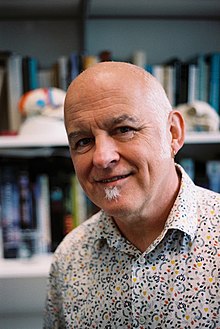
David Auerbach (Author, software engineer, writer for various publications.)
David Auerbach wishes not to be categorized. However, Auerbach is an author, ivy league graduate, computer geek, software coder, gamer, philosopher, and more. The point is categorization does not explain the real Auerbach. Auerbach offers a wide-ranging conception of what is real and not real in the world.
Auerbach criticizes categorization because it is fictive. His example is the wrong-headed categorization of sexuality. What social or cultural value can come from such categorization? Auerbach notes at one point Facebook insists users identify their sexual predilection from a list of hundreds of categories.
Auerbach pursues the concept of what is real in “Bitwise”. He fails to clearly define real but identifies what real is not. Real is not simply what the mind’s eye beholds and it is not the mathematics of reproducible experiment. There is a concreteness to real in Auerbach’s belief. However, real remains a mystery because it is to be revealed in a future not yet written.
To Auerbach, real lies somewhere within the triptych of human’ thought, mind, and language.
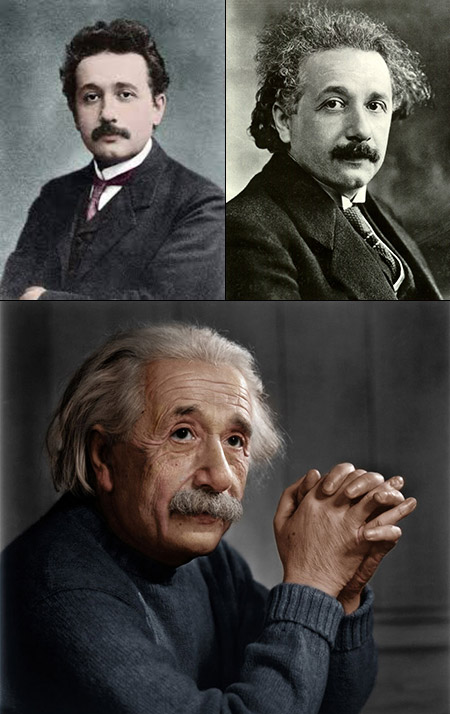
Auerbach’s philosophical argument for real is partly supported by the evolution of scientific understanding of the world. Newton discovered a partial truth about the physics of moving bodies. Einstein expanded Newton’s partial truth with a more comprehensive understanding of space and time. Einstein’s truth is changing with the discovery of quantum mechanics. All of these discoveries came from the interplay of human’ thought, mind, and language. This triptych gives concreteness to what is real.
SIR ISAAC NEWTON (1642-1727)ALBERT EINSTEIN (1879-1955)
Auerbach questions the advance of software algorithms as a method for finding truth about what is real. An algorithm is only a tool of human’ thought, mind, and language. Auerbach infers there may be a time when a computer becomes more human with the ability to define reality but not until they are more than algorithmic machines. That, of course, raises many more questions.
An algorithm is a set of calculations meant to define reality or conduct problem solving operations when in fact they neither define reality nor solve anything.
A revelation one has from Auerbach’s “Bitwise” is that gamers have become important to a younger generation because algorithms offer insight to the concreteness of existence. One can experiment with life’s outcomes without consequence in the real world.
Auerbach gives the example of a gamers use of a nuclear war game to show how world diplomacy decisions lead to world conflagration. Early versions are refined but remain blunt predictive instruments that only mimic human’ thought, mind, and language.
In his early career, Auerbach’s software experience comes from working with Microsoft. He suggests the stewardship of Balmer diminished Microsoft’s innovative history. Auerbach leaves Microsoft to join Google. He finds Google to be a more cutting-edge software developer by recognizing the value of data gathering and mining.
“Bitwise” is a clarion call to the public. Big Brother is here. It has the face of Google and the power of a nation-state.
The near future is dependent on software coding. The long future is dependent on human’ thought, mind, and language.
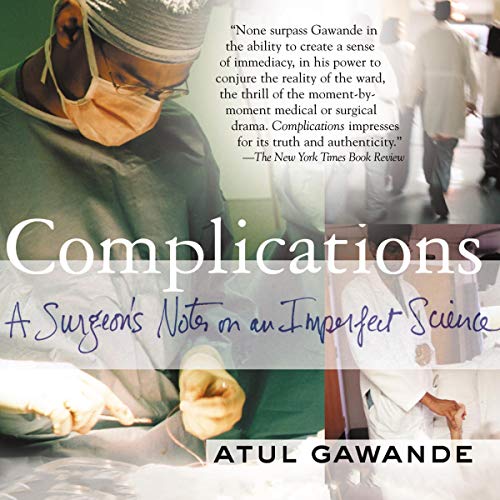
Several years ago, “Being Mortal” was reviewed with appreciation of what the author had to say about a doctor’s responsibility for improving the quality of life for the elderly and terminally ill. Atul Gawande reinforces the double meaning of “Being Mortal” in his “Complications…Notes on the Imperfect Science”.
Gawande explains doctors are not superhuman beings. They are well-educated mortals that practice medicine with the intent of making the right decisions through attentive communication with patients.
Knowledge from teachers and practitioners is helpful but it is through practice on patients that doctors become proficient for those needing help. Gawande’s reflective words “practice on patients” are frightening to one who’s life is threatened by injury or disease.
Gawande notes decisions are not based on omniscience but on a doctor’s education and experience.
Gawande offers notes on the imperfect science of medicine. He explains why even the most conscientious physicians, let alone bad practitioners, make mistakes. To become a skilled physician, as with any skill, requires practice. The monumental difference is medical practice directly affects human lives. Other professional practices are indirect.
The compounding difficulty of the science of medicine is that even the most experienced physicians make mistakes. It may be because of missed diagnosis or motivations inherent in human nature (the drive for wealth, power, or prestige) but it is always at the expense of a patient.
Gawande reflects on the intuitive nature of medicine by telling the story of the fire captain that tells fellow fire fighters to leave a building when he senses the building is going to collapse (an anecdote also told in “Thinking Fast and Slow”). An experienced doctor often must rely on the same sense and can be perfectly right or catastrophically wrong.
Gawande tells the story of a young woman who is diagnosed with cellulitis in a leg that is swollen and inflamed. The attending physician asks Gawande to look at the patient to confirm the diagnosis.
Gawande questions the patient about how she might have acquired the infection. He suspects it may be from a rare flesh-eating virus even though all the symptoms are consistent with cellulitis which can be easily treated with antibiotics. Gawande suggests a biopsy and the diagnosis is changed. It is found to be to the rare flesh-eating virus. It is Gawande’s intuition that leads to treatment that successfully saves the young woman’s life.
A medical patient listening to Gawande appreciates his candor but fears the truth of human fallibility of a profession one relies upon.
Most realize all humans make mistakes. What is disconcerting is the lack of disclosure by many physicians and the doubt raised by Gawande in some doctor’s veracity in seeking what is best for their patients.
Gawande explains some organizational methods used to minimize mistakes and modify future medical practices. However, public disclosure of those mistakes (particularly regarding specific doctors and hospitals) is largely undisclosed.
Gawande is challenging his profession to do better. To that, the public should be grateful.
Barrett suggests experiment confirms the brain is a singular organ, functioning as a network that controls human thought and action based on experience and memory.
Barrett argues the brain is not for thinking but for survival.
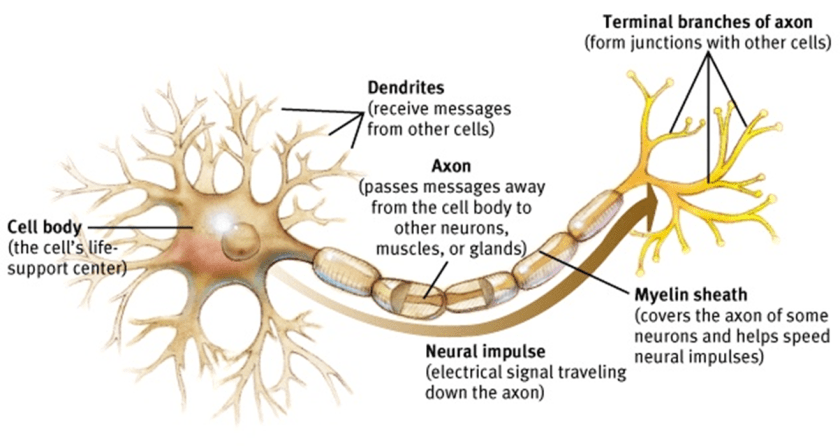
Barrett’s interpretation of Darwinian evolution suggests brains evolve based on random events. A human brain evolves into a network of axons and dendrites that are not segregated but coordinated to preserve human existence.
However, Barrett notes that non-use or lack of firing by a neuron will render it dormant. Key to maintenance of neuronal activity is repetitive firing. (Parenthetically, Barrett notes solitary confinement is cruel and unusual punishment for that reason.) Firing multiplies the bushy ends of the neuron (the dendrites) which can become lifelong connections for thought and action. Barrett suggests the early years of childhood should be filled with opportunities to learn through different experiences. She believes exposure to different languages at an early age makes later life language-learning easier.
Barrett explains–through environmental influences human brains wire themselves to the world. Each wired connection comes from repeated events that substantiate the principle of neurons firing together to become wired together. If neurons are not stimulated, they become dormant. Barrett argues brain plasticity is based on neuronal activity which suggests different areas of a brain can be retrained to repair some functions of a damaged brain.
Barrett explains human brain’ function evolves over much longer periods of time than other mammals.
Barrett notes neuronal activity evolves in humans over the first twenty or more years of their lives. This longer period of evolution allows more flexibility in neuronal activity than is inherent for other species of the animal kingdom.
The mixed benefit of a longer period of neuronal evolution is evidenced by a calf, giraffe, or deer that can walk soon after birth while a human takes two to three years.
The benefit of longer neuronal evolution is a human child’s time to increase and improve neuronal connections based on wider experience. Though humans may not learn to walk as quickly as a baby Giraffe, they learn more from the changing environment in which they live.
Barrett goes on to argue that words spoken by one person to another modify brain function based on one’s experience and memory. This reinforces realization that words do matter. When one is constantly criticized or ridiculed, the impact of words on human behavior is highly consequential. Barrett explains occasional criticism has little effect on neuronal activity, but repetitive criticism can significantly impact the way a brain’s neurons wire together with permanent effects on human behavior.
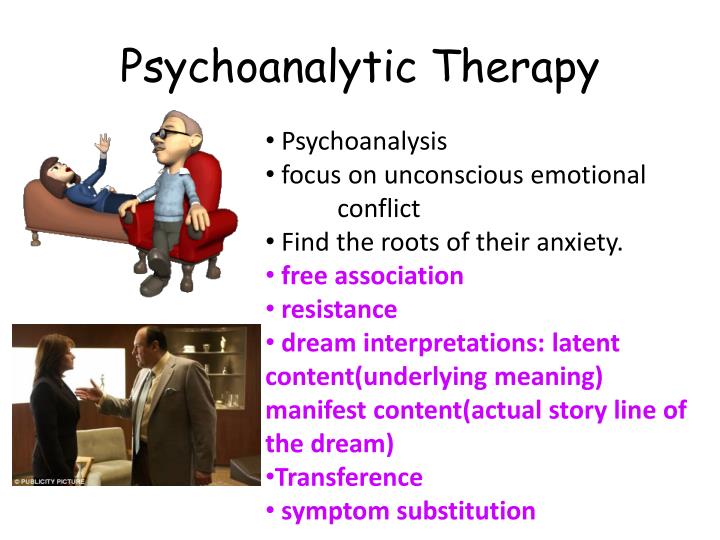
This gives credence to psychotherapeutic treatment to discover why humans act as they do. Psychotherapy offers a mechanism for changing one’s behavior. This harks back to Barrett’s notes about brain plasticity.
Barrett believes every human being has a “body budget”. That budget is added to or subtracted from by neuronal activity that is grounded in human relationship. Barrett argues humans are social creatures. Barrett infers relationships have great consequence on how humankind views and lives in the world. She argues human relations can either add or subtract from one’s body budget.
The question becomes–what relational qualities add or subtract to one’s body budget? Barrett infers love and empathy add while hate and apathy subtract from the body budget. Becoming the best of who we are seems up to us.
The Idea of the Brain (The Past and Future of Neuroscience)
By: Matthew Cobb
Narrated by: Joe Jameson
Matthew Cobb (Author, British zoologist, professor of zioology at University of Manchester.)
Matthew Cobb is a skeptic. “The Idea of the Brain” cautions the public about claims of doctors, psychologists, chemists, neuroscientists, philosophers, and technologists who claim breakthrough understandings of the brain. Cobb explains the history of how, where, and why the brain creates thought and action. Even to this day in the 21st century, brain function remains a mystery to science and the general public. Cobb does not deny progress has been made but his history of “The Idea of the Brain” shows progress has been slow, often misleading, and sometimes flatly wrong.
He explains how, in the time of Aristotle, the source of human’ intelligence and emotion were believed to be in the heart.
As the present takes hold, it becomes clear that intelligence and emotion come from chemistry and neuronal activity of the brain and body with its primary loci in the brain. The shift in understanding from heart to brain is proven by science, but details remain as much a mystery in the present as in the past.
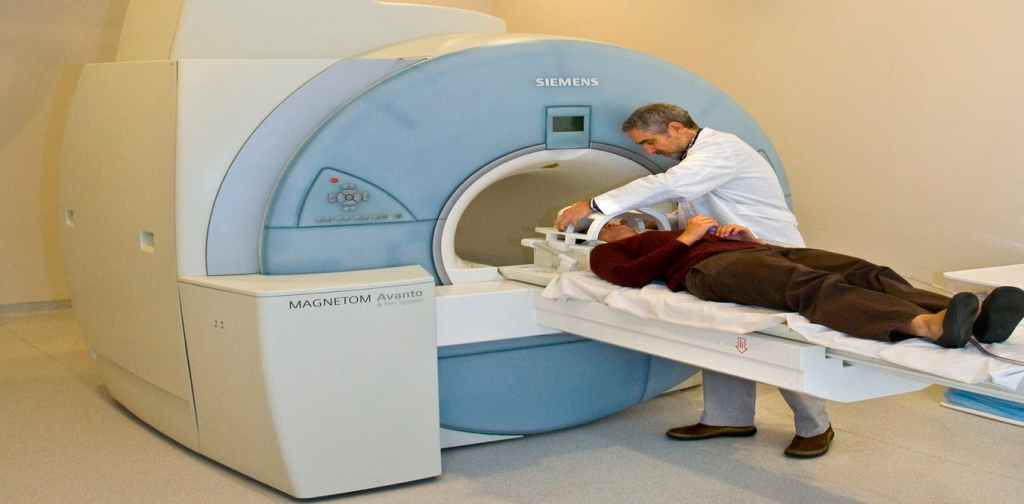
MRI
Cobb skeptically reviews modern science’s explanation of brain function. He questions the detail value of brain imaging (MRI), and researchers’ comparison of computers with brain function. MRI does not analyze brain function at a neuronal level. It offers broad information about areas of the brain that influence action. It fails to reveal anything about the brain at a neuronal level.
Cobb acknowledges brain imaging offers some insight to specific areas of the brain that process information for thought and action. However, Cobb notes MRI is a blunt instrument of analysis because it only indirectly notes stimulus by showing increased blood flow to specific areas of the brain.
“The Idea of the Brain” recalls the history of patients who have been treated for epileptic seizures. The seizures are partially abated by brain surgery.
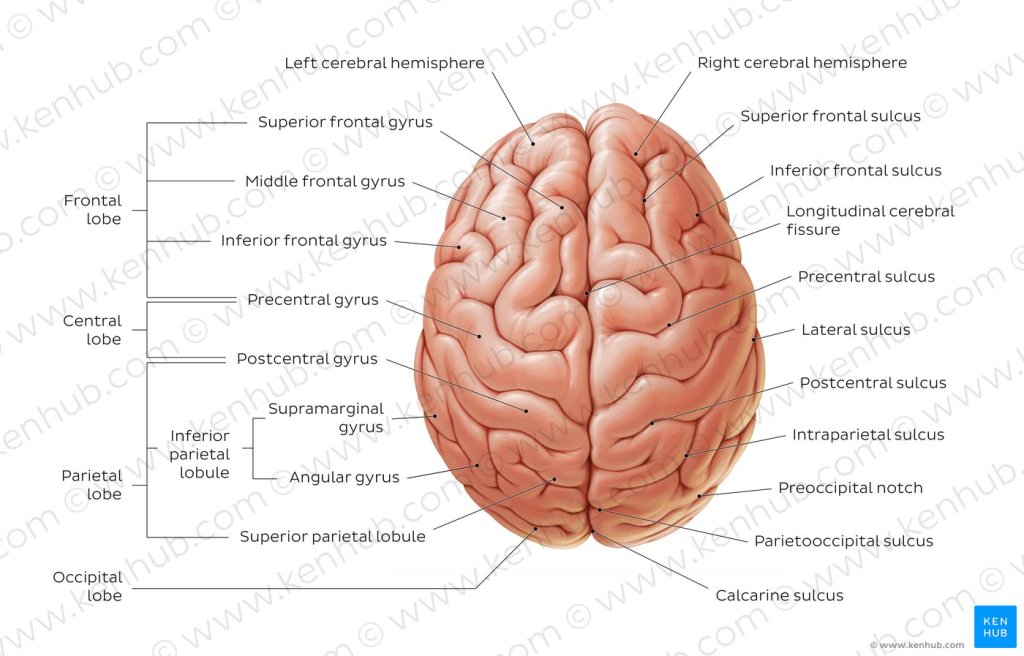
The consequence has been mixed in that the seizures are reduced but some motor skills or memory functions are diminished. Cobb also explains a consequence of separating the two lobes of the brain. When they are separated, the surgery literally makes the person of two minds, one of which knows little about the other’s thoughts and actions. The separation of the two halves of the brain confirms the differences in perception and utility of each lobe of the brain in viewing and understanding the world.
Cobb goes on to criticize comparison of brains to computers by noting neuronal activity is much more complex than the most sophisticated computer programs.
He notes a brain’s network of neuronal activity is different from a computer’s processing of information in fundamental ways. A brain predetermines future action of the body before it knows what action will be taken. There is no predetermination in a computer.
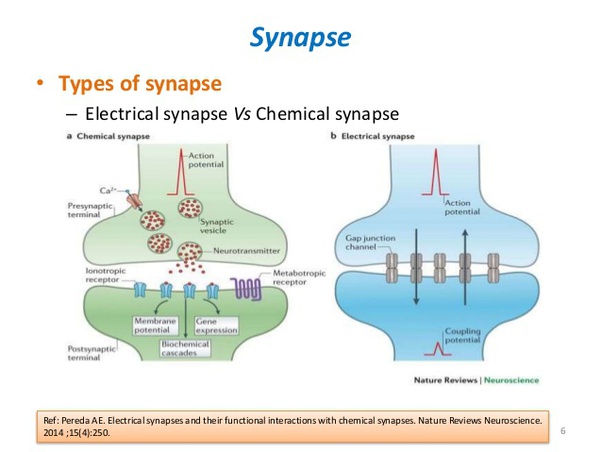
Cobb explains a human brain processes information through chemical as well as electrical impulses.
Cobb notes brains create reality from past recollection and present perception. A brain reconstructs the past from experience and interpretation. A computer does not interpret the past or create thought. Input to a computer is based on coding past and present information that is interpreted and input by humans. There is no homunculus in the human brain. A human brain mysteriously creates the past and present to form thoughts and action. Human thoughts and actions are based on emotion, imprecise memory, and intellect. Computers only correlate, not create, information. A computer devises plans based on correlation rather than creative thought implied by human neuronal activity.
Cobb makes the point that today’s computers do not think in a human sense. Computers do not create but only correlate information with results that are plans for action and execution.
Cobb suggests a computer singularity like that suggested by some futurists is too far into the future to be predictable. Until there is testable proof and understanding of human neuronal action, computers will remain lifeless tools of humankind.
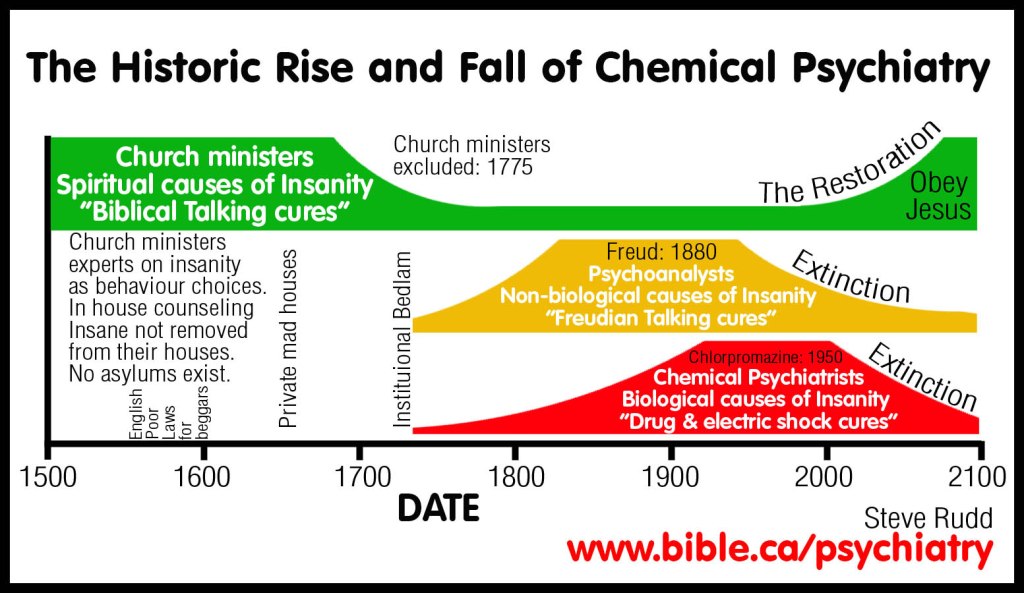
Cobb’s research makes him skeptical of chemical treatment for psychological disorders because of their unsuspected side effects. He acknowledges some of their success in abating Parkinson’s symptoms and other chemically caused maladies. However, Cobb forthrightly warns anyone taking prescribed drugs for mental disorder to continue taking their drugs under the supervision of qualified physicians. Cobb notes two major pharmaceutical companies have abandoned research for chemical treatment of mental disorders because of their imprecise medicinal benefit.
In the end, Cobb is optimistic about science’s ability to fully understand the brain. However, he suggests it will be centuries before full understanding is achieved. Cobb believes the avenue for further research should be on living things which have fewer brain cells. He argues the complexity of neuronal function requires understanding at a neuronal level before expecting a breakthrough that will reveal the mystery of consciousness and human thought and action.
To Cobb, science requires experimental proof. That proof must begin with repeatable experiments that result in the same answers by different experimenters. He argues understanding at a neural level will be key to understanding brain function and its chemical and electrical activity.
Cobb implies present-day computer comparison to the brain is a dead end. He infers–when neuronal brain activity is understood, today’s comparison of computers to brains will be the equivalent of science recognizing the brain, not the heart, is the source of thought and action. Cobb’s implication is that with an understanding of neuronal brain function, artificial intelligence may, in the far future, create life and consciousness. The ramification of that thought is that human procreation may be a thing of the past.
A lot of ground is covered in “The Secrets of Consciousness” but for many who are interested in the subject, little new is revealed.
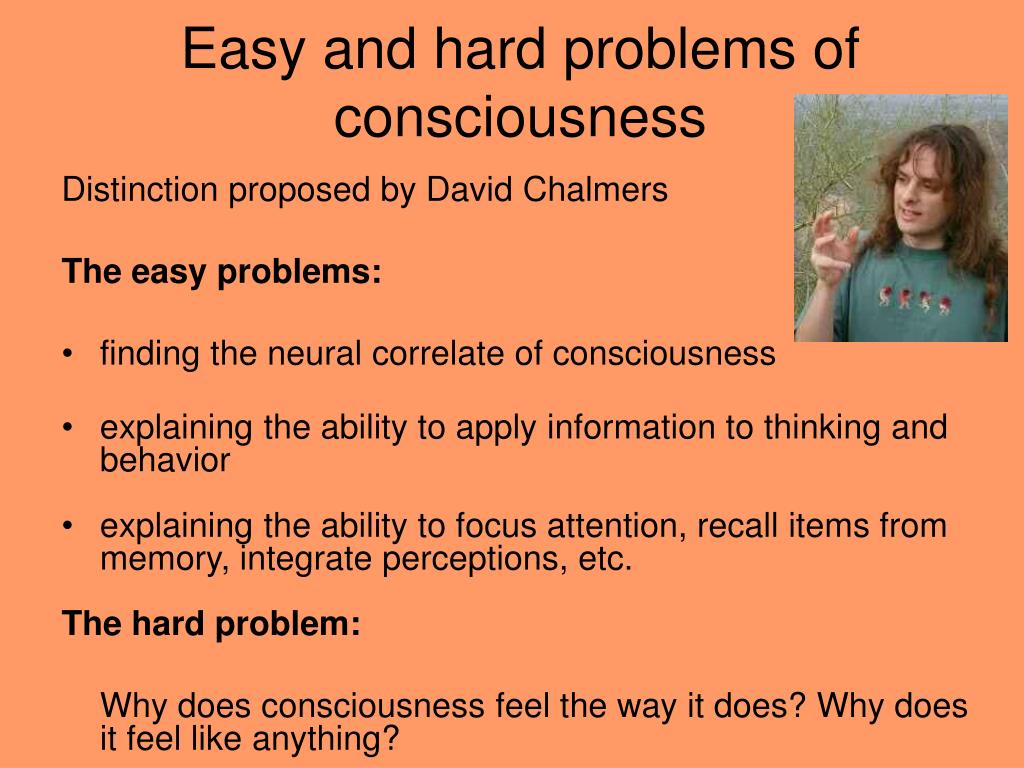
Many articles and books have been written about the easy and hard part of the theory of consciousness.
The easy part is knowledge of the physical characteristics and mechanics of brain function–the “how and where” of information that is stored and transmitted by the brain.
The hard part remains the explanation of what consciousness means, particularly the “whys”. Why are living things aware of themselves, others, and the world from information transmission within a brain. Why do humans get angry? Why do we love? Why do we hate? Why are we sad or happy? Is everything in the universe conscious?
(It is somewhat surprising that “A Thousand Brains” theory is not revealed in “The Secrets…” but it may be timing of publication. Or it may be scientist’s discounting of an engineer’s qualification for understanding consciousness.)
Consciousness is explained as an all-encompassing part of nature. There is an avenue for consciousness in A.I., once the mechanics of consciousness are fully understood. The focus of first chapters are on scientific experiments showing all living things exhibit consciousness through their actions.
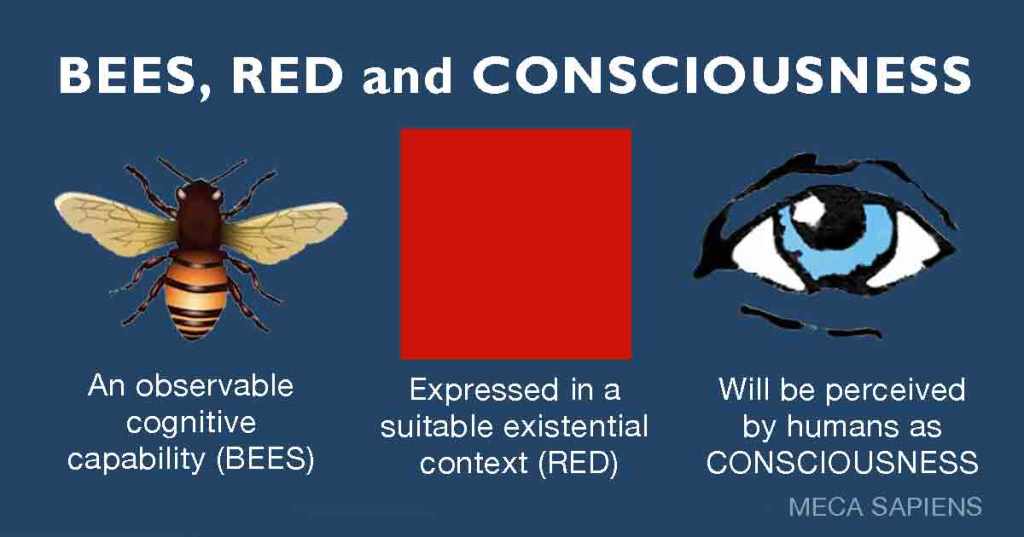
For example, bees show consciousness by seeing red and in choosing the site of their nests with an ability to consciously navigate the world.
Following chapters explain parts of the brain and the mechanics of brain function. They explore the complexity and interconnections of the brain and how different parts of the brain have specific functions. This is the easy part of understanding consciousness because it is something that can be physically measured through brain scans and experiments that correlate actions with brain stimuli.
Next, there are explanations of how experiments with brain stimuli offers potential for reading one’s mind without verbal communication.
It opens the door for a consciousness meter that may allow some level of predictability and mind control. In a positive sense, stimulus experiments might hold a key to reawakening consciousness in comatose patients. The negative sense is the potential for brain washing a non-conforming human being.
Section 4 of these “Scientific American” articles is about “Altered States of Reality”.
A particularly bizarre and threatening chapter suggests someone who sleepwalks can murder another person without being legally guilty of murder.
The last two sections of articles deal with psychoactive drugs, spiritual belief, and their effects on brain function. A listener might view these articles as incentive to experiment with consciousness in two fundamentally different ways. One is with the use of psychedelic’s. The other is to join a monastery or convent.
The last article deals with the end of life. It reveals a possible explanation of why some see a white light just before dying.
Science argues the end of life is the end of consciousness. There is nothing after death–no heaven, no hell, just nothingness.
As an introduction to consciousness, this compendium is interesting. However, after completion, the hard part of consciousness remains a secret.
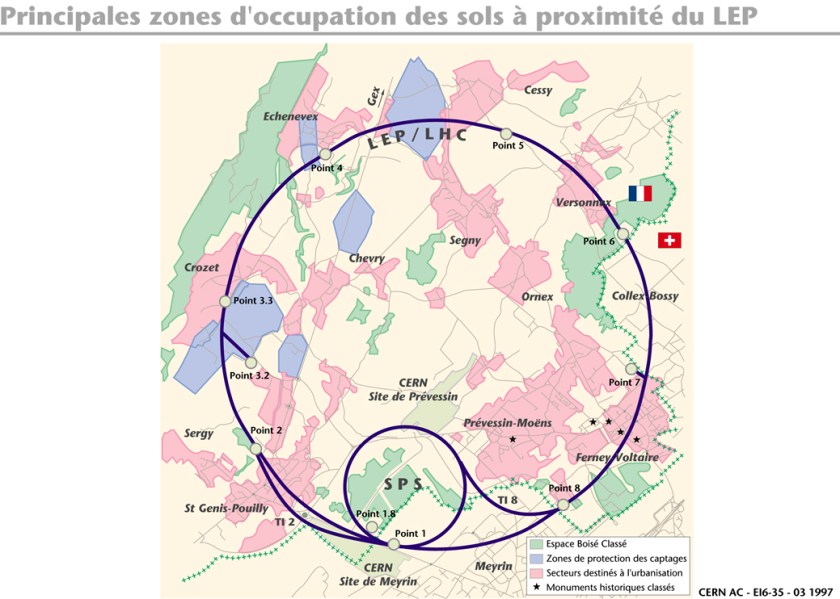
It’s difficult to believe but it has been nine years since the Higgs Boson particle was discovered. The Large Hadron Collider (LHC) in Cern, Switzerland bombarded atoms with protons to reveal a new fundamental particle of atoms known as Higgs Boson.
Alex Boyles offers an excellent narration of several “Scientific American” articles written by scientists about the significance and limitations of the Higgs Boson’ discovery.
Higgs Boson is an elementary particle produced by excitation in what is called the Higg’s field. It is a particle that decays into other particles which makes it difficult to identify. It was theorized by Peter Higgs with five other scientists in 1964. It is a particle that gives mass to what we see in the world. One of the articles cited in this narration suggests the particle that was discovered had less weight than was expected which led to speculation that another, different Higgs Boson, will be found in the future.
As of this date, though many particles have been seen, no new elementary particles have been confirmed by an improved higher velocity LHC at Cern, Switzerland.
One broad category of scientists is defined as reductionist. Scientist’s pursuit of fundamental particles of atoms like the Higgs Boson falls into the reductionist scientist’ category. This category of scientists believes the door to a better understanding of physics can only be opened with the use of fundamental particles in experiments that reliably predict the same results.
Reductionist’ thought is that more fundamental particle discovery will provide an experimental base upon which a provable “theory of everything” can be developed.
Albert Einstein, and other scientists, offer many scientific theories that have been proven by reproducible experiments, either later in their lives or after their deaths.
Without discovery of the fundamental particles of nature, reductionists argue it is impossible to create repeatable experimental results. They believe repeatable experimental results are the heart of truth. However, reproducible experiment is no guarantee of truth. There is the threat of science bias to confirm theories. There is error in experimental set-up. There is the lure of money, power, and prestige of science experimenters that deny or confirm test results.
However, whether denied or confirmed, reproducible experimental results give weight to knowledge, if not absolute truth.
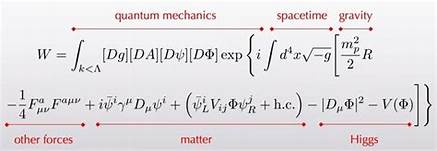
Einstein’s E=mc2 theorized energy and mass are equivalent. The theory is proven by experimentally repeatable destruction by atomic bomb detonations. To discover a “theory of everything” requires proof. Einstein unsuccessfully searched for a “theory of everything” to the end of his life. He theorized there is a “theory of everything”, but he never discovers why quantum mechanics, and the principle of gravity would not fit into a predictable equation like E=mc2.
Einstein believed quantum mechanics and gravity did not fit because of undiscovered knowledge. He dies believing a natural law would be discovered that gave certainty, rather than quantum probability, to natural events.
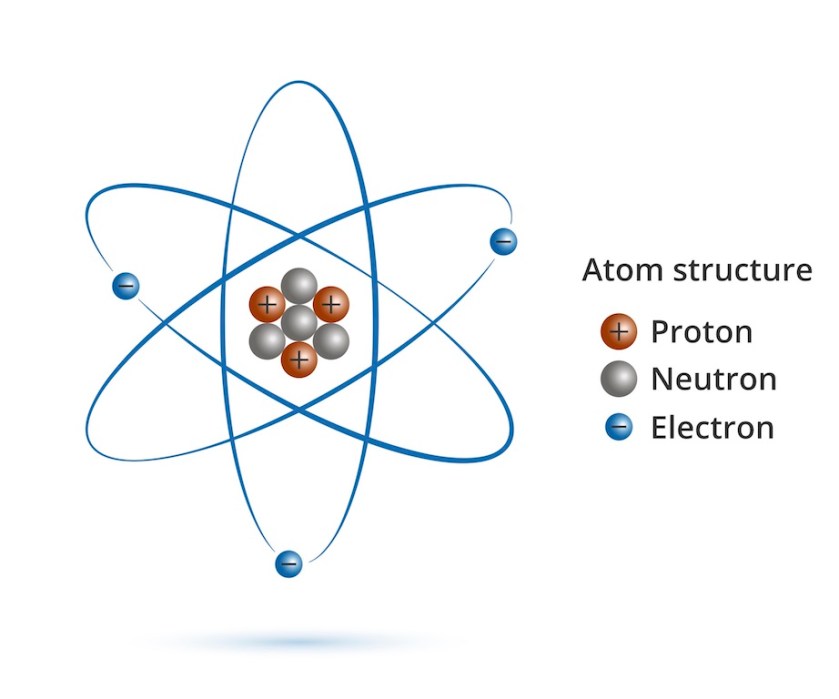
To science reductionists, the answer lies in understanding the fundamental particles of nature and how they relate to each other. However, not all scientists are reductionists. Some suggest the atom and its electrons, protons, and neutrons are all that is needed to pursue the fundamental laws of nature. Some scientists suggest understanding atoms has little to do with understanding nature. To these scientists, Higgs Bosun is of little consequence.
A “theory of everything” is presumably something all scientists are interested in, but their theories range from invention by mind, to the thermodynamics of entropy, to God.
What seems relevant in listening to these “Scientific American” articles is –Different ways of looking for the truth is critical to the future of humanity. To many, pursuit of natural laws by scientists is key to human survival. Whether a science’ reductionist, entropic theorist, believer in God, or philosopher, a provable “theory of everything” offers growth to science and a possible future for humanity.
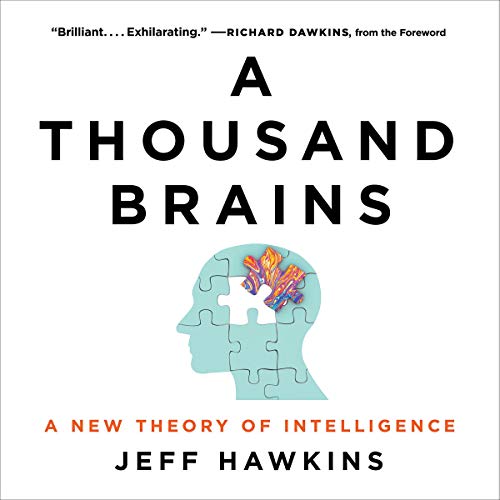
Jeffrey Hawkins (Author, electrical engineer, neuro-science researcher, business person.)
Jeff Hawkins presents an enlightening and, to some, frightening view of humanity’s current condition and future existence.
Enlightenment is in the explanation of how the brain works. Fear is in Hawkins explanation of how human beings make their own choices, with inference that humans have free will.
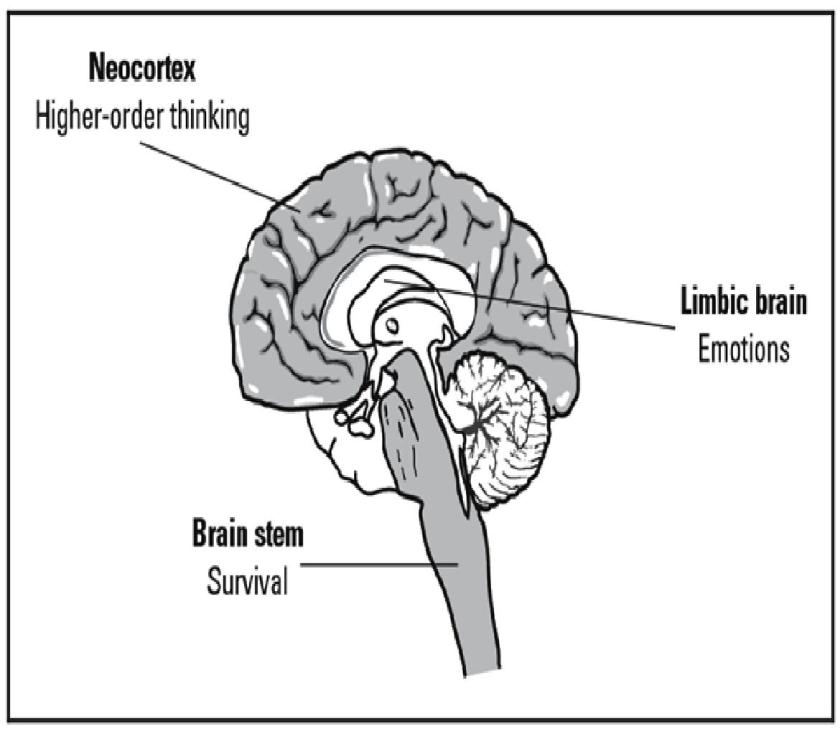
Jeff Hawkins explains a brain has two fundamental parts. One is a brain stem that extends from the limbic center of the brain. The new part is the neocortex.
The brain stem is the “old brain”, the seat of control for body function, with connection to the limbic mid-brain which contains emotion. The “new brain” is an evolutionary consequence of “old brain” origin. The neocortex surrounds and sits on top of the brain stem and constitutes approximately 70% of the human brain. The neocortex is Jeff Hawkins characterization as a “new brain”.
The remarkable insight of the author is that these two brains are interconnected by cortical columns that give humans superior intelligence. That insight opens the door to consciousness and the possibility of creating a dynamic relationship between man and machine.
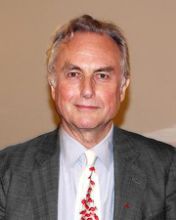
Richard Dawkins, a British evolutionary biologist, writes a laudatory forward to “A Thousand Brains”.
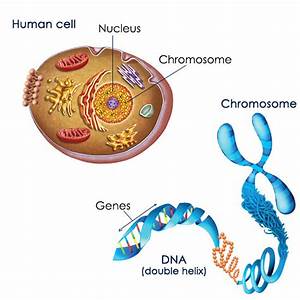
Richard Dawkins comments give listeners clues to the momentous potential of Jeffrey Hawkins experimentally reproducible theory of how the brain works. Richard Dawkins ground-breaking explanation of “The Selfish Gene” explains why Jeff Hawkins theory of “A Thousand Brains” has two fundamental parts, an “old brain” and a “new brain”. Both brains are made up with cells with genes that have a singular purpose. Genes purpose is to genetically replicate themselves. Jeffrey Dawkins implies genes in the cells of the “old brain” came first and the “new brain” came later through natural selection.
Genes are deeply imbedded in cells, the basic building blocks of life.
Jeff Dawkins argues an old brain is the seat of life sustaining action with direct connection to the mid-brain below the neocortex. To Jeff Dawkins, a new brain is an evolutionary change for humans to reach beyond emotions and action for gene survival. The purpose of survival evolves with interaction between old and new brains to accommodate social change. The new brain recognizes gene survival requires more than a “kill or be killed” mentality inherent in “old brain” evolution.
Jeff Dawkins experimentally proves there are synaptic connections between new and old brains within cortical columns that offer choices for change to ensure gene survival. That synaptic connection allows humans to draw on thousands of recorded memories from a person’s life. These memories are hundreds of thousands of models of everything a human brain experiences. As models they are only representations of reality, but humans make decisions based on those remembrances.
The flaw is that human decisions are made based on representations of reality, not necessarily true reality. Experience models in human’ memory can be completely wrong.
The implication of Jeff Hawkins’ research is two edged. One edge leads to fictional characters like Dr. Moreau and Dr. Strangelove. (Moreau is a mad scientist who creates “humanimals” and Strangelove is a fictional Nazi American advisor who wants to drop a nuclear bomb on the Soviet Union during the cold war.) The other edge may lead to a possible eternal future for humankind with travel to other worlds should this one become uninhabitable.
The first edge implies an “old brain” mad science geneticist who creates a software program for cortical columns to rule the world with an “old brain” use of force.
The second edge is a software program for cortical columns that provides rational control of the “old brain” by the “new brain”. Both are intended to make decisions based on perceived circumstances for survival. However, the “old brain” uses force, while the “new brain” uses memory of past experience and reasoned accommodation to circumstance. In either case, humans take advantage of genes survival imperative. That imperative reinforces Richard Dawkins’ theory of the immortal gene that will do whatever it takes to survive.
Though the Dr. Moreau and Strangelove future is obviously negative, there is a flaw in Hawkins second edge. It is the unreliability of human memory. Hawkins answer to this flaw is that a meld between human and machine mind can improve the accuracy of memory. If memories are quickly and accurately recalled, machine/human choice is more likely to preserve life, at least a form of human life.
Still, one wonders who wins when there is conflict between human and machine memory. Does the “old brain” overtake “new brain” cortical column software and respond with emotion and violence?
Jeff Hawkins endorses Richard Hawkins explanation of “The Selfish Gene”. Evolution is simply a reflection of a gene’s desire to survive. Jeff Hawkins infers a “new brain” uses a genetic survival meme that controls “old brain” inclinations. The question is—will the selfish gene of an “old brain” recognize this change as consistent with gene’s evolutionary imperative.
Jeff Hawkins believes A.I. research fails to follow the path of the “I” (intelligence) in A.I. Jeff Hawkins has significantly contributed to human understanding of how the brain works. His remarkable engineering perspective posits immense potential for artificial intelligence. However, if machines can truly be made to think and adapt, will they be allies or adversaries as their thinking evolves? Hawkins, to avoid that possibility, suggests human brains and machines might be integrated to avoid extinction. With Richard Hawkins’ theory of gene survival instinct, a meld between human and machine assures, if not guarantees, human survival.
With true A.I, constructive work can be done in inhospitable human environments like Mars. However, to unleash machine intelligence requires a leap of faith. Can humans trust machines without melding minds with machine technology?
Dawkins notes it is impossible for A.I., as it is presently being developed, to be capable of terra-forming another planet for human survival. Machines have to be able to think like humans in order to deal with the unknown difficulties of terra-forming another planet. Using cortical column programing to create thinking machines might offer the human race many worlds but nature has always gotten in the way of species immortality.
This is an easily understood book for non-scientists to appreciate where genetic science may lead humans. To some, it offers hope. To others, it denies existence of species demise (nature’s cycle of life and death), pre-destination, and belief in God.
It is clear in this biography that Einstein’s contribution to science is as immeasurable as aforementioned luminaries of politics, arts, and science. Einstein, and Newton stand as the elite of the elite in science. One hopes there are others in this century.
Banesh Hoffmann (1906-1986 American mathematician,physicist,and close associate of Einstein.)Helen Dukas (Einstein’s secretary and co-biographer.)
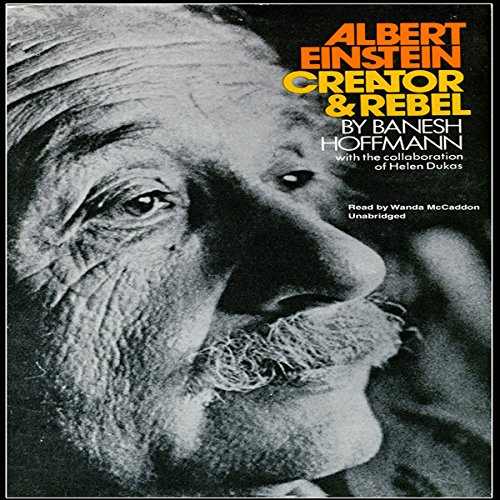
CO-AUTHORS OF “ALBERT EINSTEIN, CREATOR AND REBEL”
The impact of extraordinary human beings is partly the result of chosen facts–there repetition, and future generations’ revisions of history. The best known are men, undoubtedly due to misogyny that reaches back to the earliest writings of history. Whether because of misogyny or other reason, mostly men have had the greatest influence on the course of politics, arts, and science. None more than Aristotle, Jesus Christ, Leonardo da Vinci, Isaac Newton and Albert Einstein.
Aristotle (384BC-322BC, died age 61 or 62)Jesus (4BC-30BC or 33 BC)Leonardo da Vinci (1452-1519)SIR ISAAC NEWTON (1642-1727)Albert Einstein (1879-1955)
Banesh Hoffman and Helen Dukas reveal why Einstein is among a select group of extraordinary human beings. Presumably, Hoffman (because he is a physicist) offers explanation of Einstein’s contribution to the world of science. However, in an equally revealing light (because Dukas is secretary to Einstein), one presumes she offers understanding of Einstein’s personal correspondence and innate humanity. To we who are not scientists, Dukas is the star of the book. Whether searching for understanding of E=mc2 or Einstein’s humanity, this book is worth reading and re-reading.
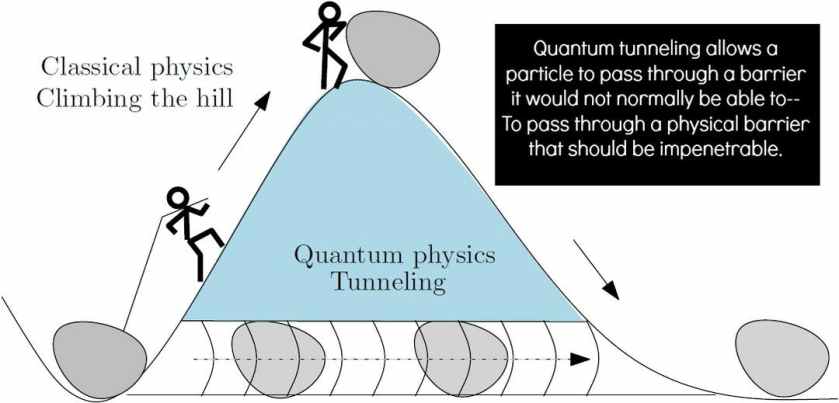
Newton versus quantum mechanics.
Einstein did not overturn the physics of Isaac Newton, just as he did not deny the validity of quantum mechanics.
Einstein added to Newton’s understanding of physics by confirming belief in quantum mechanics with the caveat that quantum mechanics does not reveal everything about physics of the universe. Einstein argues to his last days–their remains an unrevealed fundamental truth about physics. He believes physics will explain why things exist and why manifestation of things is predictable. Like the inviolate speed of light, Einstein insists there is a physics law that gives predictability rather than probabilistic answers for ways of the world.
Baruch Spinoza (1632-1677, Dutch philosopher of the Enlightenment, biblical critic.)
Einstein believes in God but it is the God of Spinoza. Einstein believes God is not a corporeal being but a principle.
To Spinoza, God is everything in nature. Religions look at Einstein and Spinoza as heretics, and as some argue, atheists. However, Einstein suggests “God does not play with dice”. He is saying there is a fundamental cause for everything in the world. That fundamental cause is God. However, that God is nature which, like energy and mass, has equivalence. Einstein believes there is an unknown fundamental law that explains life’s predictable existence which will prove God is real because, in his view, nature is real and predictable.
Einstein clearly identifies himself as a Jew but in the sense of ethnic association, not religion. Part of Einstein’s self-identity comes from his disgust with Germany and its systemic murder of Jews in the holocaust.
Dukas reveals Einstein’s sponsorship of Jews who wish to escape Nazi Germany. She notes that Israel asks Einstein to serve as President of Israel. He is deeply honored but chooses not to accept because his life experience is as a scientist, not a politician.
Dukas explains Einstein has an implacable belief in scientific predictability and an unstoppable drive for proof. Both authors make it clear that Einstein’s greatest discoveries come in his early twenties. He doggedly pursues intuitive truth, even when faced with experiments that fail to support his beliefs. Einstein does not become discouraged. He casts failed experiment and mathematical calculation aside and re-doubles his effort to confirm his intuitive beliefs.
Einstein did not initially realize the potential of E=mc2 as a weapon because he thought too much energy would be required to create nuclear fission that would change mass into energy.
With the discovery of neutrons by Otto Hahn and Fritz Strassmann in 1938, Einstein realizes there is destructive potential in his discovery of mass and energy equivalence. Neutrons used to bombard particular fundamental atoms demonstrate transmutation of mass into energy. That transmutation unleashes a cataclysmic force.
Einstein is shown to be an avid pacifist, but atrocities perpetrated by Germany in WWII leads him to recommend early efforts of America to create a nuclear bomb. However, he is appalled by the bombs use in Japan.
The thought among Allied forces is that Germany would develop a nuclear bomb before Allied forces could end the war. There is the suggestion by some that Germany’s last-ditch effort at the Battle of the Bulge was a desperate attempt to delay defeat to have time to develop a nuclear bomb.
It is clear in this biography that Einstein’s contribution to science is as immeasurable as aforementioned luminaries of politics, arts, and science. Einstein, and Newton stand as the elite of the elite in science. One hopes there are others in this century.
“Black Holes” is a brief compilation of 21st century “Scientific American” articles narrated in Audiobooks by Alex Boyles. At the least, these articles stimulate interest in finding out more about the history of black holes.
When were they discovered? Why is their discovery important? Why do they seem to contradict the experimentally proven theory of Quantum Mechanics? Why should we care?
Karl Schwarzschild (1873-1916, German physicist, astronomer, and mathematician.)
The idea of black holes dates to research done by scientists in the early 20th century. The first black hole is discovered by Karl Schwarzschild. Schwarzschild was the director of the Astrophysical Observatory in Potsdam, Germany.
In correspondence, Schwarzschild confirms Einstein’s mathematical theory of gravity as a form of matter that reinforces the famous equation E=mc2.
John Wheeler (1911-2008, American theoretical physicist.)
Much later in the century, fellow physicist John Wheeler explains “Space-time tells matter how to move; matter tells space-time how to curve”.
The elemental particles of gravity are not clearly understood because they are too small for current scientific observation. Black holes are evidence of gravity, but the evidence seems to conflict with experimentally proven theories of quantum mechanics.
The discovery of black holes is important because it may hold the secrets of gravity. Gravity makes planets and objects within and on planets attract and repel. Einstein explains how gravity distorts the fabric of the universe.
Einstein’s equation indicates that energy and mass are equivalent and therefor never lost.
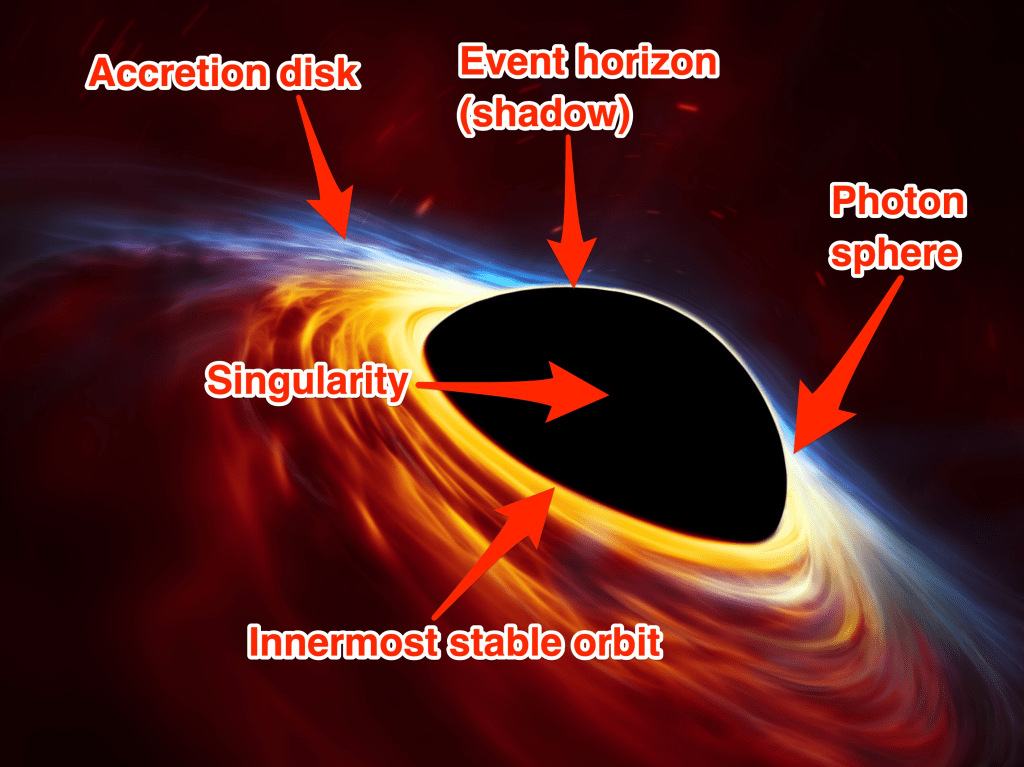
Black holes absorb all things that fall within their gravitational field at their “event horizon”.
However, astronomical observation shows that black holes seem to disappear without any information, residual mass. or energy remaining. This defies the current theory of quantum mechanics and seemingly Einstein’s belief that mass and energy are equivalent and never lost.
Why should we care? Quantum mechanics is a theory that defies certainty. However, Einstein believed God did not play with dice. He believed a future discovery will give humankind an all-encompassing understanding of nature, just as Einstein’s “energy and mass equivalence” offers a limited theory of nature. Black hole existence and disappearance may hold the answer to an all-encompassing fundamental law of nature that explains everything about everything.
Maybe Einstein’s E=mc2 is confirmed (not denied) by the existence of black holes. Maybe, black holes do not violate the equivalence of energy and mass even though information appears to be lost when a black hole disappears.
Could all black holes in a universe act as though they are connected at a distance? Maybe energy and mass equivalence is not lost but spookily transmitted to other black holes. Einstein may yet be confirmed. Maybe there is a missed fundamental law of physics that offers a Newtonian order to the universe.
Anthony Aguirre (Author, theoretical cosmologist, Presidential Chair for the Physics of Infomration at U of C. in Santa Cruz)
Anthony Aquirre offers a modicum of insight (enlightenment) to the concept of quantum reality. The use of the word modicum is not to suggest Aquirre’a effort is insignificant but understanding quantum reality remains fragmentary and obscure.
The title of the book is a clue to Aquirre’s fragmentary insight. To begin with, one must know the definition of koan. A koan is “a paradoxical anecdote or riddle, used in Zen Buddhism to demonstrate the inadequacy of logical reasoning with the intent of provoking enlightenment”.
Aquirre tells a story of a wanderer whose peregrination leads to a meeting with a Jinn who explains life is pre-ordained and cannot be changed because of the laws of quantum reality.
The Jinn tells the wanderer he can see the wanderer’s future because fundamental quantum particles of his being are known to the Jinn. The Jinn can see how each particle interacts with the wanderer’s thoughts and action to determine what will happen in the wanderer’s future. Though there are billions of interactions the Jinn can calculate probabilities of every action the wanderer will take in the future.
Quantum physics is a science of probability that examines the fabric of space-time. Experiment confirms that infinitesimal quantum particles can be in two places at the same time.
However, the particles cannot be both measured and located without effecting their path. If the particles cannot be both measured and located, how can a future be precisely predicted? Putting aside complexity and the problem of measurement and location to predict the future, Aquirre argues quantum physics has opened a new door to the nature of reality.
Schrodinger’s cat in the box is either dead or alive but you cannot know without opening the box.
Aquirre notes humans may see the world as fictive because reality is trapped in one’s mind which cannot see the fundamental particles of nature.
The example would be “green” as a figment of an interaction of one’s mind with what the eye sees; not the essence of what is identified as color because there is no fundamental particle that is the color “green”.
Aquirre explains the arrow of time can only move forward. Time travel to the past is science fiction. Traveling to the past cannot happen based on quantum theory because the past is fixed.
Aquirre is a cosmologist. He discusses the ideas of a created and expanding universe. He refers to the science of Gallio, Newton, Schrodinger, and Einstein. There is a past and a present, but the past can never be relived, and the present is past as soon as it becomes present.
There is only a present with a probabilistic future. The future can theoretically be predicted based on fundamental particles of a quantum universe, but it requires the capacity of a mythical Jinn who can compute an infinite number of variables.
Aquirre leaves listeners in Plato’s cave that shows only shadows of reality.
One comes away from “Cosmological Koans” with the belief that reality remains unknown. Complete understanding of life’s truth (if there is one) rests in the future of science and mathematics, a supercomputer like a Jinn, or God.