PHYSICS REALITY

Audio-book Review
           By Chet Yarbrough

(Blog:awalkingdelight)
 Website: chetyarbrough.blog

Fundamentals: Ten Keys to Reality

By: Frank Wilczek

Narrated by: Sean Patrick Hopkins, Frank Wilczek

To know, is to know that you know nothing. That is the meaning of true knowledge. Socrates (469 BC-399 BC)

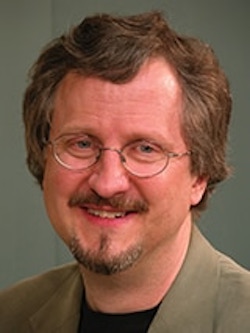
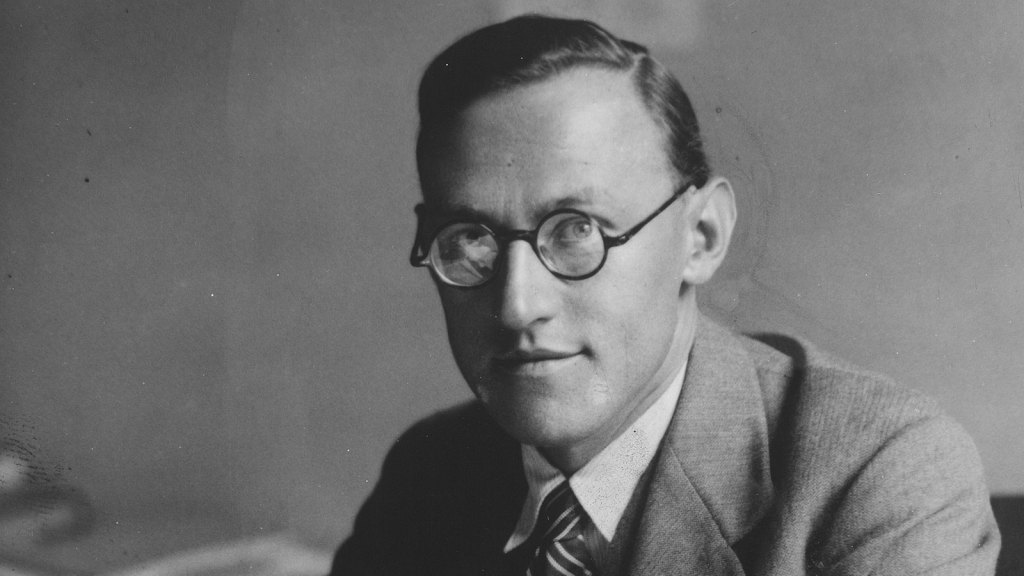
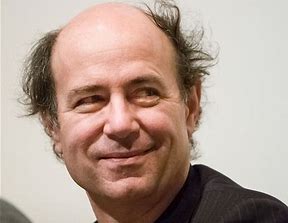
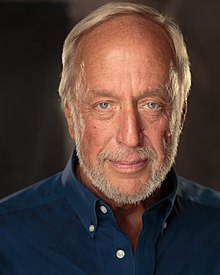
Frank Wilczek (Author, American theoretical physicist, mathematician and Nobel laureate.)

After listening to “Fundamentals”, one recognizes how Socrates’ quote is an apt description of this listener’s knowledge of reality. Frank Wilczek does a good job of explaining the nearly incomprehensible science of physics. 

Wilczek’s ten keys are labels of the known fundamental particles of physics.

  1. Electron
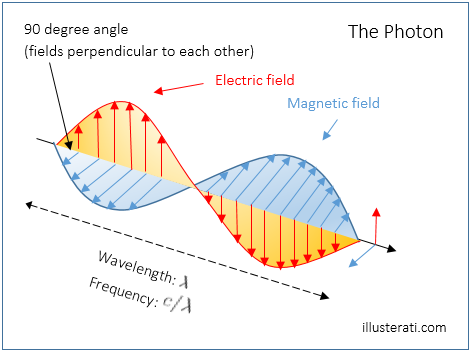
  2. Photon
  3. u quark
  4. d quark
  5. 3 kinds of neutrinos
  6. W boson
  7. Z boson
  8. Higgs particle

After a first listen, the choice of this review is to ignore proffered definitions by offering interesting and partially understood explanations of Wilczek’s keys to reality.  Wilczek explains the science of physics. 

Wilczek argues Physics reveals the truth of reality.

Wilczek suggests a scientist who understands and uses the known ten fundamental particles of physics can create whatever reality there is or may be.  However, that reality is a probabilistic future based on the experimentally proven “uncertainty principle”.  The quanta (the particles of physics) cannot be fixed by position and momentum to insure specific outcomes.  Reality is what it becomes, not what a scientist or anyone else designs by using the particles of physics.
At the level of atomism, reality is a matter of probability, not certainty.

Wilczek explains the science of physics revolves around mass, charge, and spin. Mass is revealed in Einstein’s equation of E=MC2 where energy, as well as an elephant or chair we sit on, is a form of mass and unreleased energy.  Charge is defined by the concept of negative or positive, and spin is either an up or down motion for particular fundamental particles.

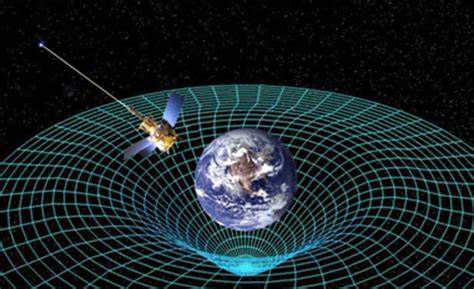
Wilczek adds explanation of Einstein’s discovery of the bending of space from the force of gravity. 

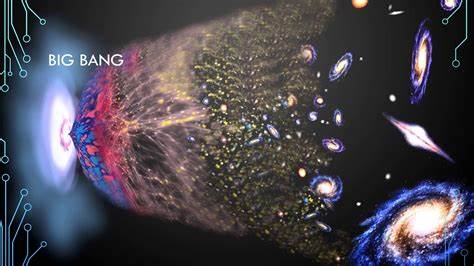
Wilczek delves into the creation of the universe, the recognition of dark matter and energy and its use as a weak force that makes up 75% of the elementary particles of nature, though neither dark energy or mass has yet been seen by anyone.

Wilczek recounts the history of physics from ancient times of Democritus to Newton’s experiment and theory of force, to Einstein’s theories of light, mass, and energy, to Bohr’s spectrographic analysis of atoms, to the 21st centuries discovery of Higgs-Bosun.

Wilczek’s last chapter notes the value of complementarity in physics. Though Einstein insists there is a “theory of everything” that explains we live in a cause-and-effect’ world, he is unable to refute Bohr’s experimental proof of quantum physics.

At the level of atomism, probability rather than certainty is reality. Wilczek does not mean an elephant on a rampage will not destroy everything in its path but that atoms that make the elephant do function probabilistically. Reality is both probabilistic and deterministic. That is complementarity.

This is a book to be listened to more than once, particularly for one who is ignorant of higher mathematics and physics. The author’s story is not bogged down by explanations of those essential subjects that relate to understanding reality.

SCIENCE LEADERS

Audio-book Review
           By Chet Yarbrough

(Blog:awalkingdelight)
 Website: chetyarbrough.blog

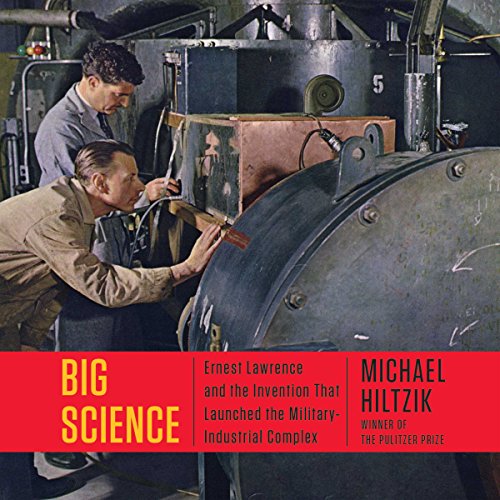
Big Science (Ernest Lawrence and the Invention that Launched the Military-Industrial Complex)

By: Michael Hiltzik

Narrated by: Bob Saouer

Michael A. Hiltzik (Author, American Journalist.)

Interesting details are revealed about the discovery of fission and the advent of the nuclear age in Michael Hiltzik’s history of “Big Science”. Hiltzik shows “Big Science” is expensive and involves large teams of scientists led by people like Ernest Lawrence.

Ernest Lawrence (Scientist,1901-1958) Lawrence died at 57 years of age.

Lawrence was born and raised in Canton, South Dakota, a rural community of less than 3,000 residents.  Lawrence pioneered American nuclear science and won the Nobel Prize in Physics in 1939 for invention of the cyclotron.

Lawrence’s invention led to the creation of the atom bomb, and later the Large Hadron Collider.

LHC MAP SHOWING CERN SITE

Lawrence’s indefatigable energy, persuasiveness, personability, and equanimity gave him the ability to raise huge sums of money to assemble the largest group of physicists, engineers, and experimentalists of the twentieth century.

Lawrence touched the lives of M. Stanley Livingston, J. Robert Oppenheimer, Arthur Compton, James Conant, Niels Bohr, Marie Curie, Ernest Rutherford, Enrico Fermi, Edward Teller, Vannevar Bush, and many others.

Hiltzik notes Lawrence is much more than an experimental physicist. Picture shows early version of Lawrence’s early cyclotron.

Ernest’s ability to organize a team of scientists and engineers to create the first cyclotron coalesced with Lawrence’s personality.  The cyclotron paves the way to a more precise understanding of the atom. His ability to tap into the resources and ambitions of young scientists and engineers, to convince government agencies, and private donors to contribute money for experiment creates a framework for “Big Science”.

Lawrence’s early cyclotron experiments pave the way for splitting the atom which ultimately leads to atomic blasts at Nagasaki and Hiroshima.

Ernest’s younger brother, John Lawrence, became a physician. 

Ernest Lawrence worked on radioactivity with his brother as a treatment for cancer.

Impetus for the unimaginable expansion of “Big Science” is magnified by WWII.  Because of the atom bomb’s horrific consequence, the fame of J. Robert Oppenheimer, and the infamous Edward Teller, become known to the world. Hiltzik explains the key role that Lawrence plays in getting Oppenheimer appointed as the science manager for the Manhattan Project (the project name for America’s rush to create the atom bomb).  Edward Teller is an early member of the team but is found to be a disruptive team player.  Teller is an outlying and brilliant theoretician with an acerbic personality, who breaks as often as he makes friendships with fellow physicists, including Ernest Lawrence.

Leslie Groves (1896-1970, General in charge of the Manhattan Project.)

The creation of the Manhattan Project required the appointment of a military supervisor.

An interesting note by Hiltzik is the relationship between General Leslie Groves and Lawrence. Lawrence, soon after meeting Groves, realizes who is in charge. Any roadblocks for funding or personnel disappear with the appointment of Groves. The two great managers complement each other and grow to respect each other’s roles in the Manhattan Project.

Hiltzik takes listeners into the aftermath of “Big Science” after the war.  Once Russia demonstrates their arrival in the nuclear bomb era, the danger of nuclear war and atomic bomb testing comes to the forefront of research. 

During the Eisenhower government years, a main concern is with the military/industrial complex and competition for nuclear superiority in the face of potential world cataclysm. 

Hiltzik addresses the dismantling of J. Oppenheimer’s reputation by Eisenhower’s appointment of Lewis Strauss as chairman of the U.S. Atomic Energy Commission (AEC). Strauss creates a government investigation of Oppenheimer and his early political life.  Strauss comes off as an unfair judge of Oppenheimer’s contribution to America in Hiltzik’s telling of the investigation.  One is reminded this is in the beginning years of McCarthyism.

Oppenheimer briefly joined the communist party but left it early in his career. Despite Oppenheimer’s great contribution to the creation of the atom bomb, Strauss manages to tarnish the brilliant scientist’s reputation.  Ernest Lawrence did not come to Oppenheimer’s defense.  The two scientists had different political beliefs.  Hiltzik implies Lawrence’s mid-western upbringing conflicted with Oppenheimer’s cosmopolitan life.  Both scientists respected their roles as scientists but differed in their politics.  

Lewis Strauss (Former U.S. Secy. of Commerce & Chair of the U.S. Atomic Energy Commission)

Hiltzik’s driving theme is the importance of “Big Science” and America’s waning support after WWII. Hiltzik’s primary example is America’s failure to lead in creating a super cyclotron like that which was built by the European Organization for Nuclear Research (CERN).  America participated in the cost but chose not to be the lead in its creation. Of particular note today is the need for investment and leadership in environment and energy.

Though many American physicists work at CERN, research at the Large Hadron is managed by 23 member states with each state having a vote.  Members make capital contributions and pay operating expenses while making all operational decisions.  America has no vote.  Japan, Russia, and America are observers (Russia was suspended on March 8, 2022).

Since WWII, one might argue America has played catch-up in “Big Science”.  Sputnik was a wake-up call that led to America’s moon mission which arguably is the last American push for “Big Science.

After listening to Hiltzik’s book, one may ask oneself–where is the Ernest Lawrence of the 21st century that is leading a team of young scientists in “Big Science”?  Ideas are out there but America’s investment seems destined to be limited by capitalist incentives, not “Big Science” experimentation.

CRISPR REVOLUTION

Audio-book Review
           By Chet Yarbrough

(Blog:awalkingdelight)
 Website: chetyarbrough.blog

Editing Humanity (The CRISPR Revolution and the New Era of Genome Editing)

By: Kevin Davies

Narrated by: Kevin Davies

Kevin Davies (Author, Ph.D in molecular genetics, Editor of Nature Genetics.)

The famous philosopher Søren Kierkegaard advised “Life can only be understood backwards; but it must be lived forwards.” 

He Jiankui (Chinese scientist who used CRSPR to modify genes of unborn twin girls.)

Kevin Davies reports the genie is out of the bottle with He Jiankui’s sloppy edit of genes in unborn twins.  Davies suggests science will move forward on gene modification to provide understanding Jiankui’s inept genetic experiment. With that forward movement, Davies implies human extinction will be delayed, extended, or ended by genome experimentation. Proof of Davies conclusion is in Britain’s plan to create a government owned company to investigate genetic diseases and cancer in adults. The pilot project is to sequence the genomes of 200,000 babies according to a May 14th article in “The Economist”.

What remains a danger is that evidence of genomic abnormality is a first step to experiments in changing genetic inheritance at birth. There is a great deal unknown about what some call “dark genetic matter”.

What becomes clear is the potential for great good and great harm in the CRISPR revolution.    

CRISPR-This is an acronym for clustered regularly interspaced short palindromic repeats. It is a tech tool that reads DNA sequences that are fragmentary and not normal. In identifying what appears abnormal, the fragments can be manipulated to repeat what is believed to be the correct DNA sequence.                                                                                        

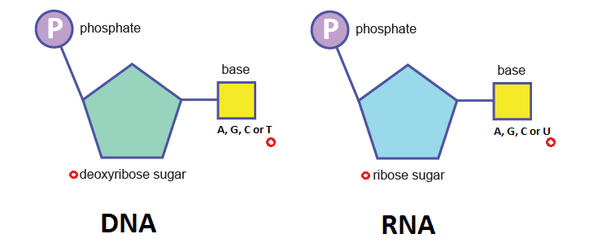
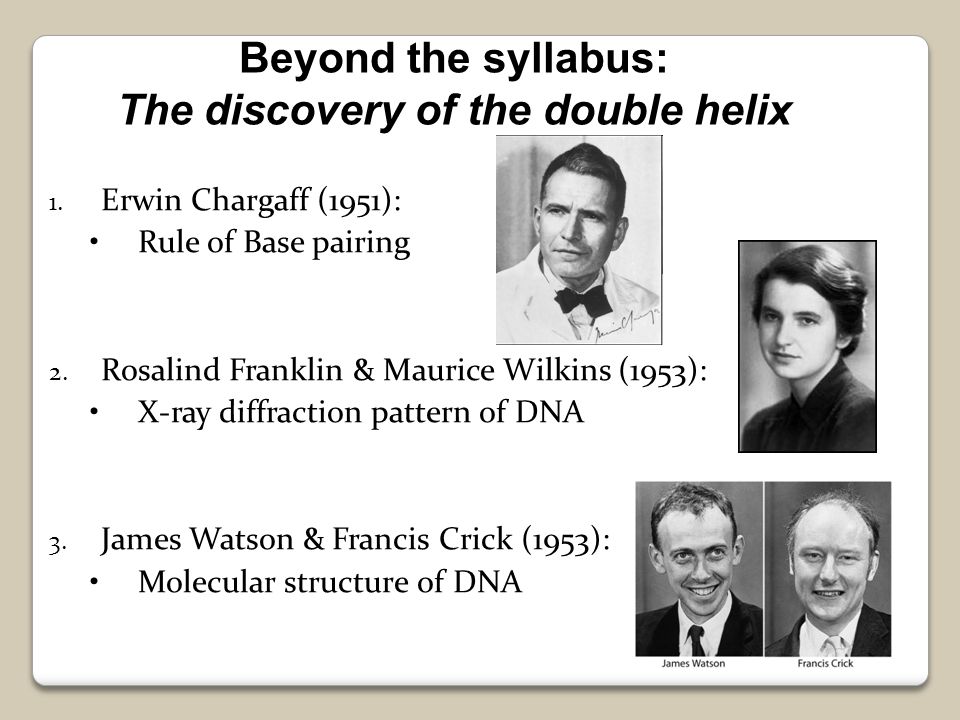
With the discovery of base pairing and the DNA double helix by Watson, Crick, and the (often-unrecognized) assistance of Rosaland Franklin, the basis for genome editing became possible. 

Beyond the syllabus: The discovery of the double helix. Erwin Chargaff (1951): Rule of Base pairing. Rosalind Franklin & Maurice Wilkins (1953): X-ray diffraction pattern of DNA. James Watson & Francis Crick (1953): Molecular structure of DNA.
Davies notes the key to editing genes are the replication errors between DNA strands.  Those spaces are indicative of disease risk that can be modified with CRISPR, a genome editing technique.

Davies offers a picture of Jiankui’s life.  He was educated at the University of Science and Technology of China and received a Ph.D. from the Department of Physics and Astronomy at Rice University in Texas.  From a humble life in China, Jiankui climbs a genetic mountain to arrive at a cliff of science.  One might characterize it as a cliff because a misstep in gene editing may injure or kill a patient and ruin a practitioner’s professional reputation.  Jiankui became a living example of a practitioner’s misstep. Jiankui is serving 3 years in prison and has been fined the equivalent of over $430,000 American dollars.  Davies notes the fate of the prenatal female twins is unknown.

Some would argue there are too many unknowns when genes are modified. As noted by Robert Plomin in “Blueprint”, the interconnection of DNA strands is complex.

Plomin notes the results of DNA modification are a matter of probability, not certainty.  Clearly identifying defective genes and modifying their code to eradicate disease or mental dysfunction is presently beyond current science understanding.

Adding to the uncertainty of results is the potential for creating a radical human cohort that defies societal norms, e.g., the creation of a destructive or superior race of humans.  An infrastructure would have to be formed to make decisions about the course of human civilization.  That infrastructure creates potential for radical authoritarian control of humanity by a select group of minders.

On the other hand, DNA modification holds the potential for eradicating disease.  The idea of eliminating HIV, and other viral diseases holds great promise for the future of humanity.  The cost and benefit will only be realized through experiment.  In one sense, it is like the experiments that doctors have taken since the beginning of medical treatment.  Heart disease and cancer treatments have become better over years of trial and error.

DNA modification is extensively used in agriculture to increase field productivity by reducing disease in plants and hardening resistance to blight.

DNA modification opens doors to regeneration when threatened by species extinction.

The light at the end of this tunnel may be a train or a new day. 

Davies’s underlying point is that CRSPR is here and will not go away.  Experiment will continue whether condoned by government or not.  All species on earth have a finite life. 

DNA modification is a fact, not just an idea.  It is here and will be used.  Science is grappling with rules to mitigate its potential downside while trying to insure its upside.  In the end, human survival will be decided by nature and the politics of control.

DNA

Audio-book Review
           By Chet Yarbrough

(Blog:awalkingdelight)
 Website: chetyarbrough.blog

Blueprint (How DNA Makes Us Who We Are)

By: Robert Plomin

Narrated by: Robert Plomin

Robert Plomin (Author, American Psychologist and behavioral geneticist.)

As a psychologist and clinical geneticist, Robert Plomin seems well suited to explain how understanding of DNA has the potential of mitigating (possibly curing) many human psychological maladies. 

The scientific community notes that 70% of human variability is based on genetic differences among people. 

With a perfect picture of a person’s DNA, there is potential for reducing human mental disorders.  However, Plomin’s argument seems weakened by his research and experience.

Plomin has spent a great deal of his life researching DNA and genetic inheritance. 

What “Blueprint” reveals is how much progress has been made but, at the same time, how far science must advance to clearly understand what the other 30% of human experience has to do with who we are, how we think, and why we act as we do. 

Plomin acknowledges there are different patterns of genetic inheritance.  These patterns show susceptible psychological maladies and other genetic anomalies that cause Huntington disease, Marfan syndrome, cystic fibrosis, sickle cell disease, hemophilia, and others.  The inheritance patterns suggest those diseases are probabilities, not certainties. 

Plomin acknowledges DNA analysis remains too complex for precise understanding of the correlation between cause and effect.  Without precise understanding of genetic manipulation there will be unintended consequence, ranging from disability to death.  Further, there is the ethics of gene splicing that implies creation of a utopian society. 

Who would have the right to determine another’s role in society?  Whether as a philosopher king envisioned in Plato’s “…Republic”, or an Aryan race envisioned by Hitler, genetic manipulation opens a door to predetermined roles for human beings.  Who will make these decisions?  Is a planned society a good thing?  Does a human being want to be classified as a worker, a leader, a thinker, a doer because someone suggests society needs those classifications?

Listening to “Blueprint” leaves little doubt that understanding DNA is important.  What is in doubt is how that understanding is used.  Humanity has survived an estimated five or six million years.  To date, human survival has been based on random modifications of DNA and life experience. 

Maybe genetics offer the next stage in human survival, but abandoning natural selection carries risks based on human thought and action rather than natural selection.  Should science open Pandora’s box?

REAL, NOT REAL

Audio-book Review
           By Chet Yarbrough

(Blog:awalkingdelight)
Website: chetyarbrough.blog

Bitwise (A Life in Code)

By: David Auerbach

Narrated by David Marantz

David Auerbach (Author, software engineer, writer for various publications.)

David Auerbach wishes not to be categorized. However, Auerbach is an author, ivy league graduate, computer geek, software coder, gamer, philosopher, and more. The point is categorization does not explain the real Auerbach. Auerbach offers a wide-ranging conception of what is real and not real in the world.

Auerbach criticizes categorization because it is fictive.  His example is the wrong-headed categorization of sexuality.  What social or cultural value can come from such categorization? Auerbach notes at one point Facebook insists users identify their sexual predilection from a list of hundreds of categories.

Auerbach pursues the concept of what is real in “Bitwise”.  He fails to clearly define real but identifies what real is not.  Real is not simply what the mind’s eye beholds and it is not the mathematics of reproducible experiment.  There is a concreteness to real in Auerbach’s belief.  However, real remains a mystery because it is to be revealed in a future not yet written.

To Auerbach, real lies somewhere within the triptych of human’ thought, mind, and language. 

Auerbach’s philosophical argument for real is partly supported by the evolution of scientific understanding of the world.  Newton discovered a partial truth about the physics of moving bodies.  Einstein expanded Newton’s partial truth with a more comprehensive understanding of space and time.  Einstein’s truth is changing with the discovery of quantum mechanics.  All of these discoveries came from the interplay of human’ thought, mind, and language. This triptych gives concreteness to what is real.

Auerbach questions the advance of software algorithms as a method for finding truth about what is real.  An algorithm is only a tool of human’ thought, mind, and language.  Auerbach infers there may be a time when a computer becomes more human with the ability to define reality but not until they are more than algorithmic machines.  That, of course, raises many more questions.

An algorithm is a set of calculations meant to define reality or conduct problem solving operations when in fact they neither define reality nor solve anything. 

A revelation one has from Auerbach’s “Bitwise” is that gamers have become important to a younger generation because algorithms offer insight to the concreteness of existence.  One can experiment with life’s outcomes without consequence in the real world. 

Auerbach gives the example of a gamers use of a nuclear war game to show how world diplomacy decisions lead to world conflagration.  Early versions are refined but remain blunt predictive instruments that only mimic human’ thought, mind, and language.

In his early career, Auerbach’s software experience comes from working with Microsoft.  He suggests the stewardship of Balmer diminished Microsoft’s innovative history.  Auerbach leaves  Microsoft to join Google.  He finds Google to be a more cutting-edge software developer by recognizing the value of data gathering and mining.

“Bitwise” is a clarion call to the public.  Big Brother is here.  It has the face of Google and the power of a nation-state. 

The near future is dependent on software coding.  The long future is dependent on human’ thought, mind, and language.

OOPS

Audio-book Review
           By Chet Yarbrough

(Blog:awalkingdelight)
Website: chetyarbrough.blog

Complications (A Surgeon’s Notes on the Imperfect Science)

By: Atul Gawande

Narrated by Robert Petkoff

Several years ago, “Being Mortal” was reviewed with appreciation of what the author had to say about a doctor’s responsibility for improving the quality of life for the elderly and terminally ill.  Atul Gawande reinforces the double meaning of “Being Mortal” in his “Complications…Notes on the Imperfect Science”. 

Gawande explains doctors are not superhuman beings.  They are well-educated mortals that practice medicine with the intent of making the right decisions through attentive communication with patients. 

Knowledge from teachers and practitioners is helpful but it is through practice on patients that doctors become proficient for those needing help.  Gawande’s reflective words “practice on patients” are frightening to one who’s life is threatened by injury or disease.

Gawande notes decisions are not based on omniscience but on a doctor’s education and experience. 

Gawande offers notes on the imperfect science of medicine.  He explains why even the most conscientious physicians, let alone bad practitioners, make mistakes.  To become a skilled physician, as with any skill, requires practice.  The monumental difference is medical practice directly affects human lives.  Other professional practices are indirect.

The compounding difficulty of the science of medicine is that even the most experienced physicians make mistakes.  It may be because of missed diagnosis or motivations inherent in human nature (the drive for wealth, power, or prestige) but it is always at the expense of a patient.

Gawande reflects on the intuitive nature of medicine by telling the story of the fire captain that tells fellow fire fighters to leave a building when he senses the building is going to collapse (an anecdote also told in “Thinking Fast and Slow”).  An experienced doctor often must rely on the same sense and can be perfectly right or catastrophically wrong. 

Gawande tells the story of a young woman who is diagnosed with cellulitis in a leg that is swollen and inflamed.  The attending physician asks Gawande to look at the patient to confirm the diagnosis. 

Gawande questions the patient about how she might have acquired the infection.  He suspects it may be from a rare flesh-eating virus even though all the symptoms are consistent with cellulitis which can be easily treated with antibiotics.  Gawande suggests a biopsy and the diagnosis is changed.  It is found to be to the rare flesh-eating virus.  It is Gawande’s intuition that leads to treatment that successfully saves the young woman’s life.

A medical patient listening to Gawande appreciates his candor but fears the truth of human fallibility of a profession one relies upon. 

Most realize all humans make mistakes.  What is disconcerting is the lack of disclosure by many physicians and the doubt raised by Gawande in some doctor’s veracity in seeking what is best for their patients. 

Gawande explains some organizational methods used to minimize mistakes and modify future medical practices.  However, public disclosure of those mistakes (particularly regarding specific doctors and hospitals) is largely undisclosed. 

Gawande is challenging his profession to do better.  To that, the public should be grateful.

ABOUT THE BRAIN

Audio-book Review
By Chet Yarbrough

(Blog:awalkingdelight)
Website: chetyarbrough.blog

Seven and a Half Lessons About the Brain

By: Lisa Feldman Barrett

Narrated by Lisa Feldman Barrett

Lisa Feldman Barrett (Author, Ph.D, Research in psychology and neuroscience.)

Lisa Feldman Barrett gives one pause about thinking they know something about the brain.  Contrary to what some researchers have suggested, Barrett believes the brain is not segmented into three functional areas. 

Barrett suggests experiment confirms the brain is a singular organ, functioning as a network that controls human thought and action based on experience and memory. 

Barrett argues the brain is not for thinking but for survival. 

Barrett’s interpretation of Darwinian evolution suggests brains evolve based on random events.  A human brain evolves into a network of axons and dendrites that are not segregated but coordinated to preserve human existence.

However, Barrett notes that non-use or lack of firing by a neuron will render it dormant. Key to maintenance of neuronal activity is repetitive firing. (Parenthetically, Barrett notes solitary confinement is cruel and unusual punishment for that reason.) Firing multiplies the bushy ends of the neuron (the dendrites) which can become lifelong connections for thought and action. Barrett suggests the early years of childhood should be filled with opportunities to learn through different experiences. She believes exposure to different languages at an early age makes later life language-learning easier.

Barrett explains–through environmental influences human brains wire themselves to the world.  Each wired connection comes from repeated events that substantiate the principle of neurons firing together to become wired together.  If neurons are not stimulated, they become dormant. Barrett argues brain plasticity is based on neuronal activity which suggests different areas of a brain can be retrained to repair some functions of a damaged brain.

Barrett explains human brain’ function evolves over much longer periods of time than other mammals. 

Barrett notes neuronal activity evolves in humans over the first twenty or more years of their lives.  This longer period of evolution allows more flexibility in neuronal activity than is inherent for other species of the animal kingdom.

The mixed benefit of a longer period of neuronal evolution is evidenced by a calf, giraffe, or deer that can walk soon after birth while a human takes two to three years.

The benefit of longer neuronal evolution is a human child’s time to increase and improve neuronal connections based on wider experience. Though humans may not learn to walk as quickly as a baby Giraffe, they learn more from the changing environment in which they live.

Barrett goes on to argue that words spoken by one person to another modify brain function based on one’s experience and memory.  This reinforces realization that words do matter.  When one is constantly criticized or ridiculed, the impact of words on human behavior is highly consequential.  Barrett explains occasional criticism has little effect on neuronal activity, but repetitive criticism can significantly impact the way a brain’s neurons wire together with permanent effects on human behavior. 

This gives credence to psychotherapeutic treatment to discover why humans act as they do.  Psychotherapy offers a mechanism for changing one’s behavior.  This harks back to Barrett’s notes about brain plasticity.

Barrett believes every human being has a “body budget”.  That budget is added to or subtracted from by neuronal activity that is grounded in human relationship.  Barrett argues humans are social creatures. Barrett infers relationships have great consequence on how humankind views and lives in the world.  She argues human relations can either add or subtract from one’s body budget. 

The question becomes–what relational qualities add or subtract to one’s body budget?  Barrett infers love and empathy add while hate and apathy subtract from the body budget.  Becoming the best of who we are seems up to us.

BRAIN SKEPTIC

Audio-book Review
By Chet Yarbrough

(Blog:awalkingdelight)
Website: chetyarbrough.blog

The Idea of the Brain (The Past and Future of Neuroscience)

By: Matthew Cobb

Narrated by: Joe Jameson

Matthew Cobb (Author, British zoologist, professor of zioology at University of Manchester.)

Matthew Cobb is a skeptic.  “The Idea of the Brain” cautions the public about claims of doctors, psychologists, chemists, neuroscientists, philosophers, and technologists who claim breakthrough understandings of the brain.  Cobb explains the history of how, where, and why the brain creates thought and action. Even to this day in the 21st century, brain function remains a mystery to science and the general public.  Cobb does not deny progress has been made but his history of “The Idea of the Brain” shows progress has been slow, often misleading, and sometimes flatly wrong.

He explains how, in the time of Aristotle, the source of human’ intelligence and emotion were believed to be in the heart.

As the present takes hold, it becomes clear that intelligence and emotion come from chemistry and neuronal activity of the brain and body with its primary loci in the brain.  The shift in understanding from heart to brain is proven by science, but details remain as much a mystery in the present as in the past.

MRI

Cobb skeptically reviews modern science’s explanation of brain function.  He questions the detail value of brain imaging (MRI), and researchers’ comparison of computers with brain function.    MRI does not analyze brain function at a neuronal level.  It offers broad information about areas of the brain that influence action.  It fails to reveal anything about the brain at a neuronal level.

Cobb acknowledges brain imaging offers some insight to specific areas of the brain that process information for thought and action.  However, Cobb notes MRI is a blunt instrument of analysis because it only indirectly notes stimulus by showing increased blood flow to specific areas of the brain.

“The Idea of the Brain” recalls the history of patients who have been treated for epileptic seizures. The seizures are partially abated by brain surgery.

The consequence has been mixed in that the seizures are reduced but some motor skills or memory functions are diminished.  Cobb also explains a consequence of separating the two lobes of the brain.  When they are separated, the surgery literally makes the person of two minds, one of which knows little about the other’s thoughts and actions. The separation of the two halves of the brain confirms the differences in perception and utility of each lobe of the brain in viewing and understanding the world.

Cobb goes on to criticize comparison of brains to computers by noting neuronal activity is much more complex than the most sophisticated computer programs. 

He notes a brain’s network of neuronal activity is different from a computer’s processing of information in fundamental ways.  A brain predetermines future action of the body before it knows what action will be taken.  There is no predetermination in a computer.   

Cobb explains a human brain processes information through chemical as well as electrical impulses.

Cobb notes brains create reality from past recollection and present perception. A brain reconstructs the past from experience and interpretation.  A computer does not interpret the past or create thought.  Input to a computer is based on coding past and present information that is interpreted and input by humans. There is no homunculus in the human brain. A human brain mysteriously creates the past and present to form thoughts and action.  Human thoughts and actions are based on emotion, imprecise memory, and intellect.  Computers only correlate, not create, information. A computer devises plans based on correlation rather than creative thought implied by human neuronal activity.

Cobb makes the point that today’s computers do not think in a human sense.  Computers do not create but only correlate information with results that are plans for action and execution. 

Cobb suggests a computer singularity like that suggested by some futurists is too far into the future to be predictable.  Until there is testable proof and understanding of human neuronal action, computers will remain lifeless tools of humankind.

Cobb’s research makes him skeptical of chemical treatment for psychological disorders because of their unsuspected side effects.  He acknowledges some of their success in abating Parkinson’s symptoms and other chemically caused maladies.  However, Cobb forthrightly warns anyone taking prescribed drugs for mental disorder to continue taking their drugs under the supervision of qualified physicians.  Cobb notes two major pharmaceutical companies have abandoned research for chemical treatment of mental disorders because of their imprecise medicinal benefit.

In the end, Cobb is optimistic about science’s ability to fully understand the brain.  However, he suggests it will be centuries before full understanding is achieved.  Cobb believes the avenue for further research should be on living things which have fewer brain cells.  He argues the complexity of neuronal function requires understanding at a neuronal level before expecting a breakthrough that will reveal the mystery of consciousness and human thought and action. 

To Cobb, science requires experimental proof.  That proof must begin with repeatable experiments that result in the same answers by different experimenters.  He argues understanding at a neural level will be key to understanding brain function and its chemical and electrical activity. 

Cobb implies present-day computer comparison to the brain is a dead end.  He infers–when neuronal brain activity is understood, today’s comparison of computers to brains will be the equivalent of science recognizing the brain, not the heart, is the source of thought and action.  Cobb’s implication is that with an understanding of neuronal brain function, artificial intelligence may, in the far future, create life and consciousness. The ramification of that thought is that human procreation may be a thing of the past.

BRAIN FUNCTION

Audio-book Review
By Chet Yarbrough

(Blog:awalkingdelight)
Website: chetyarbrough.blog

The Secrets of Consciousness

By: Essays in Scientific American

Narrated by: Coleen Marlo

A lot of ground is covered in “The Secrets of Consciousness” but for many who are interested in the subject, little new is revealed. 

Many articles and books have been written about the easy and hard part of the theory of consciousness. 

The easy part is knowledge of the physical characteristics and mechanics of brain function–the “how and where” of information that is stored and transmitted by the brain. 

The hard part remains the explanation of what consciousness means, particularly the “whys”. Why are living things aware of themselves, others, and the world from information transmission within a brain.  Why do humans get angry?  Why do we love?  Why do we hate?  Why are we sad or happy?  Is everything in the universe conscious?

(It is somewhat surprising that “A Thousand Brains” theory is not revealed in “The Secrets…” but it may be timing of publication. Or it may be scientist’s discounting of an engineer’s qualification for understanding consciousness.)

Consciousness is explained as an all-encompassing part of nature.  There is an avenue for consciousness in A.I., once the mechanics of consciousness are fully understood. The focus of first chapters are on scientific experiments showing all living things exhibit consciousness through their actions. 

For example, bees show consciousness by seeing red and in choosing the site of their nests with an ability to consciously navigate the world.

Following chapters explain parts of the brain and the mechanics of brain function.  They explore the complexity and interconnections of the brain and how different parts of the brain have specific functions.  This is the easy part of understanding consciousness because it is something that can be physically measured through brain scans and experiments that correlate actions with brain stimuli.  

Next, there are explanations of how experiments with brain stimuli offers potential for reading one’s mind without verbal communication. 

It opens the door for a consciousness meter that may allow some level of predictability and mind control.  In a positive sense, stimulus experiments might hold a key to reawakening consciousness in comatose patients.  The negative sense is the potential for brain washing a non-conforming human being.

Section 4 of these “Scientific American” articles is about “Altered States of Reality”. 

A particularly bizarre and threatening chapter suggests someone who sleepwalks can murder another person without being legally guilty of murder.

The last two sections of articles deal with psychoactive drugs, spiritual belief, and their effects on brain function.  A listener might view these articles as incentive to experiment with consciousness in two fundamentally different ways. One is with the use of psychedelic’s. The other is to join a monastery or convent.

The last article deals with the end of life. It reveals a possible explanation of why some see a white light just before dying.

Science argues the end of life is the end of consciousness. There is nothing after death–no heaven, no hell, just nothingness.

As an introduction to consciousness, this compendium is interesting.  However, after completion, the hard part of consciousness remains a secret.

HIGGS BOSON REDUX

Audio-book Review
By Chet Yarbrough

(Blog:awalkingdelight)
Website: chetyarbrough.blog

Searching for the God Particle

By: Scientific American Articles

                                                         Narrated by : Alex Boyles 

It’s difficult to believe but it has been nine years since the Higgs Boson particle was discovered. The Large Hadron Collider (LHC) in Cern, Switzerland bombarded atoms with protons to reveal a new fundamental particle of atoms known as Higgs Boson.

Alex Boyles offers an excellent narration of several “Scientific American” articles written by scientists about the significance and limitations of the Higgs Boson’ discovery.

Higgs Boson is an elementary particle produced by excitation in what is called the Higg’s field. It is a particle that decays into other particles which makes it difficult to identify.  It was theorized by Peter Higgs with five other scientists in 1964.  It is a particle that gives mass to what we see in the world.  One of the articles cited in this narration suggests the particle that was discovered had less weight than was expected which led to speculation that another, different Higgs Boson, will be found in the future. 

As of this date, though many particles have been seen, no new elementary particles have been confirmed by an improved higher velocity LHC at Cern, Switzerland.

One broad category of scientists is defined as reductionist.  Scientist’s pursuit of fundamental particles of atoms like the Higgs Boson falls into the reductionist scientist’ category.  This category of scientists believes the door to a better understanding of physics can only be opened with the use of fundamental particles in experiments that reliably predict the same results.  

Reductionist’ thought is that more fundamental particle discovery will provide an experimental base upon which a provable “theory of everything” can be developed. 

Albert Einstein, and other scientists, offer many scientific theories that have been proven by reproducible experiments, either later in their lives or after their deaths. 

Without discovery of the fundamental particles of nature, reductionists argue it is impossible to create repeatable experimental results.  They believe repeatable experimental results are the heart of truth. However, reproducible experiment is no guarantee of truth.  There is the threat of science bias to confirm theories.  There is error in experimental set-up.  There is the lure of money, power, and prestige of science experimenters that deny or confirm test results.  

However, whether denied or confirmed, reproducible experimental results give weight to knowledge, if not absolute truth. 

Einstein’s E=mc2 theorized energy and mass are equivalent.  The theory is proven by experimentally repeatable destruction by atomic bomb detonations.  To discover a “theory of everything” requires proof.  Einstein unsuccessfully searched for a “theory of everything” to the end of his life.  He theorized there is a “theory of everything”, but he never discovers why quantum mechanics, and the principle of gravity would not fit into a predictable equation like E=mc2. 

To science reductionists, the answer lies in understanding the fundamental particles of nature and how they relate to each other. However, not all scientists are reductionists.  Some suggest the atom and its electrons, protons, and neutrons are all that is needed to pursue the fundamental laws of nature.  Some scientists suggest understanding atoms has little to do with understanding nature.  To these scientists, Higgs Bosun is of little consequence. 

A “theory of everything” is presumably something all scientists are interested in, but their theories range from invention by mind, to the thermodynamics of entropy, to God.

What seems relevant in listening to these “Scientific American” articles is –Different ways of looking for the truth is critical to the future of humanity.  To many, pursuit of natural laws by scientists is key to human survival.  Whether a science’ reductionist, entropic theorist, believer in God, or philosopher, a provable “theory of everything” offers growth to science and a possible future for humanity.