SELF-PRESERVATION

Audio-book Review
By Chet Yarbrough

(Blog:awalkingdelight)
Website: chetyarbrough.blog

God’s Bankers: A History of Money and Power at the Vatican

Written by: Gerald Posner

Narration by:  Tom Parks

GERALD POSNER (AMERICAN INVESTIGATIVE JOURNALIST)

GERALD POSNER (AUTHOR, AMERICAN INVESTIGATIVE JOURNALIST)

“God’s Bankers” delves into the history of Vatican City to show there is little difference between religious institutions and any organization that puts self-preservation above ethics and morality.

Leaders of religious institutions are as capable of being corrupt and venal as any who manage organizations.  Just as some CEOs of private industry and elected officials of public institutions morally and ethically fail; some Popes lapse as moral and ethical leaders of the Roman Catholic Church.

The Roman Catholic Church has had both good and bad leaders.  From a willingness to look the other way, 6,000,000 Jews are murdered, mob money is laundered, and children are exploited.  No single organization, neither church, financial institution, or elected official is responsible for these immoral and unethical acts but many are complicit.

The Catholic diocese and its brethren have committed every sin known to man (gender identity intended).  The source of their perfidy is not unique to their religion or any system of belief or non-belief; i.e. the source is human nature’s drive for money, power, and prestige.  Popes, CEOs, and public servants are equally seduced by human nature’s drives that influence action.  Human nature is bound, like breath to life, to act immorally and unethically.

ROBERTO CALVI (1920-1982, ITALIAN BANKER CALLED -GOD'S BANKER- BY THE PRESS BECAUSE OF HIS ASSOCIATION WITH THE HOLY SEE)

ROBERTO CALVI (1920-1982, ITALIAN BANKER CALLED -GOD’S BANKER- BY THE PRESS BECAUSE OF HIS ASSOCIATION WITH THE HOLY SEE)

Gerald Posner begins his history of Vatican City with death, by suicide or murder, of Roberto Calvi in 1982.  Calvi’s death is related to the financial practices of the Vatican Bank (aka Institute for the Works of Religion or, sometimes abbreviated, IOR).  From Calvi’s Death, Posner takes church history back to the 1900s when the Vatican Bank is created. 

IOR HOME (THE BASTION OF NICHOLAS V.)


(Calvi’s death is related to the financial practices of the Vatican Bank (aka Institute for the Works of Religion or, sometimes abbreviated, IOR).

The IOR is meant to consolidate the land and money of Vatican City to preserve and expand the wealth of the Church.  

The Bank is a collection and distribution center for money donated, invested, and exchanged (legally or illegally) for preservation and expansion of the Holy Sea.

The primary purpose of the Vatican Bank is to preserve and expand the power and influence of Catholicism.  The fuel for that purpose is money.  Posner’s facts do not deny good works of the Catholic Church.  However, his story exposes the sinful nature of some wearing the robes of Papal authority, and many (employees and consultants) hiding behind cloaks of Papal secrecy.  Posner’s facts imply “being human” is the root of all evil with money as its fuel.

The purpose of the IOR is “to provide for the safekeeping and administration of movable and immovable property transferred or entrusted to it by physical or juridical persons…”  The IOR’s creation is meant to provide money for maintenance and growth of the Roman Catholic Church.  Income is intended to come from charitable activities of the church; paid for by parishioner and lay public contributions, and from legitimate business transactions.  However, Posner shows that charitable contributions and legal business transactions are not enough to sustain Vatican City and its global evangelist goals.

The drive for money is distorted by an implied license to commit any sin necessary to increase income and pay-off any who threaten exposure of illegal activity.  No crime seems out-of-bounds for the Church e.g. its complicity in Nazi occupation of the Balkans; a failure to confront German and Croatian isolation, transport, and murder of Jews; the use of the Vatican Bank to launder money for crime syndicates, the clandestine support of Nazi criminals in return for gold bullion (surmised to have been stolen during the war), espionage participation with American Presidents to subvert communist growth in Eastern Europe, Africa, and South America.  Many of these actions and non-actions increase the wealth of the Church at the expense of Catholicism’s morality and ethics.

POPE PIUS XI (1857-1939)

POPE PIUS XI (1857-1939. Pope Pius XI sells tacit support for the Nazis when the German people are taxed by Hitler to benefit Vatican City at the rate of an estimated 100 million dollars per year.)

Pope Pius XI is consumed by the desire to return Vatican City to a state and is willing to condone and support Mussolini to attain that goal.  Pope Pius XI sells tacit support for the Nazis when the German people are taxed by Hitler to benefit Vatican City at the rate of an estimated 100 million dollars per year.  Though late in Pius XI’s papacy, Hitler and Mussolini’s mistreatment of the Jews is denounced in a Decree that never sees the light of day because of Pius XI’s death.  His successor Pope, Pope Pius XII, fails to register Pius XI’s decree and refuses to condemn Hitler for the final solution during WWII.

POPE PIUS XII (1876-1958, FORMERLY CARDINAL PACELLI)

POPE PIUS XII (1876-1958, FORMERLY CARDINAL PACELLI, Pope Pius XII, fails to register Pius XI’s decree and refuses to condemn Hitler for the final solution during WWII.)

Posner brings us back to 1982 and the death of Roberto Calvi.  Calvi, as a consultant for IOR, launders money for the mafia during his tenure.  Calvi creates bogus charities to hide the transactions.  He recommends Vatican Bank investment in risky ventures that frequently fail.  On balance, until some of Calvi’s activities became public, the Vatican condoned his illegal activity; presumably because ill-gotten gains were greater than losses.  Or, the threat of money laundering exposure is a threat that would tarnish the image of the Church.

NAZISM AND CHRISTIANITY (FAITHS COOPTATION BY HITLER)

Though late in Pius XI’s papacy, Hitler and Mussolini’s mistreatment of the Jews is denounced in a Decree that never sees the light of day because of Pius XI’s death.  His successor Pope, Pope Pius XII, fails to register Pius XI’s decree and refuses to condemn Hitler for the final solution during WWII.

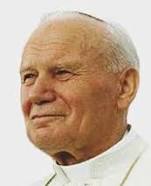
POPE JOHN PAUL II (1920-2005, FORMER POLISH ARCHBISHOP BECAME POPE IN 1978)

Pope Paul II does not come away from Posner’s characterization without some stains.  Though Pope Paul II is highly revered for his charismatic character and willingness to confront communism in Poland, he fails to unwind IOR and its nefarious operations or aggressively attack pedophilia of errant bishops.

ARCHBISHOP PAUL MARCINKUS (1922-2006, BORN CICERO, IL., DIED IN SUN CITY, AZ, PRESIDENT OF THE VATICAN BANK 1971-1989)

ARCHBISHOP PAUL MARCINKUS (1922-2006, BORN CICERO, IL., DIED IN SUN CITY, AZ, PRESIDENT OF THE VATICAN BANK 1971-1989)

Further, Posner notes Paul II’s support of the American Bishop, Paul Marcinkus, when his judgment is questioned in regard to the Vatican Bank.

POPE BENEDICT XVI (ELECTED 4.19.2005, RESIGNS 2.28.2013, THE PRESSURES OF OFFICE SEEM TO OVERWHELM THE PONTIFF)

Pope Benedict, Pope Paul’s successor, is equally tarnished for failing to confront IOR corruption and lack of regulation.  An additional note by Posner is that Benedict fails to expose a homosexual faction of the Roman Catholic Church that coerces the Papacy into promoting Bishops based on fear of exposure; i.e. rather than promotion for ability as members of the hierarchy.

ETTORE GOTTI TEDESCHI (2009-2012 PRESIDENT OF IOR, DISCHARGED AFTER POLITICAL INFIGHTING AT THE VATICAN OVER HIS THEATENED EXPOSURE OF MONEY LAUNDERING)

ETTORE GOTTI TEDESCHI (2009-2012 PRESIDENT OF IOR, DISCHARGED AFTER POLITICAL INFIGHTING AT THE VATICAN OVER HIS THREATENED EXPOSURE OF MONEY LAUNDERING)

In the end, Posner suggests IOR is becoming a more conventional bank with the support of the current Pope, Pope Francis.  The beginning of the end appears with Ettore Gotti Tedschi who became President of IOR in 2009.  Tedschi, an Italian economist and banker, begins the clean-up of IOR.  He is discharged in 2012 but not before a whistle is blown.

POPE FRANCIS (AN ARGENTINIAN, 266TH POPE OF THE ROMAN CATHOLIC CHURCH, NAMED IN HONOR OF FRANCIS OF ASSISSI)

Today’s Pope Francis may be better than yesterdays but tomorrow is another day.  One doubts human nature will change.  Humans are unlikely to escape moral and ethical weaknesses.  An ethical bank, like an ethical church, is an oxymoron.  They both require money to operate and they are managed by human beings.

Steps have been taken to regulate the Vatican Bank and stop its use as a money-laundering center for criminal enterprise.  Francis has ordered the firing and replacement of IOR board members and improved the transparency of Vatican Bank transactions.

After Cardinal Pell is exonerated for alleged pedophilia, Pope Francis returns to Cardinal Pell’s recommendations for restructuring Vatican finances. One wonders how much of the accusations against Pell were initiated by the Catholic church’s resistance to oversite of Vatican finances.

As the ancient saying goes, “Fish Rots from the Head”. With Pope Francis, light is being shed on the perfidy of the Roman Catholic Church. The question is-will it be enough and will it change 100 years of IOR malfeasance; not to mention, the generations of sexual abuse by Bishops and Priests of the order.


THE CONSOLATION OF PHILOSOPHY

Audio-book Review
By Chet Yarbrough

(Blog:awalkingdelight)
Website: chetyarbrough.com

The Consolation of PhilosophyTHE CONSOLATION OF PHILOSOPHY

Written by: Anicius Manlius Severinus Boethius

Narrated by: David Rintoul

BOETHIUS (480 A.D.- 524 A. D., ROMAN SENATOR, CONSUL & PHILOSOPHER)

This translation of “The Consolation of Philosophy” impresses all who listen to it because of the beauty of Boethius’s writing and Rintoul’s narration.  Though one may either agree or disagree with Boethius’s religious philosophy, the juxtaposition of his poetry with chapters of Socratic dialog are a pleasure to hear.

Boethius is born into a rich aristocratic Roman family and achieves high office and continued wealth, even when Rome is conquered by a Ostrogothic King, Theodoric the Great. In the beginning of Theodoric’s reign, Boethius is a court favorite but in 524 AD, he is arrested and imprisoned for (according to Bothius’s writings) defending the poor and powerless from the new Roman Ostrogothic government.  During Bothius’s imprisonment, just before his execution, he writes and completes “The Consolation of Philosophy”.

One may think of Bothius’s book from two perspectives.  One, “The Consolation of Philosophy” is a treatise to justify God.  Two, “The Consolation of Philosophy” is a rationalization for mistreatment by others; i.e. “others” defined as both God and Mammon.

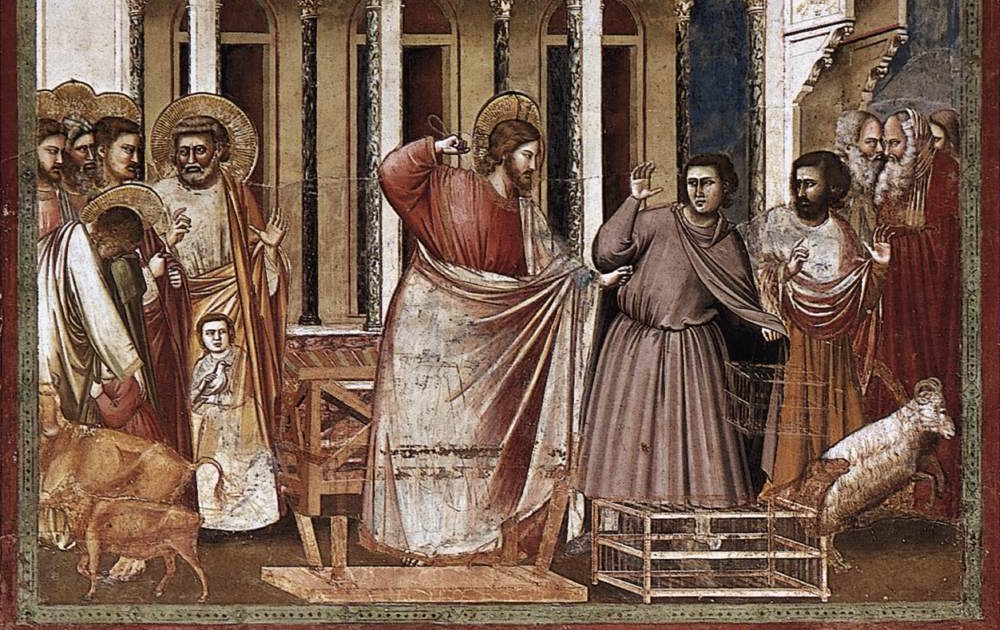
ROMAN MONEY CHANGERS (EXPULSION FROM THE TEMPLE)

Boethius is visited by a vision of the “Lady of Philosophy” in his cell.  The “Lady” has been Bothius’s companion since childhood.  She sees Bothius shedding tears over his plight and asks why he laments his station in life after having so dutifully followed in the steps of the great philosophers of antiquity.  As the “Lady” recounts Plato’s and Aristotle’s teachings, she berates Bothius for his lamentation over loss of wealth, power, and prestige.  In a Socratic dialog, the “Lady” recounts the folly of those who covet worldly ephemera when “happiness” has always been the goal of human life.  Bothius begins to recollect the teachings of Plato and Aristotle that explain wealth, power, and prestige are fleeting values in life and never the source of happiness because of the constant fear of loss and the insatiable lust for more.

BOETHIUS' LADY OF PHILOSOPHY
BOETHIUS’ LADY OF PHILOSOPHY (In a Socratic dialog, the “Lady” recounts the folly of those who covet worldly ephemera when “happiness” has always been the goal of human life.)

OMNISCEINCE
The “Lady” reminds Boethius of the omniscience of God. 

The “Lady” reminds Boethius of the omniscience of God.  He knows all, sees all, and loves all.  Both good and evil are part of earthly life and it is only those who choose moderation in all things good that will find earthly happiness.  Bothius creates a Socratic dialog between himself and the “Lady” to question how God allows evil to exist, and whether man can have free will when God is omniscient and knows each human being follows a known path in life.  Bothius asks “…is there not chance in every person’s life that leads them in one direction or another?”

Boethius implies these questions are answered to his satisfaction.  He accepts God as omniscient.  Every listener will have their own opinion after completing Bothius’s story.  To some, the answers are the machinations of a man who rationalizes his bereft state; to others, the answers are a guide to life in this world.

In any case, “The Consolation of Philosophy” is a literary work of art.

LIFE’S IMPERFECTION

Audio-book Review
By Chet Yarbrough

(Blog:awalkingdelight)
Website: chetyarbrough.blog

This is Your Life, Harriet Chance

Written by: Jonathan Evison

Narrated by: Susan Boyce

Johnathan Evison (Author)

This is a story for those who have reached a certain age.  Though written by a man, it is narrated by a woman.  In some respects, that is a weakness.  Having been written by a man, it may distort the measure of a woman’s life.  However, Jonathan Evison offers an excellent representation of what life and death looks like to a man.  The mistakes some men make in life are legion, both as a parent and husband.

JONATHAN EVISON (AUTHOR)

Evison speculates on an afterlife that says humans either die into nothingness or go to a place of peace and reconciliation.  Those are the only options in Evison’s story. 

The options are extreme but can be ameliorated by a gate keeper’s decisions about life’s led.  However, if you violate rules for a personal appearance to those left behind, you are doomed to the first extremity, nothingness.  Evison’s husband’ and father’ character chooses to violate the rules; in part because of his many guilt’s for living a selfish life.  It seems a penance he must pay to his wife, mistress, and children.

What makes Evison’s story good is the truth of what foolish, selfish men do in their lives.  Though life is ephemeral; either temporal or spiritual, many mistakes are made, both moral and ethical.

HARVEY WEINSTEIN

Harvey Weinstein charged with rape and sexual misconduct on May 25th 2018.

lolita

There is the horrid obsession of men with little girls described in Nabokov’s “Lolita”.  There is the vacuous life of Richard Ford’s main character in “The Sportswriter”. 

There is Russell Banks’ depiction of a morally bankrupt man/boy who prostitutes himself in “Lost Memory of Skin”.

Putting aside these extreme examples, Evison tells a story of the more common variety of male transgressions.  His observations ring true to listeners of a certain age.

INFIDELITY

Most men will see themselves in aspects of Evison’s story; not the extremes of Nabokov, Ford, and Banks but less than what a moral person should be.

Men who cheat on their wives.  Men who use work as an excuse for family neglect.  Men who fail to take responsibility for helping raise their children.  Men who demean their wives because they undervalue their contribution to life’s fulfillment.  Men who neglect their wives because of self-absorption.

HUMAN FAULTS

Evison notes many faults in the lives of women in his story but having been written by a man, his objectivity is suspect.  On the other hand, women do cheat on their husbands.  Women do neglect their children.  Women do drink out of boredom with house work and social isolation.  Women do demean their husbands because they undervalue their contribution to life’s fulfillment.  Women do neglect their husbands because of self-absorption.

Joe Biden (Candidate for President of the United States.)

Evison touches every human being’s faults in “This is Your Life, Harriet Chance”.  No one is exempt from human failing. 

Being of a certain age makes Evison’s story enlightening and entertaining.  Enlightening because a listener knows they are not alone.  Entertaining because a listener will enjoy Evison’s perspective on life’s journey.