CREATIVE ADULT

Audio-book Review
By Chet Yarbrough

(Blog:awalkingdelight)
Website: chetyarbrough.blog

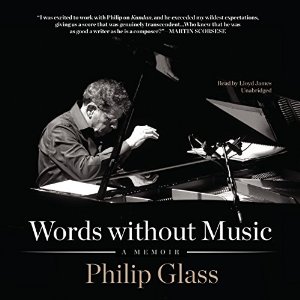
Words without Music: A MemoirWords without Music

Written by: Philip Glass

Narration by:  Lloyd James

PHILIP GLASS (AMERICAN COMPOSER)

“Words without Music” is a memoir of Philip Glass’s transformation to creative adult.  This is a journey taken by every child–with greater and lesser degrees of actualized creativity.  Glass explains how love by others transforms his life and why self-actualization is the fountain of creativity.  This is certainly not a new revelation.  Socrates, through the words of Plato, characterizes self-actualization in the dictum of “know thy self”.   Self-actualization is explained as the penultimate goal of life by Abraham Maslow.
Glass recounts his childhood with a description of his ex-Marine father, and school teacher mother.  Glass’s father is a small business man who raises his children in a rough New York neighborhood.  Strength, determination, and adventurousness come from Glass’s father.

PHILIP GLASS (WITH HIS FATHER, A RECORD STORE OWNER, WHO SENT HIS SON TO HIGH-END MUSIC SCHOOLS)

The soul of Glass’s family is his mother.  She is the conservator, the method-of-living key to Glass’s growth as an artist.  Glass explains how his father feared little in a neighborhood of gangs; while managing his record business with an iron hand.

Glass learns how to overcome fear in working in his father’s record shop and taking the proceeds of the day to the bank at the end of the day.  Glass sees himself, as though in a mirror, when he chooses not to tell his father of a customer’s theft of a record.  Glass knows his father will act reflexively by overzealously punishing the thief.

women are the sun
WOMEN ARE THE SUN, THE SOURCE OF ENERGY AROUND WHICH MEN REVOLVE.    (In Glass’s  pursuits, he notes that his mother is his rock, his supporter and adviser.)

Glass strives to be a good student and is accepted by the University of Chicago based on academic tests rather than high school graduation.  Glass chooses to become a musician based on early experience as a flutist, and later as a pianist.  He finds from counseling, from a Julliard alumnus, that composing music rather than playing music is more conducive to his innate ability.  In these pursuits, Glass’s mother is his rock, his supporter and adviser.

After graduating, Glass chooses to travel to Paris in pursuit of a composer’s education.  He is mentored by an older woman who provides the technical skill and stern loving support he needs to continue his journey toward actualization.  Glass chooses to leave his mentor with a woman of his own age and travel to India.  Glass sees himself in a way that requires reinforcement from others.  “Others” are teachers of the ancient practice of yoga.
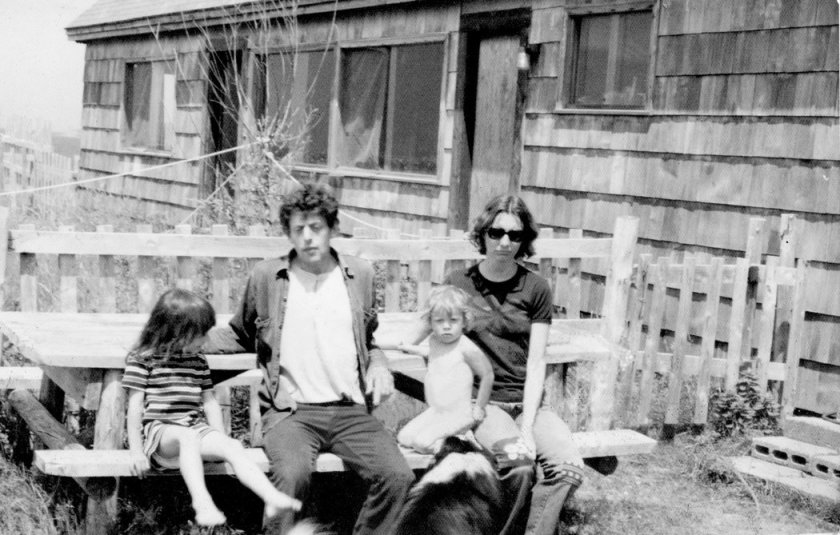
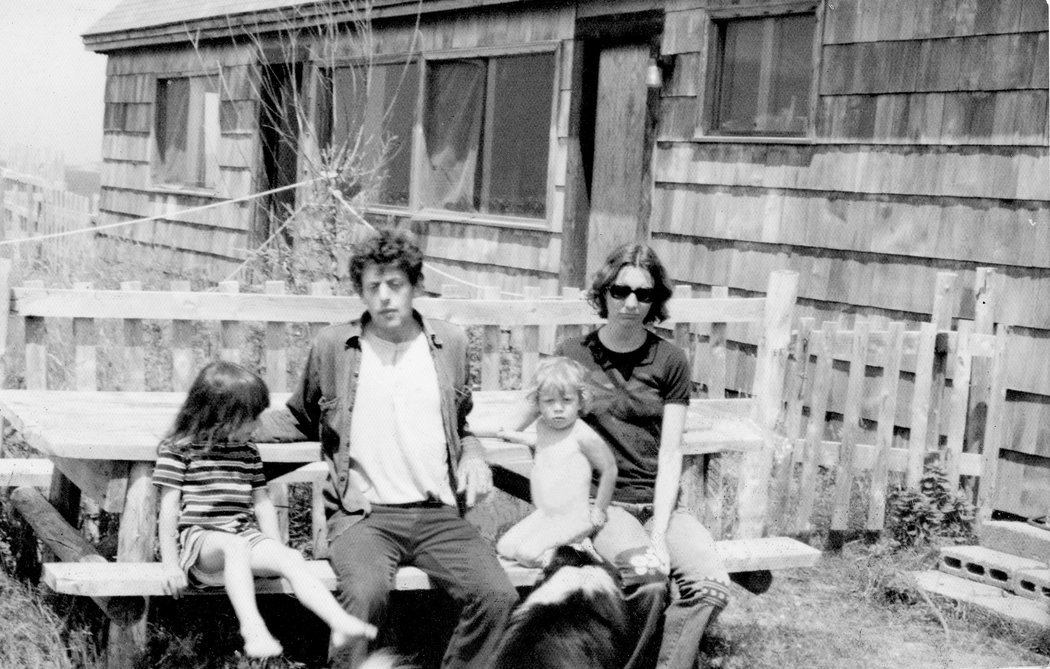
PHILIP GLASS AND HIS FAMILY IN 1973

Glass returns to America with a wife, with whom he has two children.  He lives in New York and works as a furniture mover and taxi driver while pursuing his education as a composer.  Glass is approaching thirty.  He begins to have serendipitous success.  The first big break is an opera called “Einstein on the Beach”.

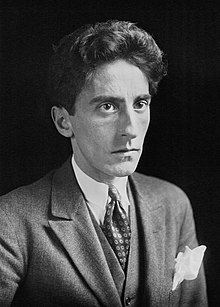
JEAN COCTEAU (1889-1963, NOVELIST, POET, ARTIST, FILM MAKER)

Glass’s journey is symbolized by his dissection of the works of Jean Cocteau; i.e. particularly La_Belle_et_la_Bête (Beauty and the Beast).  Glass argues that Cocteau’s works are about human creativity and transformation.  The symbolism in La_Belle_et_la_Bête is the story of Glass’s life.  The rose in Cocteau’s movie symbolizes beauty (Glass’s body of work). The key is the method (Glass’s mother). The horse is strength, determination, and speed (Glass’s father). The glove is nobility (Glass’s renown as a composer). The castle is a prison that can only be escaped with love from another (Glass’s three wives, his children, his mentors, and friends). The Mirror symbolizes who you truly are (this memoir of Glass’s life).

This is a nicely written and narrated memoir of Philip Glass; considered by many as the most influential composer of the late twentieth century.
ARE YOU BLACK ENOUGH

Audio-book Review
By Chet Yarbrough

(Blog:awalkingdelight)
Website: chetyarbrough.blog

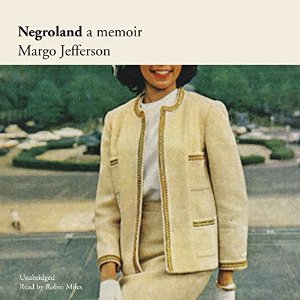
Negroland: A Memoir

Written by: Margo Jefferson

Narration by:  Robin Miles

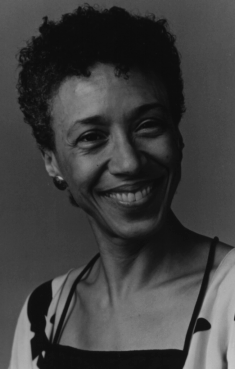
MARGO JEFFERSON (AUTHOR, FORMER THEATRE CRITIC FOR NYT, PULIZER PRIZE WINNER FOR CRITICISM, PROFESSOR @ EUGENE LANG COLLEGE)

Margo Jefferson’s memoir is a perspective on growing up in America.  Jefferson is born in 1947.  She is raised in Chicago by two professional middle class parents; i.e. one is a doctor; the other a teacher.  What makes Jefferson’s memoir interesting is her middle class upbringing.  It sharply defines answers to many questions never asked by Americans.

Are you black enough?  Are you white enough?  Are you female enough?  Are you male enough?  Are you American enough? 

MARGO JEFFERSON (CLASS OF '71 COLUMBIA UNIVERSITY GRADUATE)
MARGO JEFFERSON (CLASS OF ’71 COLUMBIA UNIVERSITY GRADUATE)

Jefferson wrestles with many of the same baby to teenage insecurities all Americans face in their generation.  However, there is an extra layer of complexity for Jefferson because of her color.  Jefferson lightly touches on the history of slavery and its societal consequence but she personalizes that history in explaining how she became Margo Jefferson, an accomplished theatre critic and professor.

Chicago is a microcosm of America.  Discrimination, crime, poverty, and failure in equality of opportunity are the same in Chicago neighborhoods as anywhere in America. 

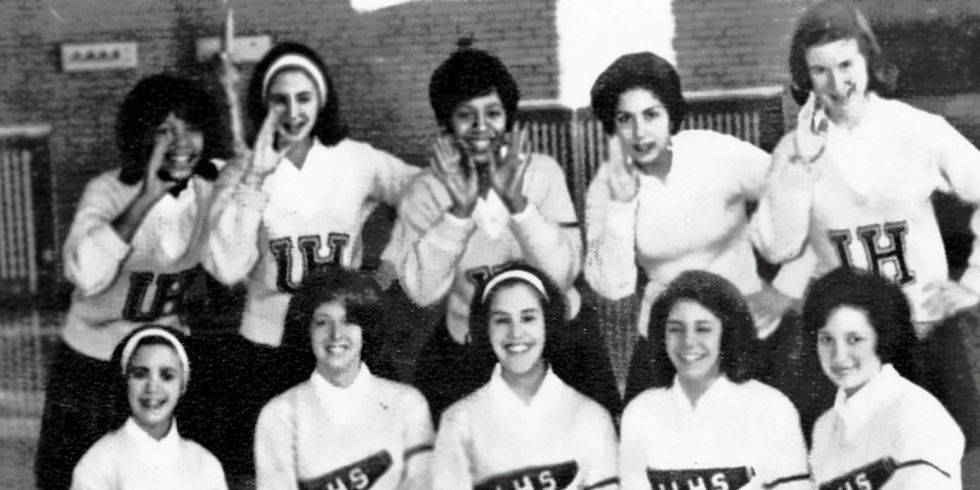
MARGO JEFFERSON AS CHEERLEADER IN THE 60'S (CENTER, TOP ROW)

What Jefferson does in “Negroland” is explain how American society makes her life different because of her color.

Like most girls and boys in high school, Jefferson wants to be popular.  She tries to become a cheerleader.  With success in her senior year, she wonders about the reasons for it taking so long.  Is it because she is not pretty enough?  Is it because she is nearsighted and has astigmatism?  Or, is it because she is not white enough?

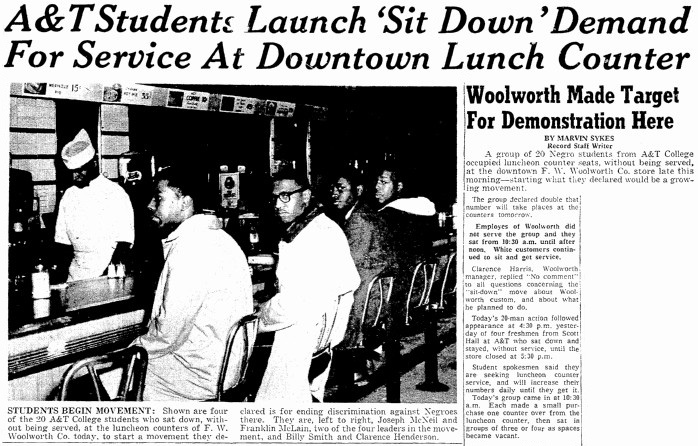
RACISM

Jefferson recalls her family’s trip to Atlantic City for a doctor’s conference.  Reservations were made but when they arrive, the hotel gives the family a poorly appointed room and suggests the restaurant would be off-limits for dining.  They checked out of the hotel the next morning.

Jefferson notes concerns of her mother about how other people of color talk and act while warning her daughter not to emulate their speech or style.  Jefferson becomes aware of the potential stigma of not being black enough among people who are proud to be black.

Jefferson explains how she becomes best friends with a handsome gay white man and revels in the looks black men give that seem to question her interest in being with a white man when she is black.  At the same time, she notes how beautiful women hit on her friend without understanding that he has no interest in them.

LARRY WILMORE (COMEDIAN AND SOCIAL CRITIC)

In listening to Jefferson’s memoir the day after Larry Wilmore’s routine about Obama at the White House Correspondents’ Dinner, one gains better insight to Wilmore’s send-up of President Obama.  Wilmore is unfairly criticized for his tart-tongued stand-up when thought of in light of Jefferson’s memoir.

The last part of Wilmore’s presentation seriously praises Obama’s accomplishment and then uses a pejorative word for black Americans to categorize Obama.  Wilmore’s comment is badly interpreted by some.  Wilmore is saying Obama is great enough to be both the President of the United States (in the sense of acceptance by all Americans) and black enough (in the sense of being accepted by blacks).

Jefferson’s memoir, and Wilmore’s routine shows that being American enough, black enough, white enough, male or female enough, is just being a part of the human race.

SYMBOL OF WOMEN’S RIGHTS

Audio-book Review
By Chet Yarbrough

(Blog:awalkingdelight)
Website: chetyarbrough.blog

I Am Malala

Written by: Malala Yousafzai

Narrated by: Archie Panjabi

Malala Yousafzai may be narrowly identified as a symbol of women’s rights. That categorization is certainly earned but one is left wondering what will become of this young woman.

Malala lives the life of an old soul–advocating for equal rights at eleven years old and being nearly murdered at 15.   Malala will be 23 years old this July, 2020.

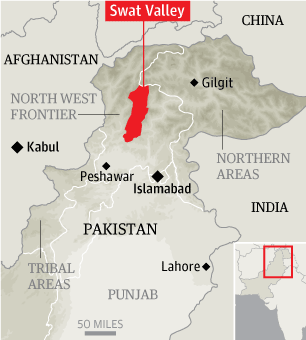
SWAT VALLEY IN PAKISTAN

As most know, Malala is shot in the head by two young Taliban who attacked her school bus in the Swat Valley of Pakistan.  We know they were Taliban because they acknowledged responsibility soon after the attack.

Miraculously, the bullet did not penetrate Malala’s brain but bone fragments from the shock of impact severed a facial nerve and temporarily paralyzed most of her motor functions.

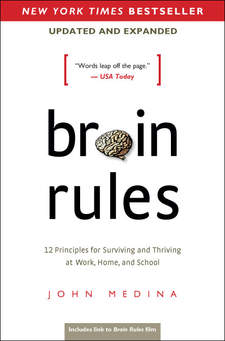
BRAIN RULES

Dr. John J. Medina explains how unbelievably versatile the human brain is by recounting experiences of people who have been severely injured. 

Some recover many of the functions formally managed by parts of the brain that have been damaged.  John Medina notes that eyes do not see; i.e. the brain is the functional source of sight.  He explains the miraculous feats of the brain that manipulate the scenes of life.

Malala is rushed to a hospital in Pakistan and is saved from immediate danger by a competent Pakistani neurosurgeon.  The world is apprised of the attempted assassination and sends messages of support for Malala’s recovery.  In “I Am Malala”, a listener finds that after-care in Pakistan nearly ends Malala’s chance for survival.

MALALA (SHOT AND HOSPITALIZED)

MALALA (SHOT AND HOSPITALIZED)

Somewhat ironically, Great Britain comes to Malala’s aid.  The irony is in the long history of Great Britain’s colonization of Malala’s homeland.  There is historical justification for India/Pakistani’ ambivalence toward the West.  “I Am Malala” touches on that ambivalence.  However, Malala recognizes how important Great Britain’s assistance was in saving her life.

DRONE ATTACK

Malala reminds listeners of the lost lives of her countryman from American drone strikes and the invasion of Pakistani air space; including military action to kill Osama bin Laden. 

On the one hand, Malala shows embarrassment over bin Laden’s successful sanctuary in Pakistan; on the other, she implies America should have worked with the Pakistani government to capture the world’s most notorious terrorist.  There is a whiff of resentment in Malala’s depiction of the West’s treatment of her country but it is ameliorated by her principled stand for education, equal opportunity, and Pakistan’ sovereignty.

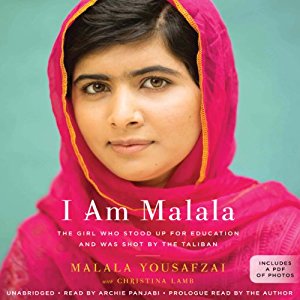
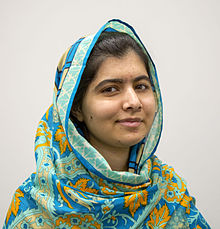
MALALA YOUSAFZAI (NOBEL PRIZE, SAKHAROVE PRIZE, SIMONE de BEAUVOIR PRIZE, NATIONAL YOUTH PRIZE WINNER)

MALALA YOUSAFZAI (NOBEL PRIZE, SAKHAROVE PRIZE, SIMONE de BEAUVOIR PRIZE, NATIONAL YOUTH PRIZE WINNER)

“I Am Malala” shows a young girl with great resilience and ambition.  One is left with the impression that Malala will return to Pakistan.  She will attempt to become a leader in her home country.

The message one gets from her book is that Pakistan is a great and beautiful country that can be a partner with the West as an independent and Islamic nation.  Malala is a politician in waiting.  One hopes for her success.