MOST INTERESTING ESSAYS 12/4/25: THEORY & TRUTH, MEMORY & INTELLIGENCE, PSYCHIATRY, WRITING, EGYPT IN 2019, LIVE OR DIE, GARDEN OF EDEN, SOCIAL DYSFUNCTION, DEATH ROW, RIGHT & WRONG, FRANTZ FANON, TRUTHINESS, CONSPIRACY, LIBERALITY, LIFE IS LIQUID, BECOMING god-LIKE, TIPPING POINT, VANISHING WORLD
Title: Life Is Hard (How Philosophy Can Help Us Find Our Way)
Author Kieran Setiya
Narrated by: Kieran Setiya
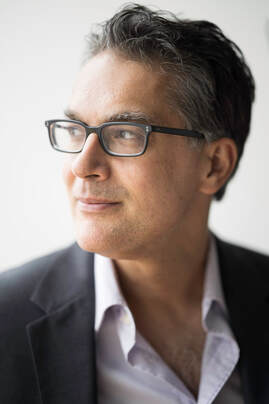
Kieran Setiya (British Author, Professor of philosophy at MIT.)
In the beginning of Kieran Setiva’s book something seems awry. It is written by a PhD graduate of Princeton who is working as a professor at MIT. What does a philosopher who is admittedly happily married (with one child), working as a professor at a prestigious university know about life being hard? Stick with it, and by the end of the book, Setiva’s point becomes clear and worth more than one listen. The “Economist” calls Setiva’s book one of the best of 2022. Being an acolyte of the magazine, it seems prudent to review “Life is Hard”.
Every life has an individual story. Life is hard for every human being whether rich or poor, educated or illiterate, wise or foolish.
The only difference is some die young, others live to be old, but each find life is hard. Setiva explains he is stricken at 27 with an undiagnosed malady that deprives him of sleep because of recurrent pelvic pain. He learns how to cope with the pain and get on with life. In that learning and his personal education in philosophy, Setiva offers insight to what it means to live life.
Hardship is an equal opportunity malady that strikes every human life.
It just comes in different forms, either physical and/or mental. No sentient human escapes the hardship of life. Each person deals with hardship in different ways and with varying degrees of success. Setiva chooses to get on with his life by tolerating and adapting to his pain. He pursues personal goals, presumably with the hope of growing old.
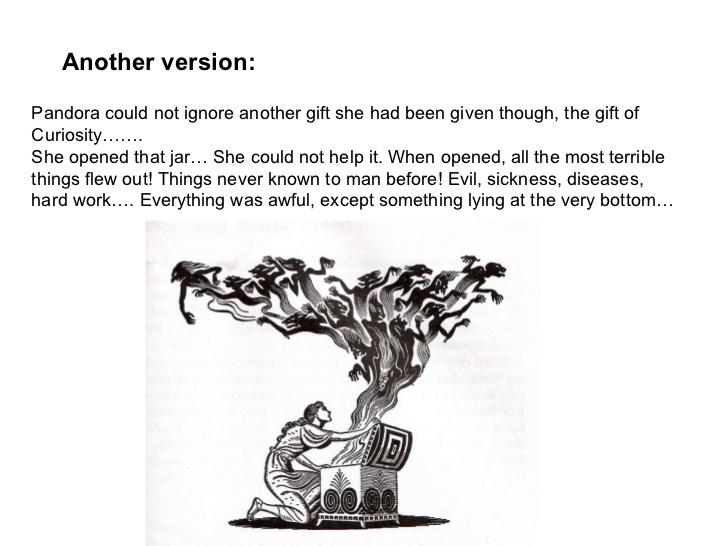
Setiva tells the fable of Pandora’s box. In the Greek legend, Pandora was created by the gods and given gifts by each of them. One of the gifts is a box which she is told never to open. From curiosity, the box is opened and all the maladies of life escape, save one, i.e., hope. Like the biblical fable of Eve’s apple and the tree of knowledge, life’s hardship becomes a part of human life. (Sadly, these are fables of ancient history and biblical tales that set the table for world misogyny.) The idea of hope is a mixed blessing that helps one cope with life but with a price paid for its failure to eliminate hardship.
Hope is the insight Setiva reveals to one who is faced with hardship in life.
Whether one is a university professor, wealthy industrialist, penniless beggar, or cloistered saint, hardship is a part of their life. Hoping to grow old is all that remains, and its value seems circumspect if not useless. Setiva’s book may be one of the best of 2022 but like the hope he describes in the last chapter, it’s a mixed blessing.
Scaling People (Tactics for Management and Company Building
By: Claire Hughes Johnson
Narrated by: Claire Hughes Johnson
Claire Hughes Johnson (Author, former chief operating officer of Stripe, lecturer on management of companies, former technology and operations manager.)
In “Scaling People”, Claire Hughes Johnson offers an insightful and actionable skill-set for both creators and managers of eleemosynary, government, and business organizations. She explains how large and small organizations can become more effective in executing their plans for development.
Johnson suggests every successful organization must have a clear statement of mission. “Mission” statements are the beginning of an entrepreneur’s creation of a company, a non-profits’ purpose, or a government’s departmental objective.
Every effective manager within an organization begins with a clear understanding of mission. Small and large organizations become successful when managers understand their organizations’ mission. The only difference is an entrepreneur’s mission is to prosper and grow a business, a minister’s mission is to ameliorate sin and grow a congregation, a charities mission is to grow and do good for others, and a government agency is to provide public service and grow as needed for those who cannot help themselves.
Johnson explains a manager’s success begins with self-understanding.
Johnson notes the ancient saying inscribed on the Oracle of Delphi in ancient Greece, “know thyself”. Knowing oneself is being aware of one’s nature and limitations. Johnson infers every good manager is a leader because, by definition, managers and leaders lead people.
Johnson works in the high growth industry of technology but her book applies to all organizations whether staid and maintenance driven or growth oriented.
When addressing growth companies, Johnson explains high performers fall into two categories. She classifies the first as “pushers” and the second as “pullers”.
Both are valuable employees but Johnson notes pushers want more money and power while pullers are subject to burn-out. Though their reasons are different, both may leave the organization. The potential cure Johnson suggests is a biannual review, designed in different ways, to motivate them to stay. The pushers should be counseled on what they can do within the company that trains them to take on more responsibility in return for more pay and power. Johnson’s counsel to pullers is to acknowledge their contribution and offer a new challenge that benefits the company and their skill without taxing their life/work balance. Johnson notes this does not always work but it directly confronts, and tries to serve the needs of employees and the organization.
Once a mission is understood by a manger, organizational missions are accomplished with the help of others.
A large part of Johnson’s book is how to make organization’ managers effective leaders of their respective management teams. Johnson explains teams are organized to achieve goals to meet an organization’s mission as a sin quo non of success. Johnson’s book about organizational management is based on her challenging experience as a manager for Google and as the Chief Operating Officer for a successful tech company called Stripe.
Johnson addresses work horses of organizations that at times are low performance employees. Johnson argues their biannual reviews require recognition of measured performance deficiencies with constructive conversation about how they can improve. Johnson suggests it is important to recognize their longevity as employees and their cultural value as longer-term employees. However, if performance does not improve by the next review, a performance plan is written that offers what may be a final opportunity for a low performance employee. If that fails, the employee may be discharged. (Second chances are in the best interest of organizations because of the investment they make in hiring and training employees, let alone continued employment for the worker.)
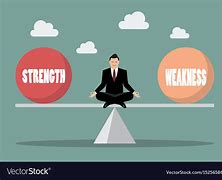
“Scaling people…”, is about measuring yourself as a manager and others that are a part of a companies’ team. The first step is scaling yourself and your own strengths and weaknesses. That is Johnson’s insight to her own organizational effectiveness. Good managers and leaders build on their strengths. That is why Johnson explains how important it is to know yourself. To Johnson “knowing yourself” is the source of an effective manager’s productivity. By knowing yourself, one can overcome personal weaknesses with people who have complementary skills. The key to success is in team building that achieves an organization’s defined mission.
The hard part of Johnson’s insight is in having self understanding. It is made harder by a willingness to reveal it to others. In that willingness, team cohesion is formed. Team members experience self-understanding’s value by fulfilling an organization’s mission.
Only with self-realization, does one focus on mission with the energy and will needed for organizational success. Achieving an organization’s defined mission requires team work.
A manager/leader needs to focus on strengths and weaknesses of teams in the same way he/she understands their own strengths and weaknesses.
Johnson notes self-understanding is only a beginning. “Scaling people…” requires measurement of performance against goal. Teams have to be monitored, measured, and adjusted to more effectively achieve the organization’s defined mission. Johnson offers a number of tools that can be used to monitor, measure, and adjust a team’s effectiveness.
“Scaling people…” is a great addition to the literature of organizational management. “Scaling people…” is an excellent tool for forward thinking organizations interested in growing and improving their performance.
There is little doubt that Esther Ahmad saved herself and some number of innocents by abandoning Jihadist religious beliefs.
Her story is of a very brave woman who defies her family and Jihadism in Pakistan, but her refuge in Christianity carries every organized religion’s contradictory teaching. Her journey from organized Islamic religion to organized Christian religion is trading one mythology for another.
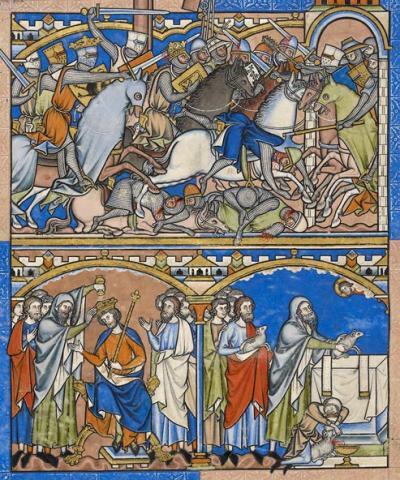
The history of Christian religion is as violent, and conflict ridden as Jihadist Islam.
Depiction of the Eleventh Century Christian Crusades
Absolute belief cannot come from the written word because the written word is man’s interpretation of what may or may not be the word of God, Allah, Yahweh, or whatever name the Divine is given. Esther Ahmad’s journey is heroic. She lives in a culture of violence and overcomes its alure through a will-to-believe. She abandons Islam, marries a Christian, and flees her father’s Jihadism to eventually arrive in America.
What is disappointing is Ms. Ahmad trades one organized religion for another, both of which are based on a man’s interpretation of Holy books. Human interpretations do not prove the existence of Divinity.
Ms. Ahmad’s journey to Christianity is reinforced by what appear to be two miracles. Her mother is cured of heart disease and her brother’s infected leg are healed through prayer. A skeptic might argue they were not miracles because her mother never had medically diagnosed heart disease and her brother’s infected leg may have naturally healed. Organized religion and human belief neither prove nor disprove a Divinities’ existence.
Ms. Ahmad faces an inquisition by Muslim scholars in defending her belief in Christianity.
Depiction of a Christian Inquisition.
She is questioned on four different occasions in front of other Muslim believers. Her knowledge of the Koran trips up the first three inquisitors and the third offers her a bribe to return to the Muslim faith. Ms. Ahmad’s defense is ironic because she shows inconsistencies in the Koran that make Muslim clerics look foolish. The irony is that the Christian Bible is equally riddled with inconsistency, but the Muslim clerics choose only to defend the Koran without pointing to the inconsistencies in the Christian Bible. That is the weakness of the cleric’s inquisition because, like the Koran, the Bible is written and re-written by humans.
The strength of Ms. Ahmad’s story is in her will to resist a patriarchal organization, and her own father who is prepared to murder her for blasphemy.
One can believe in Divinity without believing in organized religion, particularly with the force-of-will demonstrated by Esther Ahmad. “Defying Jihad” is, without question, a story of bravery but also a story of organized religions’ delusions. Ms. Ahmad’s story is a false flag for belief in any organized religion, rather than belief or disbelief in Divinity.
This is a remarkable story of an extraordinary woman, but it fails to move one who has read many histories that show how organized religion has misled people by lying, abusing, robbing, and murdering innocents on their way through life.
Eve Babitz (1943-2021, Author, novelist, essayist raised and died in Los Angeles at the age of 78.)
“Eve’s Hollywood” is Eve Babitz’s memoir of life in southern California. Some names are undoubtedly changed to protect the not-so innocent. Babitz’s picture of Hollywood and her recalled life seems like a fantasy. Her story is filled with the glamour of life when young–with the 60s’ experiences of sex, drugs, and rock-and-roll.
There seems a hint of self-delusion as one hears of hook-ups, enlightenment from LSD, and her struggling year in New York.
Babitz story is of her life in Hollywood among women coveted for looks more than brains by predominantly male rainmakers. The irony is their brains, not their beauty, were the source of their success. Good looks opened doors but being a good Hollywood actor or writer required brains.
Babitz’s Hollywood is an entertaining memoir, but it is a tale that exposes the well-known character of a patriarchal world.
Babitz seems to use sex to open doors to experience and opportunity. With opened doors and intelligence, Babitz achieves a level of economic success as a writer and trend setter. Likely, even today, Hollywood women’s good looks help get jobs.
JEFFREY EPSTEINHARVEY WEINSTEIN(COMBO): This combination of pictures created on October 13, 2017 shows US producer Harvey Weinstein (L) taken on March 10, 2015; (1st row from L) US actress Rose McGowan taken on April 3, 2016, US actress Angelina Jolie taken on September 13, 2017 in New York City, Italian actress Asia Argento taken on May 17, 2017, US actress Gwyneth Paltrow taken on May 6, 2017, US actress Ashley Judd taken on July 25, 2017, (2nd row fromL) French actress Lea Seydoux taken on May 19, 2016, US actress Mira Sorvino taken on December 7, 2015, US actress Rosanna Arquette taken on February 25, 2017, US actress Louisette Geiss taken on October 10, 2017, British actress Kate Beckinsale taken on on August 7, 2017, (3rd row fromL) Television reporter Lauren Sivan taken on July 26, 2014, US actress Jessica Barth taken on June 21, 2012, US producer Elizabeth Karlsen taken on January 4, 2016, French actress Emma De Caunes taken on October 17, 2016, and French actress Judith Godreche taken on October 19, 2015.
An avalanche of claims of sexual harassment, assault and rape by hugely influential Hollywood producer Harvey Weinstein have surfaced since the publication last week of an explosive New York Times report alleging a history of abusive behavior dating back decades. / AFP PHOTO / GETTY IMAGES NORTH AMERICA AND AFP PHOTO / STAFF
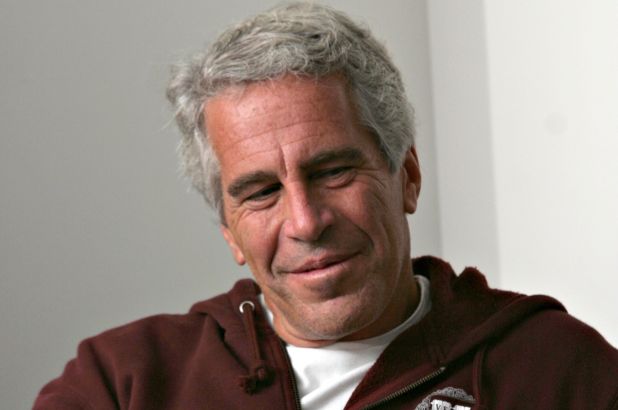
It might be that looks are less important today as powerful moguls like Epstein and Weinstein are exposed but looks still matter but more for women than men.
EVE BABITZ IN HER YOUTHEVE BABITZ LAST INTERVIEW
There seems an underlying sense of despair in Babitz memoir for women who lose their looks as they age. The doors of opportunity that once opened for women among the beautiful are discarded as their youth fades. This seems less true for Hollywood men with long careers like Robert Redford, Cary Grant, Harrison Ford, and so on.
In both the beginning and end of Babitz story, the gap between rich and poor in Los Angeles is briefly touched, though not fully explored.
Her first vignette addresses a beach in Los Angeles that is visited by gang members and how Babitz becomes friends with a young woman who introduces her to one locally famous and violent hood who returns from prison and is soon murdered.
In the last chapter, Babitz describes Watts where rich and poor meet. A married man in his forties has a two nightstand with a twenty-year-old.
He returns to his wife. That might be the end of the story, but the young woman finds he has divorced his wife. The man tries to rekindle the relationship with the young woman from Watts. She is initially overwhelmed by his renewed interest in her but senses something is not right. She plans to break the relationship with a final dinner at a Japanese restaurant, but a comedy of errors interrupts her decision to break the relationship. It is an unfinished story, but one presumes the age difference between the young beauty and the wealthy businessman dooms its consummation.
The underlying truth in Babitz memoir is that there is no difference between the sexes, whether living and working in Hollywood, New York, Seattle, Miami, Dallas, Atlanta, or elsewhere.
Each sex wishes for equal opportunity in their pursuit for money, power, or prestige (hopefully within the boundaries of rule-of-law). Coming to grips with the consequence of men and women being equal is a hard subject for men to accept. Babitz memoir may or may not help men understand that women’s ambitions and capabilities are no different than men.
Patricia Lockwood (Author, poet, novelist, and essayist. Winner of the Thurber Prize for American Humor, and the Dylan Thomas Prize.)
This is the second Lockwood’ book listened to with interest and limited praise. Praise is limited because Lockwood writes with a customized perception of the world that diminishes its broad appeal. Like this critic’s review of “No One is Talking About This”, “Priestdaddy” reinforces Lockwood’s singular perception of the world. However, “Priestdaddy” adds depth to her personalized view of life. “Priestdaddy” has broader meaning than “No One is Talking…” but its appeal remains singular more than universal.
The broad meaning of “Priestdaddy” is that children are genetically marked and shaped by their parents in good and bad ways.
Lockwood’s literary success is remarkable considering the life she reveals. Lockwood’s sense of humor seems inherited from her mother, but her view of the world seems locked in a struggle with perception of her “Priestdaddy” father. Her father became a Catholic Priest, which is possible after marriage with the support of the church. In Lockwood’s struggle with her “Priestdaddy” and unrelated 20th century revelations about Catholic Bishop’ pedophilia, she loses faith in organized religion.
Relationship with one’s parents and the church are only part of Lockwood’s world view. Personal life experiences revealed in “Priestdaddy” also affect Lockwood’s perception of the world.
Reference to the author’s rape and miscreant priests that abuse children is a reminder of the horrors of human perversion. The broader contribution Lockwood offers is the extreme intimacy required to achieve success as an acclaimed writer. Not everyone has the courage, willingness, or skill to tell stories of their personal lives to the public. A listener will agree or disagree with Lockwood’s personal view of the world based on their own parental inheritance and life experience.
Praise is something all writers seek but few achieve. Lockwood is an interesting writer, recognized with national awards for her writing, and praise by many of her readers.
To some extent, one’s interest in Lockwood’s writing is because of the intimacy of her stories. Others fail to have wider appreciation of Lockwood’s writing because her story is not their story. When reading or listening to a book, many are looking for a broader understanding of life, not necessarily revealed by perceptions of a writer’s intimate experience.
Weijian Shan (Author, CEO of a private equity firm PAG, former partner in TPG Asia, holds a Ph.D. from Univ. of CA.)
Weijian Shan is a capitalist, a Chinese economist, CEO of an Asian investment company, and former professor at the University of Pennsylvania, Wharton School. Weijian Shan was born and raised in China during the Mao era.
Shan has written a memoir of his experience in the Chinese Cultural Revolution which began in 1966 and ended with the death of Mao Zedong in 1976. Shan writes about China’s and America’s economic and political differences.
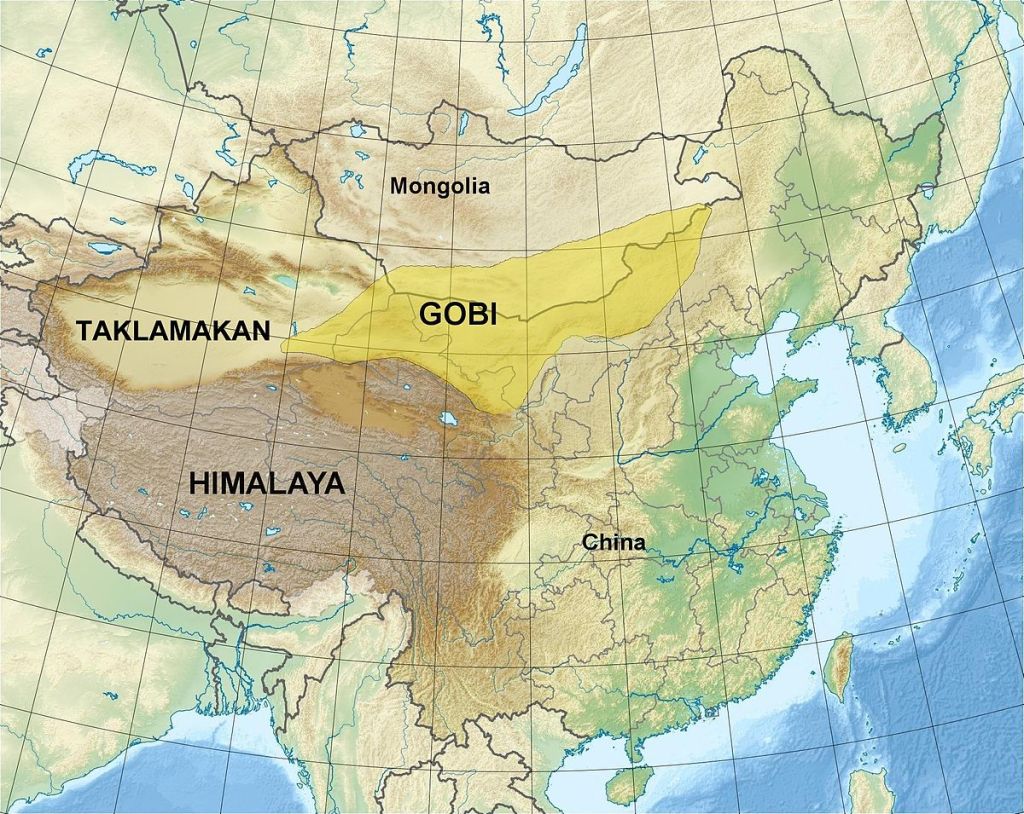
In 1966, Shan is barely a teenager, having only completed his grade school years. Shan, and many other teenagers, are sent to the Gobi Desert during the Cultural Revolution in China. Shan’s compelling story tells of his experience during the Revolution with an explanation of how he is chosen, at the age of 21, to go to college in Beijing. “Out of the Gobi” is published in 2019. Shan offers insight to Mao’s communist political ideas and gives listeners some thoughts about what Mao’s politics mean in the age of Xi Jinping’s rule of China.
Shan is sent to the Gobi Desert during the Cultural Revolution.
Shan’s experience in the Gobi Desert is among many Chinese citizens who are ordered to leave their city homes to experience rural China’s farm life. The irony is that neither China’s Gobi Desert farmers, the bourgeoise, nor displaced youth were culturally, intellectually, or financially benefited. Rural farmers were victimized because citizen relocations impacted food availability for what were subsistence farms. Many farmers were barely able to feed themselves, let alone thousands of relocated city dwellers. Relocated youth were denied higher education and forced into labor camps that had a negative effect on rural prosperity.
From a political perspective, Mao’s Cultural Revolution is a brilliant idea.
This is not to praise Mao as an intellectual but as a pragmatic politician who understood the value of the Cultural Revolution’s youth-relocations to advance his vision of Chinese communism. Mao cleverly instills a sense of discipline and teamwork by indoctrinating China’s next generation with Maoist communism. Today’s Xi benefits from Mao’s Cultural relocation with a generation raised in the time of the 1966 Revolution.
Shan’s story is the triumph of Weijian Shan’s intellectual development without a structured pre-college education.
(Uighur re-education camp in the 21st century.)
Shan’s memoir is a tribute to his personal strength and determination. Reaching the age of 21 in the Gobi Desert did not impede his intellectual development. Through work experience, social engineering among peers, and a commitment to read everything he could find, Shan overcame his Gobi Desert relocation and lack of a high school education.
With little English language skill, Shan begins his education at a Beijing college to become a student of foreign trade relations.
This educational opportunity is presented to Shan at the time of Nixon’s opening of Mao’s China to the world. Shan had firsthand experience of Mao’s communist mistakes. Shan tells the story of lost prosperity and peace for Gobi Desert dwellers and intruders.
In the Gobi Desert, Shan experiences the deficiency of a government system based on bureaucratic control that distorts productivity reports to make superiors look good. The disconnect between real progress and reports of progress hides the truth of economic waste and deterioration. Shan shows how orders from above depress productivity in two ways. One, by government superiors being ignorant of true productivity, and two, by discouraging the value of competition.
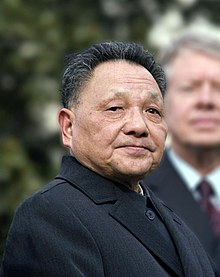
Shan reveals the strength and weakness of Deng Xiaoping’s opening of China after the death of Mao.
Without question, Deng contributed to China becoming the world’s second largest economy by GDP in 2010. On the other hand, Shan suggests Deng’s decision to crush the Tiananmen Square demonstration is the Communist Party’s misreading of demonstrators’ intent and support of economic revisionism. Deng (though reported to have given the order to jail or kill demonstrators) is revealed as a foil to Mao’s dictatorial beliefs in communism. Shan points to the odd fact that Mao removes Deng from leadership but refuses to remove Deng from the Party. The inference is that Mao may have understood the value of capitalism as a communist precursor (as noted by Marx).
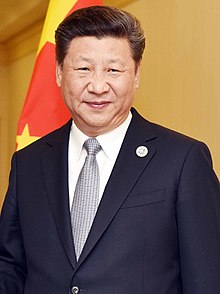
XI JINPING (GENERAL SECRETARY OF THE COMMUNIST PARTY OF CHINA AND PRESIDENT OF THE PEOPLE’S REPUBLIC OF CHINA)
President Xi is reestablishing communist party authoritarianism and may make the same mistakes Mao made, without a foil like Deng. Singular authoritarian leaders in the 21st century often deny the merits of democratic free enterprise that reduces the threat of kleptocratic bureaucracy.
Dirt to Soil (One Family’s Journey into Regenerative Agricultural
By: Gabe Brown
Narrated by: Gabe Brown
Gabe Brown (Author, farmer.)
“Dirt to Soil” offers a glimpse of a farmer’s life. Gabe Brown’s family manages a 5000-acre farm in North Dakota. Brown and his son’s farming experience offer insight to a branch of biology that addresses the relationship of a farm environment’s organisms. Brown is not a scientist or academic. He is a farmer.
Gabe Brown became an expert in soil conservation based on experience and insatiable curiosity. Though he went to college, it is four years of hardship that gave Brown an understanding of farming. From that experience, Brown reordered his practice of farming based on five principles.
No soil disturbance (no-till, no-synthetics).
Reinforce Soil’s Natural Defenses (the outer layer of soil protects all life)
Promote biodiversity (marry species nature’s way to keep soil healthy)
Keep living roots in the ground as long as possible and use cover crops with seasonal diversity.
Animal & Insect integration (both predator and protector) to promote natural diversity.
Brown’s journey to understand and practice these farming principles increased the profitability and durability of farmland. “Dirt to Soil” is a record of Gabe Brown’s personal farming and educational journey. Though Brown admits to being a city boy, his experience in 4H, some academic classes, and visits to his future wife’s farm sparked a lifelong interest in farming. When his wife’s parents retired from their 1700-acre farm, Gabe Brown and his wife took over management.
Gabe Brown’s farming education came from 4 years of weather-related catastrophes that nearly ended his career as a farmer. He notes his wife appeared ready to give up farming life, but he refused to give up. His experience in those years re-focused his attention on the intimate relationship between nature and farming.
Brown explains, in “non-wilding” words, how it is necessary to rewild his farm. By watching how nature preserves itself, he changes his farming practices. Without plowing, furrowing, and fertilizing with chemicals designed by farming industry, Brown rejects practices that artificially enhance dry soil that exposes it to natural diseases and the exigencies of weather. He turns to observing nature to find how it replenishes soil’s natural nutritional condition. His objective is to turn “Dirt to Soil”.
Brown reasons that raising cattle on the farm would fertilize its soil. (A caveat to Brown’s observation is that fertilization by cow manure requires frequent grazing rotation, not industrial manure concentration.)
(There is a concern about carbon dioxide increase and ground water contamination from livestock. In a 2019 overnight stay with a farm family in New Zealand, there was objection to the former Prime Minister’s attempt to burden farmers with the cost of better livestock control.)
With natural fertilizer and cultivation of different plant species, Brown finds soil nutrient value improves. That soil improvement is absorbed by newly planted crops that benefit both livestock and consumers. The planting is done without tilling the ground but planting seedlings in unplowed ground. After experimentation, Brown begins rotating crops based on soil enrichment objectives.
Brown experiments with different species of plants to find which types replenish the soil in his area of North Dakota. With these discoveries and changes in practice, Brown’s farm prospers.
Brown notes change in farming practices is a slow process because of a false belief that high productivity is more important than nutritive value. When a film crew interviews Brown, one of the film’s producers is asked to buy a dozen eggs at the market and bring them to the farm to show the difference between eggs from “free range” chickens vs. caged chickens.
This is a comparison of a cracked egg from a free-range farm and an egg from a caged chicken farm. Brown notes his rewilded farm shows a brighter yellow yoke.
“Dirt to Soil” goes on to become a teaching facility for future farmers. Brown’s son works on the farm and will inherit it when his mother and father pass. In the meantime, an internship program is started to pass on the educational experience of Gabe Brown’s farming life. Rewilding farms means paying attention to the diversity and value of nature. Brown explains the nutritive value of food has fallen in America because artificial fertilizers have replaced the natural processes of nature.
Brown’s story about eggs reminds one of a trip to a Norwegian fish farm last year. One of our fellow travelers asked the employee of the farm if there is any difference between fish-farm’ salmon and a wild salmon. His answer is there are very few wild salmon left in the sea. However, he notes wild salmon have more Omega-3 per serving than farmed salmon which have less protein.
Gabe Brown explains his goal has always been to make a good living at farming and pass that skill on to his family and every American interested in that life. He concludes the success of farmers should not be based on crop yield but on profitability. His experience shows there are many ways to make a profit in farming.
Brown explains that high crop yield is not a measure of success. With the creation of alternative income practices, he believes a small farm is as capable of making a profit as a large farm. Observing nature and farm diversity (both human and ecological) is Brown’s guide for farming success and profitability.
“A Life of My Own” introduces Claire Tomalin to those who do not know her. Born in London, and educated in English grammar schools, Tomalin graduates from the University of Cambridge to become a writer.
Tomalin meets and marries a fellow Cambridge student named Nicholas Tomalin who becomes a successful journalist. He is killed on assignment while reporting on the Arab Israeli war.
As a listener/reader one appreciates Tomlin’s writing. As a respected biographer, Tomalin illustrates the importance of honesty in writing about one’s life story.
Tomalin writes with candor and detail that make one believe what she writes. Tomalin has written several biographies of famous people like Mary Wollstonecraft, Charles Dickens, Thomas Hardy, Jane Austin, and Samuel Pepys. References she makes to her research for earlier biographies assures listeners of her diligence in revealing her own life. How well we know ourselves is always a question, but the facts Tomalin reveals suggest she, like Bronte’s “Jane Eyre”, is a woman of substance.
As with all who have lived a long life, Tomalin experiences good and bad fortune.
She is raised by a father and mother who love her but divorce. As a child growing up, Tomalin mostly lives with her mother who cares for her. However, as a single mother, the two undoubtedly struggle to make a living. Her father remains a part of Claire Tomalin’s life but seems only later to provide some level of trust and security in their relationship.
There seems a great deal of love but a sense of frailty and insecurity in Claire Tomlin’s life with her mother. Her mother is a musician and unpublished composer who works at odd jobs to support their life together. Most divorced wives recognize how difficult it is to lose one/half (usually more) of a family’s income when divorced.
Claire Tomalin’s life enters a new phase when she marries Nicholas Tomalin. Because of Nicholas’s job, he is away from home on assignments. Claire pursues her own career. They separate. They come back together. Nicholas is tragically killed while on a 1973 news assignment to report on the Arab Israeli war.
At some point in Claire Tomalin’s marriage, the man she married becomes physically abusive. Tomalin explains her husband is a bon vivant who attracts other women’s attention.
Claire Tomalin is left with five children, three daughters and two sons. She publishes her first book in 1974 (“The Life and Death of Mary Wollstonecraft). She becomes the literary editor for the “New Statesman” and “The Sunday Times”. Her mother dies. Her father dies. One of her sons is born prematurely and requires special aid. A daughter commits suicide. She manages through it all and marries the novelist and playwright Michael Frayn in 1993.
She continues to write into her late 80s. Along the way, she meets some of the greatest writers and authors of modern times. As with anyone who lives into their 90s, it seems Claire Tomlin has had an eventful and good life, but it required grit and determination. Something one cannot help but admire is that Tomalin is a woman of substance.
King Richard: Nixon and Watergate-An American Tragedy
By: Michael Dobbs
Narrated by: Mark Bramhall
Michael Dobbs (Author, British member of the House of Lords, graduate of Oxford and Tufts University.)
Appropriately, it is a British citizen who writes a biography that focuses on Nixon’s years as President of the United States. An American is much less likely to be objective about Nixon’s Presidency.
Like yesterday’s Richard Nixon and today’s Donald Trump, Americans love or revile former Presidents.
The title of Dobbs’ book exemplifies a legitimate view of Richard Milhouse Nixon as an American tragedy. One doubts history will ever consider Trump’s fall from power as a tragedy. Both Nixon and Trump act like Kings but Nixon served America in ways that justify Dobb’s book title for Nixon as “…American Tragedy”.
Dobbs reminds Americans of Nixon’s prescient understanding of China by opening China to the west.
Nixon extricated America from Vietnam, a war that could not be justified or defeated by the delusional beliefs of past Presidents who believed in the domino theory of communist expansion.
Though Dobbs did not write about Nixon’s domestic policies, it was his presidency that formed the Environmental Protection Agency and instituted the war on cancer with a $100-million-dollar subsidy creating national cancer research centers. Nixon signed the Title IX civil rights law preventing gender bias at colleges and universities receiving federal funds. Nixon provided Native Americans the right of tribal self-determination. Nixon expanded social security benefits for working families.
Dobbs notes Nixon exhibits a kind of insecurity that clouds his judgement. That insecurity leads to the foolish decision to invade the Watergate Democratic headquarters; compounded by a cover-up that ends with Nixon’s resignation.
The prestige of office magnifies strengths and weaknesses of one who becomes a national leader. The potential for abuse of power by authoritarians has been demonstrated many times in world history. America is no exception. Dobbs details Nixon’s fall from the Presidency.
Dobb’s story of Nixon is an interesting contrast to Trump’s rise and fall. In no way is that to suggest there is any equivalence in intellect or contribution of these two Presidents because one is a tragedy while the other is a farce.
It is not a surprise that Trump is still being supported by many Republicans. Republicans supported Nixon until the truth is revealed by John Dean and the Nixon recordings. One suspects that will be true of Trump when the FBI investigation is completed.
Dobb’s paints a picture of Nixon that is at times imperious and, at other times, endearing and vulnerable. Nixon seems a lonely man who loves his children but seems distant from his wife. Nixon has few friends.
Those who remain close to Nixon seem remote from his rise to the Presidency. He gains respect from those who report to him but more because of position than intellect or emotional attachment. It will take an outsiders view of Trump to objectively assess his contribution to America.
A fundamental difference between Nixon and Trump is that Nixon rose to fame from nothing while Trump is born to wealth. Nixon earned his education. Trump bought his education.
To Nixon, Dobb’s shows money is a means to an end. To Trump, money seems all there is, and value is only measured by how much you have.
Nixon appears to have useful friends, not pleasant friends. The few pleasant friends are like Bebe Rebozo who never challenges his opinion and listens rather than asks questions. Useful friends are protected or abandoned based on personal loyalty. Any disagreement by useful friends with Nixon’s or Trump’s public pronouncements is perceived as disloyalty.
Both Nixon and Trump revile criticism, particularly from the press. Nixon is willing to sacrifice his closest subordinates if required to protect his position. Both ex-Presidents of the United States were willing to use the power of their office to pardon the guilty who have followed their orders.
All who become close to Nixon or Trump have been positively and negatively infected by their association. “King Richard” is a reminder of America today.
Katie Roiphe (Author, critic, tenured professor at New York University.)
“The Power of Notebooks” is a memoir of Roiphe’s life between the age of fifteen and fifty. Her first love affair is with a Rabbi when she is fifteen. On the one hand, Roiphe notes the inappropriateness of the Rabbi’s seduction; on the other, she implies a level of guilt for the affair. Roiphe is married and divorced twice and has two children which she mostly raises as a single parent. Her father was a psychoanalyst and her mother, Anne Roiphe, is an American writer and journalist.
To borrow a phrase and title of a well-known book, this memoir is of a woman who is “Naked and Unafraid”.
Though labeling is fraught with misrepresentation, Katie Roiphe is a feminist. She is an advocate for women’s rights and equality of the sexes but questions the veracity of “me to” in the world of Harvey Weinstein and Jeffrey Epstein. One doubts Roiphe would not vilify Weinstein’s and Epstein’s behavior but “The Power Notebooks” implies extreme behavior is not a reflection of society in general.
In “The Power Notebooks” Roiphe’s strident voice reflects on her life as an independent woman. She chooses her friends, lovers, and fellow writers based on a qualification of not caring about who you do, or what you do. Roiphe writes about what she did and what she believes.
Roiphe notes how some question her role as a single parent raising two children on her own. It is not a concern of Roiphe’s, and one wonders why anyone would question that circumstance in the 21st century.
Roiphe examines her relationship with men whom she neither depends on nor expects will be dependent on her. It is not that she does not fall in love, but that love is not all there is to a relationship.
Relationship is always a work in progress and if there is no progress, relationships end.
Roiphe expresses the same concern of all working parents in being concerned about job security. She explains how she successfully gains tenure at a university which assures continued employment. In a way, there is a disingenuousness in that employment concern considering the professional status of her family. However, Roiphe shows herself to be a highly independent woman who seems unlikely to seek help from anyone in living the life she chooses.
“The Power Notebooks” shows there is only one difference between the sexes. Women give birth, men do not. Roiphe could be telling anyone’s story, male or female, if they were not reluctant to be “Naked and Unafraid”.