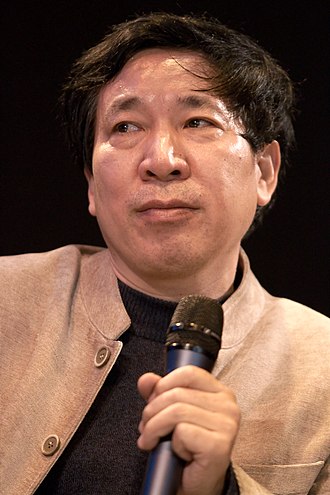
Yan Lianke (Chinese author of novels and short stories based in Beijing. Received the Franz Kafka Prize in 2014. Winner of the Man Booker International Prize twice.)
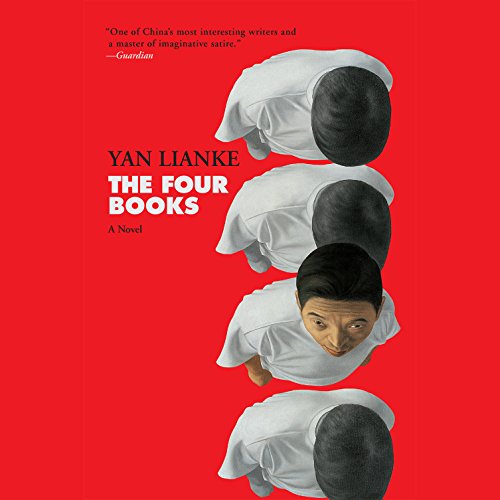
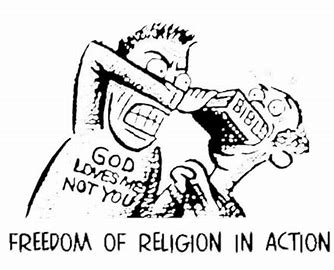
“The Four Books” is a satire exposing the fallibility of belief in a Christian God. Yan Lianke is a Chinese author living in Beijing whose books and short stories are banned by the government.
Lianke’s book satirizes most religions and government leaders.
The main character in Lianke’s story is called “Author” who is charged with responsibility for two of “The Four Books”. Two books are titled “criminal records” and “secret reports” written by “Author” for a camp commandant to know who and what everyone is thinking and doing in a prison camp. The other two books are less clearly identified but there is the “Scholar’s” book and presumably, the Christian Bible. The main characters in Lianke’s book are the “Boy”, the “Scholar”, the “Musician”, and the “Author”.
The character named “Author” reports thoughts and actions of fellow re-education prisoners in return for special privileges.
The “Boy” is the camp commandant. The “Scholar”, “Musician”, and “Author” are college educated prisoners, along with other city intellectuals, who are sent to re-education camps in the country. Their jobs are to farm the land and manufacture steel from black sand deposits in the country. The idea is to re-educate scholars on the importance of serving the economic advancement of their country with labor, rather than thought.
The setting of Lianke’s story is the Chinese famine during the “Great Leap Forward” which occurred between 1958 and 1962.
Neither the “Great Leap Forward” nor Mao are mentioned in Lianke’s book. Undoubtedly it is because of personal risk that such mention might have for Lianke. However, “The Four Books” universal appeal goes beyond Mao’s mistakes in China.
Most, if not all, religions and governments fail to provide an economic and social environment in which prosperity and peace can be equitably maintained.
Lianke chooses one period in China’s history as an example of religions’ and governments’ failure to peacefully guide or manage society. Undoubtedly, Lianke chooses China’s story because that is the culture he most intimately understands.
Lianke shows how religion and government ineptly handle human nature.
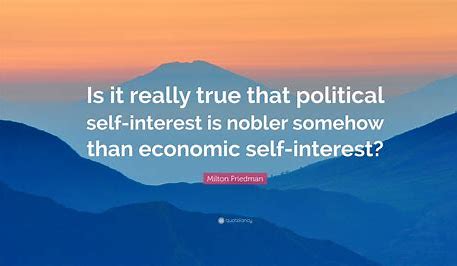
Whether one is rich, poor, formally educated, or uneducated–the masculine, feminine, neuter, and common person is motivated by self-interest. Religions and governments have tried to deal with human nature by preaching belief in something greater than the individual. Religions have threatened, cajoled, and forgiven society in a vain attempt to control human self-interest. Governments have done the same with similar mixed and failed results.
“The Four Books” uses the history of the “Great Leap Forward” because human nature is at its worst in times of great upheaval.
What Lianke reveals is the reality of human nature when neither religion nor government forthrightly deals with human nature under stress. The philosophy of leadership in “The Four Books” is to mandate economic development at whatever cost society is compelled or willing to bear. The choice of China’s leadership is to turn all formally educated urban citizens into rural workers by moving them from whatever jobs they may have had to jobs needed by leadership to rapidly advance China’s economic growth. Little consideration is given to the self-interest of individuals by government leaders’ preaching “the good of the country”.
What Lianke’s story shows is that government uses the same tools as organized religion to advance institutional rather than the self-interests of its people.
Religion preaches heaven, like government preaches economic growth. Religion and government do not deal with realities of today but with a future to be realized. Human beings are viewed as means to an end rather than ends in themselves.
There is no supreme God or deity in Buddhist’ teaching.
Is it possible to serve society with a belief system that equitably treats individual self-interest? Lianke implies Christian religion, other religions, and government cannot offer a solution. However, Lianke implies Buddhism may be a solution. A Buddhist, in contrast to other religions or governments, seeks enlightenment in this world through an individual’s search for inner peace and wisdom. Lianke’s answer to individual self-interest is Buddhist belief in achievement of inner peace and wisdom.
The weakness in Lianke’s argument is that self-interest is an individual human characteristic. Self-interest is unlikely to be erased by Buddhism, Taoism, any religion, or government. Buddhist and Taoist beliefs do not ameliorate aberrant self-interests (most common in human beings) that deviate from those wishing and trying to seek peace and wisdom through Buddhism or Taoism.
It may be that there are two types of self-interest, one hostile and the other enlightened. Of course, the weakness of the second is the same as the first. Can human nature, any religion, or government elicit enlightenment?
Self-interest can generate great economic wealth but when unregulated it diminishes peace and often leads to unwise choices and ends. History shows neither government, deistic religion, or contemplation of the “Way” moderates nor contains individual self-interest. A governing system of checks and balances may be a step in moderating and containing self-interest, but it (at best) is a work in progress.
Lianke shows in a famine, self-interest offers two choices. Either one gives up or fights for survival. There is no middle ground.
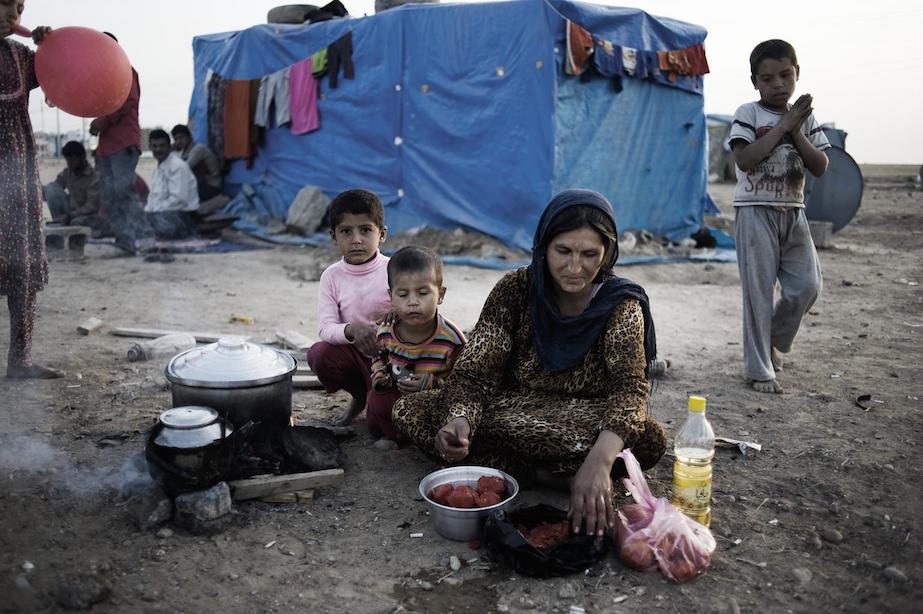
Self-interest in a famine leads some to prostitute themselves, murder their equals, inferiors or superiors, and become cannibalistic or some combination thereof. No widely accepted religion or government seems to have found a solution to equitably treat individuals’ self-interest. Lianke believes Buddhism may be an answer, but one wonders how an individual’s search for peace and wisdom will feed the hungry.
Violet Kupersmith (American Author, Taught English in the Mekong Delta on a Fulbright Program.)
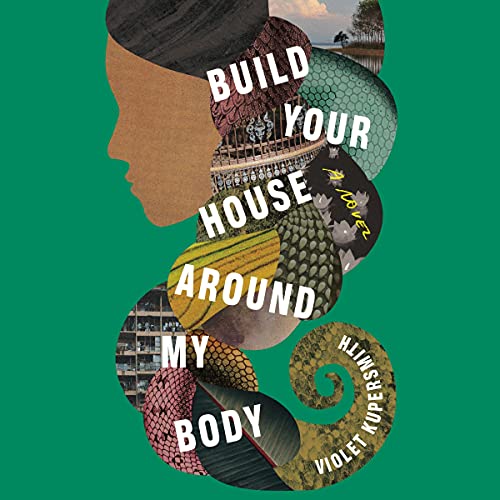
This is the debut novel of Violet Kupersmith. “Build Your House Around My Body” is an interesting title that cleverly infers human life is built around women, not because of their role in birthing but because of their influence on the other half of humanity.
Kupersmith’s novel suggests the male half of humanity is more maleficent than beneficent. Women are characterized as diabolical in pursuit of revenge for their treatment as less equal human beings and sex objects of men.
Kupersmith’s story is complicated and surreal which may discourage many listeners. On the other hand, its history reminds one who may have visited Vietnam or Cambodia of Southeast Asia‘s different cultural history and mythology. Though animism and the supernatural are less present in America, Kupersmith implies they are ever-present phenomena in the lives of indigenous Vietnamese.
Animism and the supernatural are a distinct part of southeast Asian culture.
There are two main characters, but the most prominent character is Winnie, a woman of mixed southeast Asian and American parentage. She travels from America to Vietnam to become a teacher of English in an adult education class. She seems ill suited for a teacher’s job but perseveres and becomes the mistress of one of the teachers. Kupersmith’s story revolves around the disappearance of Winnie from a house in which she cohabits with this fellow teacher. The story begins with the mysterious disappearance of Winnie. Winnie becomes a vehicle of revenge through possession by a spirt who lives in the body of a dog.
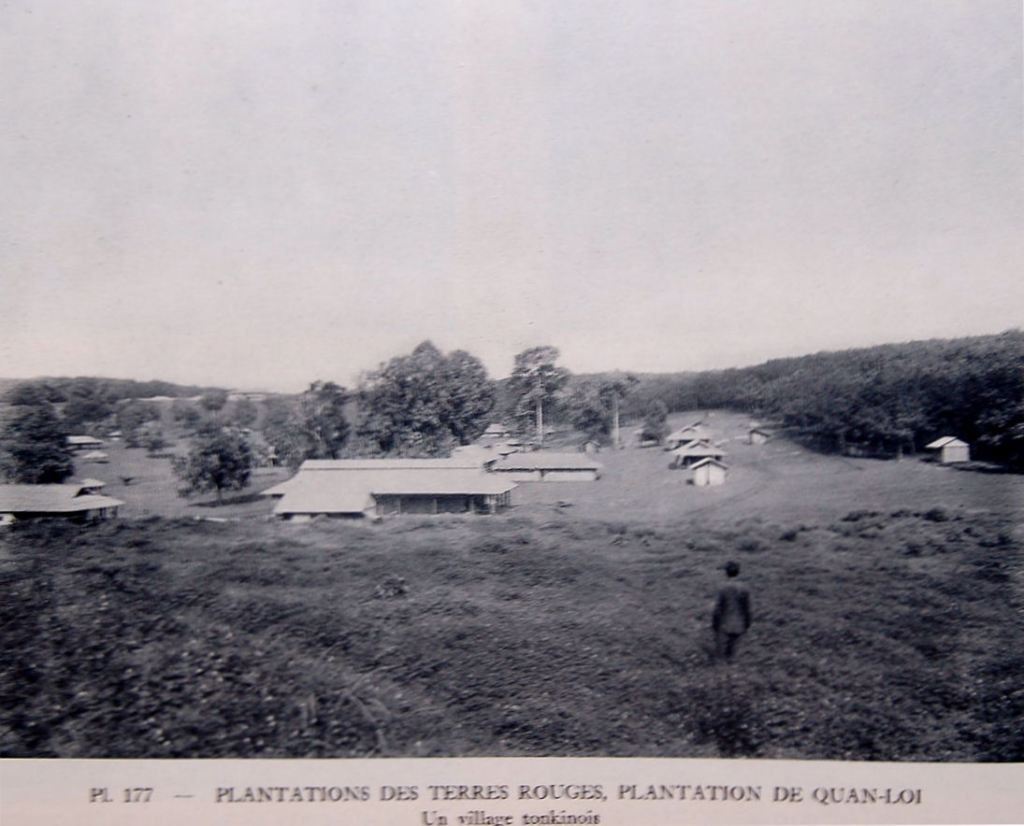
With various journeys through time from the date of Winnie’s disappearance, a listener is given a history lesson on the iniquity of Vietnam’s foreign occupation. French Rubber Plantation in Vietnam.
During France’s occupation of Vietnam, rubber plantations were formed by French colonists who employed Vietnamese laborers to harvest their crops. Kupersmith implies Vietnamese men and women who worked on these plantations were underpaid and abused by plantation owners.
Kupersmith implies the folly of foreign occupation of an indigenous people’s culture.
What foreign invaders often do not understand of countries they occupy is that occupiers are as likely doomed to failure as assimilation and success. Both occupied and occupier become victims of cultural ignorance. “Build Your House Around My Body” is a cultural tautology. One becomes who they are by the culture in which they live.
Kupersmith introduces soothsayers and spirits who can change their form, occupy other life forms, deform themselves, and find those who are lost while liberating or condemning those whom they choose.
Animist Celebrations in Modern Vietnam.
During Kupersmith’s explanation of colonial times, one is entertained and horrified by indigenous peoples’ belief in animist spirits who wreak havoc upon the world.
“Build Your House Around My Body” is bizarrely addictive. Winnies experience in Vietnam exposes her to poverty, sexual exploitation, and belief in a spirit world that influences, if not controls, all that happens in people’s lives. Reader/listeners of Kupersmith’s story find how potent animist and spirit-world’ belief can be while revealing the iniquity of sexual inequality.
Thomas Mallon (Author, novelist, essayist, and critic.)
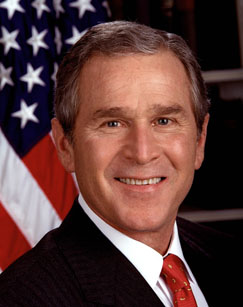
Thomas Mallon’s book is a fictionalized account of George W. Bush’s administration. Mallon cleverly includes a fictional love story that adds some drama to his story. What one should be wary of is Mallon’s political bias and how it might color the story.
In listening to a book of fiction that uses the names of the known, it is difficult to separate fact from fiction.
Fictionalizing history-making characters is particularly difficult when it is written about events of the near past. What helps is the knowledge that all history books are partly fictionalized by choice of an author’s facts. Revisionist history is why past Presidents have both risen and fallen in the eyes of historians and the public.
George W. Bush makes some bad decisions as a young man, but more importantly and significantly, as a two-term President.
The son of former President H. W. Bush comes across as a decent and flawed human being. America’s consequence from Iraq and Afghanistan invasions and George W.s response to Katrina show American government hubris and failure. Mallon’s story shows American’s fallibility as a democratic government. Both Republican and Democratic parties in America have made good and bad domestic and international decisions; some of which have been reversed, others not.
Mallon writes of the difficulty of working through America’s deadly mistakes in Iraq.
Mallon chooses to write a fictional account of the bad decisions made by President George W. Bush. Some of us have short memories but Mallon reminds listeners of the last four years of George W.’s Presidency. Some in Bush’s administration reluctantly suggest America must withdraw from the mess America created by removing Iraq’s autocratic and brutal dictator, Saddam Hussein. Some of George W.’s leaders were misled (or lied to themselves) about Iraq’s threat of weapons of mass destruction (WMD). No one in George W.’s administration manages to persuade policy makers that American nation-building in foreign cultures is a fool’s errand.
Autocratic governments know little about what it means to be free, or at least free within the rule of law.
Mallon creates a story that implies there is a great deal of descension in the second term of George W.’s administration. This is particularly evident in the intellectual conflict between the Secretary of Defense, Donald Rumsfeld, and Secretary of State, Condoleezza Rice. There is a growing recognition by leaders in the administration, that America could not re-build Iraq’s government. Rumsfeld may have suggested immediate withdrawal of American troops from Iraq with political spin that infers America’s job is done. The President and Secretary of State Rice realize the Presidency and American resolve is tarnished by withdrawal, whether it is militarily or diplomatically accomplished. Mallon’s novel concludes G.W.’s legacy is the Iraq debacle and the mishandling of the Katrina disaster in Louisiana.
Katrina disaster in Louisiana
As time passes and history is rewritten, Mallon’s conclusions are likely to be repeated. Neither George W. Bush, Secretary of Defense Rumsfeld, nor Secretary Rice will be remembered as great leaders. It is not judgement about their patriotism or their desire to make America safer or better, but a consequence of political mistakes.
George W’s administration fails to understand nation-building is folly, and natural disasters are not about the dead but about quick and organized aid to survivors. Mallon’s book is a reminder of how difficult it is for any organization’s leader to become great in the eyes of history.
In “Transit”, Rachel Cusk offers a master class for people who wish to be writers. Cusk creates a picture of a writer’s life, i.e., the places they go, conversations they have, and work they do in writing a story. Cusk explains what it is like to be a writer. Whether writing about oneself, an incident, an acquaintance, or an important “other”, the art of writing is in the details and how they are arranged to stimulate readers’ or listeners’ interest.
Cusk cleverly begins her story in her search to purchase a flat in London. A realtor tells her to find one in a good neighborhood that is underpriced because of its dilapidated condition.
The realtor advises a good neighborhood is where the greatest value is when purchasing a home. The idea is that reconstruction will increase value beyond cost of repair if the flat is in a good neighborhood. As a part time professor, Cusk’s heroine is in the business of reconstructing writers, like a homebuyer reconstructs a home.
The neighborhoods for writing are fiction and non-fiction. Cusks counsel to writers is to reconstruct their writing if a story is not up to its neighborhood’s standards. As any reader/listener knows, books have been published with both richly and poorly written stories.
Cusk describes a young woman writer who is divorced, has two young boys, lives in London and makes a living as a writer and adjunct professor for “wanabe” writers. Cusk takes reader/listeners on a journey to a writer’s book club meeting. Writers attend distant book club meetings to tell their stories and sell their books. In the telling at one of these meetings, one hears of admiration and love/hate relationships between authors. At the same time, one learns of the tediousness of travel from one book club to another while learning how writers think and talk about their books.
Cusk’s heroine talks to aspiring writers and what they wish to write about. In her story, a listener/reader finds what makes research and facts important in writing a book. Writing must put research and facts together in a way that makes a story interesting and relatable to its audience.
Cusk’s story may or may not be about herself, but “Transit” offers valuable insight to anyone who is interested in becoming a writer. Cusk’s heroine is both relatable and informative while telling a story through the lens of a writer’s lived life which, like all lives, is in “Transit”.
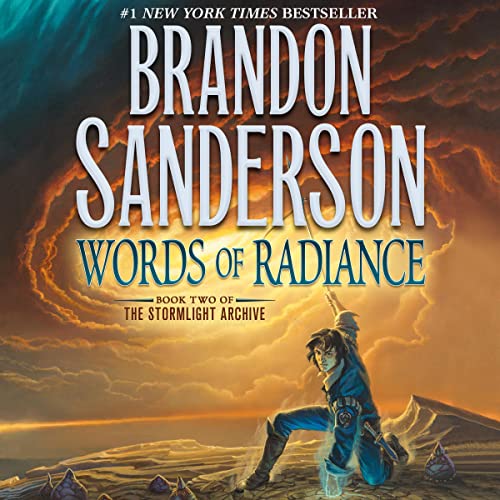
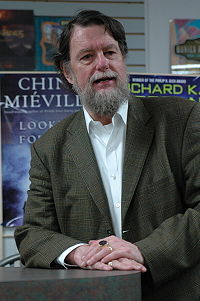
Brandon Sanderson (Author, fantasy and science fiction novelist, former BYU student majoring in biochemistry.)
“Words of Radiance” carries the same fantastical experience a reader/listener envisions when listening to “Eye of the World”. Brandon Sanderson’s “Words of Radiance” illustrates why he was chosen to finish Robert Jordan’s posthumous work. Sanderson’s book is long and may take many chapters for one to become engrossed in its story.
Brandon Sanderson finished Robert Jordan’s “Eye of the World” after Jordan’s death. “Eye of the World” is a story of imagination about the experience of a young boy in a fantasy world imagined by Jordan.
There are a great many characters in Sanderson’s story. The characters represent disparate cultures that have different societies that seem destined to compete until the end of time. Each culture is hierarchal with kings, armies, citizens, and slaves. A singular king believes all these cultures must come together for peace, and tranquility because a storm, an Armageddon like event, is coming. The goal of unity seems unlikely as the story develops. Interestingly, this king is far from perfect despite his prescient vision. He is drunk near the end of the story when all appears to be lost.
Characters in Sanderson’s story are not just kings but people who have supernatural abilities. One former prisoner in this world has those abilities which he is only beginning to understand. Sanderson adds a third principal character, a 17-year-old seer who is also only beginning to understand her powers.
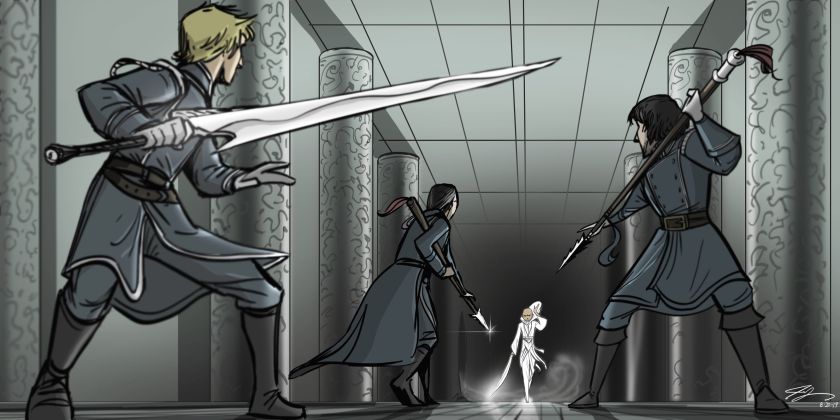
Sanderson creates a white clothed antagonist with supernatural ability who is killing leaders of this fantasy world.
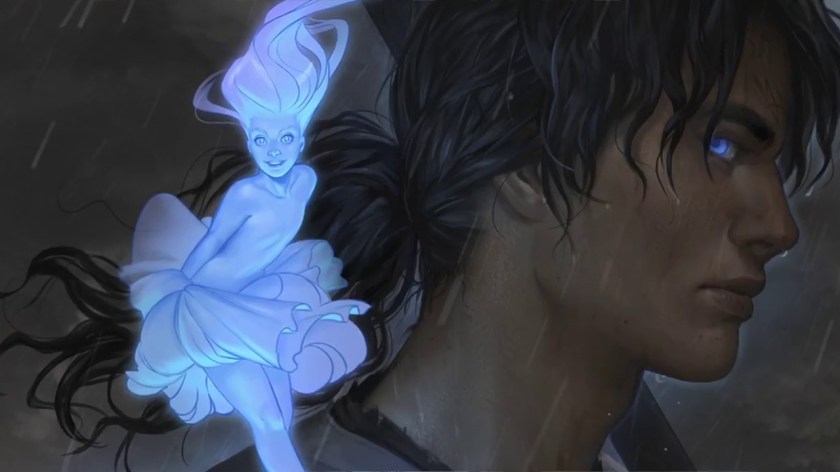
The most interesting innovation by Sanderson is the invention of “spren”; i.e., spren are “ideas” who accompany characters in his story. Spren show themselves as symbols, figures, or lights. They offer guidance to the characters they follow. Spren guidance comes from their ability to slyly spy, modify their form, unlock doors, and inform their companions. There are spren who accompany both sides of the pending battle for the future of the world. The spren recognize life is driven by lies and truth, concluding both can have ethical value. Ethical value comes from lies that mislead miscreants and truths that help the helpless.
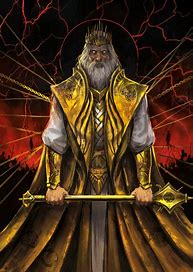
God is dead in Sanderson’s story. How or why God dies is undisclosed. The only remainder of God’s existence is a spren (the idea of God) which chooses a hero to defeat the Armageddon that is coming. The spren’s choice of heroes and heroines manages to defeat the coming storm and offers hope for world unity in the future.
The devil is called Odium.
After the storm passes, God’s spren suggests if God can be killed, so can the devil. Odium’s possible death is “hope” for those remaining after the storm.
Loss of species are noted in Sanderson’s world because of overhunting and ignorance, a reminder of today’s culture with degrading water and land environments.
There are storms in Sanderson’s story that remind one of the cataclysmic age in which we live. Great winds, lightning, and flooding threaten nations.
At the end of Sanderson’s story, a listener recognizes this fantasy is a mythical representation of this world, i.e., good and bad leaders, poverty, environmental degradation, and ethnic inequality.
THE INTERNECINE RUSSIA/UKRAINIAN WAR
Sanderson leaves listeners with a laugh by resurrecting a character who is thought to be dead, i.e., not a God or warrior, but a seer. There remains some hope in Sanderson’s imagined world, but it is cloaked in hardship and toil.
As most know, “A Tale of Two Cities” was first published as a series in the U.K. in the 19th century. Its formal publication date was 1859. In comparison to some novels, “A Tale of Two Cities” is difficult to follow because of the many characters who play important roles in Dicken’s story.
The setting is in two cities, London and Paris before, during, and after the French revolution of 1789.
The famous beginning of Dicken’s story of the French revolution is “It was the best of times, it was the worst of times….” Most of the tale is about “…the worst of times…” in France.
The picture of the London and Paris cities is dismal because of its citizens who were either very rich or very poor. The seat of power in Paris is teetering on the edge of a coming revolution. The focus of the story turns to its main theme with Alexandre Manette, a French physician, heard to be alive after being unjustly imprisoned for 18 years in Paris. The story of Manette’s imprisonment is revealed to Jarvis Lorry, a London bank manager. Lorry arranges a meeting with the jailed Manette in Paris with his daughter who lives in London.
Manette’s daughter is Lucie. She goes to Paris with her governess, Miss Pross. Lucie meets with her father whom she thought was dead. Lucie brings her father back to London, but he suffers periodic mental lapses that return him to a shoemaking trade he learned while in prison. We get a glimpse of London on Manette’s return but it is of a trial that reminds one of the gaps between haves and have-nots in London. There is a trial for a spy named Charles Darnay, the nephew of a French aristocrat.
London in the 18th Century.
Lucie is a witness to Darnay’s alleged spying. She knows nothing about Darnay’s activity, but he had helped her in some minor way when he was accused of being a spy. Because of her testimony, Darnay’s character seems less spy-like and more gentlemanly. Darnay is acquitted because his defense attorney notes one of his colleagues, Sydney Carton, looks much like Darnay and could have as easily been the person accused. Darnay is released. The person, Sydney Carton, looks like Darnay but is loosely characterized as an undisciplined young bon vivant.
London court 18th century.
The main characters of the story are Dr. Manette, and Darnay but each character noted in these first chapters play important roles in the story. Dr. Manette had been unjustly imprisoned in the Bastille because of the death of a son and his mother caused by two French aristocrats. The remaining story largely takes place in Paris.
Dickens brings Darnay and Lucie together as husband and wife in London before the revolution in France. They have a son and daughter. The son dies, which reflects upon child mortality which is rather common in that time of the world’s history.
The reasons for the French Revolution, inferred by Dickens, are from harsh, unfair, and unequal treatment of the poor by the aristocracy. The examples given range from an aristocrat’s comment to the poor and hungry to “eat grass”, to the murder of a young boy and his mother by two “bon vivants” who hide their crime, to a murdered boy killed by an errant carriage accident caused by Darnay’s French Uncle.
Dickens creates the story of Darnay’s uncle flipping a coin to the father of a boy killed by his carriage’s collision. Darnay’s uncle is later murdered at his home by the father of the boy.
The table is set for the French Revolution of 1789. Dickens introduces the Defarge’s, Madame and Monsieur Defarge. They are republicans planning to kill as many of the French aristocracy as they can. Interestingly, the strongest and most violent of the revolutionaries is Madame Defarge.
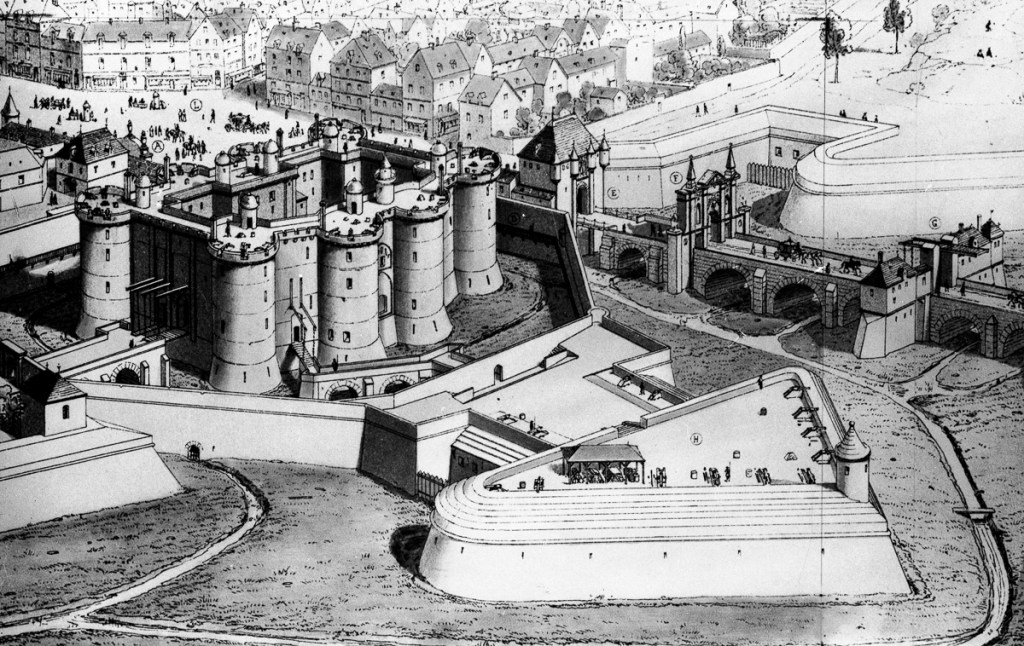
As they storm the bastille, Monsieur Defarge demands a visit to Dr. Manette’s former cell. He knows of a secreted letter that explains why Manette is jailed and wishes to recover it. That letter incriminates Darnay’s Uncle and, by association, blames anyone that is part of that family.
Reconstitution de la prison de la Bastille. Paris.Cell in the French Bastille
Two years after the 1789 revolution in Paris, Darnay receives a letter from a servant of his murdered uncle asking for his help to be released from the Bastille. Darnay journeys to Paris and is imprisoned in the Bastille because of his association with French aristocracy. The remainder of the story is about the effort to get Darnay released. As true of other Dicken’s novels, there is a bitter-sweet happy ending.
Dickens is a masterful writer but to this reviewer, “A Tale of Two Cities” is not his best work. It is easy to lose the thread of the story because of its many characters. On the other hand, the characterization of Madam Defarge is one of the most terrifying written descriptions of revenge for social inequality. The terror of the French revolution and its causes are frighteningly vivified by Dickens’ creation of the Defarge’s.
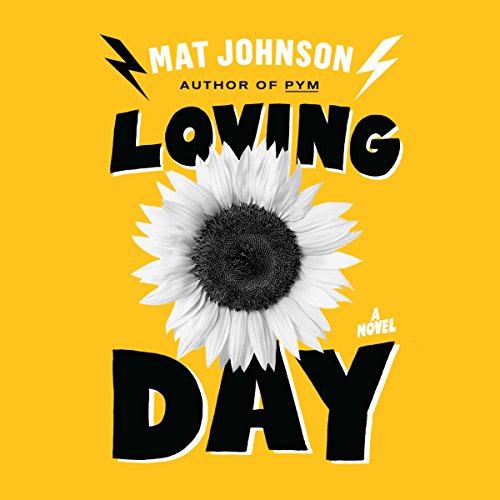
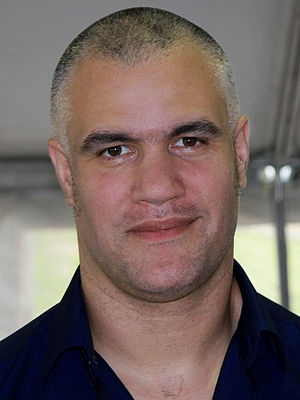
“Loving Day” is a rambling novel about discrimination. Mat Johnson’s main character, a son of a white father and black mother, inherits a dilapidated mansion from his father who dies during its renovation. The house has many doors. Johnson creatively assembles a variety of characters who figuratively knock on those doors to define and find a way to erase discrimination.
Johnson’s novel sets a table for understanding the many forms of discrimination hidden behind closed doors.
Every human has an ethnic and sexual identity whether recognized or not. Johnson’s story illustrates the inequality of the sexes while sidestepping any solution or answer for societal accommodation to ethnic difference. His host of characters range from transexual to sexual, from black to white, to mixed race, from married to divorced, from Jew to gentile. Each character might be classified as ethnic, but still a part of larger society that is burdened by inequality and discrimination.
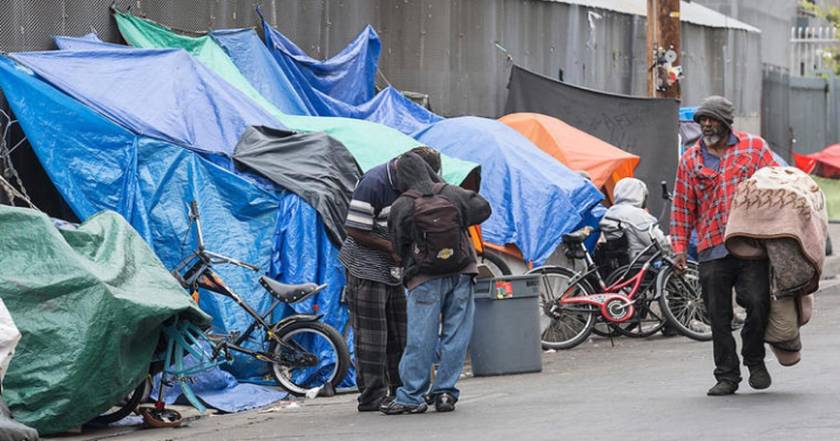
Though Johnson’s primary focus is on discrimination, his many examples are a hot mess. There are too many to list in one review. There are many causes of discrimination. Children of unwed mothers are unerasable consequences of unsafe or forced conjugal relations. Children of un-wed mothers often become latch-key kids because their single parent has to work to pay rent and put food on the table. Some are sent to grandparents who may or may not be able to handle the responsibility of another person to feed, clothe, and educate. Homelessness is a consequence of many human causes, ranging from economies in crises to discrimination to medical or mental disability.
Schools created out of heart felt belief in eradication of inequality create an atmosphere of privilege that exacerbates discrimination.
A marker for discrimination is illustrated by the author’s character named “One Drop”. One Drop is a human label associated with birth of a child from parents with different ethnicities. One drop of blood or semen between a black person and a white person, in the eyes of some, makes that person Black. In Nazi Germany, a gentile who marries a Jew identifies their children as Jewish. A man or woman may have conjugal relationships with others while married and are judged untrustworthy as future monogamous partners.
Society organizes itself without understanding or constructively dealing with inequality engendered and perpetuated by poor judgement.
Genetic/Socio/ethnic differences are the thematic subject of Johnson’s story. Society judges human difference as good or bad. The author’s conclusion is that people are people. Society should accept people for what they are; until then, discrimination and unequal treatment will be like an unrenovated house that will either be moved from one place to another or destroyed.
Maurice Carlos Ruffin (Author, fiction writer, finalist for the PEN-Faulkner Award and others.)
Maurice Carlos Ruffin’s story is about understanding discrimination and where it stands in America today. Ruffin’s creativity as a writer of fiction is on display in “We Cast a Shadow”.
Though Ruffin’s imagination rambles too far at the end of his story, he offers a strong opinion about his generation’s view of 21st century America.
The book title and the author’s characters flood a listener with thoughts of history, worry, and hope. Ruffin writes a story about four generations of a fictional black family. He reaches back to the main character’s grandfather, his father, the main character (a successful lawyer practicing law), and his young son. Worry comes from how far social and economic equality must go to be real. Hope comes from believing America will get there.
Ruffin creates a family in a southern community. The father is a black lawyer struggling for partner in a successful southern white law firm. His wife works in a hospital.
They live a middle-class life in a white suburban community. The son has a birthmark on his face that is slightly darker than the rest of his skin. The birth mark turns darker when exposed to the sun. The father is obsessed with the birthmark and wishes to have it surgically removed to give his son a more even Mediterranean appearance. The boy’s red headed mother views her husband’s concern as an absurd obsession.
The father of the black lawyer in Ruffin’s story is raised in a lower-income black community in the south. His father is serving time in prison. His mother owns and runs a restaurant in which he worked while growing to manhood. His father is highly educated with a PhD received in his 21st year of life. His grandfather is described later in the story and reflects on the age of slavery that gives weight to the author’s perception of America’s generational change in discrimination.
The professional lawyer’s young life exposes him to good and bad influences in a low income, minority neighborhood. He possesses the intelligence of his father and expositive experience to become a successful lawyer. A part of his experience is to use drugs as a way of coping with life’s stress. He is deeply influenced by the loss of his father’s guidance because of an interminable prison sentence based on unequal treatment by the police.
Ruffin’s main character is the only black lawyer in the southern firm.
At an annual review of the firm’s lawyers, one person may be promoted to partner, while others may be fired. Ruffin’s main character is neither fired nor made partner but is taken under the wing of an ambitious white woman law partner who promotes him to a newly formed Diversity Division in the firm. The woman’s ambition is to become leading partner of the firm by increasing its revenue with a broader appeal to all ethnicities in the firm’s market. She recognizes the competence and potential of the rising black lawyer.
Ruffin somewhat comically sets this table but prepares one for a meal of many tastes. “We Cast a Shadow” reflects on what it means to be black in America and married to a white woman with a son who has a symbolic birthmark.
The “…Shadow” Ruffin casts is discrimination’s continuation in both black and white America. Discrimination is different today than when the lawyer’s grandfather lived. Through four generations, black perception of discrimination changes from a grandfather who says the way for black folks to get along is by making white America feel guilty for discrimination. In contrast, the lawyer’s father (serving an interminable prison sentence) raises his son to understand he is as smart and capable as any white person. However, due to circumstances of his era, his father is thrown in jail for talking back to the police while standing up for his rights as a citizen of the country. (Of course, this is a part of the unequal treatment that exists in today’s America.)
The jailed father’s son resents the absence of his father despite his father’s principled stand that led his father to jail. In spite of that resentment, the lawyer is shown to feel and exhibit both his grandfather’s and father’s influence.
The lawyer feels trapped by his profession and beholding to white people in the firm. He recognizes (just as his father taught him) he is as good as any lawyer in the firm and better than some.
The generational change between the grandfather, the father of a successful black lawyer, the father and his son show an evolution occurring in America. The lawyer’s son represents today’s generation that rejects his grandfather’s belief, accepts his innate ability and equality, and proffers hope for equal treatment in life that is not based on the color of one’s skin.
The irony of the lawyer’s belief is his obsession with his son’s birthmark. The birthmark is a reminder to the lawyer of unequal treatment in America. The lawyer is discriminating against his own son because of a birthmark that identifies him as something less than white.
In the end, a conclusion one draws from “We Cast a Shadow” is that every parent comes to a point of realizing Glory Gaynor’s truth—“I am what I am.”
Lyrics
I am what I am
I am my own special creation
So come take a look
Give me the hook or the ovation
It’s my world that I want to have a little pride in
My world, and it’s not a place I have to hide in
Life’s not worth a damn till you can say
“I am what I am”
Every parent makes mistakes in raising their children. This father’s mistake is to obsess over a birth mark without recognizing what is most important, i.e., a parent must love a child, while allowing them to become who they choose to be.
Emily Fridlund (Author, Man Booker Prize shortlist for-History of Wolves)
Emily Fridlund’s “History of Wolves” cleverly reveals the fears of life for children, young adults, and parents. It is told from the perspective of an adult woman’s recollection of life in a Minnesota wilderness near Lake Superior. The nature of human beings is aligned with the nature of “…Wolves”.
Fridlund infers humans are sexual animals, congregate for purpose, live in extended families, and die alone—just like wolves.
Fridlund’s main character is raised in a two-parent family with a mother who pushes her daughter to be better than her parents through education and experience.
Fridlund’s fictional family appears to be living the life of the 1960s/70s flower children who wish to return to a simpler life in the wilderness.
The daughter works while in high school and becomes acquainted with neighbors across a lake she lives on in Minnesota. The daughter, a teenager, becomes a babysitter for the new family. The husband of this new family is frequently away from home.
A friendship develops between the daughter and the mother of a 3- or 4-year-old boy. The daughter agrees to babysit for $10 a day. A friendship between the new neighbor evolves into something more in the mind of the daughter. The “more” is characterized as erotic, at least from the daughter’s perspective.
Part of Fridlund’s story is about older men who groom younger women in high schools and universities.
The author’s beginning infers a level of “grooming” complicity from younger women, not for sex, but for personal identity. Fridlund’s inference is discomfiting. It suggests humanity is just another species of animal, something like a predatory wolf. Fridlund’s story is frightening because it infers predation in both sexes. There might be some truth in Fridlund’s view for a college student, but high school seems a step too far when her main character partially absolves a pedophile fired from the school she attends.
Some listeners may feel the distinction between high school and university students is prudish, but character seems much less formed in high school than the age of most college students. The experience difference between high school and college age students makes the author’s “wolf” categorization of human sexes unjustifiable.
There is more to the story than Fridlund’s perception of the predatory nature of humanity. Fridlund tells a story that addresses a fundamental conflict between religion and science.
An older university professor (the husband of the new family across the lake) marries one of his students. They have a child. The child is stricken with an illness. The professor is a Christian Scientist who eschews medical treatment. The professor is characterized as a highly intelligent astronomer who is writing a book on the origin of life. The child dies from his illness. Both the professor and his wife are taken to court for child neglect.
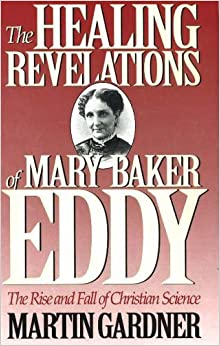
Fridlund goes on to explain her main character is raised by a family that believes in Mary Baker Eddy’s religion. This added information posits a broader view of the potential harm religion inflicts on society.
The daughter grows into adulthood. Her father dies and her mother’s well-being is diminished either by age, the deterioration of her house from a storm, or her belief in a religion that insists on the healing power of prayer.
There is also a whiff of guilt shown by the main character in the death of the baby-sitter boy. She realizes a warning could have been given by her to the authorities about the fragile medical condition of dying boy and their parent’s Christian Scientist’ beliefs.
The last chapters of Fridlund’s story are a flash back clarifying her “wolf” categorization of both sexes.
Fridlund’s writing is excellent and Susan Bennett’s narration is first rate. The quality of Fridlund’s story is enlightening to one who wishes to have a broader understanding of life. There are three categories of human beings in Fridlund’s book, tigers, wolves, and victims. The women in Fridlund’s book are tigers. The men are wolves. Society is the victim.
“Florida” is a series of well written short stories. The binding theme of the author’s stories is her view of life. As Lauren Groff makes clear in her former book, “Fates and Furies”, there is little difference between the sexes. Women may give birth, but children are children who need care. The truth is men, more often than women, physically leave their children. Most women stay. Groff suggests it is not necessarily because women want to stay but they have fewer alternatives.
Once born, most children are loved and held close while some are abandoned physically and/or emotionally by their parents.
Groff infers women most often stay, but not because of a maternal instinct. A woman can choose to abandon their children just like men, but they may have grown to love their children. On the other hand, they may fear the social recrimination if they leave like fathers. Groff seems to infer women are as capable of leaving their children as men, but society treats the sexes unequally. In many ways, Groff wants equal treatment of men and women, but her observations are a harsh judgement of human beings.
Groff implies societal expectation is different for women than men.
The only area where Groff accepts difference between men and women is in physical strength.
Beyond strength differences, Groff’s stories show there are no differences between men and women. A woman is as likely to pursue sex as a man for the same purpose. Groff suggests there is no difference between men and women when it comes to desire for sex.
Groff tells a story of a violent storm that interrupts a single woman’s night out. Groff’s character is trolling a bar for a conjugal companion for the night. The violent storm leads to a dangerous interlude with a man that might as easily rape her as help her survive the storm. The man chooses to drink himself into a stupor and the woman survives the encounter without being raped.
Groff shows poverty is as crushing for women as men.
Both men and women can quit working or lose a job and devolve into homeless vagrants. Either can choose to become thieves, sexual consorts, or menial laborers to survive at the bottom of society.
Groff’s stories may appall some listeners, but she offers a point of view that strikes at the heart of sexual inequality.
Emotional human attachment is important in every story Groff writes. She is not suggesting either men or women are incapable of real love of each other and their children. She is arguing there are no intellectual, or emotional differences between the sexes.
















































 REVIEWS AND VIEWS OF LIFE