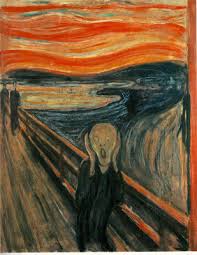
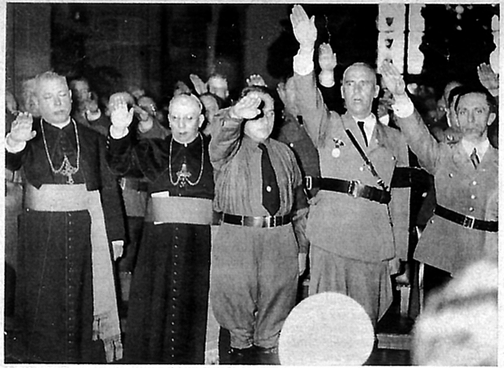
OVERCOMING

Audio-book Review
By Chet Yarbrough

(Blog:awalkingdelight)
Website: chetyarbrough.blog

The Count of Monte Cristo
By Alexandre Dumas

Narrated by John Lee

Alexandre Dumas (1802-1870, French Autor)

Alexandre Dumas is a French Charles Dickens and a writer of “Dostoyevsky light” stories.  The narrator, John Lee. magnifies “The Count of Monte Cristo” characters with an exotic voice that markedly enhances Dumas’s story.  
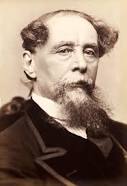
Charles Dickens (1812-1870, English Author and soicial critic.)

Like Charles Dickens, Dumas creates interesting characters. And, like Dostoevsky, he creates emotionally driven protagonists. 

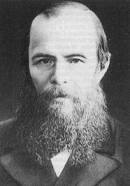
Fyodor Dostoevsky (1821-1881, Russian novelist, essayist, journalist, and philosopher.)

Dumas writes a story of revenge with twists of fate that have Dickens’ coincidences and “Dostoevsky-like” motivations.

The hero is Dante, the wrongfully accused, convicted, and secretly incarcerated prisoner. The heroine is Mercedes, the love of Dante’s life that mourns his disappearance on their wedding day. 
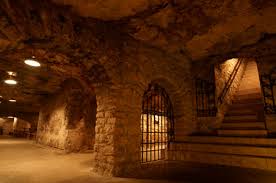
Dante is unjustly imprisoned for being a Bonopartist based on inadvertent collusion by Danglars, Villifort, and Fernand.  They all have different motives for jailing Dante. 

The jealous and greedy merchant, Danglars wants to rid himself of Dante because he is a commercial rival.  An ambitious, duplicitous, and sycophantic, politician, Villifort, wants to hide his family’s involvement with the Bonapartists.  Fernand wants to remove Dante from his wedding to give himself an opportunity to marry Mercedes himself.

(Bonapartism is the political ideology of Napoleon Bonaparte. In government speak, it is a dictatorial executive with a weak and ineffectual legislative body, filled with sycophants.)

Luck and fate mix into Dante’s imprisonment. Dante escapes and becomes fabulously rich.   Dante travels the world after his escape and searches for information about people in his life before imprisonment. 

A cloak of mystery surrounds Dante as he appears in the lives of his friends and enemies.  The cloak is removed at perfect moments in each episode.  He endeavors to understand his friends and enemies strengths and weaknesses. 

Dante rewards his friends and punishes his enemies.  Plans for revenge and exposure of his enemies’ misdeeds are cleverly woven into the story.  Each colluding villain is defeated by his own human weakness. 

Danglars’ greed becomes his destruction.  Villifort’s lies lead to madness.  Fernand’s false accusation, and the loss of Mercedes’ love drive him to commit suicide.

The story is a tangled web of relationships, guilts, and crimes that are satisfyingly resolved by the end of the book.  Overcoming life’s adversity and justice’s triumph are the appeal of “The Count of Monte Christo”.

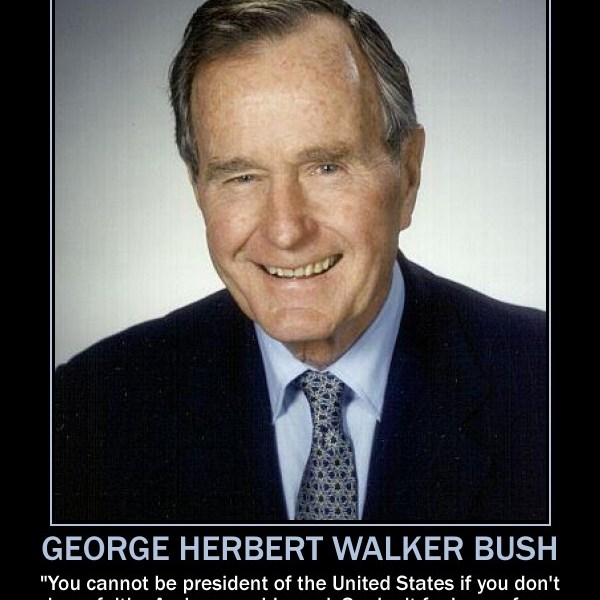
Who among Dumas’s three villains in “The Count of Monte Cristo” reminds one of America’s Bonapartist President?

FREE WILL

Audio-book Review
By Chet Yarbrough

(Blog:awalkingdelight)
Website: chetyarbrough.blog

The Brothers Karamazov
By Fyodor Dostoevsky

Narrated by Walter Covell

Fyodor Dostoevsky (Russian Novelist, 1821-1881)

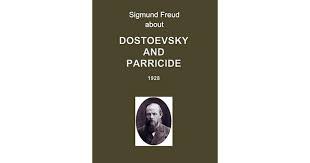
Twenty years before Sigmund Freud’s “…Psychopathology of Every Day Life”, Fyodor Dostoevsky penetrates man’s subconscious to reveal unnamed frames of mind that influence human behavior. 

Sigmund Freud was an Austrian neurologist and the founder of psychoanalysis (1856-1939)

All of Dostoevsky’s writing probes the human mind allowing listener/readers to hear unspoken thought and vicariously experience the consequence of singular deliberation.

Human aggression, compassion, love, and hate possess “The Brothers Karamazov”.  The origins of these feelings are nakedly exposed in the murder of “The Brothers…” hedonistic father.

One of four brothers is suspected to be a murderer.  The oldest brother is a student intellectual, a middle brother is an effusive pleasure seeker, and the youngest is a pious seminarian.  A lurking illegitimate fourth son (aged somewhere between the oldest and youngest) adds to Dostoevsky’s tale of parricide.

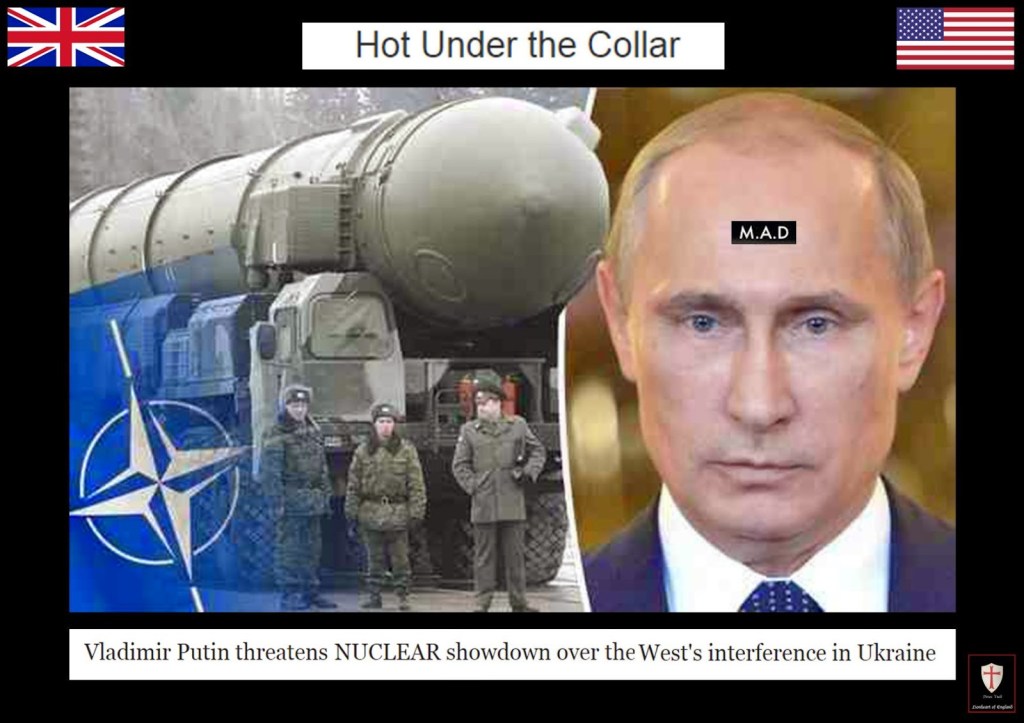
The irony of isolated thought and deliberation is that it can lead to genius or horrendous crime. The first might be a Paul Dirac or Volodymyr Zelensky; the second a Ted Bundy or Vladimir Putin.

Theodore Robert Bundy was an American serial killer, kidnapper, rapist, burglar, and necrophiliac (1946-1989) Electrocuted–1989 in a Florida prison.

“The Brothers Karamazov” introduces Ivan Karamazov, an intellectual agnostic. Ivan’s agnosticism and misanthropy contrasts with his younger brother, Alyosha.  Alyosha is a character reminiscent of an earlier Dostoevsky’ work (“The Idiot”) who exemplified man’s goodness in a life lived in contemplation and moderation.

“The Brother’s Karamazov” illustrates life’s contrasts with Alyosha, a saintly hero and Ivan, a deluded manipulator of human events. Both live lives of contemplation but one chooses to become a monk; the other an intellectual misfit.

God, free will, lust, innocence, guilt, and responsibility play out in thoughts and actions of the four brothers.  If free will exists, where does it begin and end?  Are we free?  Are we driven by human nature or by God’s plan to become who we are; and to do what we do? 

If you teach someone to hate as Ivan teaches Smerdyakov, his illegitimate brother, are you innocent of actions taken by those whom you teach?  Does a teacher have any guilt; any responsibility for bad actions of the student? 

As an intellectual, Ivan explains he does not believe in God.  And later, he denies any responsibility for his father’s murder.  His beliefs lead him to despair when he realizes Smerdyakov is the murderer. 

Ivan eventually takes moral responsibility for his father’s death.  At the end, Ivan seems on the verge of reassessing his belief in God; i.e. an assessment dear to Dostoevsky’s life and a subject espied in all his work.

The question of free will is challenged by the history of the Karamazov family.  Every characteristic of the brothers is reminiscent of a part of their father’s strengths and weaknesses. 

All of the brothers in varying degrees are molded into who they are by their paternal father and their Holy Father.  The evidence of their Holy Father’s role is exhibited by the guilt ridden consciences of everyone but Smerdyakov. Finally, with Ivan’s final acceptance of responsibility for his father’s murder, Dostoevsky concludes an argument against free will.

Fyodor Dostoevsky brilliantly expands the value of literature with his insight into the relationship between thought, instinct, and action. Ivan’s broader intellect, and Smerdyrkov’s lesser intellect informs their actions. Instinct informs Mitya’s action. Religious belief informs Alyosha’s action.

The characters in Dostoevsky’s imagination are incarnations of religious belief. In “…Brothers Karamazov” each character’s life is prescriptive. Life is either designed by genetic inheritance or fulfillment of God’s plan. One suspects Dostoevsky believes the second more than the first.

Parallel Worlds

Audio-book Review
By Chet Yarbrough

(Blog:awalkingdelight)
Website: chetyarbrough.blog

Parallel Worlds
By Michio Kaku
Narrated by Marc Vietor

Michio Kaku (American physicist, author, professor)

Michio Kaku valiantly tilts Don Quixote’s lance at physics in writing “Parallel Worlds”. The fictional Quixote quests for knowledge as a knight errant. Michao Kaku pursues knowledge as a renowned physicist. Time will tell if Kaku is a errant physicist or a clarion of knowledge.

This is a book about Physics, the baffling science of mathematics, and those who wish to understand why Newton, Einstein, Bohr, Planck, Michael Green, and Ed Schwarz et al are important to all of us who are confused.

In spite of the abstruse subject, Kaku reveals some understandable break through discoveries in cosmology, and mankind’s pursuit of the Holy Grail. The Holy Grail is a unified field theory that explains everything there is to know about matter and energy in one combinatoric theory.

Physicists continue to search for a theory that will explain how electromagnetic, gravitational, weak, and strong forces follow one fundamental rule of existence.

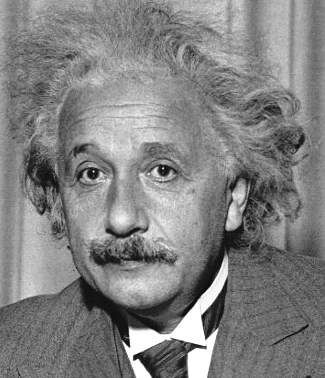
Einstein’s theory of special relativity, implies predictability. Quantum mechanics exclusively relies on probability. How can these two fundamentally different rules be made into one theory?

Contrary to Einstein’s belief that “God does not play with dice”, God lives in Las Vegas.

On a subatomic level, repeatable experiments show that it is impossible to predict the exact position of an electron. With measurement of either position or energy of an electron, its location or power is changed. Electron movement is unpredictable by any known criteria of measurement.

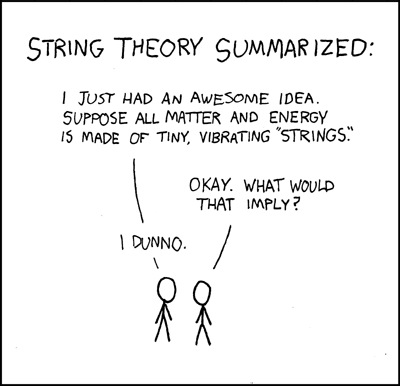
Experimental proof of a theory demands measurement; without measurement, there is no proof. For example, one reason “string theory” is unproven is that the dimension of strings is too minuscule. Technology has not advanced enough for experimental proof. It does not make the theory wrong. It’s simply not experimentally provable.

The God question inevitably raises its head in sciences’ pursuit of a unified field theory.  However, putting philosophical discussion aside, Kaku tells the story of Einstein’s unsuccessful pursuit of a unified field theory. 

Einstein refuted some of Newton’s laws.  Bohr refuted some of Einstein’s speculation.  Their research leads to discoveries that only a science fiction writer could conceive.  Bohr introduces quantum mechanics to Einstein’s discovery of the interchangeability of energy and mass.

With science pursuing the universe’s origin and its component makeup, only telescopes like Hubble and CERN’s Hadron collider in Europe have made any progress in identifying dark matter or energy.

Smaller and smaller elements of matter and energy are discovered by scientists, but an estimated 75% of the known components of the world are unknown.  Dark matter and dark energy make up that 75%. (Discovery of Higgs-bosun in 2012 is the most recent addition to component knowledge.)

Another hope of discovering a UFT in theoretical physics is Ed Schwarz’s and Michael Green’s string theory postulation.

Schwarz’s and Green’s theory provides a more inclusive categorization of the basic elements of the world. Kaku describes string theory in terms of a stringed instrument that changes the character of matter by shortening or lengthening strings.

Just as Einstein’s theory of the curvature of space-time is not proven until Stanley Eddington’s measurement of an eclipse in 1919,
Swartz and Green wait for technology to catch up. String theory waits for another Eddington.

When the strings are plucked they resonate at different frequencies. That change in vibration changes the elemental nature of the particle even though the string is fundamentally the same.

String theory, if it proves correct, opens many doors in the sub-microscopic world. It opens to the speculation of possible parallel worlds.  Kaku overwhelms listeners with the potential of a scientifically verifiable unified field theory.  He suggests the possibility of time travel and space exploration through black holes and white holes. 

“Parallel Worlds” ends its exploration of physics with notes of caution and optimism about our world’s progress.  The book is semi-understandable (possibly, horribly misleading) but worth reading.

BIG QUESTIONS

Audio-book Review
By Chet Yarbrough

(Blog:awalkingdelight)
Website: chetyarbrough.blog

Brief Answers to the Big Questions


By Stephen Hawking, Eddie Redmayne-foreword, Lucy Hawking-afterword

Narrated by Ben Whishaw

Stephen Hawking (English theoretical physicist, cosmologist, and author)

“Big Answers to Big Questions” is Stephen Hawking’s last book. It is posthumously compiled by others.

Though many books have been written by Hawking, none are as popular as “A Brief History of Time”.  However, this compilation of Hawking’s thoughts deserves equal, if not greater, popularity.  It is simpler to understand and addresses a wider range of subjects that puzzle human beings.

“Brief Answers…” does not definitively answer the questions that are raised.  It does offer a perspective from a person that is one of the great minds of modern science.

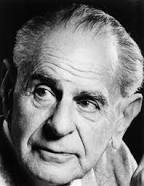
Karl Popper’s dictum is that “He who decides one day that scientific statements do not call for any further test…retires from the game.” By that criteria, Hawking’s “Brief answers…” can only be right or wrong.  Even Einstein’s theories are still being tested. 

What is the origin of life? 

Hawking’s answer is the “Big Bang”.  The origin of life begins with the “Big Bang”, a somewhat pejorative term that describes a black hole.  This black mass is formed from a consolidation of gaseous and fragmented material that compresses to a point smaller than a pea.

Is there an explanation for something being created from nothing? 

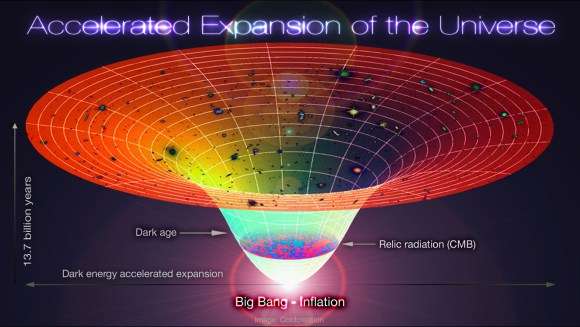
Hawking’s answer is related to the theory of the “big bang”.  Time did not exist before the big-bang.  The arrow of time is created by the instantaneous expansion of our universe’s compressed black hole.  Hawking argues before time there is nothing.  The creation of this world came from the physics of compression and its consequence; i.e. inflation, the instantaneous expansion of a black hole.

From that tiny spot in the cosmos, Hawking argues a universe is born. This minute point of compression is postulated by Hawking to expand instantaneously (termed cosmic inflation). 

In accordance with Einstein’s law of physics, mass and energy are equivalent and cannot be destroyed.  Instantaneous inflation is a changed form of energy and mass with space being its primary constituent.  That instantaneous expansion of a black hole made the universe.  This universe is made of many galaxies (estimated to be between 200 billion and 2 trillion); of which we are only one, called the Milky Way.   

From the big bang, the elements of life are formed. Hawking explains chemical interactions from the explosion lead to the first carbon-based life’ forms.  That combination of chemicals evolves into plants, animals, fungi, protists, archaea, and bacteria. 

Is the only explanation for the existence of earth an omniscient and omnipresent God?

The “big bang” is Hawking’s answer; without insisting that there is no God.  Hawking’s argument is founded on science that offers a plausible alternative explanation.

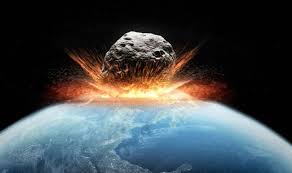
What are the greatest threats to life on earth?  Hawking notes four.  One, nuclear war; two, global warming; three over-population, and four—an asteroid collision with earth.

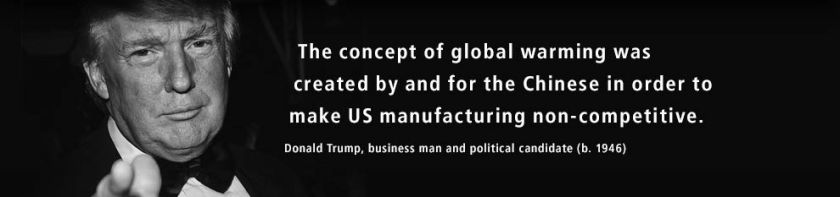
Not surprising to some, Hawking suggests the first two are accelerated by the election of Donald Trump.  The third and fourth are another matter.

Does life exist on other planets? 

Hawking believes it is probable.  However, he believes it unlikely to be humanoid.  He suggests the evolution of humankind is a confluence of serendipitous circumstances that are unlikely to be repeated. 

How will human beings survive on a world with diminishing resources?

Hawking believes human survival depends on habitation of other planets.
He argues that the same thing that motivated Columbus to find a new continent motivates humankind to journey into space.

Through a combination of curiosity (born partly of greed for wealth and power in my opinion) and necessity, explorers expanded their domains.  Hawking suggests the same holds true today.

Will humankind visit other solar systems? 

Hawking explains the limitations and problems of space travel and habitation.  The distances involved in finding a planet like earth are currently too great.

Planets in other solar systems are not reachable with the energy limitations of current propulsion technology.  Long distance space travel is not insurmountable, but presently it is beyond the capability of experimental science. 

Hawking argues that funding for space travel research needs to be increased.  Planets and moons in our solar system will require elaborate survival systems to deal with a lack of water, harsh climate, and unbreathable air. However, planets like Mars offer some refuge based on technological innovation.

Will a law of nature that explains everything about everything be discovered? 

Hawking believes someone will find a theory that combines quantum theory with the special theory of relativity.  The present state of science suggests “God does play dice”, contrary Albert Einstein’s belief.  What remains unknown is how the theory of a causal world can be the same as a probabilistic world.  Hawking believes the melding of quantum theory and Einstein’s theory will be the answer to the puzzle of existence.

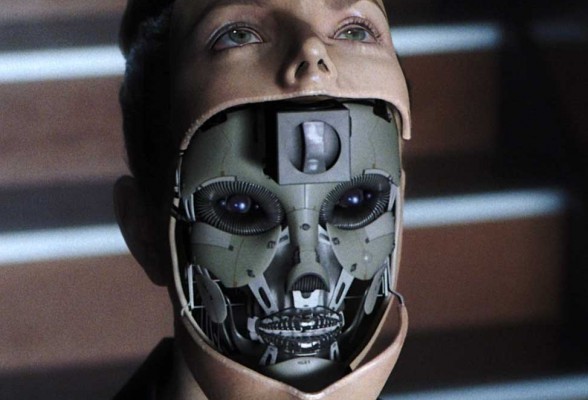
Is Artificial Intelligence a danger to humankind? 

Hawking argues that A.I. is potentially dangerous, but also a possible boon to humankind.  He believes A.I. will exceed the capability of human reasoning.  Hawking argues human beings must responsibly limit actions taken by A.I. that might be detrimental to humankind.

With the advance of genetic engineering (like Crispr), Hawking argues the human genome will be modified.  That modification may involve A.I. in ways that enhance human capability.  On the other hand, it may destroy human consciousness (whatever that is). 

Hawking explains a dire prediction for A.I. is its potential to improve itself at the expense of humans.

Despite the four possible causes for human extinction, Hawking believes the more likely cause of human extinction will be an asteroid collision with earth.  Humans, like the dinosaurs, will die in a bang, rather than a whimper.

There are other interesting thoughts from Hawking but a final question is–what discovery, in Hawking’s opinion, would be the most valuable to the world?  What discovery would hold the most promise?

Hawking suggests the world’s energy and environmental problems can be addressed by one discovery.  The discovery of a method for creating energy from nuclear fusion.  Such a discovery would diminish degradation of our environment and improve the odds for interstellar travel.

INTERNATIONAL RELATIONS

Audio-book Review
By Chet Yarbrough

(Blog:awalkingdelight)
Website: chetyarbrough.blog

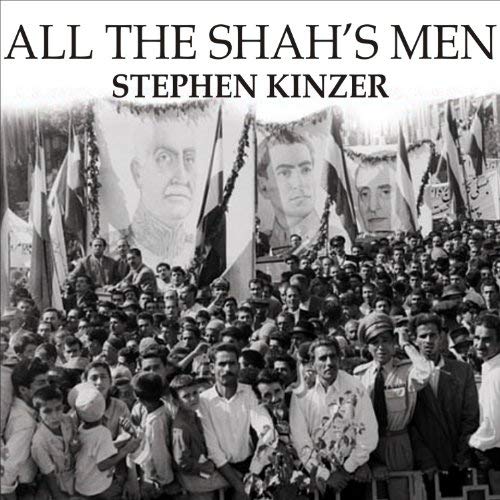
All the Shah’s Men:

An American Coup and the Roots of Middle East Terror
By Stephen Kinzer

Narrated by Michael Prichard

Stephen Kinzer (American Author, journalist and academic, former NYT’ correspondent)

Stephen Kinzer is among a long line of journalists that look at America’s past and reveal some of its lies. Kinzer is a journalist that covered Middle Eastern affairs for the New York Times.  He examines a piece of Iran’s history to reveal America’s clandestine involvement in the overthrow of Mohammed Mossadegh, a 1950’s Prime Minister of Iran.

“All The Shah’s Men” is a thrilling recount of America’s complicity in Iran’s overthrow of Mohammed Mossadegh in 1953.  Kinzer builds a credible story of British greed that seduces American government into removing Mossadegh from office. 

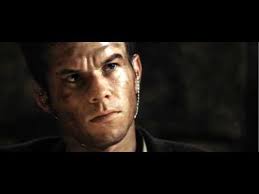
(One is reminded of “The Three Kings” movie that shows an American captive being forced to drink oil; a graphic illustration of why some in the Middle East accuse the West of greed.)

Kinzer recounts British colonization, and industrial domination of Iranian oil assets.  The Shah of Iran enters into long term agreements with a British-controlled oil partnership of Iran’s oil industry.  The contract is long term and exclusively managed by the British with all accounting for Iranian payments determined by British managers. Mohammed Mossadegh fights for Iran’s right to its natural resources.

British Petroleum was the controlling and managing partner of an Anglo/Persian oil conglomerate called APOC. The British treasury purchased 51% of the conglomerate in 1914.

Mossadegh, formally educated in France with credentials as a lawyer and Finance Minister, exposes unfair practices of the British-controlled oil company. The British government supports the oil company’s refusal to renegotiate their contract with the Iranian government. Iran refuses to kowtow to the British government.   In response, Mossadegh nationalizes the oil conglomerate’s assets.

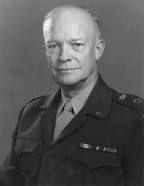
Winston Churchill appeals to President Truman for American assistance in overthrowing Mossadegh’s administration; Truman refuses.  Churchill recognizes Truman is soon to be replaced by Eisenhower and decides to wait until Eisenhower is in office.

The Churchill administration suggests Mossadegh is creating instability in Iran. Churchill argues that Iran will turn to communism if America does not aid Great Britain in the removal of Iran’s Prime Minister.

The irony of Churchill’s instability argument is that much of the instability is caused by Britain’s strict embargo of all assistance to Iran while Iran’s primary source of income, the oil industry, is shut down by Britain’s refusal to negotiate a new oil contract.

Kermit Roosevelt Jr. (1916-2000, CIA officer, a grandson of U.S. President Theodore Roosevelt.)


Eisenhower initially rejects Churchill’s overture but the CIA becomes involved through the clandestine placement of Kermit Roosevelt as a CIA operative in Iran. His job is to foment a rebellion. Direct involvement of Eisenhower is not revealed by Kinzer’s research but Roosevelt and CIA participation in the removal and replacement of Mossadegh is clearly documented by Kinzer.

Kinzer’s story is fascinating. However, as credible as his story is, to suggest a direct link between Mossadegh’s overthrow and the bombing of the New York towers is hyperbolic. 

Great Britain, the United States, the Shah of Iran, and private industry are villains in this story, but greed is a universal human failing that permeates all human endeavors. A direct line between one event and international relations is a trick by historians and journalists to simplify history. One nation’s exercise of power and influence over another is resisted by all sovereign nations. It is the accumulation of sovereign encroachments that cause long term enmity between nations.

U.S. Embassy Hostages Taken in Iran in 1979.

Qasem Soleimani

No singular event explains one nation’s antipathy toward another but each opens wounds from the past.

ROBERT FROST

Audio-book Review
By Chet Yarbrough

(Blog:awalkingdelight)
Website: chetyarbrough.blog

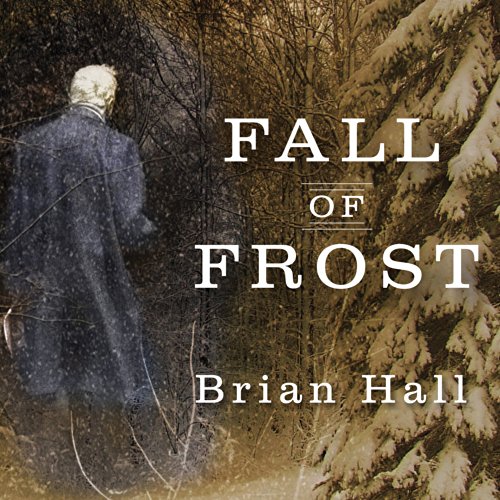
Fall of Frost


By Brian Hall
Narrated by Dick Hill

BRIAN HILL (AMERICAN AUTHOR)

If you are not presently an Audio book fan, this is a book that might expand your literary horizon.  Without any intent to diminish Brian Hall’s skill as a novelist, “Fall of Frost” is a better book to listen to than read. 

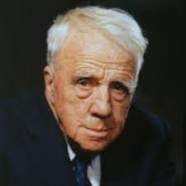
ROBERT FROST (AMERICAN POET 1874-1963)
“Fall of Frost” is a fictional portrayal of “four time” Pulitzer Prize winning American poet, Robert Frost.  Dick Hill’s narration smoothly transitions from prose to poetry in his beautiful presentation of Brian Hall’s fascinating rendition of Robert Frost’s life.

This is not a biography.  It is a work of fiction grounded in historic events of a poet’s life.  It is an author’s projection of what Robert Frost thought when he wrote a poem; when he met world movers and shakers, or when he gave speeches at famous gatherings.

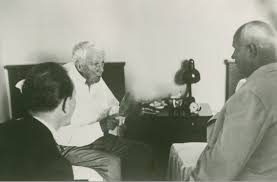
Hall escapes tedious fact reporting by capturing moments of Frost’s life.  When Frost meets with Khrushchev in 1962, he is nearing the end of his life. 

The story makes a listener feel Frost’s age by describing a long flight and revealing ruse’s of old age; i.e. like saying “what did you say” when what you really want is more time to think of a response.

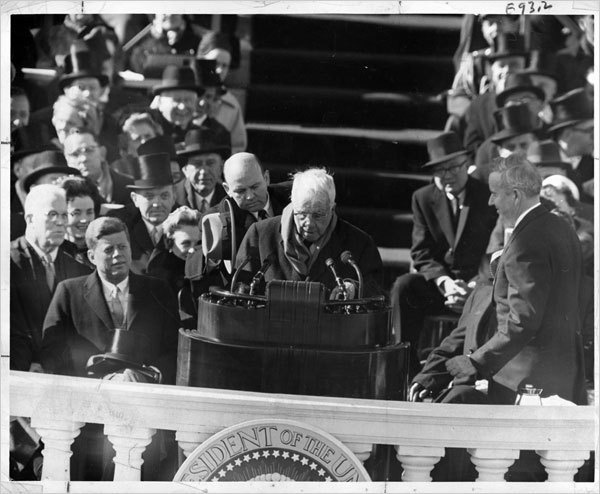
Hall speculates on what might be going through Frost’s mind.  When Frost offered a poetry reading at Kennedy’s inauguration, he missed a line of his own poem; Hall writes like he knows Frost’s thoughts showing Frost’s frustration over his mistake.

“Fall of Frost” entertains and informs by revealing events in Frost’s life that influenced his poetry.  By shedding the category of non-fiction, Hall manages to create believable circumstances of a life that created famous poems like “The Road Not Taken” and “Stopping by Woods on a Snowy Evening”.

No, this is not a biography but it gives a context to events in Robert Frost’s life that can be found in history books.

The prose of Hall and poetry of Frost are wonderful to hear, regardless of the precise facts of Frost’s life.

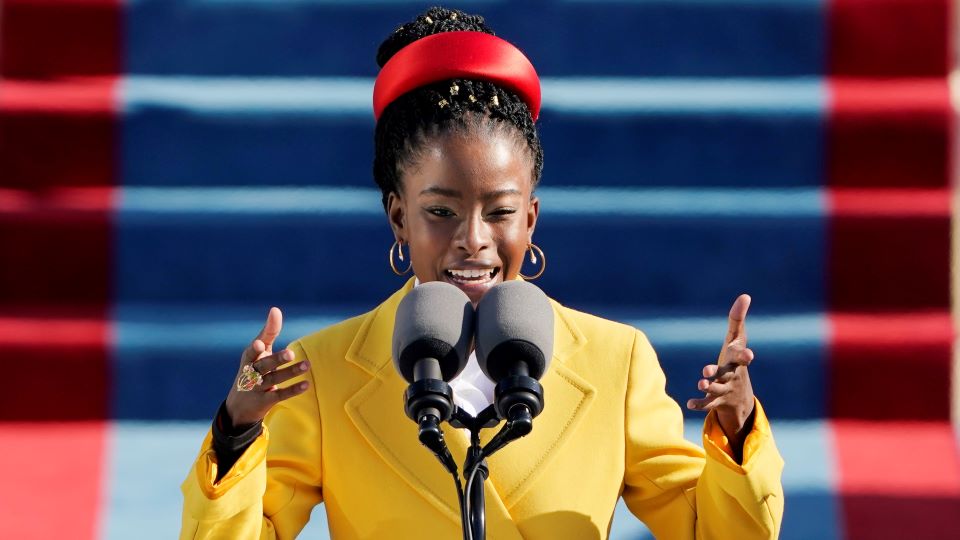
Amanda Gorman seems a youthful replacement for Robert Frost–her poetic presentation at the Biden/Harris Inauguration is beautifully rendered on a page of the WSJ in 2021.

After listening to Fall of Frost, an audiophile or bibliophile will have a better appreciation of who Robert Frost was and what he represented in America and the world.

RATIONALIZATION

Book Review
By Chet Yarbrough

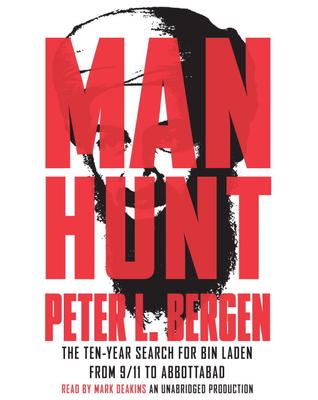
Manhunt: The Ten-Year Search for Bin Laden from 9/11 to Abbottabad
By Peter L. Bergen

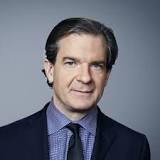
Peter Bergen (British-American Journalist, Author, CNN Nation Security Analyst)

Written by Peter Bergen, Manhunt is a page turning thriller that tells America’s story of the search for and killing of Osama bin Laden, an acknowledged mass murderer.

The story of the search and killing of Osama bin Laden perversely satisfies human nature’s desire for revenge. 


Osama bin Laden (1957-2011, Saudi Arabian founder of the militant orgranization al-Qaeda.)

Osama bin Laden takes responsibility for 9/11/01 killing of nearly 3,000 innocents–one presumes bin Laden goes to his grave believing in his rationalization for terror and murder. 

Osama Bin Laden and his followers believe America manipulates and subverts Middle Eastern culture and religious belief. Bin Laden called Americans infidels who deserved death because they did not believe in the “truth” of Allah.  To most Muslims this is a distortion of the true meaning of Islamic faith and a false interpretation of the Koran.

Bin Laden’s son is alleged to have the same sentiment as his father. Hamza bin Laden is rumored to be the new leader of al-Qaeda with the same terrorist ambitions. America offers a $1,000,000 bounty for the capture of Hamza bin Laden. (Killed in 2019–alleged to have been a result of America’s counter intelligence operations in Pakistan and Afghanistan.)

Many, if not most, Muslims argue that Osama bin Laden misrepresented the Koran and its teaching about life and the hereafter. To many, the nature of the living is to be free to choose what one believes and to live in peace with your neighbors. 

Al Qaida’s rationalization for terrorism comes from an interpretation of the Koran that condones indiscriminate murder of others; including believers in the faith. This is appalling because it involves murder of innocents. How can a babe in arms be guilty?

Biblical literature of all major faiths, at different times, have notoriously rationalized murder of innocents. The God of Abraham is a vengeful God in the Old Testament. The Old Testament speaks of killing every man, woman, and child in ancient communities because of failure to follow the word of God. How can a child in the womb be guilty of not following the word of God?

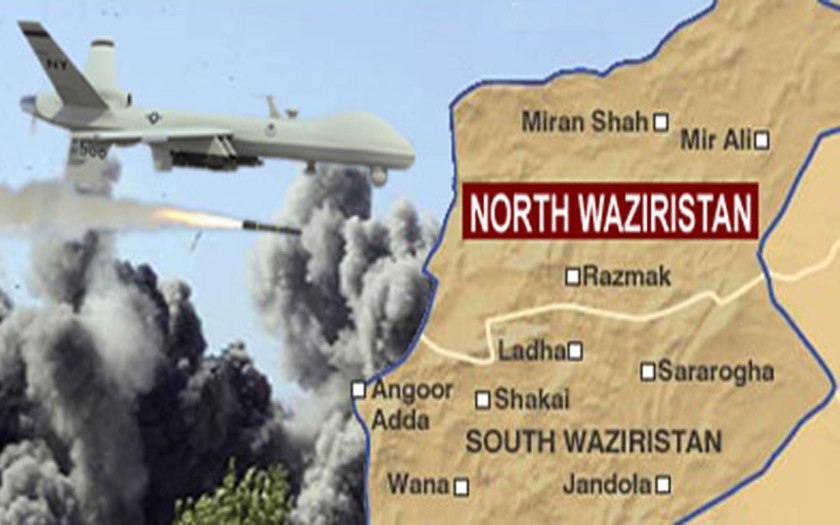
American rationalization for drone use also murders innocents.  There is a calculated number given as an acceptable number of innocents to be killed in a drone attack on suspected terrorists.

Osama bin Laden manages to evade capture for over ten years after 9/11.  Bergen infers this long period of evasion is a result of distracted American military focus, poor American intelligence, and political ambivalence of Middle Eastern allies.

The key to tracking Osama bin Laden is Ibrahim Saeed Ahmed, aka Abu Ahmed al-Kuwaiti (the Kuwaiti).  Bergen explains that Ahmed is a trusted courier for Osama bin Laden.  Ahmed is summoned to a compound in Abbottabad, after having been away from al Qaida for nearly a year.  This summoning and extensive surveillance of the Abbottabad compound suggest a high ranking al Qaida leader is hiding in this northeastern Pakistani’ city of nearly 1.5 million people.

Ibrahim Saeed Ahmed (al-Qaeda member and courier that lead Navy Seals to Osama bin Laden in Pakistan.)

Osama bin Laden Pakistan compound in plain sight of the Pakistani military.

Bergen explains how American government leaders and military analysts monitor and eventually infiltrate the Abbottabad’ compound for actionable intelligence.  The focus of the team is to determine who the high ranking person is in the Pakistani compound.  Speculation grows to a 50% chance that the person is Osama bin Laden.

Location of the bin Laden compound in relation to the Pakistan Miltary Academy.

The highest government and military leaders of America wrestle with life and death decisions; often based on too few facts for guaranteed mission success. 

Bergen’s build up to the decision to send a team of Navy Seals into the compound rivals the best drama one can write about a secret military mission. 

Bergen illustrates the difference between being a manager and a leader.  The former keeps an organization running; the latter gives organization purpose. 

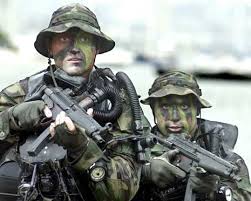
Just as one President chooses not to cross the border of Iraq in operation Desert Storm, a second chooses to invade Iraq, and a third chooses to illegally cross Pakistan’s border. Some argue America is right twice and wrong once. (The misleading representation of WMD in the invasion of Iraq was a mistake for which America and the world continues to pay.)

Right or wrong, American Presidents show themselves to be leaders. Even Trump leads in his own way. The concern is in where facts begin and rationalization ends.

Woodward exposes Trump’s intentional decision to mislead the public. The corona virus nears 200,000 American deaths with projections of up to 400,000.

By the end of Bergen’s story, a listener understands the complexity of the decisions made by American Presidents. On reflection, one realizes bin Laden, Mao, Stalin, and Hitler were also leaders. In that recognition, one realizes how important it is for nations’ political systems to choose their leaders carefully.

NIHILISM

Book Review
By Chet Yarbrough

The Winner Stands Alone


By Paulo Coelho

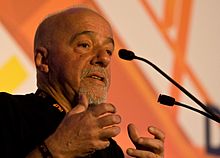
PAULO COELHO (BRAZILIAN AUTHOR, WRITER, LYRICIST)

Every life is a world.  Paulo Coelho’s The Winner Stands Alone magnifies the ephemeral nature of money, power, and fame.  After reading “The Winner…” one might conclude–in life, we stand alone; in death, we die alone.

However, Coelho suggests something different, i.e., we stand or die but are accompanied by either a good or bad angel.  It seems Coelho believes human existence is a fulfillment of destiny. Coelho implies there is no free will.

The Winner Stands Alone is a love-it or leave-it experience.  If it is a first exposure to Coelho, a reader will likely leave it.

Coelho also wrote “The Alchemist” which is a preordained destiny story but it is more hopeful in the sense that when one dreams, dreams can become reality. It speaks to the power of conviction, self-understanding, and never giving up.

“The Winner Stands Alone” is a dark tale, cleverly written about the world of glitz, glamour, fame, and fortune.  Set in Cannes during Festival, the vacuity of a nihilist’s life is stripped bare.

In “The Winner Stands Alone” Coelho cleverly reveals an evil protagonist’s nihilism.


Coelho’s “Winner…” is a nihilist who believes that existence has no objective meaning or intrinsic value. His belief inures to nothingness. 

Coelho’s main character, Igor, is a Russian millionaire.  Igor is a “Heisenberg-like” character with skills of a killer, passions of a romantic, and intelligence of a savant.  Igor lives by instinct, like a viper with a human brain.  He creates a demented plan to recover the love of his ex-wife. 

Igor’s plan is to destroy worlds (the lives of others) to demonstrate depth of love for a woman who has abandoned him.  Igor murders several of Cannes’ rich attendees and one poor shop girl with each victim losing their personal world of experience and existence. 

Igor sends IMs to his ex-wife at the end of each murder.  Each destroyed world punctuates Igor’s arrival and pending reunion with his lost love.  The reunion caps Coelho’s story.

NIHILISM : THE BELIEF THAT ONE LIFE, OR ANY LIFE IS MEANINGLESS.

“So last year 37,000 Americans died from the common Flu. It averages between 27,000 and 70,000 per year.

Trump’s nihilist view of life & the economy–Earlier this year, there were 3,428,462 confirmed cases of Corona Virus, with 137,613 American deaths. Today, over 1,000,000 Americans have died.

What is Vladimir Putin’s destiny? He and Donald Trump seem fellow travelers.

U.S. President Donald Trump and Russian President Vladimir Putin shake hands as they hold a joint news conference after their meeting in Helsinki, Finland, July 16, 2018. REUTERS/Leonhard Foeger

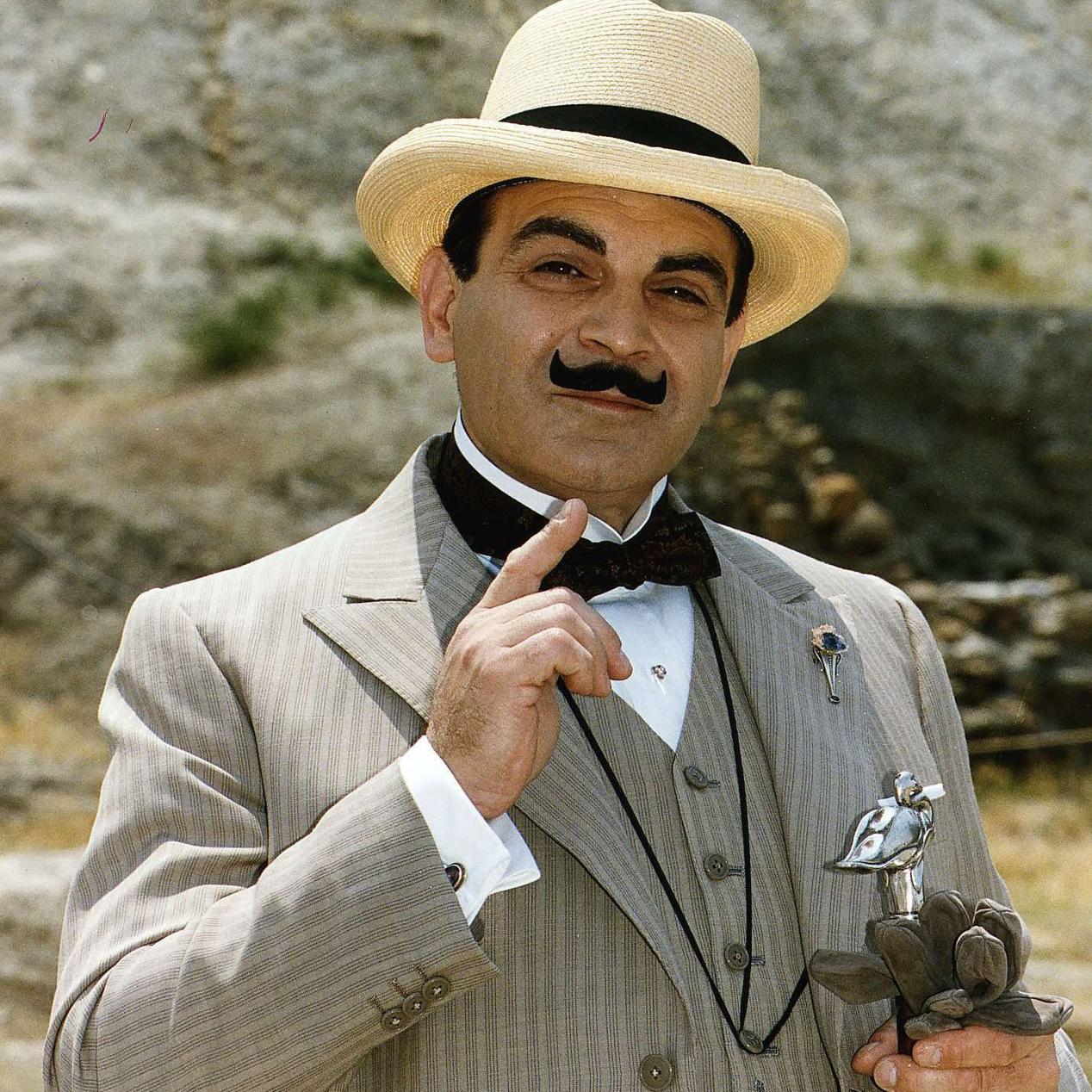
An aspiring Cannes’ police detective, like Hercule Peoirot, recognizes a serial murderer is at work before Igor’s reunion takes place.  The detective recounts former serial murderer cases to reveal common threads of intent.  Igor’s intent is seen by the detective as a message that, once delivered, will stop the serial killing at the Cannes’ festival.

What may keep a reader reading “The Winner Stands Alone” is the desire to know how the story will end.  Will Igor be caught?  Is human existence a fulfillment of destiny or life lived by instinct? Is there a difference?


NEVER FORGET

Audio-book Review

By Chet Yarbrough

chetyarbrough.blog

Comedy in a Minor Key

By Hans Keilson, Translated by Damion Searles

Narrated by James Clamp

HANS KEILSON (1909-2011, JEWISH GERMAN-DUTCH NOVELIST, POET, PSYCHOANALYST, AND CHILD PSYCHOLOGIST)

“The horror, the horror…” from Joseph Conrad’s Heart of Darkness creeps into your mind when listening to Hans Keilson’s story of a German Jew that is hidden by a young married couple in Nazi Germany.

Keilson is long gone and little remembered but this story places you in a small two story house, in an upstairs bedroom with the shades drawn, in a grim scene of anxiety and despair.   James Clamp has a perfectly accented voice for this tale of gloom because he does not over dramatize Keilson’s words but gives them a solemn and poignant believability.

The names of the three main characters of this novel are gone from your mind as soon as the last page is read but the truth of the story sticks with you.

The truth of what dehumanizing a creed, a race, or religion can lead to.  The idea recurs to you when you listen to books like The Coming of the Third Reich by Richard Evans recounting the systematic vilification and slaughter of 6,000,000 souls.

In listening to Keilson’s story there is the thought that history is a reflection of an eternal return. Vilification of human beings as the “other” rather than one of us repeats in every nation of the world. Today it is Ukrainians to Russia’s government, Uighurs to China’s government, Muslims to India’s government, Palestinians to Israel’s government, Americans to Iran’s government, immigrants to America’s and most of the world’s governments, and so on, and so on.

This is a story that shows how any society can devolve into a repressive, barbaric, totalitarian state but still bare witness to individual and small human conclaves of bravery, compassion, and humanity.

The comedy is in the irony of being raised in the same culture and knowing that what is happening is wrong and not being able to stop it.  The comedy is compounded with the realization that stopping evil, wrought by a totalitarian state, is dependent on individual action (a minor key in a major production).

You cannot help but empathize with the trauma that one must feel when choosing to fight what is wrong when it may mean the end of your life, not necessarily death, but the complete change of your circumstance of living. 

The married couple hiding a Jew makes a small mistake that forces them to leave their home; their job; their life, as they have been living it, to escape the consequence of their action.  It is an ironic little comedy because it turns out the minor mistake is purposely ignored by the German investigator; a character that resists the out of control culture that he is a part of. 

Except for the death of innocence, the story has a happy ending with the married couple returning to their home to begin again.  One wonders if beginning again means they will continue to be protectors of the innocent; to be human in a culture that slips into organized genocide, destruction, and hate.

This is a short book, more of a novella, but it tells a big story that resonates in our own history and the history of all humanity.

BEST OF TIMES

Audio-book Review
By Chet Yarbrough

(Blog:awalkingdelight)
Website: chetyarbrough.blog

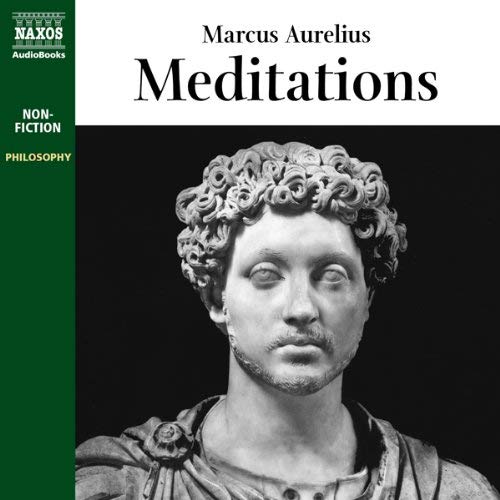
Meditations
By Marcus Aurelius

Narrated by Duncan Steen

MARCUS AURELIEUS (121 AD-180 AD, EMPEROR OF ROME FROM 161-180)

Marcus Aurelius has been called the last of the five good emperors of Rome.  Edward Gibbon, the historian, went so far as to suggest that this is one of the best times in history for people to live.  (Maybe, but Gibbon might be a little biased based on being male and white.)

PLATO, ATHENIAN PHILOSOPHER ( 428/427 or 424/423 – 348/347 BC)
Marcus Aurelius embodies the concept of the Philosopher King.  Philosopher Kings are first described by Plato as the only totalitarian leader capable of ruling society.  They would rule capably because of their wisdom and knowledge of the Good.  “Meditations” suggests that Aurelius was the real deal.

In the modern world, Aurelius provides a bible for the leisure-class. However, one is not sure what the leisure class is in this era of doing rather than being.

Aurelius recognizes the ephemeral nature of life’s pleasures and chooses to write about and use Plato’s ideal forms to guide his rule.  

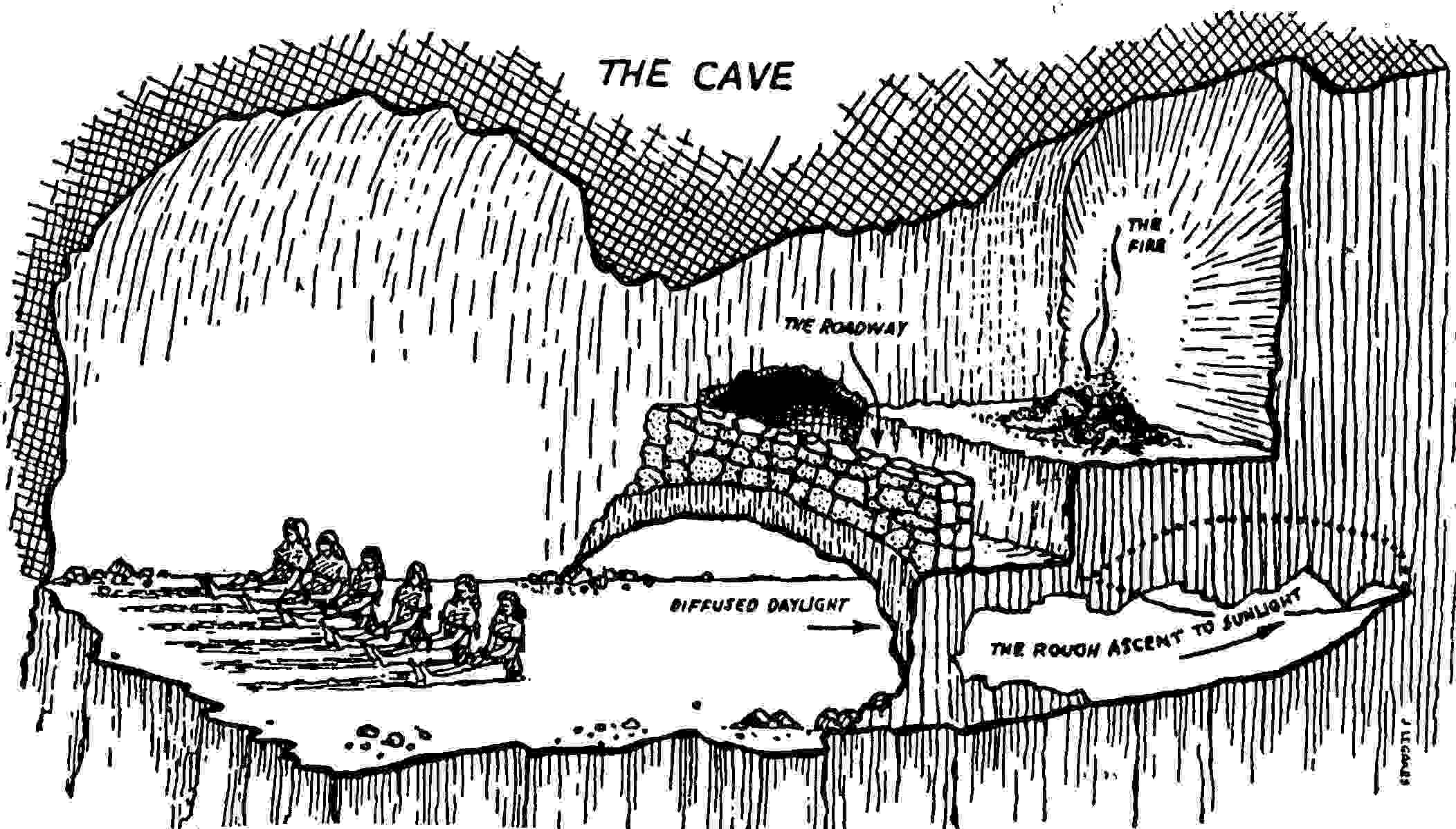
The ideal forms are Plato’s essences of life, measures of the Good that in most people’s minds are only shadows in a cave.  

Aurelius benefited from wealth and leisure by being in the lap of luxury while denying its seductive pleasures, His private education allowed him to study and understand the source of Plato’s shadows in the cave. 

In the post industrial world the likelihood of a 21st century Philosopher King is inconceivable but “Meditations” does offer a guide to today’s leisure class.  With time, education, and inclination, a human being can adopt Aurelius’ rules to live a life of joy and contentment. 

A life of joy and contentment runs contrary human nature’s proclivities, the pursuit of money, power, and prestige, but the leisure class may have enough of each to stop climbing life’s ladder to despair.

Aurelius lives in the post Christian era (121-180 AD) and writes with some confusion about belief in gods or God but seems to believe in pre-ordination and humankind’s necessary acceptance of a lot in life. 

Aurelius forsakes despair and honors acceptance of doing the best one can do in a short human life.  Aurelius does not seek money, power, or prestige but accepts responsibility and lets actions define his life.  He believes every person has a social responsibility and that to remove oneself from social interaction is a betrayal of living a good life.

There is wisdom in Marcus Aurelius’s “Meditations”.  If a listener is at a position in his or her life that allows meditation, this is a good place to start.