

Books of Interest
Website: chetyarbrough.blog
The Return of Great Powers (Russia, China, and the Next World War)
By: Jim Sciutto
Narrated By: Jim Sciutto

Jim Sciutto (Former American news anchor for ABC, national security correspondent for CNN, Yale graduate majoring in Chinese history.)
Jim Sciutto has been seen by many on television. One suspects few know he served as the Chief of Staff and Senior Advisor to the U.S. Ambassador to China between 2011 and 2013. His book, “The Return of Great Powers” is interesting but not particularly revelatory. It was written before today’s news of the blows to Iran’s role in the Middle East with the removal of Syria’s brutal leader and Israel’s increased attacks on Hezbollah and Hamas. Tragically, there is always death of innocents in war. The question is whether war is ever worth its cost.
Sciutto certainly has a better grasp of China than most Americans based on his education and experience but his general analysis of the “…Great Powers” and their return is more topical than insightful.

The rise of Putin and Xi have certainly changed the world. Newspapers and television are full of stories about these leaders’ dance around the war in Ukraine. Xi offers moral and financial support to Putin, along with some important weapon components needed by the military, but China limits military equipment and direct munitions provisions for the war. China may benefit from Russia’s Ukraine invasion because of Xi’s expressed interest in acquiring Taiwan but China’s advances have not moved much from where they were before the invasion.
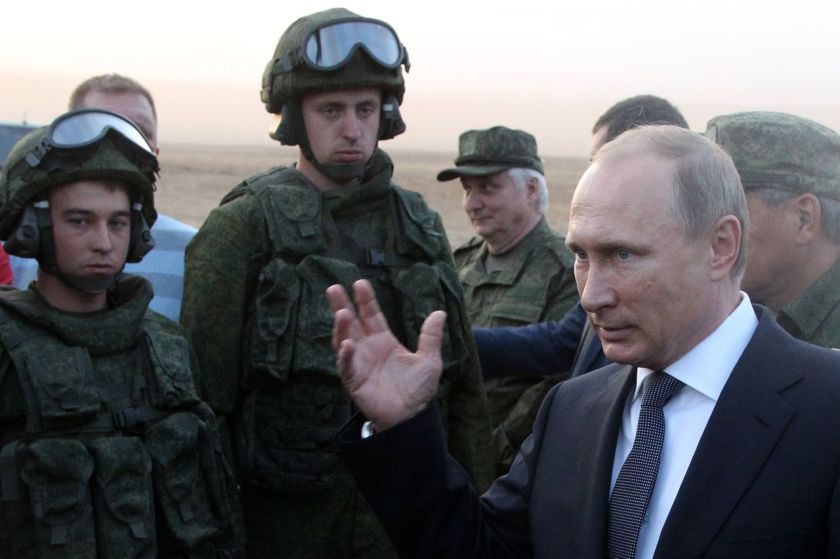
What seems clear today, particularly in Sciutto’s book, is that Putin has made too many mistakes in his invasion of Ukraine.
Putin’s apparent disregard for Russian soldiers’ deaths undoubtedly threatens his influence with many Russian citizens. Some of America’s media suggest Putin is becoming more conscious of his political and personal vulnerability. It is reported by Gleb Karakulov. a Russian engineer and defector who fled to Kazakhstan, that Putin has become paranoid and increasingly isolated.

Sciutto suggests Estonia is on a Putin invasion list once Ukraine has been conquered.
Having recently returned from the Baltics, occupation of Estonia would be a pyric victory for the same reasons as the Ukraine invasion. The hate for Russians one hears from Baltics’ residents (Lithuanian, Estonian, and Latavian) who were under the rule of Russia from 1940s to 1991 is palpable. The jail cells, torture, and murder of Baltic citizens by Russia is detailed by tour guides from each country. The prosperity of the Baltic countries since 1991 is a tribute to freedom that will not be given up easily by its people. At best, Russia may be able to occupy the Baltics, but citizen resistance would far outweigh any value occupation might offer.
Sciutto goes on to imply Taiwan will lose its independence to China.

The picture of death and destruction he outlines with China’s overwhelming military might mitigates against China’s success. Once freedom is experienced, it is like genies in a bottle–difficult to be re-imprisoned. Whether NATO or America will come to Taiwan’s aid is unknown, but like Russia’s invasion of Ukraine and Putin’s interest in the Baltics, the price to be paid is higher than the reward they can expect.
Freedom, once it is experienced, is an unconquerable force. Conquest of Ukraine, the Baltics, or Taiwan would be a pyric victory at a cost far in excess of a conquerors’ perceived value.

 REVIEWS AND VIEWS OF LIFE