
Blog: awalkingdelight
Website: chetyarbrough.blog
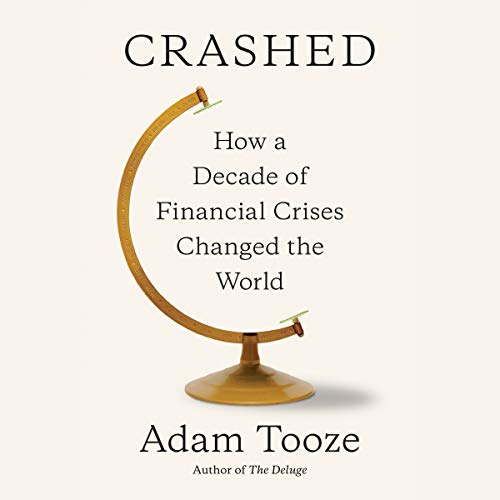
Crashed: How a Decade of Financial Crises Changed the World
By: Adam Tooze
Narrated by: Simon Vance, Adam Tooze

Adam Tooze (British Author, Historian, professor at Columbia University, Director of the European Institute.)
“Crashed” is a book about the 2008 financial crash. Though it is old news, Adam Tooze offers historical perspective and a cautionary tale about America, the E.U., China, India, Russia, Spain, and other nations of the world. Interconnectedness is greater now than any time in history. The surprising realization in Tooze’s analysis of the financial crash is that America caught a fiscal infection like Covid19, and it spread across the world.

These securities were purchased and re-sold among big banks, wealthy investors, and investment houses. The lax oversight of the quality of the combined mortgages led to a cascade of bank and investment house failures that nearly collapsed the world financial system.

Though the western world was more directly affected by purchases of these mortgage packages, countries like China, Russia, South Korea, Ireland, Spain, and Greece were severely, if not equally, impacted.
Nations’ financial crises were not solely because of purchases of these mortgage packages but because of world economic interconnectedness. Nations of the world, as users of energy and product purchases, quit buying. At the same time, Tooze notes the American dollar was hoarded by some countries for protection from devaluation of local currencies. With America’s financial crises, the dollar became a source of devaluation rather than protection.

China chose to invest in domestic infrastructure projects like dams, high speed rail, and bridges. China chose to increase product production (at lower labor costs) for the worldwide market. In contrast, Russia reinforced kleptocracy, before, during, and after the 2008 crisis, by rewarding Russian oligarchs who became a wealthy and powerful cadre of supporters of the government. With favored treatment of the oligarchs, Vladimir Putin recognized he had the power to act as he wished whether it was in the best interest of Russian citizens or not. (This is similar to the repressive reign of Kim Jon-un who spreads the wealth of his nation on a relatively small cadre of North Korean protectors while many citizens live in poverty.)

Ben Bernanke (American economist, 14th chairman of the Federal Reserve.)
In America, Tooze deconstructed the complicated negotiation process between banking industry independence and federal government oversite by the Obama administration. The range of disagreement is from nationalization of the banking industry to a direct bailout of overextended banks. Though the government bluntly accused banking executives of overpaying themselves for the mistakes they made, Obama and Geitner recognized the importance of industry independence in making complicated decisions to get America out of its financial ditch. The decision is made to bailout the banks. The American government loaned enough money to banks and select companies to maintain American lenders’ and industries’ liquidity.
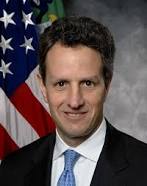
Timothy Geithner (Former central banker, 75th U.S Secretary of the Treasury under President Obama.)
The controversial decision made by the government to support banking and industry liquidity resulted in many American citizens loss of their homes; not to mention their jobs, because of business and industry cutbacks. The tranches of money to support lenders and businesses did nothing to help the poor who purchased houses on variable rate mortgages to qualify for a loan. Mortgage lenders received large bonuses for increased business but were never penalized for the harm they did to the public. When rates on their loans escalated, lower income buyers could no longer pay their mortgages. The choices of Obama’s administration reinforced the perception that those with enough money to cope with the economic downturn were favored over the poor because they had enough income to either pay the escalated mortgage payments or refinance their mortgages.
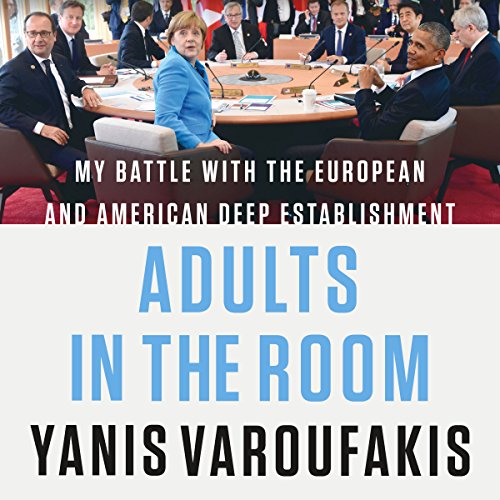
The financial rescue of Greece follows a similar path between 2008 and 2018. Greece is eventually bailed out but the citizens most hurt by the restructured financing are the poor.
In order to stabilize the economy, 320 billion euros were lent to Greece by the European Union and the IMF. As of 2019, only 41.6 billion had been paid back to reduce that debt. The E.U. and IMF imposed austerity measures that principally hurt the poor by reducing retirement pensions and employment opportunities. Greece fell into a recession that lasted until 2017. The poor became poorer because of pension reductions and loss of jobs. (Full repayment of the 320-billion-dollar loan is not expected until 2060.)
Tooze tells a similar story about Spain. The 2008 crises caused a 3.6% reduction in GDP in 2009. Spain’s response was similar to Greece’s in that the poor were more likely to have been hurt than the rich because of implemented austerity measures that reduced public spending, and job creation that impoverished a wide swarth of society.

The final chapters of Tooze’s history severely criticizes the rise of Trump and his extremist rhetoric about helping the working poor when in fact he is only interested in himself, his power, and his wealth. Tooze implies Trump uses American belief in free speech, and the power of public office to distort the truth of immigration, poverty, and equality to mislead the public. Historically, this is not a new American phenomenon but in this technological age, the damage political leaders can inflict on the public is multiplied.

In explaining the impact of the 2008 financial crises, Tooze shows how one nation’s actions and policies can roil the world. In the 21st century, actions and policies of one nation are not local. Like a ripple in water, the world can be changed by one stone thrower.

 REVIEWS AND VIEWS OF LIFE