EGOTISTICAL UTILITARIAN

“Greenlights” offers a different view of who McConaughey is than what one might think of him based on his public persona.

Books of Interest
 Website: chetyarbrough.blog

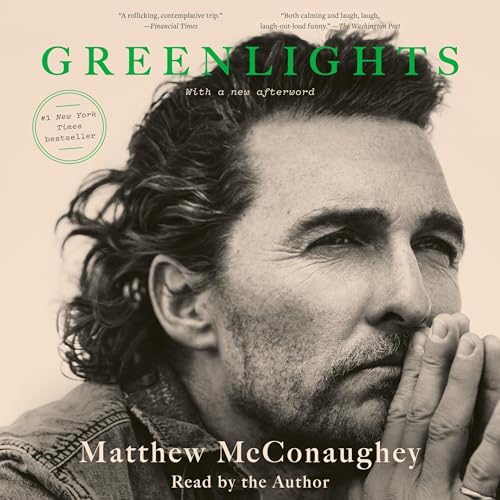
Greenlights

Author: Matthew McConaughey

Narrated By:  Matthew McConaughey

Matthew McConaughey (Author, actor born November 4, 1969, in Uvalde, Texas.)

“Greenlights” is a self-narrated autobiography of the famous actor Matthew McConaughey. The picture he creates of himself seems naked and unafraid. His narration gives a sense of a person acting in a movie who tells of the strengths and weaknesses of a person who speeds through the greenlights of life, believing in only God and himself. McConaughey idolizes his deceased father while seemingly acknowledging how much he is who he is because of his mother.
A listener senses they are witnessing a heartfelt theater presentation, where a person earnestly strives to live fully in the moment, embracing the understanding that every experience is a valuable part of life’s journey. This journey, rather than instilling fear, invites acceptance and courage, grounded in the belief that God is at the helm, guiding each step with love and purpose.

The self-confidence McConaughey exhibits borders on arrogance, but his presentation is entertaining and revealing. A listener feels they are experiencing a theater presentation of a person who strives to live in the moment with confidence that everything that happens is a part of life’s journey, not to be feared but embraced because God is in charge. With the dimension of good looks, and self-confidence McConaughey boldly embraces life while searching and reflecting on its meaning. He seems to revel in success and not brood over failure. He believes in discipline, respect, and love even though they often demand more than he can provide.

McConaughey’s biography makes one reflective.

His sense of humor and willingness to live life as it happens are entertaining. On the other hand, there is a sense that his self-confidence can become a threat to others and himself. He writes of his experience as an exchange student in Australia where he lives with a family who demands a behavior with which he disagrees. The result of his opposition is confrontation with the family and a change in his Australian family sponsorship. McConaughey’s side of the story is all one hears but it seems unlikely that a family would not be screened before a foreign student is invited to their home for a year.

“Dazed and Confused” movie.

With a line widely recognized by movie goers, i.e., “Alright, alright, alright”, from “Dazed and Confused”, McConaughey became a recognized actor. The movie was released in 1993. It is about the last day of school in a small Texas town. After that movie, McConaughey makes a good living as an actor. He proves himself as a talented actor in “A Time to Kill”. He plays a lawyer in a racially charged courtroom drama.

Camila Alves (Brazilian American model.)

McConaughey’s bon vivant life changes when he meets his future wife, Camila Alves.

Alves is a Brazilian American model and entrepreneur who McConaughey meets in the early 2000s. They become committed to each other soon after their meeting and have their first child in 2008. McConaughey explains how they call his mother in the middle of the night to give her the great news. McConaughey is surprised when his mother is outraged by having a child with a woman to whom he is not married. A listener/reader recognizes how important and influential McConaughey’s mother is to his growth from boyhood to adulthood.
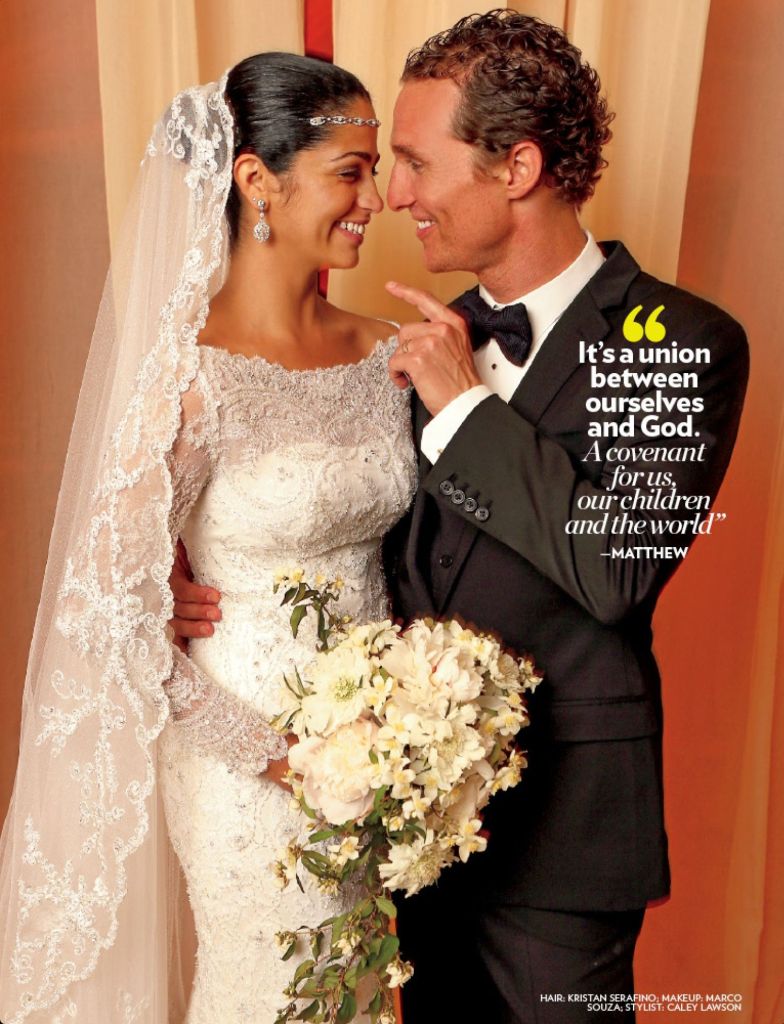
McConaughey and Alves marry four years after the birth of their son and a daughter.

Now, in his early 40s, he changes the course of his life. He had made a good living as an actor, i.e. making a number of forgettable romantic comedies after proving his acting ability. After making millions, McConaughey and his growing family leave the business of only making money to buy a property in Austin, Texas. They have a third child. He refuses to make any more romcom movies. He disappears from the limelight for nearly two years when he receives offers to make three movies that make him the mega-star he becomes.

A McConaughey’ mega hit shows how committed he is to the art of acting by losing 50 pounds of his muscular body to play the part of an HIV victim.

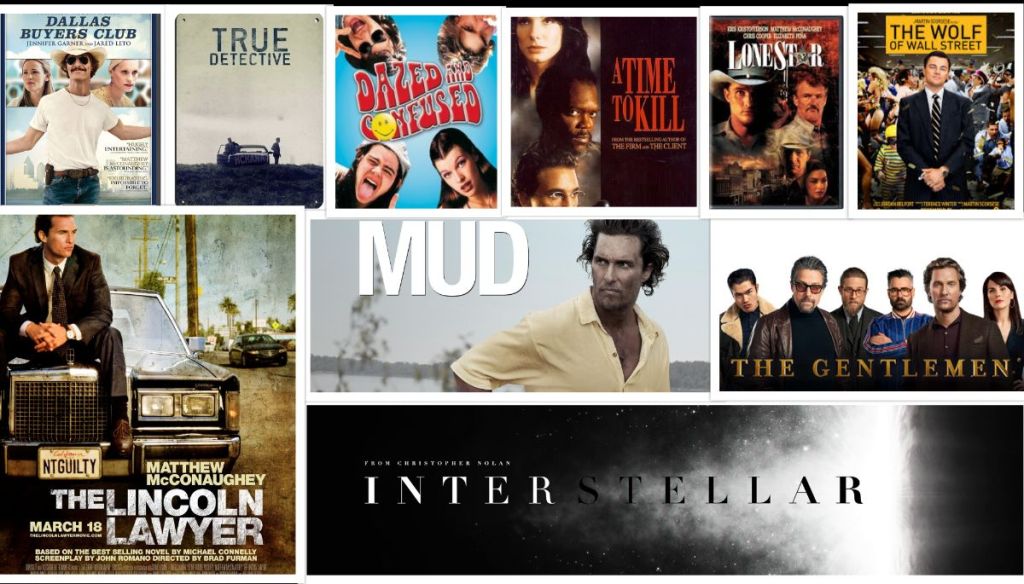
With the release of “Dallas Buyers Club” in 2013, McConaughey’s shows how he had grown professionally. He received an academy award for his performance. At this point in his life, he and his wife have three children under the age of six. Movie rewards, a beautiful wife, and three young children make McConaughey feel he is a better actor because they sharpen his sense of purpose in life. The complexity of his life is translated in the way he expresses himself in the mini-series True Detective, and movies like Lincoln Lawyer, and Mud. The characters he plays are introspective and layered. He recognizes hardship is a part of life that makes one grow as a human being.

“Greenlights” offers a different view of who McConaughey is than what one might think of him based on his public persona.

TOO LATE

Ideally, public good and ethics will be taught in advance of the melding of technology and government, i.e., not after mistakes are made. However, history suggests humans will blunder down the road of experience with A.I., making mistakes, and trying to correct them after they occur.

Books of Interest
 Website: chetyarbrough.

The Technological Republic (Hard Power, Soft Belief, and the Future of the West)

By: Alexander C. Karp and Nicholas W. Zamiska

Narrated By: Nicholas W. Zamiska

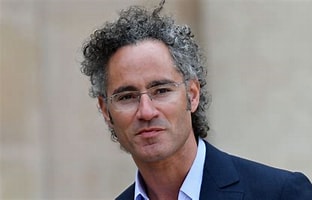
The authors are the founder and operations manager of the American software company, Palantir Technolgies. Palantir has been hired by the U. S. Department of Defense, the Intelligence Community, agencies of NATO countries, and Western corporations to provide analytic platforms for defense analysis, healthcare, finance, and manufacturing.

They believe artificial intelligence research and development has lost its way.

They argue Silicon Valley has lost focus on what is important for survival of society and Western values. They suggest A.I. should be focusing on serving humanity in ways that responsibly regulate nuclear weapons and protect society from existential risks like climate change, pandemics, asteroid collisions, etc., that threaten human extinction. The authors provide a powerful criticism of technology and its national purpose.

Karp and Zamiska argue that technology is focusing on consumerism rather nuclear annihilation or existential risk.

By focusing on convenience and entertainment for financial success, fundamental problems like the threat of nuclear war, homelessness, inequality, and climate change are ignored or relegated to the trash heap of history. (“Trash heap of history” is the belief that what happens, happens and society can do nothing about it.) The west has become complacent with short-term focus on profit and consumer demand. The authors argue that the greater good is no longer thought of as an important societal goal. The primary goal is making money that enriches creators and company owners by making purchases more convenient to and for consumers.

Aldous Huxley (English writer and philosopher, 1894-1963, author of “Brave New World”.)

Their argument is there should be more collaboration between tech and government. Historically, government is only as good as the information it has to make societal decisions. A computer program can be programmed with false information like the error of weapons of mass destruction that led to an invasion of Iraq that was a bad decision. The domino theory input that led to the Vietnam war; so, on and so on. There is also the threat of an elected President that uses the power of technology to do the wrong thing because of his/her incompetence. There is the risk of government gathering personal information and using it to cross the line into a “Brave New World” where innovation, free thought, and independent action are discouraged or legislated against so people can be sent to jail for breaking the law?

Possibly, melding technology with government is an answer, but it is a chicken and egg concern. Education about public good and ethical practices should begin as soon as the egg cracks, not after hatchlings are already old enough to work. Phrases that come to mind are “What’s done is done” or “The die is cast”.

The authors argue the West needs to up-its-game if it wishes to create a peaceful and prosperous future for a society that is founded on the ideal of human freedom.

Without future generations creating policies based on ethical purpose for the public good, one infers western culture will spiral into individual isolation and self-interest that diminishes western culture and ideals.

Ideally, public good and ethics will be taught in advance of the melding of technology and government, i.e., not after mistakes are made. However, history suggests humans will blunder down the road of experience with A.I., making mistakes, and trying to correct them after they occur.

M.A.D. (Mutually Assured Destruction)

The near assassination of Trump is a harbinger of a world unduly influenced by today’s technology and media influence.

Books of Interest
 Website: chetyarbrough.blog

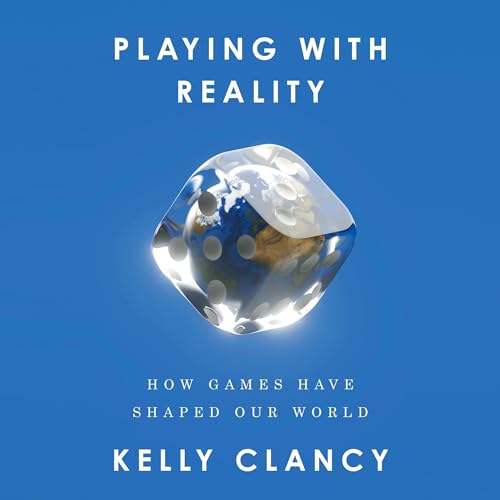
Playing with Reality

By: Kelly Clancy

Narrated By: Patty Nieman

Kelly Clancy (Author, graduate of MIT in physics with a Ph.D. in biophysics from U.C. Berkley.)

Kelly Clancy has a distinct point of view as a scientist. Her understanding of game theory and the mathematics of probability may steer reader/listeners away from her interesting book. “Playing with Reality” is less like playing and more like hard work, at least in the first chapters. Clancy begins by defining game theory and its permutations. Then she explains how it is a flawed tool for understanding human behavior. As one gets through the first chapters of her book, a reader/listener realizes Clancy is offering more than gaming theory history.

Clancy offers a detailed history of the growth of computer technology through the use of gaming programs designed to educate, entertain, and enrich private companies, public conglomerates, and individuals.

Clancy reveals the growth of chess playing gaming programs like Deep Thought, Big Blue, and Deep Blue to expose the battle line between human and artificial intelligence. Clancy is a skeptic of gaming technology–with a warning.

Clancy’s skepticism lies in mistaking game-theory’ studies as proof of predictive human behavior.

Clancy notes human behavior is not predictable for many reasons; one of which is human irrationality, and another is a human’s sense or understanding that he/she is being manipulated for prescribed responses. For example, in the first instance, a person may be irrationally afraid of all snakes even though there are no poisonous snakes in their State. In the second instance, a person who knows the theory of something like the “Prisoner’s Dilemma” can choose to modify their behavior and respond based on knowledge of previous experimental studies.

John von Neumann (1903-1957, Hungarian American mathematician, physicist, computer scientist, engineer and polymath.)

The troubling part (the warning) revealed by Clancy is that brilliant people like John von Neumann, an intellectual giant of the twentieth century, can have bad ideas. Clancy notes von Neuman considered preemptively nuking the Soviet Union because he reasoned it would (and it did) successfully create a nuclear bomb soon after America’s bombing of Nagasaki and Hiroshima. Neuman presumably considered this a rational option based on game-theory thinking.

Today, one wonders what Russia’s leader is capable of with nuclear weapons if he considers them just another tool of war.

Clancy notes Putin, like the President of the United States, is legislatively authorized to unilaterally choose to use nuclear weapons to protect what they believe is a threat to their countries. The gaming industry and the growth of A.I. are not the problem. Human nature is the problem. There are not enough checks and balances to keep well intentioned Presidents or bad actors from making bad decisions.

Clancy shows how the computer gaming industry has obscured the tragic consequence of violence by returning murdered life in a game back to life so they can play the game again. The game is not real, but the lesson is that gun violence is ok because it is just a game that can be replayed. Computer gaming has become a gateway to violence in the world. Easy access to guns is a problem in America but guns are instruments of violence, not the cause of violence. Among the causes are, poor education, poverty, mental dysfunction, and gaming that distorts reality.

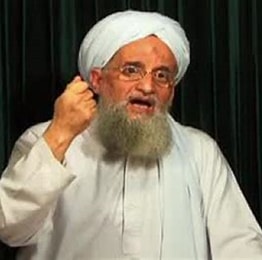
Political position and power are dangerous in the face of human irrationality, a not uncommon characteristic of intelligent, ill-informed, or uncaring political leaders. In this age of computer drones and face recognition, three American citizens, one Iranian citizen, and an Egyptian’ Al Quada leader were killed by drone strikes at the order of American Presidents.

These murders may or may not have been justified but they exemplify the danger of gaming, face recognition, and the future of artificial intelligence. Clancy tempers her assessment of gaming in the last chapters of her book, but some will come away from her positive comments with a sick feeling in their stomach.

The near assassination of former President Trump is a harbinger of a world unduly influenced by today’s technology and media influence.

LIFE’S DEMONS

A sad ending to a remarkable human being.

Books of Interest
 Website: chetyarbrough.blog

“Robin” 

By: Dave Itzkoff

Narrated By: Fred Berman

Dave Itzkoff (Author, American journalist, former culture reporter for the NYT.)

Dave Itzkoff produces an insightful and well written biography of Robin Williams. Robin Williams was a spectacular actor and comedic genius who brightened the lives of many while hiding a personal insecurity and a self-critical demon.

The author’s story is an audiobook delight because of its author and narrator. The narrator, Fred Berman, offers a reminder of Robin Williams incredible ability to entertain an audience with human observations and ethnic expressions that make one laugh.

Berman is not Robin, but he is enough of a mimic to help listeners understand the ways in which Robin was a genius. Itzkoff completes that categorization by explaining how Robin could read a script in one sitting and recite it verbatim at a next day’ rehearsal.

Williams became friends with famous future actors at Julliard.

Williams was admitted to Julliard as a promising actor. Julliard is noted for rigorous training, and imaginative daring. Julliard was an introduction to performance opportunities in New York city. However, his undisciplined character cost him the opportunity of graduating. Nevertheless, association with Julliard paid dividends in later years because of its reputation. One close friend was Christopher Reeves of Superman fame who, as is well known, became paralyzed later in life from a horse-riding accident. Reeves died in 2004, ten years before William’s suicide.

Williams was a father of two boys and a girl, born from two marriages. His first marriage ended after ten years with one child born in 1983, Zachary Williams. His second marriage to Marsha Garces lasts for two decades with the birth of a girl and boy, Zelda and Cody. Itzkoff implies both marriages end because of Robin’s self-critical demon. Robin lets the demon loose with insobriety. Drugs and alcohol magnify his fears and distort his relationship with others. Both marriages failed as alcohol and drugs entered, left, and reentered his life.

What was surprising to some who read this biography, were the number of movies Robin Williams worked in either as a lead or supporting actor.

Williams was in over 70 films, some of which became block busters. Some were duds but others received high acclaim. Among the most memorable were “Good Morning, Vietnam”, “Dead Poets Society”, “Awakenings”, “Mrs. Doubtfire” “Good Will Hunting”, and “Aladdin”. Some were bombs at the box office while these six had some negative reviews but blockbuster revenues. Williams received an Oscar for best supporting actor in “Good Will Hunting”.

Some think of Williams as a stand-up comic that reminds one of Jonathan Winters, a close friend of Robin’s.

Others remember the television show “Mork and Mindy” where Robin played a space alien coming to earth. The versatility of Williams is revelatory in Itzkoff’s biography. Itzkoff notes the many friends Williams had and how generous he was with his time and support of others. When Cristopher Reeve’s accident happened, the support offered by Williams is touchingly explained by Itzkoff.

Throughout the biography, a listener becomes aware of the destructive impact of drugs and alcohol on William’s life.

In his first marriage, William’s growing fame gave him access to all the cocaine he wanted. He comes to a realization that his addiction was out of control when John Belushi, his friend, dies in an overdose on the same night they were together. This was 1982. In 1988, his first wife, Valerie Velardi divorced him. In 1989, Williams married Marsha Garces.

Robin Williams’ demon does not disappear but becomes quiet in his mind as he becomes sober.

Williams life with Marsha broke him away from drugs and alcohol for several years. Williams and Marsha succeeded in having a daughter and son together. Marsha managed to get him away from the life of drugs and alcohol. The demon in Williams’ mind returned in the last years of his marriage to Marsha when he returned to drugs and alcohol. Williams hanged himself in 2014. He and his wife, Marsha were divorced. Sometime after his second divorce, Williams was married a third time.

A few months before his suicide, Williams was misdiagnosed with Parkinson’s disease.

It was found in autopsy that Williams had Lewy body dementia, a debilitating brain disease that is symptomatically similar to Parkinson’s. Williams’ demon was Lewy body dementia, a brain disorder that causes depression, anxiety, and paranoia. Clinically, LBD is caused by abnormal proteins. One wonders whether those abnormal proteins were always in Williams’ body. Were they always there or stimulated by his addictions? In any case, it was a sad ending to a remarkable human being.