

Books of Interest
Website: chetyarbrough.blog
Proto (How One Language Went Global)
Author: Laura Spinney
Narrated By: Emma Spurgin-Hussey

Laura Spinney (British science journalist, novelist, and non-fiction writer.)
Laura Spinney has written a challenging book for non-linguistic learners. Her book, “Proto”, focuses on a single ancient language she calls Proto-Indo European (PIE) that is said to have spread across the world to form half of the world’s spoken languages. She is not suggesting a new origin theory but argues languages around the world are synthesized by language structure and use. She suggests genetics, human cooperative effort, and recurring mythological beliefs are the basis of adopted languages.
A contrast between the way Spinney’s theory of the spread of a language and others is that it is based on wide use of peoples’ words in daily activity rather than a dictation by leaders who exercise control over a gathered group of people.

Spinney’s historical view for language development is in a people’s events of the day, repeated word use, and changing mythological stories that cultivate and spread a language. The language grows, changes, and spreads based on wider adoption by those who are communicating daily experiences to others. As inventions like horseback riding and wheeled transport show their value to an individual, its descriptions spread new words to one person that grows to many in that culture who communicate its value to others.
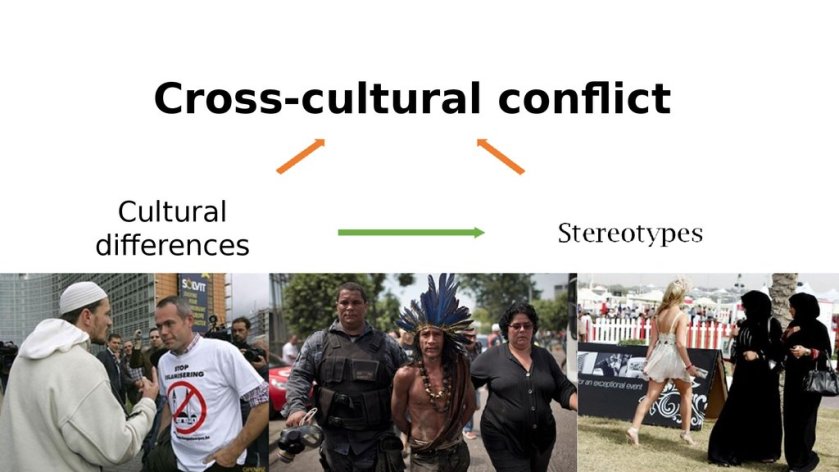
As one reads/listens to Spinney’s story, the reasons for differences in language appear based on the timing of ancient cultures growth when one area of the world is populated longer than another.
Every populated area creates their own mythologies. Mythologies are different because they are created by local events, burial rituals, and the desire to explain the “not understood” to others. Additionally, people live in environmentally different areas of the world. A native American has no reason to precisely or creatively describe snow whereas an Eskimo who deals with snow on a daily basis uses more precise and creative words to describe snow’s characteristics and its effect on their lives.

Whether true or not, this is an interesting hypothesis on the growth of language.
PIE, of course, is only one family of languages but her idea of its spread seems applicable to other equally important languages. As in all stories of ancient cultures, there is misrepresentation or misunderstanding because of not being there as languages are formed. Spinney acknowledges the fragmentary evidence of her theory which makes her conclusions tentative, if not suspect. Human nature is to relate facts that make sense of one’s own beliefs and may not accurately recall or report actual experience because of research bias. Power of leaders is diminished or discounted by Spinney’s theory of the spread of language.

Spinney believes PIE originated among the Yamnaya people, north of the Black Sea in what is now eastern Ukraine and southern Russia.
From there it spread westward into Europe, southward into Antolia, eastward into Central and South Asia, and into the Tarim Basin in western China. She believes PIE expansion is primarily because of technological innovations like the wheel and domestication of horses. This is interesting because it suggests the spread of language did not come from conflicts among warring regions but the utility of new technological discoveries.
Will today’s technology bring nations together or reinforce the silos of our differences?

Spinney makes some interesting points that may or may not be the principal origin and evolution of language difference. Her ideas seem plausible, just as Newton’s physics seemed entirely correct until Einstein proved otherwise.
 REVIEWS AND VIEWS OF LIFE