

Books of Interest
Website: chetyarbrough.blog
Enshittification
Author: Cory Doctorow
Narrated By: Martin Sheen
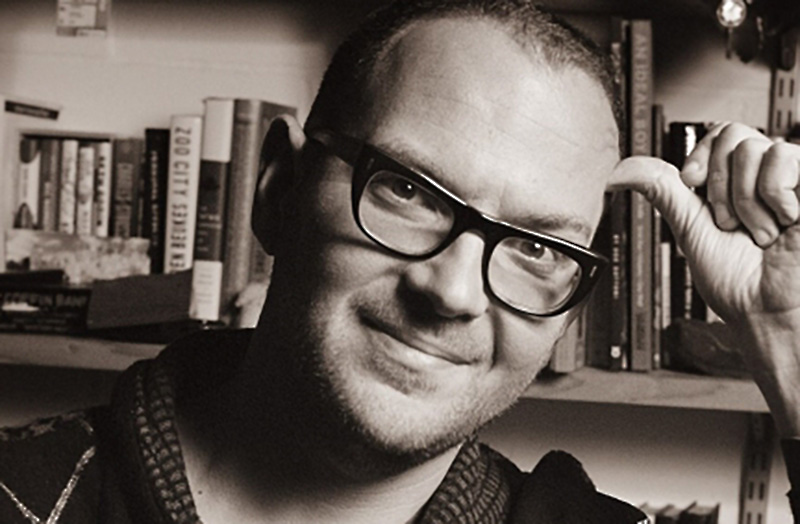
Cory Doctorow (Author, Canadian-British blogger, journalist)
Despite the poor choice of titles for Cory Doctorow’s book, his theme of internet corruption is inevitable because of the nature of human beings. The corruption of which Doctorow writes is evident in most mega-corporations and governments. The only difference is in their motivation, i.e. whether it is money, power, or both in world organizations.
Elon Musk (Businessman, billionaire, entrepreneur, leader of Tesla, SpaceX, Twitter, and xAI.)

The first part of Doctorow’s book is an evisceration of the famous Elon Musk. Not surprisingly, Doctorow is not a fan of Elon Musk. Musk is an example of the theme of Doctorow’s book. Musk’s acquisition and decimation of a widely used communication platform known as Twitter exemplifies “Enshittification”. Doctorow infers Musk’s desire to have a free speech forum is actually a betrayal of the principle of free speech. The reality is that Musk has only created a Megaphone for his personal biased beliefs. Musk’s first action in the Twitter acquisition is to fire essential employees to reduce costs of operation. One presumes from Doctorow’s theme that Musk’s first step results in “Enshittification” of Twitter. Twitter’s new name is “X”. “X”s value has plummeted just as the American government’s service to the poor has fallen. With Musk’s singular focus on reducing cost, without consideration of effectiveness, enshittification is virtually guaranteed by Musk’s actions.

(Though not mentioned by Doctorow, it seems to this critic, that Musk’s firing of government employees under Trump, is similar to the dismantling of Twitter. The firing of government employees results in citizen-service’ losses equivalent to Twitter’s loss of advertisers.)
Traditional media is a one-way broadcast of information whereas the Internet is two-way interactive communication. Anyone can publish on the internet while singular corporations or institutions that own traditional media have only a one-way form of communication. The internet is global, instant, and decentralized while traditional media is scheduled for delivery and centralized. Access with on-demand, 24/7 internet are not time-bound like traditional media. The cost of using the internet is low and often free while traditional media entails infrastructure costs.

Trouble arises with the internet because of its ubiquitous availability while traditional media is singularly targeted.
The internet is immediate while publications are period based. It is possible to precisely and instantaneously measure internet responses based on clicks, views, and engagement while traditional media relies on third party analysis by publishers or by hired companies like Nielsen. Doctorow shows how differences between internet and traditional media exacerbate loss of privacy and increase potential for massive societal disruption. The internet can immediately influence and potentially control social beliefs. In less capitalist and more authoritarian governments the danger of the internet is direct influence and control of its citizens.

In American capitalism, the danger lies more in the drive for profitability than the control of social and political belief.
Doctorow argues America’s social norms are being corrupted by disparate industries that are creating tech platforms to monopolize product consumption only for economic gain, not service to its users. The consequence erodes trust of the public, distorts accountability, and thwarts free choice. The ruling classes of American society can evade traditional checks and balances. The utility of the internet can be used to distort the truth. Corporate objective is to make more money, not to benefit public discourse, improve product, reduce product cost, or improve service, but to monopolize consumption.
On the one hand, Doctorow acknowledges social media platforms optimize engagement. However, these platforms become forums for outrage, and misinformation that tribalizes society.

Rather than improving connections between people, algorithms are created by users of a media platform to exacerbate outrage, foster conspiracy theories, stir up and ultimately exhaust the public. The objective is increase clicks to make buyers of advertising to purchase time on their platform. As a free society, Doctorow suggests Democracy can mitigate the “Enshittification” by regulating the internet. He argues that one’s use of a platform should not monopolize personal information by restricting one’s right to take their information with them if they become unhappy. Platforms should not be prisons that restrict users legal right to their personal information if they choose to change platform providers. He argues for a breakup of major providers like Amazon, Facebook, Google, X, and Adobe.
Doctorow argues for more transparency in the algorithms being used by media platforms.
The public should be informed about how a platform’s algorithms are being used to steer the public. Individuals should be given the opportunity to opt out of algorithmic categories if they wish. Regulatory agencies should be created with the right to enforce consumer protections. He notes the EU’s move to require platform accountability. In general, Doctorow argues that the internet should return to its roots as a space for mutual aid, free expression, and innovation.
Internet Moguls: CEO Google Pichai, CEO Meta Zuckerberg, CEO Apple Cook, Executive Chairman of Amazon Bezos
Doctorow is not the first to propose reform of the internet.

Some time back, Tim Wu, a Columbia law professor, notes that Amazon, Apple, Facebook, and Google had shifted from serving users to extracting value from them. He argued for antitrust enforcement, regulation, and restrictions on content and infrastructure. American Democracy is a safer environment for public media than what is being experienced in countries like China and Russia where all media is tightly controlled by the government. However, Doctorow shows how the American public is being taken advantage of by today’s major private media owners and manipulators.
Doctorow argues for the breakup of internet companies that have become too big. He believes returning the internet to the service of society requires a more level playing field to equitably serve the public.
 REVIEWS AND VIEWS OF LIFE