UNPREDICTABILITY

Audio-book Review
By Chet Yarbrough

(Blog:awalkingdelight)
Website: chetyarbrough.blog

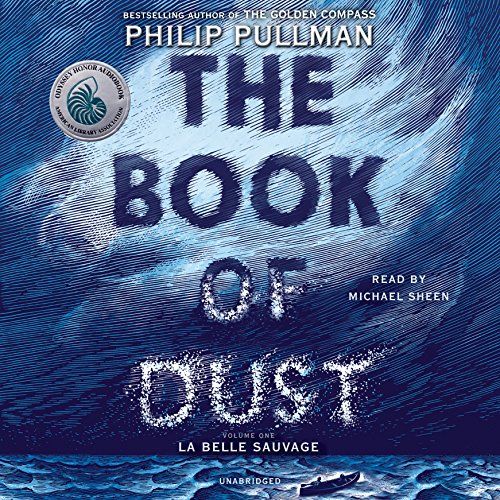
The Book of Dust: La Belle Sauvage (Volume 1)

By: Phillip Pullman

Narrated by Michael Sheen

Phillip Pullman (English Author)

 “The Book of Dust” is a surreal story told by a master narrator.  Pullman combines magical fantasy with speculative science.  The drama of Pullman’s story captures your attention with a story about a boy and girl struggling with maturity in a world turned upside down by a disastrous flood. Phillip Pullman’s extraordinary imagination is amplified by Michael Sheen’s oral presentation. 

Human nature is on display.  People are not always what they seem.  Every person has an image of themselves and others that is revealed by what they do; not by how they look, or what they think.  Pullman implies there is a presence in each of us that is illustrated by an individualized demon. 

In Pullman’s imagination that demon is attached to our being and cannot be separated except by death or extraordinary circumstance. 

The demon is like a talking spirit that changes form in ways that reinforce feelings and thoughts of its companion.  It advises, directs, and illustrates contradictions and affirmations in its companion’s life.

Volume 1 of Pullman’s trilogy sets the table for an ongoing story with three principal characters.  Lyra is a baby in Volume 1 but seems destined to be the main character that carries secrets and mysteries to be revealed in future volumes. 

Lyra holds a mysterious power as an offspring of an estranged husband and wife who are on opposite sides of a political divide.  One side appears to be autocratic: the other loosely democratic.

Volume 1’s hero is an eleven-year-old boy named Malcolm.  Alice is Malcolm’s fierce companion in a dangerous escape from a mad scientist, a horrendous flood, and an autocratic government agency.  The two young protagonists struggle in their relationship with each other. They have a pact to protect Lyra. Both are pursued by the mad scientist who is determined to murder Malcolm, ravage Alice, and either kidnap or kill the baby.

Pullman’s appeal is partly in the adventure but also in the sprinkling of “dust” that seems to have something to do with quantum unpredictability. 

Both threads of Pullman’s story appeal to a reader/listener’s fascination with the adventure and puzzles of magic, religion, and science.  A third interest comes from those who just enjoy well told fictional stories.

 The first volume will lure many into the second and third of Pullman’s trilogy.

IT’S A MYSTERY

Audio-book Review
By Chet Yarbrough

(Blog:awalkingdelight)
Website: chetyarbrough.blog

Manhattan Beach

By: Jennifer Egan

Narrated by Norbert Leo Butz, Heather Lind, Vincent Piazza

Jennifer Egan (American novelist)

“Manhattan Beach” is a mystery.  Egan tells the fictional story of Anna, raised in an Irish family, among New York Italian mobsters during WWII.  The story unfolds with revelations about its characters.  “Manhattan Beach” reveals the contradictions of human life.  It exposes the good and bad of every human life, whether male or female, law abiding, or criminal.

Manhattan Beach in the 1930’s and 40’s.

Anna grows to adulthood from a childhood interrupted by her father’s disappearance.  She is 14 years old when he disappears.  Her father left some money to the family, but without a word about where he went or what had happened.  Egan adds to the mystery with Anna’s father’s meeting with an Italian mobster, two years before her father’s disappearance. Anna is at the meeting.  She is 12 years old.

Anna’s father has an eidetic memory.  That skill leads him to be hired by the mobster.  The mobster uses Anna’s father’s detailed memory to keep tabs on employees and operations of a nation-wide gambling syndicate. 

The mobster is the biggest financial contributor to the boss of the syndicate.  Anna’s father’s eidetic memory helps the mobster, but it also creates a potential risk to the syndicate.  It could be used to reveal the details of its criminal activity.

Later, Anna meets the mobster her father worked for, but she is now in her early twenties.  She chooses not to reveal her real name.  She thinks she might find some clue about what happened to her father.  She and the mobster begin an affair.  She reveals her real name, and the mystery begins to unfold. 

A listener wonders is her father dead or alive?  The mobster believes he is dead, but Egan reveals the father’s life as an officer in the merchant marines, after his disappearance.  A listener now begins to understand what might have happened.  One becomes interested in how the story ends.  That is what makes Egan’s story interesting and worth completing.

This is not the greatest story ever told but it is entertaining. It illustrates how similar and equal men and women are–both in good, bad, and ethical qualities.

POVERTY IN AMERICA

Audio-book Review
By Chet Yarbrough

(Blog:awalkingdelight)
Website: chetyarbrough.blog

The Street

By: Ann Petry

Narrated by Shayna Small

Ann Petry (1908-1997, American author and journalist.)

This was Ann Petry’s first novel.  It was published in 1946.  It was renewed in 1947, republished in 1958, 1988, 1985–now rendered by Audiobooks in 2013.  Petry became the first African-American woman to sell more than 1,000,000 copies.  Petry offers a vivid picture of a Black woman’s experience in America.

Petry pictures Harlem as a poor family’s neighborhood where a rich white man dominates lives of a largely Black American ghetto.  This is not today’s Harlem, but it is a precursor to what plagues 21st century America.

East Harlem in the 1940 s.
Petry’s story is of a young, extraordinarily beautiful, Black woman driven to live in a Harlem tenement. 

Lutie Johnson is separated from her husband and compelled by poverty to rent a squalid room on the top floor of an apartment building.  She has a high school education and a minimum wage job that barely supports herself and her young son, Bub.  The tenement is owned by a white man who owns the building and a nearby casino.

A Black Madam works for the owner and pimps young women to make a living that enriches the owner of the building while creating income for herself.  The tenement has a Black superintendent who lives in the basement and manages the building for the white owner.

Petry tells a story that explains how a decent woman can be driven to commit murder, abandon her child, and perpetuate a family’s poverty.  

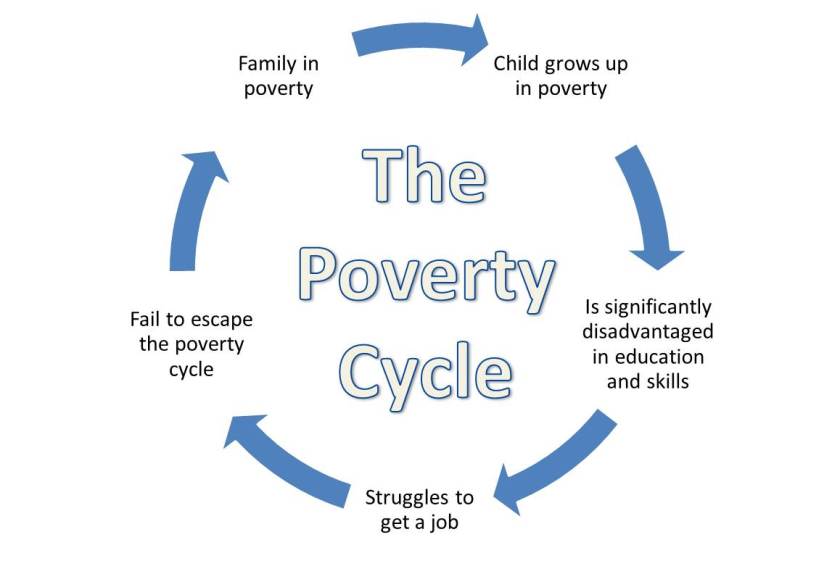
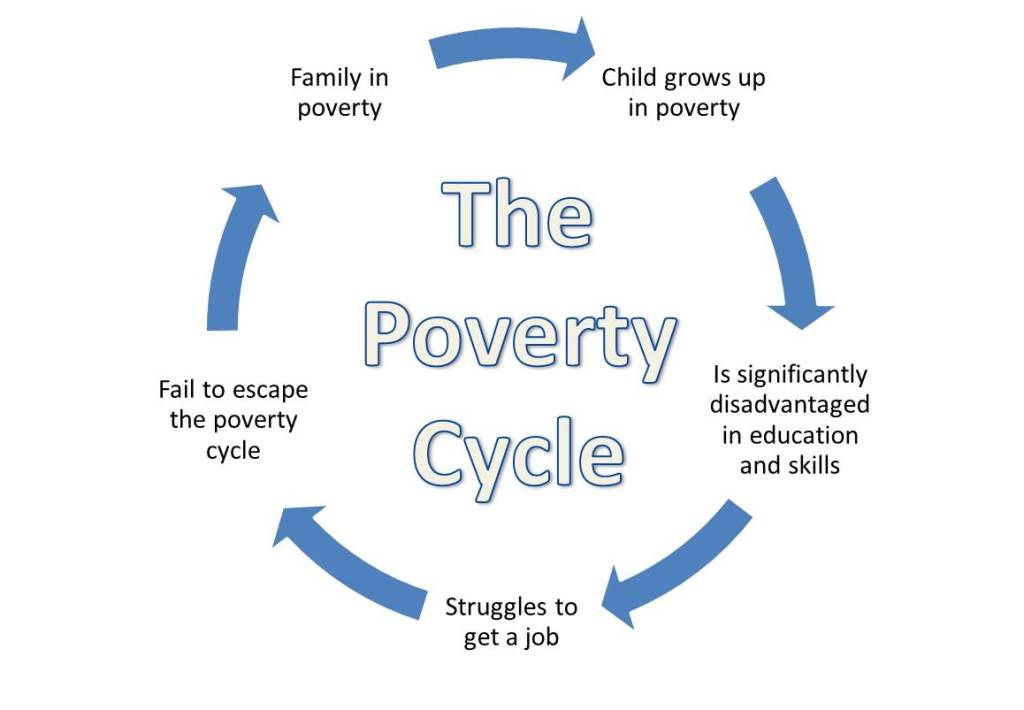
Petry explains how the roots of a family decay and how that decay fertilizes future generations of poverty-stricken families.

Before Harlem, Lutie works as a maid for a rich white family outside the city. The work pays relatively well but it separates Lutie from her husband because of the growing demands of the white family. Lutie stays at their house for longer periods of time. 

Lutie and her husband’s love wither when he cannot find a job. Her husband feels diminished by his inability to support the family.  The husband’s idle time leads to an affair that breaks his bond with Lutie and their young son.  Lutie leaves, with her son, to start a new life in Harlem.

Lutie does not divorce her husband because of its legal cost.  She wonders if she is not the reason for their break-up. It relegates her to legal single-hood if she wishes to marry in the future. She realizes the circumstance of poverty had more to do with there break-up then any other single cause. Her husband’s lack of job prospects, and their separation irreparably damaged their affection for each other.

Petry notes how Lutie grows to despise white people because of presumptions white people make of non-white people. Lutie naturally resents men’s presumption that she is willing to have sex with any white man that asks. Petry notes Lutie’s domestic employer’s condescension when other white people are nearby.

Petry offers a side story of a white teacher in Harlem who treats her students poorly. She has a fear of non-white students.

The students, in turn, ridicule the white teacher for her attitude toward them. It is a mutual distrust based on the color of one’s skin, not the content of their character.

As Lutie reviews her new circumstance, the only job she can find offers barely enough income to afford rent, utilities, and food for the two of them.  To compound Lutie’s trouble she is subjected to the leering interests of the building superintendent and the white owner of the building.  She refuses their advances but is drawn into a crisis, a crises manufactured by the sexually aroused superintendent. 

After unsuccessfully trying to rape Lutie, the superintendent concocts a plan to get back at her by getting her son arrested.  Her son is recruited by the superintendent to steal mail from adjacent tenements.  He convinces the young boy that the police want his help to find a criminal in the neighborhood.  The boy is caught by post office authorities and taken into custody. 

Lutie knows nothing about the super’s lie and is faced with the belief that she needs a lawyer to get her son out of juvenile detention. There appears to be no effort by the police to investigate beyond the arrest of Lutie’s son.

Lutie does not have the $200 needed to hire a lawyer.  She turns to a Black employee of the white owner. The employee explains that if she is “nice” to the white man (implying she would have sex with the owner) she can get the $200 she needs.  She refuses. 

The employee, having failed to convince Lutie to be “nice” to his employer, decides and tries to rape her.  She murders him out of defense and rage.  Lutie has reached her breaking point.  She buys a ticket to Chicago, leaving her young son with the State. 

“The Street” is a Black woman’s story of the 1940 s, but it is every woman’s story in a culture that discounts equality of opportunity and often treats women as property.

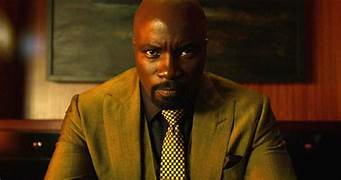
The dimensions of Ann Petry’s 1940’s Harlem story are widened by the modern adventures of the Marvel hero Luke Cage.

“The Street” shows being a woman diminishes opportunity in America. Ann Petry shows being black in America magnifies that inequality.

Poverty’s Song

Audio-book Review
By Chet Yarbrough

(Blog:awalkingdelight)
Website: chetyarbrough.blog

Sing, Unburied, Sing

By: Jesmyn Ward

Narrated by Kelvin Harrison Jr., Chris Chalk, Rutina Wesley

Jesmyn Ward (American Author, associate Professor of English at Tulane University)

Songs about poverty are hard to listen to.  Like Whitehead’s story about “The Underground Railroad”, one wonders “Is this America”?  It is and it is not.

Jesmyn Ward’s song is about an American family.  In one sense, the story is unrelatable because most American families escape dire poverty.  But Ward’s depicted family is poor with the added burden of being a minority of a minority.

Though every family’s story is unique, there are familial lessons to be learned from Ward’s story. On many levels, the story is about troubles of every poor American family.

Poverty amplifies good, bad, and indifference in all families. 

Ward introduces a black family headed by a patriarchal grandfather, a wise and wizened grandmother, a grown daughter, and two grandchildren living under the same roof. The daughter is in a committed relationship to a young white man who is about to be released from prison.  He is the father of the two grandchildren.

The boy grandchild adores his grandfather.  The girl grandchild adores her brother.  Both children are ambivalent about their mother because of her self-absorption and inability to comfort either of them.  As her grandmother explains, it is not that her daughter does not love her children. She just does not know how to express her love.

The grandmother is nearing death with regrets about her daughter’s inability to comfort her children and raise them with the values she and the grandfather live by.

The grief of her daughter when her mother dies is palpable. It is a grief borne of self-pity but also of deep love for what her mother knew and tried to teach her.

Life seems bleak.  The only ray of light comes from the grandson who copes with the indifference of his mother, and fear of a father he barely knows.  This ray of light comes from stories told, and examples set by his black grandfather.

This grim story describes a poverty trap made in America.  The father who is being released from jail is estranged from his family because of his relationship with a black family.  He is damaged by his experience in jail and the irony of being the son of a bigot. 

The downward spiral of this father’s life and his companion appear set in motion.  The mother of his children loves and depends on him, but their destiny is bleak.  Ward ends her story with the grandmother’s death, and the parents leaving the children with their black grandfather. 

One presumes the boy will grow to manhood with the moral compass of his black grandfather, but the fate of the daughter seems as bleak as her parents.  Without the guidance of a loving mother or grandmother, it seems the daughter is destined to remain in poverty.

Being black is a struggle not understood by white America.  Even with a powerfully good moral compass, a young black boy-man or girl-woman bares the burden of being black in a world of white authority.

This is a beautifully written book of a tragedy, made and remade in America.

NOT FROM ADAM’S RIB

Audio-book Review
By Chet Yarbrough

(Blog:awalkingdelight)
Website: chetyarbrough.blog

Fates and Furies

By: Lauren Groff

Narrated by Will Damron, Julia Whelan

Lauren Groff (American novelist.)

“Fates and Furies” shows how men are not from Mars, and women are not from Venus.  Lauren Groff shows how “Adams Rib” is a joke played on women by men who have a false sense of gender superiority.

Groff artfully illustrates how men and women are equal.  They are equal in every respect, but particularly Groff shows how they are equal in drive, ambition, ability, and fallibility.  

Groff’s artistry is in the beauty and cogency of her writing.  She tells the story of a husband and wife’s lives from cradle to adulthood.

Groff shows how little difference there is between the sexes when new life is hatched but not borne by parents.  (This is not to say parents are not important but parents and culture often fail children by training them to be unequal–for example–the picture of marriage shown above.) The first half of her book is told from a husband’s view of himself in the world; the second half is told from a wife’s view of herself in the world. 

Every reader/listener will draw their own conclusion about Groff’s view of sexual equality.  Her story may not be your story, but it will give every person pause, if not enlightenment. 

Power plays a role in every human’s life.  Gender is immaterial.  Groff shows how a man and woman exercise power between each other and among family, friends, and acquaintances. 

Groff focuses attention on one couple, a husband and wife, and their personal relationship.  Groff reflects on each of their histories to explain, in part, how they became who they are. 

The couple, and outsiders of the couple’s relationship, have little understanding of who they are or why they act as they do.

The beauty of Groff’s writing adds dimension to the truth that men and women are equal.  Lancelot (aka Lotto) Satterwhite and Mathilde Yoder (Lotto’s wife) are creative geniuses.  One might argue both have character flaws, as all humans do, but that is not the story. 

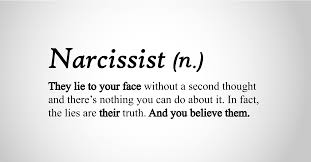
Lotto is a narcissist who thinks the world revolves around him.  Mathilde is a narcissist who lets Lotto think the world revolves around him.  Both are trapped in their own delusions. 

From delusion to reality, Groff shows how deep love can be, even between two narcissists.

Lotto and Mathilde merry, graduate from Vasser (a liberal arts college in New York) and begin their lives together.  Lotto is a struggling actor and Mathilde works for an art gallery.  In their early years of marriage, Mathilde works to make money they need to keep their household together.  Groff changes that condition when Lotto abandons acting to become a playwright.  In that change, Groff reveals more of Lotto’s life in flashbacks. 

Lotto’s life experience leads him to fame and, to a degree, fortune.  In Lotto’s telling-that success is different from the telling given by Mathilde in the second half of Groff’s book.

Lotto and Mathilde are very much alike, aside from gender.  Both are abandoned by their parents.  Both learn how to cope with life alone.  Each draw on their experience as children to learn how to survive in a world driven by money, power, and prestige.

After Lotto’s death, Groff uses flash backs to explain Mathilde’s childhood. In that telling, Mathilde is shown to be an equal to Lotto. Lotto’s mother, who dislikes Mathilde, disowns Lotto from a family fortune. Lotto’s mother plans to rescind the disownment upon her death. As fate (luck) would have it, Lotto’s mother dies before Lotto’s passing. Mathilde inherits her husband’s estate.

The hardship of Lotto’s and Mathilde’s childhoods prepares them to use their gifts of intelligence and sex to survive. 

Groff shows little difference in their drive, ambition, and ability to make their way in the world.  None of that makes any difference with life’s luck (or, if you wish, fate).  That is one of many points Groff makes in “Fates and Furies”. Life is a matter of fate (luck), and fury.

Groff shows how men and women are equal. They have different strengths but equal drive, ambition, ability, and fallibility.

The missing ingredients in the modern world are equal pay for equal work, self-understanding, and public acceptance.

ENTERTAINMENT

Audio-book Review
By Chet Yarbrough

(Blog:awalkingdelight)
Website: chetyarbrough.blog

The Midnight Line

By: Lee Child

Narrated by Dick Hill

Lee Child (British Author of the Jack Reacher novels.)

Let Lee Child entertain you. 

“The Midnight Line” is Child’s latest chapter of the Jack Reacher series.  This is the first Lee Child novel for this reviewer.  Reacher is put at risk by a drug dealer who tells a hit man to be on the lookout for “big foot” or the “hulk”.

Child suggests 6′ 4″ Lawrence Dallaglio (Retired English Rugby Player) is the image of who he thought of as Jack Reacher.

Having seen a Jack Reacher movie, one understands why many Reacher fans are disappointed with Tom Cruise’s billing. The diminutive 5′ 7″ Tom Cruise does not fit Child’s characterization, but Cruise became Reacher in a film from Child’s book, “One Shot”.

In two senses, Lee Child is a spartan writer.  He writes short, clear, precise sentences, and creates a Herculean “spartan like” character.  “The Midnight Line” is a guilty entertainment for mystery and action addicts.

Jack Reacher is a loner.  Reacher is a combat veteran with an investigator’s curiosity.  He is a West Point graduate who left the military after 11 years.   He is a former major in the Military Police. He lives in the moment.  He travels the roads of America without a suitcase and often without a ticket to ride.  He hitchhikes.  He wears one set of clothes until he needs a new set.  He discards the old and buys new. 

The story begins with a tiny ring that Reacher happens to see in a pawn shop.  The ring is from a former cadet at West Point.  From there, the listener hitches a ride with Reacher to South Dakota and Wyoming.

Reacher is a phenom.  Not only because he is big but because he forgets nothing and sees everything.  With remembering and seeing, he intuits what is going to happen next. Whether in a fight or personal crises, Reacher assesses details and sees the future.

Lee Child places Reacher in a story of addictive drug manufacturing, illegal distribution, and human destruction. 

The author’s dialog is short and to the point.  Reacher is almost supernatural but just believable enough that a listener identifies with his heroics.  Child adds mystery to his characters.  His terse sentences makes listeners want to know more. 

“The Midnight Line” is partly about a missing person (a twin of a beautiful woman).  The missing person is a former graduate of West Point that has pawned her ring. Reacher knows something is wrong because he knows how difficult and psychologically rewarding it is to graduate from West Point.

The missing person is involved in an interstate illegal drug trade for reasons that are not clear until the end of Child’s story.  It’s a good guy, bad guy story with twists. 

A listener learns something about the illicit drug business in the United States. How and why it works.  Particularly how it feeds off a culture that insists all human pain must be medicinally treated.  And, how an injured veteran of war, with a distinguished service record, can become an addict.

In the end, “The Midnight Line” is an entertainment.  However, it also says something about addiction–its causes, its consequences, and the amoral businesses that serve it. 

AMERICAN CONSCIENCE

Audio-book Review
By Chet Yarbrough

(Blog:awalkingdelight)
Website: chetyarbrough.blog

The Water Dancer

By: Ta-Nehisi Coates

Narrated by Joe Morton

Ta-Nehisi Paul Coates (American author & journalist, winner of the 2015 National Book Award for Nonfiction with–BETWEEN THE WORLD AND ME).

This is Ta-Nehisi Coates’ first book of fiction.  What makes “The Water Dancer” a fiction is its hero’s mystic ability.  He is a water dancer. 

Coates’ story is a history that stains American conscience.  It is about the tragic sequel of slavery.  Slavery is introduced to America in the British colony of Virginia in the 17th century. 

Though Virginia tobacco plantations were first created in the 17th century, Coates story is undoubtedly set in the early 19th when plantations were in decline.  In 19th century Virginia, soil is depleted by poor farming practices and mismanagement.  White property owners turned to sale of their slaves to pay their debts.  The ugliness of slavery is compounded by the breakup of black families and friends that shared a common history.  Though that history is blooded with servitude and violence, Coates illustrates how slaves created close-knit communities. They were close; in-spite of their sorrowful condition.

Just as soil depletion reduced plantation owner’s income, they increased sale of slaves to sustain their standard of living.  Though black slaves had always been treated as property, the crash of the tobacco industry accelerated their sale. 

(Thomas Jefferson is a prime example of an American slavery apologist who sold slaves to reduce debt.) 

Sons, daughters, husbands, and wives were sold to other white slave holders.  Many families were broken apart; some sent to other States after being sold; others escaped to the North. 

Some were caught by slavers.  Coates writes–runaway slaves were sometimes caught and thrown into makeshift prisons and sold back into slavery.  In Coates’ story, prison is a hole in the ground for its hero. Hiram (Hi) is not sold back into slavery but tested for a critical role in the underground.

To compound the humiliation of being caught, Coates writes of slaves who betrayed their own race. Their purpose was to maintain some level of freedom from harsh conditions on the plantation.

Black women were subject to the whims of their owners.  Women could be raped by their owners without repercussion, or sold to the Fancy industry, i.e. brothels.

Coates reveals the depth and breadth of what Philip Roth called a human stain, i.e., broadly known as discrimination.  Slavery may have been abolished in 1865 but its institutionalization lives on in the 21st century.  It is a stain that resists removal.

Murder of a black jogger , Ahmaud Arbery, on February 23, 2020 in Brunswick, Georgia. A white father and son are charged with murder on May 7th, 2020.

Coates’ story reveals much about America, the abolitionist movement, the growth of the underground, and the human toll of slavery.  Coates suggests some wealthy white southerners participated in the underground to salve their conscience.  They were heroes but they hid behind the degradation being felt every day by black Americans subject to an economic system based on slavery.

Coates shows how southern white abolitionists were important to the growth of the underground.  Their role grew out of a first-hand view of human beings being treated as property. 

Elizabeth Van Lew (1818-1900, Richmond, VA Abolitionist.)

Coates fills many gaps in the history of slavery by seeing it through the eyes of extraordinary slaves. 

Harriet Tubman (American abolitionist who rescued an estimated 70 enslaved people. Unknown date of birth; Died in 1913.)

Families were torn apart, men and women were degraded by their enslavement, husbands had to cope with plantation owner abuse of their wives, blacks victimized their own people, and mothers suffered from guilt for the life their children had to live.  These are irremovable stains on the American conscience; for both Black and White Americans–each are stained in their own way.

BULLIES AMONG US

Audio-book Review
By Chet Yarbrough

(Blog:awalkingdelight)
Website: chetyarbrough.blog

The Topeka School

By: Ben Lerner

Narrated by Nancy Linari, Peter Berkrot, Tristan Wright

Ben Lerner is a writer with academic and literary awards that attest to his intelligence and accomplishment. 

“The Topeka School” appeals to those who are blessed with intelligence, raised by accomplished parents, and unburdened by financial insecurity.  It is a story of a child bully that grows into adulthood.

To paraphrase Leonardo da Vinci “…men who desire nothing but material riches are absolutely devoid of wisdom, which is the food and only true riches of the mind.”

“The Topeka School” makes one wonder what makes a child become a bully.  Does affluence have anything to do with it?  Is it because of superior intelligence?  Is it because of genetic pre-disposition?  Lerner creates a boy’s childhood that suggests some bullies do come from the aforementioned. 

Trump’s penchant for bullying is unrequited in spite of being among the most influential leaders in the world.

Adam Gordon is Lerner’s main character in “The Topeka School”.  Adam is a highly competitive youth who excels in public debate because of his innate intelligence, training, and articulateness.  His mother and father are accomplished professionals. 

Unlike Donald Trump, by the end of Lerner’s story, Adam has grown into a responsible adult. 

In a pique of self-righteous indignation, Trump refuses to accept defeat in a race for a second term.

Even as a “Lame Duck”, Trump compounds his self-righteousness by firing and replacing government leaders who have questioned his judgement.

In contrast to America’s Presidential bully, the “Topeka School” hero’s journey involves many experiences that resonate with most boys who grow to manhood.  To a large extent, Adam outgrows his penchant for bullying by resorting to reason rather than force when confronted with opposition.  However, he can still lose his temper when reason and polite argument are ignored. 

“The Topeka School” largely takes place in the 1990 s but is brought current with a reference to family separation actions of ICE; warranted by President Trump. 

Adam and his foreign born wife and two children attend an ICE’ protest. Adam confronts an ICE officer who tells him to have his daughter stop drawing on the sidewalk outside of the ICE office. Adam engages the officer with arguments about public space and the erasable nature of chalk on a sidewalk. Adam handles the confrontation as a mature adult; not a bully.

The structure of “The Topeka School” is disconcerting and may make some reader/listeners put the book down.  The book will lose some who cannot identify with Lerner’s characters because of their social status and accomplishment in life.  The struggles of the Gordon family seem distant from the lives of many people who do not come from families as smart or financially accomplished as those in Lerner’s story.

BAD PARENTING

Kevin Wilson (American writer from Sewanee, Tennessee).

Bad parenting is endemic in America. Wilson offers four examples in “Nothing to See Here”.

In the richest country in the world, Americans waste their lives seeking money, power, and prestige at the expense of their children.

The heroine of Wilson’s story is a child raised by a neglectful single parent. The “friend” is an acquaintance from an exclusive and expensive school that the heroine attends because of her superior intelligence.

The two young girls become “friends” in the boarding school. The “friend” is from a wealthy and privileged family. She has great ambition, superior athletic skill, and extraordinary beauty. The “friend” slips into the thrill of drugs and is caught with a bag of cocaine. Her father comes to her rescue by bribing the mother of the heroine with $10,000 to say it was her daughter and not his that had the cocaine.

The young heroine has no say in the matter but she idolizes her “friend” and chooses to go along with the lie. She is expelled from the school, returns to her mother’s home, and works at odd jobs until several years later when she hears from her childhood friend. The heroine is now twenty eight with few prospects in life.

The parenting quality of Wilson’s next two families is revealed when the heroine’s friend calls to ask a favor. The favor is to take care of two children that literally catch on fire when frustrated or angry.

The “friend” marries a rich southerner who divorces his wife and marries the “friend” because she is beautiful and a highly capable manager of her husband’s campaign as a Senator. He is a Senator with interest in becoming a Secretary of State; and maybe future President of the U.S.

However, his ex-wife commits suicide, leaving their two children to her aged parents who are too old and unhealthy to raise the children. His ex-wife home-schooled the twins because of their penchant to catch on fire. The children are isolated from society, and are now being raised by incompetent grandparents.

The rich southerner becomes Secretary of State but chooses to abandon his two children because of their “catch on fire” notoriety. He now has a new wife and son by his second marriage. One presumes the “catch on fire” character of his former wife’s children is a genetic anomaly that came from his ex-wife. However, it turns out–the child of the Senator’s new wife also catches on fire. The genetic anomaly, if that is the cause of the “fire” children, came from the father.

A new favor is asked by the heroine’s “friend”. Please take care of the twins for the rest of your life, and keep them out of the Secretary of State’s daily life. The twins are abandoned by their father and his new wife.

The irony of Wilson’s story is the resurrection of the heroine as a parental surrogate for the abandoned children. She becomes a parent that outshines the four dysfunctional families of the story. At least, we hope so.

LIFE AFTER DEATH

Audio-book Review
By Chet Yarbrough

(Blog:awalkingdelight)
Website: chetyarbrough.blog

Lincoln in the Bardo

By: George Saunders

Narrated by Nick Offerman, David Sedaris, George Saunders, Carrie Brownstein, Miranda July, Lena Dunham, and others

GEORGE SAUNDERS (American writer, winner of many awards including Booker Prize and National Bood Award for Fiction.)

The New York Times gives high praise to George Saunders’ book, “Tenth of December”. There are reviewers that disagree with Kakutani’ and Cowles’ laudatory comments about Saunders’ book of short stories but once a listener steps on the cracked ice of “Tenth of December’s” last story, he/she becomes a Saunders’ fan.

Saunders seduces a listener with simple phrasing–pulling one into a story and then ambushing the unwary with crystal clear insight to human foibles, self-delusions, and false dependencies. Saunders sees that measuring one’s success by possessions defines you as an inanity, an empty symbol of humanity. What we do; not just what we think is what we become.

Like “Tenth of December”, George Saunders surprises with a new way of looking at ourselves– where we have been, and where we are going.  Lincoln in the Bardo reflects on a Tibetan Buddhist belief in a “…state of existence between death and rebirth”. 

A host of humanity is represented by voices of famous and not-so-famous actors.  They assume the roles of rich, poor, educated, and unschooled Americans living and dying during the Civil War.  The two major characters are Willie (Lincoln’s dying son) and the great man himself.  The ugliness of discrimination, the desire for freedom, and the trials of living are embodied in Saunders’ netherworld.

Willie Lincoln (Third son of Abraham Lincoln.

As Willie nears death from typhoid fever, listeners are introduced to a Bardo civilization. 


It is a community of disparate characters who believe they are alive but must, for unknown reason, return to their “sick boxes” (graves) every night.

In the beginning of the story, we are introduced to the idea of a sick box when a man in his forties marries a woman of 18.  It seems unclear why such a marriage should take place. But the reader/listener hears a confession of the groom that he would be a companion, rather than a conjugal partner, of his new wife.  As their relationship progresses, the young woman expresses her desire to consummate the marriage.  On the day of the intended consummation, the husband is struck dead by a falling beam.

Saunders leaves the story of the struck groom and introduces many voices that reflect on the mood and experience of America during the Civil War.  You hear from people who lived lives as slaves, merchants, politicians, miscreants, preachers, prostitutes, and soldiers.  Some are rich; some are poor.  All exist in the Bardo.  A common understanding among these characters is that they are alive but constrained from acting on the natural world around them. 

In one sense, many of these people remind one of Jean-Paul Sartre’s play “No Exit” in which hell is described as eternal life with other people you cannot stand.  However, the Bardo is not hell. 

The Bardo seems a place between heaven and hell.  Something is keeping people from leaving the Bardo.  Willie is the key to the door by which one may leave. 

As history records, Willie dies.  Willie is the first to tell those in the Bardo that he, as well as they, are dead.  Willie found he was dead by entering his father’s mind.  After dying, Willie hears of his death in the grief of his father.  Willie explains the truth to all those who did not know they were dead. 

Those who live in the Bardo cannot leave until they recognize they are dead.  In that recognition, they can leave but they do not know whether it will be to heaven, hell, or (in the Hindu sense) some form of reincarnation.

The beauty of Saunders creativity is expressed by his creation of a nether world of lives who have an ability to occupy the minds of those still living.  The occupation of the living is more as receiver than transmitter of information.  It offers a literary tool for reading the mind of historic figures. It also presents the idea of lost historic figures, friends, or family influencing the living.

Lincoln and his wife are devastated by Willie’s death.  Lincoln is consumed by early failures of the Civil War which occupy his mind as Willie nears death.

However, Lincoln’s desire for unifying the country is unbent by the tragedy of his son’s passing.  In a return to the cemetery, Lincoln is riven with remorse over the death of Willie. Willie enters Lincoln’s living body and realizes his father is grieving for him. Willie realizes he is dead.

The consequence of being a receiver in the Bardo, rather than transmitter of action or information. is that those in the nether world cannot reliably change the livings’ thoughts or actions.  There is a hint in Saunders’ story that there is a chance of a Bardo resident changing a living person’s mind, but it is only a slim chance. This is made clear by a Mulatto woman who has been beaten, raped, and murdered by many men. She desires revenge and chooses to remain in the Bardo to accomplish that end.

Living in the Bardo is not necessarily unpleasant because it is like living in the world except you must return to your sick box every night.  The possibility of affecting the real world’s direction, though slim, still offers some appeal to Bardo residents. 

Some flee the idea of knowing they are dead because of the choice that must be made once they acknowledge their death.  All who acknowledge their death must weigh the risk of heaven, hell, or (in Hindu belief) reincarnation.  If they choose to stay in the Bardo the only negative is having to return to their sick box every night.  Otherwise, life in the Bardo is like living in the world except for a limited effect you have on the world you have left.

Many ideas are exercised in Saunders’ creative story.  An insight plainly explained by Saunders is in many quotes produced from other books about Lincoln.  Saunders shows how facts of history change based on a writer’s perception of histories events, places, and people. 

In Saunders’ creative mind, there is life after death in the Bardo. He opens a door to heaven, hell, or reincarnation.  On the other hand, Saunders may be wrong. Death may just be death.