Peter Drucker (1919-2005, Austrian-born American management consultant)
Peter F. Drucker is a storied business management consultant (famously known as a consultant for General Motors in the 1940 s) who taught business administration and sociology at Claremont Graduate University in California. He died at the age of 95 in 2005.
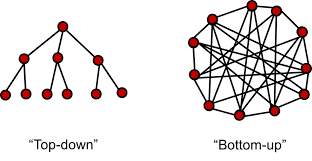
Drucker’s management insight reverses the power structure of profit and non-profit enterprises; i.e. management down changes to management up with organization leaders determining direction but employees (knowledge workers) controlling productivity and effectiveness.
“Management Challenges for the 21st Century”, written in 1999, capsulizes Drucker’s view of the world and his management beliefs. He notes that for the first time in recorded history post-industrial nations are demographically becoming older rather than younger.
American, Chinese, Russian, Japanese, Indian, and most European countries’ birth rates are lower than their death rates. There are more people nearing retirement than entering the work force (excepting countries with higher immigration rates that offset low birth rates).
This demographic change profoundly affects the future of modern economies. Drucker argues that retirement age will grow from age 65 to 75. Drucker observes that revenue from consumers’ discretionary spending rather than revenue from gross sales is the hall mark of growth industries.
Drucker explains private corporations need to treat employees like non-profits. They need to treat employees like volunteers by respecting employee abilities and placing them where they can be most productive.
The rise of the knowledge worker and the fall of manual labor changes the way managers manage.
Successful organizations will increasingly value employees as investments (as assets) as they recognize the real cost of employee turnover.
Good managers will continue to be leaders but employee jobs will be based on defined objectives (rather than job descriptions) that can be met by employee placement in jobs that require their specific skills and/or strengths.
Successful organizations will invest in employees by putting them in positions that capitalize on what they are good at or can be trained to be good at. With job placement that utilizes employee’ strengths, successful managers will stay out of the way by enabling rather than directing employee performance.
The manager’s role becomes one of defining organizational objectives, measuring productivity, and changing organization structure based on empowered employee roles.
Education is a critical component of Drucker’s philosophy of management but his approach contradicts the present direction of educational reform that focuses on teacher accountability for educating students in the fundamentals of reading, writing, and arithmetic.
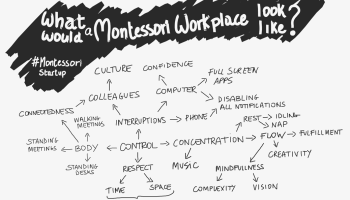
Drucker promotes a Montessori like approach to education. Drucker believes in structuring education based on student interest rather than a set curriculum.
Peter Drucker is an insightful sociologist and guru of American free enterprise. Managers who choose to follow his recommendations increase their odds for success in life, let alone organization management.
Enrico Moretti (American author, econonomist, and Professor of Economics at the University of CA.)
Enrico Moretti suggests jobs in America have a new geography. As a professor of economics, Moretti notes how technology reshuffles the nature and location of jobs around the world. Great manufacturing cities like Detroit, Pittsburgh, and Chicago are losing jobs in the 21st century. More jobs are moving to places like Seattle, Portland, Silicon Valley, and Austin. Tech employment is creating more jobs away from historic manufacturing hubs.
Manufacturing job losses 1997 to 2012 as a percentage of working age populations.
Manufacturing jobs are declining in American cities. That decline is memorialized in a New York Times magazine; distributed in the May 5, 2019 Sunday paper. The human cost to Lordstown, Ohio, when G.M. closes its Cruze automobile manufacturing plant, is heartbreaking.
In the early years of tech, companies like Apple, Microsoft, and Google chose business locations based on where they wanted to live; not where labor existed.
Moretti suggests new job creators choose city locations based on factors other than manufacturing labor. Moretti suggests University locations have some effect, but decisions made by early entrepreneurs seem serendipitous; more than reasoned. Their initial start-ups may be in any community because their ideas are new. Their technologies are unproven. Their new employees are generally young, inquisitive, college educated, and innovative. If these new job creators attract investor interest, they grow their companies through culturally shared purpose.
Not only is there the multiplier effect of unrelated domesticate services, there are new technology companies that choose the same communities. The culture grows to what Moretti suggests is enough density to attract the best and brightest in the world. Incomes rise for all businesses in that community. Even though these communities become more expensive to live in, they continue to attract tech companies because of the savvy technological depth of the area.
What Moretti notes is that if new tech ideas have legs, innovators locate in the same area. Like germs on a petri dish, they multiply to create a new culture.
Moretti acknowledges foreign manufacturers pay their laborers less but, more ominously, he notes foreign countries are doing a better job of educating workers to more fully embrace technology. That embrace begins in grade school and advances through higher education. China’s, Vietnam’s, India’s, Taiwan’s, and South Korea’s emphasis is on science and mathematics. In the U.S., Moretti cites numerous studies showing the quality of American education, particularly in science and mathematics, is declining.
Moretti notes manufacturing decline is partly based on automation, but more fundamentally on a deteriorating American education system.
Science Curriculum Ranking in the world.
The irony of Moretti’s observation is that many graduates
of American universities are foreign students that are compelled to leave
America when they finish their degrees.
They are unable to remain in America because of America’s restrictive
immigration policies. Adding to government
immigration policy limit is America’s failing education system; not only at a
graduate level, but at the preparatory level of America’s grade and high school
curriculums.
As an economist, Moretti explains the multiplier
effect of companies that choose to operate in the U.S. and world where labor is
best educated; particularly in the field of technology. Additionally, Moretti suggests foreign governments
are proportionately outspending the U.S. in science research and development. America is falling behind and risks its
future as a multi-cultural center and economic power in the world.
Historically, most Americans are immigrants. Moretti is certainly right in arguing America’s education system must improve, but that improvement needs children of parents who are intent on making their lives better.
What is missed by Moretti is that immigration is important to America; not only for the technological elite, but for first-generation immigrants. From that pool of humanity, America became the most successful industrial nation in the world. That prominent position is threatened by America’s current leadership.
Alec Ross (Author, American technology policy expert)
Alec Ross’s book about future industries is founded on
world travel and observation. Ross is an
historian by education. His wide-ranging view of sociological change is from personal
experience with technology and the information-age.
Ross observes social change around the world as a senior adviser to then Secretary of State, Hillary Clinton. His dizzying travels explain how mobile phones connect the world and change economic, political, and social opportunity for both third world, and highly industrialized countries.
Ross’s fundamental argument is that “…Industries of the Future” will be based on information technology. The forefront of that technology rests on software (coding) and human evolution (genetics).
Despite nationalism and the horrendous consequence of Covid19 on the world, Trump-like government leaders who focus on nationalist independence and existing manufacturing jobs are job destroyers; not creators.
New jobs will not come from expanded labor-intensive manufacturing but from the accumulation and use of data. Ross suggests coding and genetics will determine jobs of the future.
Ross infers creators of code are tomorrow’s laborers. Today, learning how to code is a valuable skill that insures employment through and beyond the 21st century.
Though there is hyperbole in Ross’s suggestion that today’s coders make a high wage of $100,000+ a year, they do make an entry level living wage with vertical mobility. As the market matures, coder’s income will undoubtedly keep pace with expanding economies.
Ross shows how coding opens the door to automating the manufacturing world. Human labor to make things will change to coding labor that ultimately leads to machines building machines.
Artificial Intelligence is common today and will be ubiquitous tomorrow.
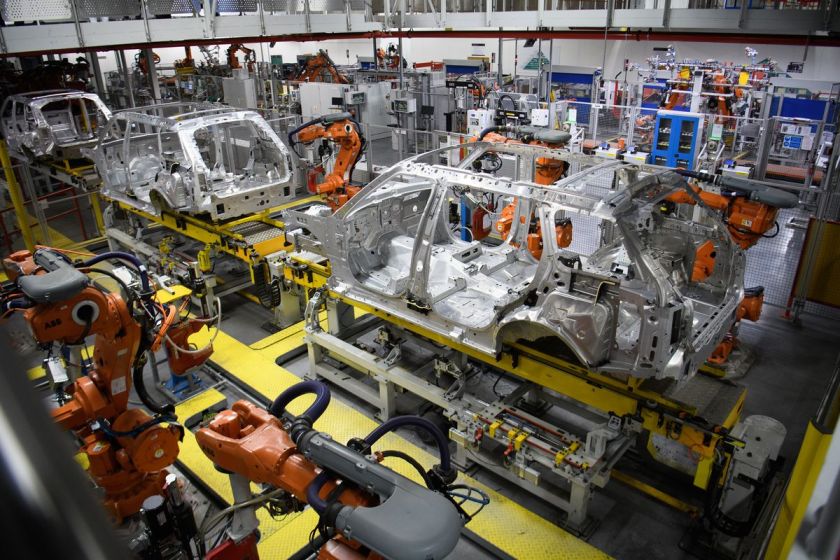
The automobile industry is increasingly relying on machine assembly of automobiles. The manufacturing process still requires human supervision, but physical labor will be increasingly code driven.
Numerous examples are noted by Ross. Driving a car is simpler because of A. I. Using GPS maps shorten travel time, gauge traffic congestion, and locate lost devices. The obvious effect of information technology is reduction in physical labor with employee job change, reeducation camps, and new employment. This is a tough reality for today’s laborers; particularly those who work hard every day. The rise of A. I. contradicts the industrial age’s moral belief that character is enhanced by hard labor.
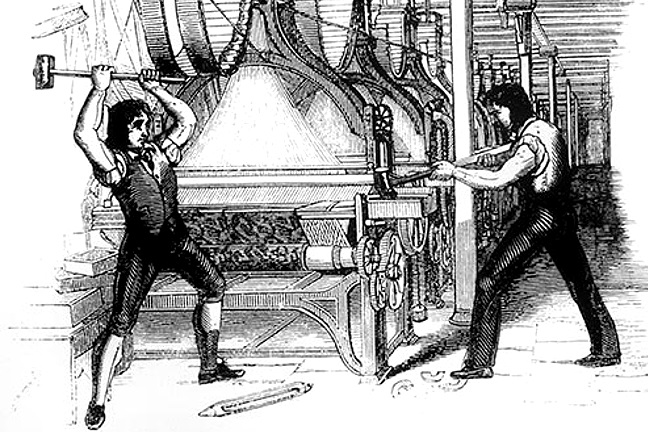
The laborer says, “I am not going to lose my job to a machine”. From a production line laborer or steel worker of a certain age, it is a message once said by Luddites in the nineteenth century. In the industrial age Luddites began dismantling machinery that cost their jobs.
Job upheaval is frightening. However, Ross suggests the information-age offers the greatest opportunity for the world since the industrial revolution. President Trump’s populist effort to turn back time creates false hope for many hard working Americans.
Employees in dying professions should be helped by private industry and the government to retrain and embrace inevitable market changes. America needs a Rooseveltian and internationalist response to Covid 19 and the advance of technology.
What Ross shows is that industrialized nations that choose not react positively; to be proactive to the information age are destined to decline. Ross shows how third world countries in Africa see opportunities that were never seen before because of technology.
With a mobile phone, African men and women have become entrepreneurs because they can communicate with wider circles of influence and support. Their phones become banks for loans and payments; and more importantly, for investment in themselves.
Ross explains another opportunity presented by the information age in farming. As has been known for centuries, farm productivity is improved by appropriate management and use of natural resources and man-made fertilizers. That customization increases the world’s food supply in ways that could only be approximated in the industrial age. Coded farm machines replace day laborer planting, cultivation, and harvesting,
With the advent of automated farm management systems, soil preparation, planting, and harvesting operations can be more precisely customized.
The second fundamental argument in Ross’s book regards genetics. Understanding of genetic science and our ability to manipulate genetic markers is a wild-west opportunity.
In theory, genetic modification can be a threat to the ecology of the earth, a monumental environmental catastrophe.
To Ross, genetic modification is a boon for agricultural and human productivity that will lead the world out of environmental and human crises.
Giant steps have been and are being made in genetic modification of agricultural products. Ross notes reports of crop productivity increases due to disease resistance coming from genetically modified seeds. Ross argues that GMO opponents are wrong in suggesting “natural” agricultural products are any safer than genetically modified food products.
Ross sites reports of GMO foods that show they are equally or more nutritionally beneficial to humankind than non-GMO foods.
Many would agree with Ross’s assessment of the success of GMO production. However, modification of the human genome opens a much higher level of concern.
There are moral and ethical questions raised by science and religion with experimentation on the human genome. On the one hand, it raises the possibility of erasing the diseases of humankind. On the other, there is the fictional account of the “Island of Dr. Moreau”. Both concerns are expressed in the controversy surrounding the 2018 human gene editing in Hong Kong by Dr. He Jiankui, a Chinese researcher.
Dr. He Jiankui (Claims to have conducted the first human genome-editing of a human embryo)
Ross approaches “The Industries of the Future” from a
more historical than scientific perspective.
His book sees great opportunity in information technology, but proof is
largely unborn history. The
technological revolution is not like the industrial revolution because it goes
beyond Newton’s laws and only touches Einstein’s. Ross seems more likely right than wrong but only
the future will tell, and only history will prove it.
Jerry Z. Muller (Author, professor of history at the Catholic University of America)
Professor
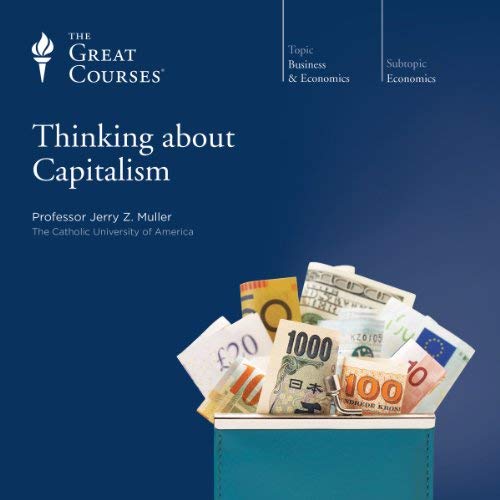
Muller offers an interesting and insightful defense of capitalism. Jerry Muller’s “Thinking about Capitalism” is
an historical account of economic theory.
Muller explores three economic systems: 1) market, 2) command, and 3) mixed. In his journey through the history of economic systems, market (aka capitalism) shines brightest.
Muller notes that capitalism is pummeled by many anecdotes of history. Muller does not deny the excesses of market economies, but Muller suggests capitalism’s benefits far exceed its detriments.
There is nothing new in Joe Manchin’s self-interest in coal investment or representation of a state dependent on the coal industry. The question is whether he is representing his personal interest in wealth and re-election or the common good of the nation.
Adam Smith (1723-1790, Scottish economist)
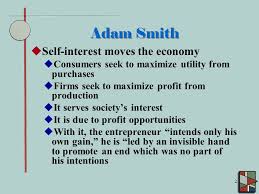
Muller argues capitalism’s storied failures distort its multifaceted values. In the “Wealth of Nations”, a seminal work on capitalism, Adam Smith clearly explains the value of a capitalist (market) economic system based on self-interest. Muller notes Smith’s term “self-interest” is often misinterpreted by the public as greed.
Smith’s definition of self-interest is founded on virtue, i.e., behavior based on high moral values. However, Self-interest comes in many forms.
One person’s self-interest may be altruistic in helping others to feel better about themselves. Another person’s self-interest may be to increase personal wealth to improve their family’s standard of living. And, self-interest may be associated with greed. The fundamental point is that everyone’s self-interest is a motivation that is ungoverned by an outside force. Self-interest is a part of human nature.
In a broader sense, there is some truth in the economic cliché of “a rising tide lifts all boats”. It reflects Adam Smith’s belief in the “invisible hand” that guides one’s life in a market driven economy. Every individual strives for their own self-interest which offers charity to some, employment to others, and individuated incentive to all.
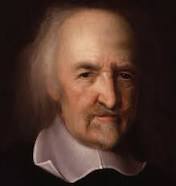
Thomas Hobbes (1588-1679)
Thomas Hobbes notes that human nature is both good and bad. He tempers Smith’s argument for capitalism by suggesting government is necessary to mitigate self-interest that is harmful to the public.
Smith and Thomas Hobbes (author of “The Leviathan) believe self-interest is a universal human characteristic. Smith addresses self-interest as an enlightened Socratic understanding of virtue. Hobbes is less doctrinaire and implies Socratic virtue is not common in the general population.
Smith argues that capitalism takes the essence of human nature’s natural self-interest to advance civilization. This advance is not a smooth upward curve but an improving trend. Bad things do happen in a capitalist society. Hobbes might agree with Smith but only in the context of “rule of law” that mitigates non-virtuous self-interest.
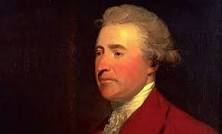
Edmund Burke (1729-1797, Irish statesman)
Muller does not ignore critics of Adam Smith’s “Wealth of Nations”. Edmund Burke is a noted critic who argues that too many social conventions are sacrificed by disparate self-interests. He argues that the French revolution is a potential consequence of an economy driven by self-interest.
The social structure of France is decimated in the 1789 revolution. History shows “the terror” of the French revolution murdered innocents. On the other hand, it reformed an economy that left many behind. Prior to 1789, only the rich owned land, never went hungry, and inherited wealth. In the 18th century, France’s poor are mired in poverty, often hungry, with little chance for advancement.
Justus Möser (1720-1794, German social theorist)
Muller also cites criticism from Justus Möser , a contemporary of Burke, who believed the rise of capitalism (mercantilism) destroys craftsmanship in local economies. With trade from other parts of the country and world, Möser argues insular communities are harmed by prices of similar products replacing local artisan’s goods.
Möser argues mercantilism destroys the fabric of local communities; foments insecurity and social unrest. Muller, in part, agrees with Möser’s argument. However, Muller notes Möser’s argument is right and wrong.
With less money being spent for one thing, more money is available to buy or invest in other things. What Möser ignores is mercantilism’s benefit to consumers and the local economy. Consumers who buy a product for less money have more money to spend or invest in the local economy.
An amendment to criticism of Möser is that the consumers must have enough money to buy product being produced, whether in America or somewhere else.
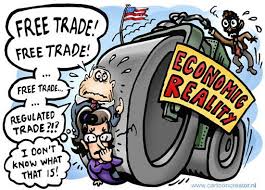
Much of Möser’s argument is the same concern raised by those who support today’s trade war. Trump ignorantly pursues a trade war that weakens Adam Smith’s view of capitalist competition. America needs to adapt to a world economy that is increasingly intertwined.
Möser is right in suggesting free trade creates insecurity in local markets. It also demands adjustments in labor that harm local artisans, but Muller argues there is a net gain in public good and general welfare with free trade.
Max Weber (1864-1920, German sociologist, philosopher, and political economist)
Muller goes on to explain how a confluence of religion and capitalism benefits society with Max Weber’s melding of Protestant Ethic with the Spirit of Capitalism. Weber makes the idea of living aesthetically and putting aside savings as a prudent way of living life in an uncertain environment. Creating wealth became a religious calling to some.
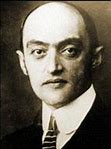
Joseph Schumpeter (1883-1950, Austrian political economist)
Muller reviews Joseph Schumpeter’s contribution to the theory of capitalism. As a 20th century Harvard Business School professor, Schumpeter lectures on the value of “the invisible hand”. Schumpeter advances the idea of “creative destruction” as a characteristic of capitalism.
Schumpeter outlines the value of entrepreneurs who pursue new ideas, new products, and innovation that replaces dying industries. He trumpets the growth of capitalism as an engine that perpetuates societal benefit. Some argue that today’s American governance discourages new ideas by dwelling on manufacturing at the expense of technological innovation and change.
Muller examines the other two economic systems, i.e., 2) command, and 3) mixed systems. Muller implies they fail to meet the historical successes of market capitalism. A command economic system is autocratic with primary economic decisions made by one ruling agency—like Mao’s communist party, Hitler’s Third Reich, and Stalin’s Great Turn.
Short term economic benefit of a command system economy hugely disrupts society. Economic improvement is evident in the short term, but momentum is lost as the gap between haves and have-nots grows.
In a command economy, the cult of personality takes over and image becomes more important than substance; i.e. who you know becomes more important than productivity.
Muller implies mixed economic systems are a work in progress. They are represented by leaders like President Xi in China, and President Putin in Russia.
Xi and Putin retain the concept of communist control of the economy but combine command economics with “Smithian” capitalist ideals. However, Putin takes a wrong turn by waging war on an independent country with its own mixed economy ambition.
China’s mixed economic policy began with Deng Xiaoping, but Xi expands its reach.
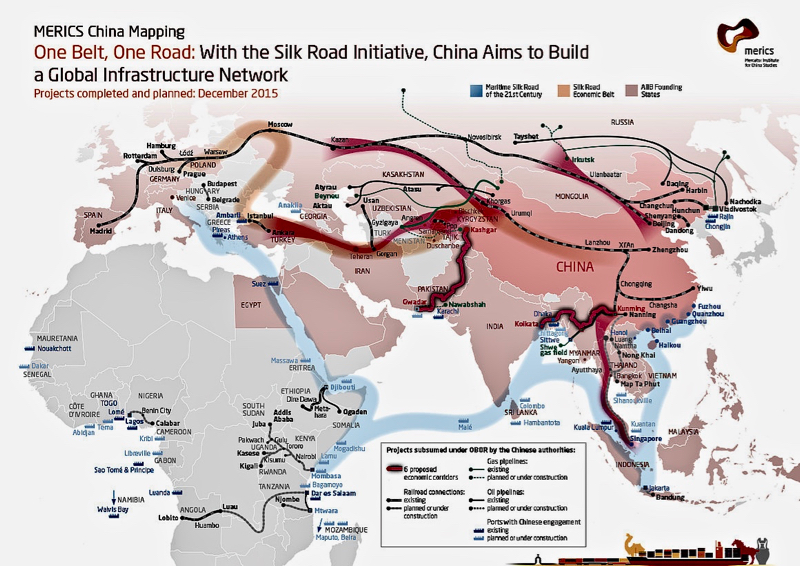
Both China and Russia have shown economic improvement in the late 20th and early 21st century. Xi’s “Road and Belt” plan is part of a command economy, but it relies on the capitalist market principle of influencing trade between nation-states. China’s long-term success remains to be seen. Whether it will be a more effective form of economic improvement than Adam Smith’s market-based formula is left to history.
Russia, like Xi, uses capitalist influence to grow its economy. Russia, in contrast to China, uses its natural resources (oil distribution), rather than a “Road and Belt” policy to expand its influence. Unfortunately, Putin chooses to waste Russia’s oil wealth on war.
Fundamentally, Muller infers no modern economic system is better than capitalism. One draws that inference by Muller’s cogent explanation of the value of capitalist self-interest. Because Adam Smith’s concept of self-interest is an inborn characteristic of human nature, it will prevail over any known economic system that requires command control.
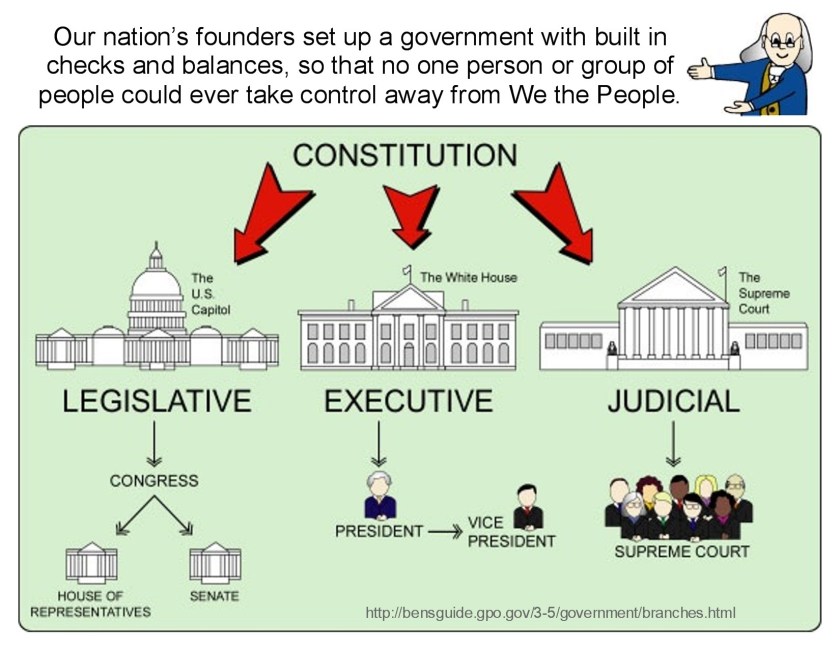
America has been a successful capitalist country in great part because of checks and balances that mitigate command control qualities of mixed economies. Hobbes assessment of human nature demands some level of command control, even in a capitalist economy.
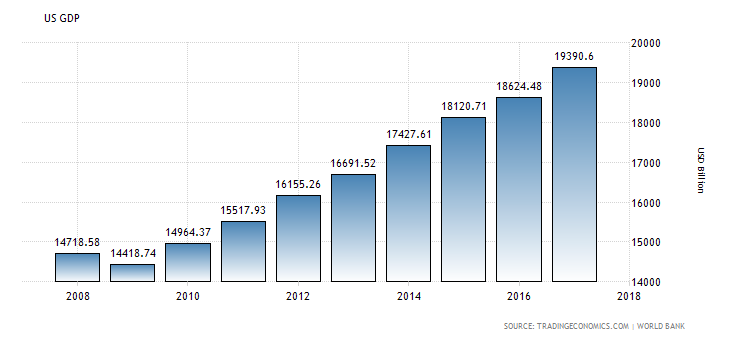
One might argue that America’s avoidance of near economic collapse in 2008 is evidence of the importance of a mixed economic theory. (Interestingly, a December 18, 2018 “…Economist” article, published under the Schumpeter byline, notes that China’s communist party’s mixed economic system during Trump’s trade war fared better than America’s government regulated free enterprise economy.)
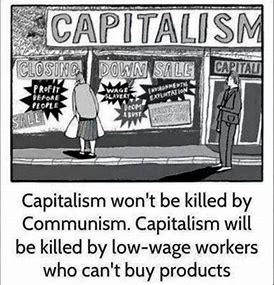
American history shows lower taxes encourage higher production and job creation. What is missed by tax reduction is that it exacerbates income inequality. Tax reduction incentivizes corporate leaders to devalue worker wages to increase profitability. Human self-interest leads to higher income for corporate owners and executives. The consequence magnifies the wealth gap between have and have-nots.
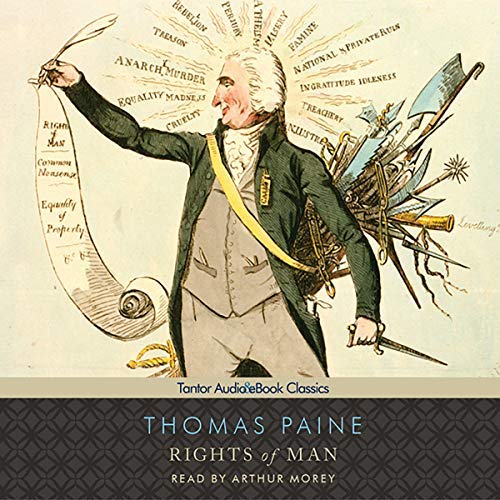
It seems time today to read Thomas Paine’s “Rights of Man”. Though his primary purpose is to refute Edmund Burke’s condemnation of the 1789 French revolution, his observations on British Aristocracy are the essence of today’s American “moneyocracy”.
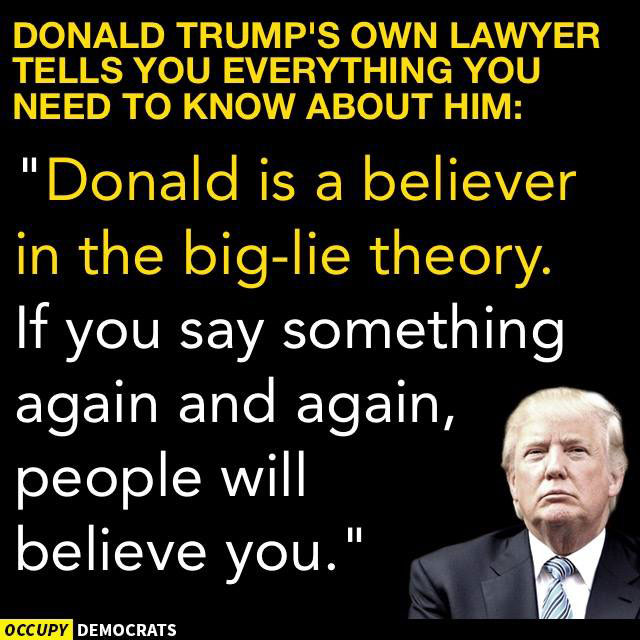
Though President Trump is not the originator of American “moneyocracy”, he is its quintessential representative.
In spite of domestic mass murders by demented Americans, Trump and many of his followers insist on giving voice to the NRA’s belief in an American right to buy automatic weapons designed only to kill people.
Uvaldi, Texas elementary school shootings 5.24.22
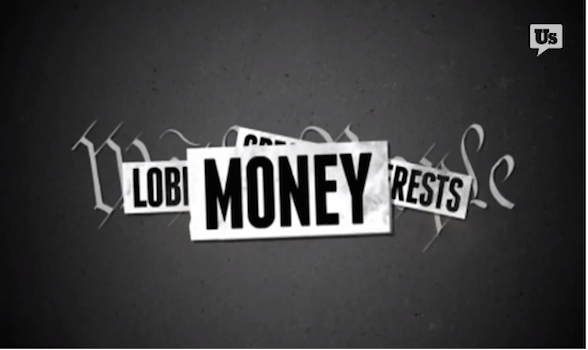
It takes money to run a campaign for public office. Trump, like most politicians, panders to lobbyist’ and business’ interests that distort the American electoral process.
The appeal of Trump has to do with American’s desire to be left alone. Whether a misogynist, a gun toting individualist, a federal tax cheat, or an independent morally upright American, many believe that is their right. Trump exemplifies the right to be left alone.
Beginning with congress’s approval of tax reform, America’s ballooning deficit is a direct consequence of a mistaken belief that “a rising tide lifts all boats”. Contrary to the tired refrain “jobs, jobs, jobs” to make “America Great Again”, the current administration is setting the table for the world’s next economic crises.
The “Occupy Wall Street” demonstrations are an amorphous scream of disgust by an educated population that resents American “moneyocracy’s” control of the economy, elected representatives, the election system, and the “Rights of Man”. “Moneyocracy” is an inheritable line of an American aristocracy.
Instead of 18th century Aristocratic control of British government, 21st century America substitutes the wealth of individuals and corporations (classified as individuals) to control American Democracy. This is not a partisan issue in America.
Every President, Republican or Democratic, has sided with corporate interests in this era of corporate largess. The world is in a state of economic upheaval that is fueled by technology. That economic upheaval is not adequately addressed by corporate America. The government continues to subsidize yesterday’s economy at the expense of middle and lower income citizens.
Management executives that are employees of corporate America take salaries 50 times or more than salaries of their average employee.
The new controller of our economy, the primary interest group of elected representatives, and the master of the American election system is corporate America.
Wealth is the new hereditary right of succession. Corporate America is the thief and ruler of inherent “Rights of Man”.
Once individual compensation reaches beyond rationality, money becomes fuel to maintain America’s “Moneyocracy”, the new hereditary right of succession.
The controller of our economy and political representation is corporate America.
The primary interest group of elected representatives, the master of the American election system, and ultimately, the thief and ruler of inherent “Rights of Man” are corporations and the super-rich. Of course, the rich have always been in control of American government. However, now the rich are not just singular individuals. They are corporations classified as individuals.
The Supreme Court in “Citizens United v Federal Election Commission” in 2010 rules that corporations are persons with the right to support candidates for office with as much money as they want to influence government policy.
The Supreme Court’s unwise decision based on freedom of speech identifies corporations as persons. With that nose in Democracy’s tent, corporations could offer millions of dollars to election campaigns. What human being cannot be influenced by such largess? Excessive executive compensation perpetuates “moneyocracy”, but corporate influence is the cause of the loss of the “Rights of Man”.
Tax change is a smoke screen that obscures the real danger of American decline in the 21st century. It is too blunt an instrument to bludgeon the rich. It smacks of false patriarchy and jingoist rhetoric.
American history shows that Americans believe that hard work is the source of success but being American does not guarantee a free ride. Equal opportunity is where America fails.
Education, anti-discrimination legislation, and equality of opportunity have to be strengthened. Corporate America needs to step up. Corporations need to quit wasting money influencing legislators and invest in human rights.
Corporations need to subsidize education by re-training their employees to meet changes wrought by technology.
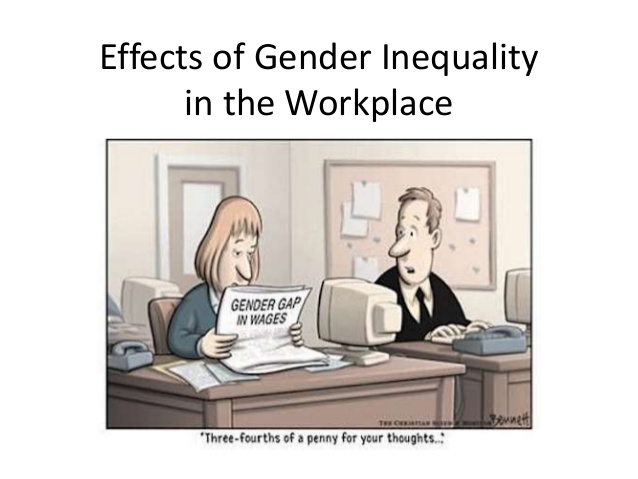
Corporations must insist on equal treatment of employees, by gender and/or ethnicity. The government needs to re-enforce equal opportunity for all.
America needs to return to the ideals of equal opportunity by allowing entrepreneurs to create wealth through human productivity. Money is not an end but it has become an end that has no end; i.e. high salaries perpetuate themselves through an Aristocratic “moneyocracy”. If one says they make a $1,000,000 a year they are saying they are better then someone who makes $10,000 or $100,000 a year. Salaried compensation is perceived as human value.
Denying salaries that exceed 50 times average employee compensation is not denying the creation of wealth. Entrepreneurs that create productive companies that grow to multi-billion dollar enterprises have opportunity to become billionaires; not from salaries, but from building human productivity that creates wealth.
“Occupy Wall Street” is an unlikely precursor of another American Revolution; however, it may be a symptom of an American cancer that debilitates productive life without killing the patient. “Occupying Wall Street” is not a hippie “sit in” but a plea for reform of American “moneycracy” just as Thomas Paine’s “Rights of Man” was a plea for reform of Aristocratic inheritance.
ADDENDUM: Does the “right to be left alone” extend to pandemics? The question is raised when it comes to a pandemic that has killed over 783,000 people in the United States as of November 15, 2021. (Statistics provided by “worldometer”, a reference website that provides real-time statistics. Considered the best free reference website by the American Library Association.)
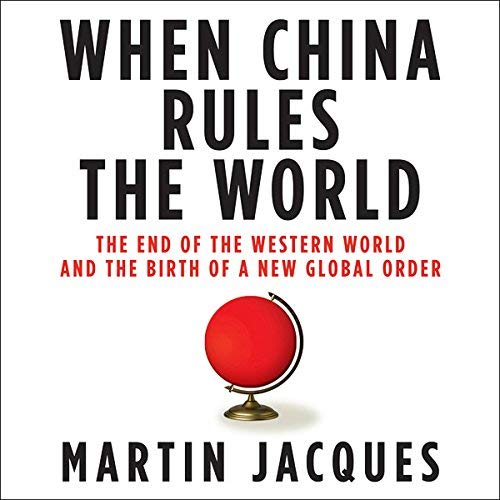
Martin Jacques has written an interesting book about China’s rise as a world economic power. His overview of the geo-political and Realpolitik relationships of the east and west are interesting; particularly in light of the Trump administration.
“When China Rules the World” has interesting details that inform but do not convince one that China will rule the world. The provocative title drives the bus but it does not reach its destination.
World control is a myth that causes wars and destroys the best and brightest, as well as the mean and maniacal.
What is happening in China is remarkable. China’s transition from Maoist communism to capitalist communism is a caterpillar turning into a butterfly; i.e. China has grown wings but it still lives in a world constrained by its environment.
Though President Xi is re-instituting some Maoist mistakes, China’s world wide investment in infrastructure is based on capitalist beliefs. Xi has an internationalist focus, just like that which made America great; at least, until Trump’s Presidency.
Chairman Mao’s cultural revolution and belief in enlarging collectivist ideology nearly destroys China’s path to prosperity
Xi is attempting to open new markets by financing infrastructure improvements in African, Middle Eastern, and Asian countries. He is creating customers for Chinese product.
Undoubtedly, Xi is also trying to seduce other nations into belief in Xi’s form of Communism. This is not unlike America’s intent to democratize the world.
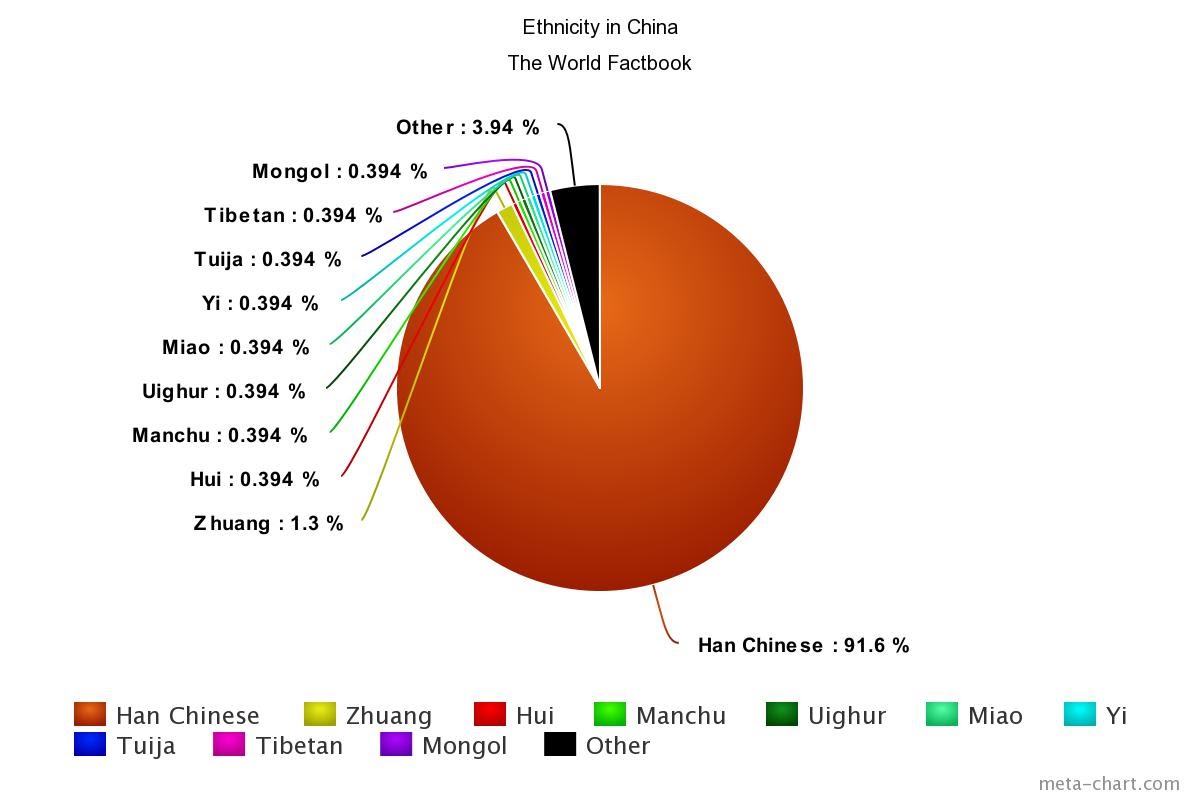
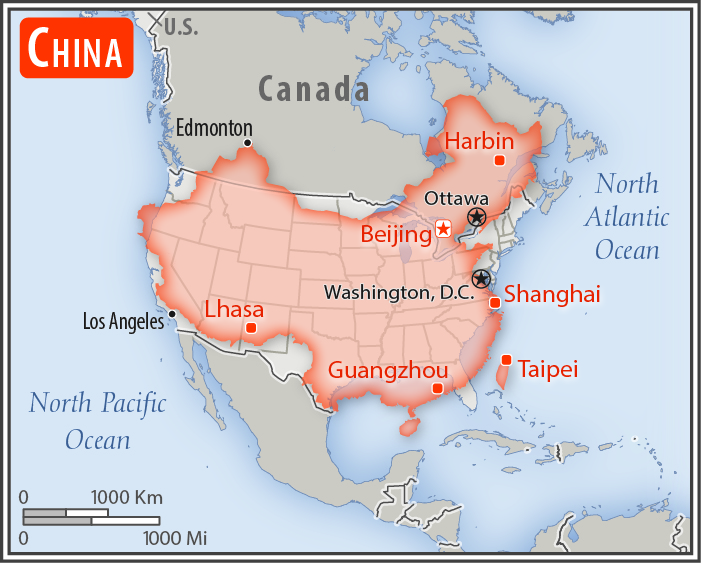
Jacques argues that a 90% Han Chinese cultural domination of 1/5th of the world’s population will change the nature of the 21st century. In a limited sense, that is undoubtedly true. However, regardless of the type of government rule, human nature is the same.
Money, power, and prestige, are the primary motivations of humankind. Whether one is Han Chinese, Tibetan, Uighur, Indian, Hispanic, Black, or any singular ethnic group, all humans seek control of money, power, and prestige. These innate drives are the speedometer, brakes, and steering wheels of nation-state’ leaders and followers.
There are dominant factions in every culture that are not necessarily the majority of a culture’s population. Jacques’ early comments suggest China’s 5000 year history reflects a cultural conformity greater than any other country in history while later he acknowledges that the predominant Han population is highly diverse in its beliefs.
Cultural conformity is not the relevant issue; i.e., dominant cultures, whether a majority or minority of an indigenous population, are the game changers of a nation’s history.
Jacques argues that China’s cultural history of familial respect and veneration will have profound affects on the future of world economies. Jacques has a valid point. However, the history of modernization suggests that the fabric of extended filial obligation will be ripped apart in China just as it has in every industrializing nation.
China, just as all modernizing nation-states, will see deterioration of familial bonds.
Human nature is immutable. As an agrarian culture moves to the city and parents are compelled to work for wages, family structure and filial commitment deteriorates.
Of course, capitalism is not the same in China as it is in the western hemisphere. As Jacques reports, major capitalist businesses are state owned in China. They compete in the world market but government support mitigates much of the free enterprise ideal of capitalist economies. However, no nation-state operates as a free enterprise capitalist country; i.e. government has always played a role in capitalist nations. Government subsidy of industrialization is a matter of degree.
It may be that China will change the way industrialized countries compete but global economic domination is no longer possible in a tech savvy world that recognizes knowledge is power and natural resources are limited.
All the world knows how each culture in the world lives. With that knowledge, countries will gravitate to systems of government that serve its dominant culture best. Best is defined as what is most important to the dominant culture in the context of either money, power, or prestige.
Long term, China is facing a tougher road to modernize because of population, environmental degradation, and dwindling natural resources, but their short term prospects look better than most other nations.
New estimates from the U.S. Census Bureau put China in the lead with 1.34 billion residents, followed by India with 1.19 billion. The United States is a distant third with 311.1 million people.Jul 6, 2011
As Jacques points out, China’s savings rate is over 20%, with a GDP growth rate 3 times that of America. The cost of dwindling natural resources is more affordable to China than most other modernizing countries. However, all economies are closely tied to each other and a major failure in America or Europe will have great consequence for the world economy which will significantly affect China’s short term advantage.
With a failure of a western countries economy, China’s drive toward modernization will be in danger. That danger is demonstrated today by America’s creation of a trade war with China.
Some argue this burgeoning trade war is hurting the Chinese economy more than the American economy. That may be true in the short term, but the efficacy of trade wars are questionable in the long term; particularly in our internet connected world.
Jacques’ book is worth its purchase price and a consumer’s time because he exposes some of the cultural biases of China that are not widely known. His suggestion that discrimination is as prevalent in China as it is in the United States is reprehensible, and disgustingly familiar. Globalization is real. Human nature is immutable. All mankind travels on the same space ship; i.e. our blue ball. At the very least, China is proving that our environment is fragile and natural resources are finite.
(SARAH ELLISON-AUTHOR, REPORTER FOR “THE WASHINGTON POST”)
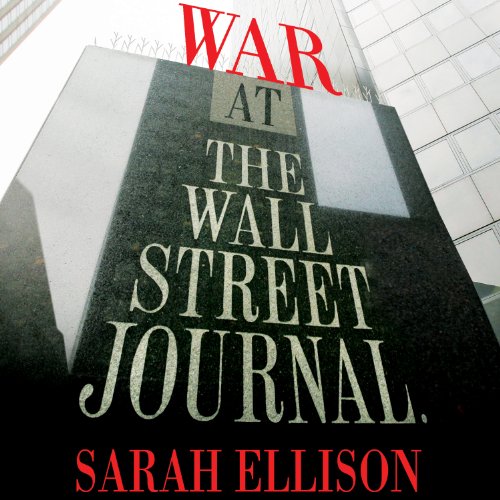
The word “War” in Sarah Ellison’s book title exaggerates the reality of change at the “Wall Street Journal”. Exaggeration aside, Sarah Ellison succinctly reports big changes in the newspaper. Ellison writes a very straight forward and interesting account of the takeover of the “Wall Street Journal” by Rupert Murdoch and News Corporation.
(RUPERT MURDOCH, MEDIA MOGUL)
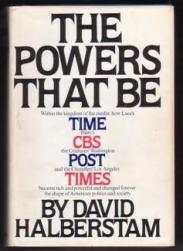
Ellison’s presentation does not have the depth and breadth of Halberstam’s “The Powers That Be” but it does provide insight to changes that are happening in the newspaper industry.
Murdoch is characterized by some as a devil but Ellison’s picture is not horned or tailed. The “Wall Street Journal”, like every mass circulation newspaper in the nation, is in the same life boat.
The internet and their communication speed have ripped holes in the “Chicago Tribune”, “Philadelphia Enquirer”, and “Los Angeles Times” sailing buoyancy. Even the “Washington Post” and “New York Times” have taken on water.
Murdoch is not painted as a white knight, but Ellison’s reporting suggests rescuer is a more apt description than devil. The same might be said of Jeff Bezos’ acquisition of the “Washington Post”. Also, though the “New York Times” has not changed hands, it has suffered through years of weakened financial viability.
JEFF BEZOS (CEO AND PRINCIPAL OWNER OF AMAZON)
Nationally read newspapers are threatened by the instantaneous reporting of the internet but every national paper is adapting to changing modes of delivery.
The “Wall Street Journal” and other daily papers are leaner today because they are following market demand for shorter stories, but the “…Journal” and other national market papers have not abandoned investigative journalism. Newspaper reporters plumb the inner workings of world crises. They reveal government malfeasance, and investigate corporate corruption. They remind the public that “freedom of the press” is fundamental to democracy. The depth of newspaper coverage is deeper and more comprehensive than rumor driven internet accounts.
The internet has democratized the news; i.e., individuals seek their own depth. Some suggest newspapers like “USA Today”, have taken a step too far by reducing print to twitter feeds about the news. Their reporter and news feed cutbacks have caused a loss in value (stock price decline) that has encouraged a hostile takeover by MNG (an offer recently rejected by “…Today” ownership). The complication for print media is monetizing web based reporting without decimating print coverage. Those newspapers that cannot meld one to the other seem destined to fail.
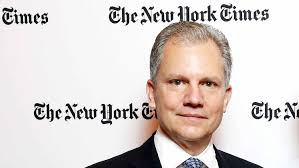
ARTHUR OCHS SULZBERGER JR. (PUBLISHER OF THE NEW YORK TIMES)
Murdoch and Sulzberger media conglomerates have specialization and editorial biases that serve their consumer cohorts. Subscribers have the option of reading their papers on the internet when traveling away from home. Income from internet add sales supplement print advertising. Those publications that refine the utility of their websites are a boon to both newspaper publishers and consumers.
Those newspapers that focus on substantive truth, website improvement, and delimited editorial bias will serve themselves as well as the public. Internet integration of print with internet reporting will sustain national newspapers’ future.
Media longevity is a matter of change, i.e., newspapers did not disappear with the advent of radio and radio did not disappear with the advent of television; they adapted, they changed. Murdoch has taken a creditability dive with the Fox network news settlement, but the WSJ remains among the best source of business news in the world.
Newspaper readers who stand and wait will also be served. Murdoch over paid for the “Wall Street Journal”; maybe for the wrong reasons, but with the right results. Ellison implies the “…Journal” is serving its customers better now than before Murdoch’s takeover. The “New York Times” return to profitability suggests the same. The jury remains out on “USA Today”, Chicago Tribune, Los Angeles Times”, “Washington Post”, “Philadelphia Enquirer” and other nationally recognized papers. Change is universal, survival is ephemeral.
2008 was just yesterday but today’s attack on government regulation is destined to create America’s next crises.
Audio-book Review
By
Chet Yarbrough
(Blog:awalkingdelight)
Website: chetyarbrough.blog
The Big Short & No One Would Listen
By Michael Lewis By Harry Markopolos
Narrated by Jesse Boggs Narrated by Scott Brick & Others
There are lessons to be learned from Lewis’s and Markopolos’s books that are forgotten in the pending impeachment trial of President Trump.
Both Adam Smith (the father of economics) and Thomas Hobbes (author of “The Leviathan”) argued self-interest is a universal human characteristic.
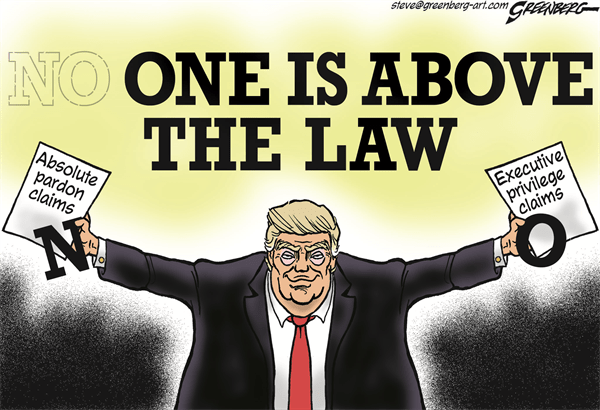
Self-interest led Trump to enlist the Justice Department to overthrow the election of President Biden. If that is not insurrection, one wonders what justifies any impeachment action.
Smith argued that capitalism takes the essence of human nature’s self-interest to advance civilization. He noted-the advance of capitalism is not a smooth upward curve but an improving trend. Smith was not saying that bad things do not happen in a capitalist society but they bend toward the good of society.
Hobbes would take issue with both of Smith’s assertions. Self-interest would not advance civilization unless it was regulated. Hobbes insisted on government control through “rule of law” to mitigate non-virtuous self-interest.
Hobbes feared unbridled self-interest in any form of government. Hobbes viewed human nature as brutish and unfair unless ruled by a Socratic philosopher king or, in a democracy, by tightly regulated and enforced “rule of law”.
The forensic reports of Michael Lewis and Harry Markopolos show what happens when efforts to regulate human nature are abandoned. One concludes from their books that Thomas Hobbes’ “Leviathan” wrecks havoc on society when “rule of law” is either not present, or unenforced.
Inept management by Fannie Mae, and Freddie Mac offered mortgage insurance for grossly over-leveraged mortgages. Companies like AIG removed investor risk by insuring banks against bad investments.
All of these foolish actions coalesced to bankrupt companies and families around the world. Individual lies, bungles, and missteps in the real estate industry created the worst recession since the 1929 stock market crash.
While this real estate debacle was developing, Bernie Madoff built a 50 to 70 billion dollar empire by making fools of the U.S. Government, European royalty, world wide charities, and working families. Madoff lied, cheated and stole billions of dollars from wealthy investors, charities, and mom and pop businesses with offers of bogus investment returns based on buying from Peter to pay Paul. He paid dividends to earlier investors by taking money from newer investors.
As long as people believed in Madoff, or deluded themselves, his wheel of fortune continued to roll. As the real estate market collapsed, old investor money was recalled and new money became unavailable. Madoff’s failure was inevitable.
Michael Lewis identifies seers that recognized “Quants” were packaging doomed mortgages into re-salable financial instruments called derivatives. These astute observers of the market, knew mortgage backed securities were at risk.
How could these things happen in a 21st century, democratically elected and governed society? Hobbes would say “how could these things not happen”?
Madoff’s investment lies were exposed by Harry Markopolos in a “red flag” report to the Security Exchange Commission in the year 2000; way before the 2008 economic catastrophe.
The title of the book “No One Would Listen” tells the story. This book is an indictment of democratic government in free society. Markopolos’s story exposes an inept and failed SEC, an agency created by government to protect investors–when, in fact, it protected corporate interests.
The irony is that Madoff did not get caught by the SEC. He confessed in 2009 because his Ponzi scheme fell apart. along with the collapse of the real estate industry.
Lying is part of being a human being. That is a fundamental reason for government to have “rule of law”. It protects people from the abhorrent self-interest of the few from the many.
President Trump is impeached by the House of Representatives. It is the moral responsibility of the Senate to have a trial.
Hiding behind a loose interpretation of the rules of the Constitution is a disservice to the people. Guilt or innocence should be proven by the facts; not the parties of interest.
Regulation is not a perfect solution for control of bad actors in a free society. However, no regulation is worse.
Audio-book Review
By Chet Yarbrough
(Blog:awalkingdelight)
Website: chetyarbrough.blog
Capitalism Without Capital
Written by: Jonathan Haskel, Stian Westlake
Narrated by: Derek Perkins
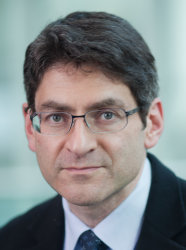
JONATHAN HASKEL (AUTHOR, BUSINESS SCHOOL PROFESSOR IMPERIAL COLLEGE LONDON)
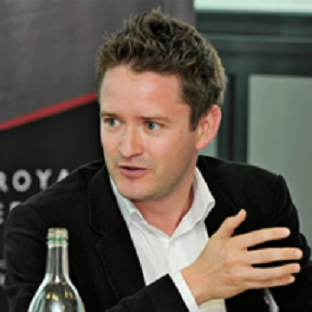
STIAN WESTLAKE (AUTHOR, ENGLISH BUSINESS CONSULTANT)
In addressing 21st century technology, Haskel and Westlake argue that the tradition of hard asset value is diminished. In today’s technological economy, the authors suggest investment in intangibles is as important as investment in buildings and machinery.
Haskel and Westlake acknowledge intangibles have always been an important part of economic growth. They note worker training programs, specialized employee’ experience, and patented designs have always had value; but auditors rarely (if at all) quantified those intangibles as anything other than expense. Little of a company’s investment in training, employee experience, and patents is assigned as an asset by analysts who use pre-twenty-first century accounting rules.
Most intangibles have historically been classified as uncapitalized expenses. In part, because quantification of intangibles is difficult to measure. Before the tech-revolution, investments in training, patents, and experience were looked at as costs of doing business. They were most often expensed (with some exception for patents).
When companies are sold, value of goods (machinery, buildings, inventory), and historical price/earnings ratios are the principal determinants of value. Haskel and Westlake note that patents are unreliable values because competitors reverse engineer product that, with newly created changes, are arguably new “unpatented” products; e.g. cell phones, computer chips, software programs, etc.
Haskel and Westlake note that patents are unreliable values because competitors reverse engineer product that, with newly created changes, are arguably new “unpatented” products; e.g. cell phones, computer chips, software programs, etc.
With growth of companies like Amazon, Microsoft, Apple, Google, Uber, Facebook, et al–standard accounting practice needs more than hard assets to determine value. Though it is difficult to patent intangibles, Haskel and Westlake suggest new accounting methods are, and should be, created for today’s and tomorrow’s industries. The idea of new accounting methods leads to “Capitalism Without Capital”.
With growth of companies like Amazon, Microsoft, Apple, Google, Uber, Facebook, et al–standard accounting practice needs more than hard assets to determine value.
Haskel and Westlake suggest information replaces capital as the fuel for economic growth.
Haskel and Westlake suggest information replaces capital as the fuel for economic growth. They extend their argument by advising investors, lenders, and governments to increase their capital commitment to intangibles. This seems ironic in view of a remaining need for traditional capital investment to energize 21st century economic growth. However, the authors are arguing capital is a smaller part of overall economic growth; albeit a critically important part. What they are suggesting is that investment should be recognized as an asset; not just an expense. Investors and lenders should look beyond bricks and mortar as a measure of security for capital investment. Some would argue that companies like Tesla should be able to carry a higher debt load because its value is greater than the sum of its hard assets.
Further, Haskel and Westlake emphasize Governments continued subsidization and investment in research and development in those areas where near term return is problematic. The example the authors give is DARPA in its early invention as a precursor of the internet, but there are many more examples; e.g. nuclear power, computer hardware, weather prediction, space exploration, etc.
Historically, intangible value has always been with us but recognized as an expense. Haskel and Westlake suggest intangibles need to be partially and judiciously accounted for as assets. When recognized as assets, intangible values open the door to wider private and public finance.
Kotkin’s first volume about Stalin’s rise to power offers lessons to modern American and Chinese governments. China seems on one path; America another.
STEPHEN KOTKIN (AMERICAN AUTHOR, HISTORIAN, ACADEMIC)
Stephen Kotkin offers a remarkable and comprehensive view of Russia’s 1917 Revolution in “Stalin, Volume I”. Kotkin succinctly describes how power in the hands of one may advance a nation’s wealth, but at a cost that exceeds its benefit.
Kotkin’s first volume about Stalin’s rise to power offers lessons to modern American and Chinese governments. China seems on one path; America another.
The formation of “checks and balances” sustains America’s economic growth, even in the face of leadership change. In contrast, a “rule of one” has moved China’s economic wealth to new heights, but “rule of one” threatens its future success; particularly if it follows Stalin’s, and now Putin’s mistaken path.
In historical context, Kotkin profiles the three most important characters of the Russian revolution; e.g. Vladimir Lenin, Joseph Stalin, and Leon Trotsky. Kotkin documents the personalities and circumstances of the pre-U.S.S.R.’ economy; i.e. an economy based on the disparity between wealth and poverty, federalization and centralization, political idealism and pragmatism.
MAO ZEDONG (1893-1976, FOUNDING FATHER OF PEOPLE’S REPUBLIC OF CHINA.)
Three leaders in the Chinese revolution were Mao Zedong , Zhou Enlai, and Deng Xiaoping. Zhou Enlai is the moderate of the three in trying to preserve traditional Chinese customs. Mao is by some measures an idealist who attempts to expand the theory of communism. His idealism creates a bureaucracy that nearly derails China’s economy. “The Gang of Four” radicalized Mao’s idealism into a more Stalinist view of communism. “The Gang of Four”s radicalization of Chinese communism is eventually reversed with the leadership of Deng Xiaoping, but not until after the Tiananmen Square massacre.
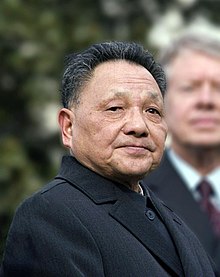
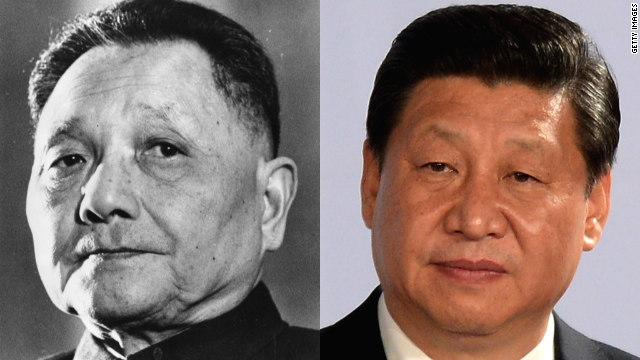
DENG XIAOPING (CHINA’S CHAIRMAN OF THE CENTRAL ADVISORY COMMISSION 1982-1987)
After Tiananmen Square, Deng recognizes the power of public dissent. Rather than increasing suppression, Deng opens the Chinese economy to a degree of self-determination. Deng does not abandon communist ideology. However, he recognizes the importance of economic growth and how less doctrinal communist policy would unleash the power of people as demonstrated at Tienanmen Square.
Deng dies in 1987 and the government of China is reshuffled. Deng’s eventual successor, President Xi, emphasizes the idealism of communism that threatens return to a Stalinist-like terror in China; i.e. a terror enhanced by technological invasion of privacy, and “big brother” control.
XI JINPING (GENERAL SECRETARY OF THE COMMUNIST PARTY OF CHINA AND PRESIDENT OF THE PEOPLE’S REPUBLIC OF CHINA)
President Xi returns to Mao’s authoritarian belief in enforced collectivism with the idea of expanding China’s new-found wealth through government subsidization of industry. Xi renews emphasis on rule by the Communist party, headed by himself.
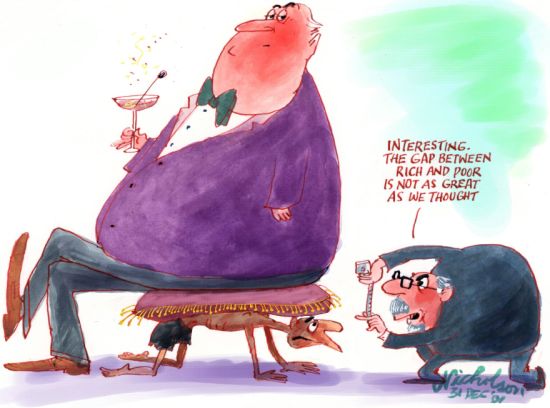
The growing disparity between rich and poor in both China and America is widely seen in the internet, and with increased international travel. China’s rapid rise in economic wealth is unevenly spread, just as it is in the United States. The difference is in how that economic disparity is addressed.
In America, private dissent is an inherent part of its history which lauds individualism, self-determination, and freedom (within the boundary of “rule of law”). But, these characteristics denigrate American citizens who are unable or unwilling to reap the rewards of individualism, self-determination, and freedom. These are the Americans sleeping on America’s streets and living in their cars.
America’s system of governance allows a rift between the rich and poor because it is based on a system of “checks and balances”. America’s system demands debate, and more broadly considered human consequence, before government action is taken.
LIVING ON THE STREET IN AMERICA
In China, the homeless are compelled to work at jobs created by the government. China’s system of governance is driven from the top, with limited debate, and more singularly determined public consequence. Government action is autocratically determined.
BEIJING-In China, dissent is discouraged and freedom is highly restricted, but homelessness is addressed with housing for the poor at subsidized prices.
In ancient China, singular autocratic rule offered a mixed blessing. Some of the world’s wealthiest and most cultured governments were created in China. These ancient dynasties successfully expanded their economies to make China a world leader in science and industry. At the same time, with few checks and balances, the history of China’s “rule of one” resulted in periodic social and economic collapse.
In some ways, China’s ancient civilization’s rise and fall is reminiscent of the rise and fall of the U.S.S.R. after 1917. Kotkin describes the turmoil surrounding Russia in 1917. The beginning of WWI and Germany’s invasion exaggerate the paradox of power in Russia. Modern European, Asian, North American, Middle Eastern, and African countries are experiencing some of the same economic, and political disruption.
On the one hand, the peasant is a proud Russian; on the other hand, he is a slave of the landed gentry; indentured to preserve the wealth of others at the cost of his/her life.
In 1917, the Czar and wealthy aristocracy depend on a population of the poor to defend the government. Russian peasants are faced with defending a government system that recognizes them as serfs, agricultural laborers indentured to wealthy landowners. (A similar system existed in China prior to 1949.)
In 1949, Mao recognizes the same inequity and judiciously separates landlords from their vast estates and re-distributes it to tenant farmers who worked for them. Ownership restructuring improved agricultural production until Mao tried to make small collectives into large collectives with Communist party oversight. Formation of a Chinese Communist Party bureaucracy distorted actual production and de-motivated farmers that did the real work of farming. The result of production over-estimation caused a nation-wide famine.
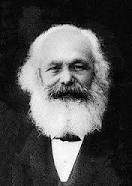
KARL MARX (BORN TRIER, GERMANY 1818-DIED LONDON, ENGLAND 1883)
Kotkin notes Russian social and economic inequity is a breeding ground for a Leninist/Marxist revolution. Marx’s dialectic view of the wealth of nations suggests that governments will change based on the growing recognition of the value of labor; i.e. beginning with agrarian feudalism, growing through industrialized capitalism, and socialism; reaching to a state of equilibrium in communism (a needs-based and communal sharing of wealth). Marx suggests all nations will go through this dialectic process.
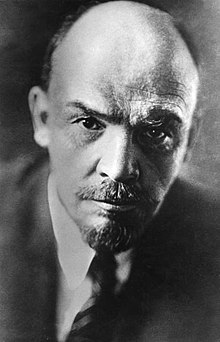
Lenin bastardizes Marx’s dialectic idealization. Lenin believes the process can be accelerated through revolution and centralized control of the means of production. This idea is adopted by Mao Zedong in China in 1949 with early success. However, Mao expands the collectivist policy with “The Great Leap Forward” in 1958. Mao’s broader collectivist policy collapses the Chinese economy in 1962. Thousands of Chinese die from starvation as communist overseers exaggerate food production quotas.
Collectivist expansion is an oversimplification of Kotkin’s explanation of Vladimir Lenin’s form of communism but it shows the risk of “rule of one” governance. Even Lenin is conflicted about how Russia will grow into a communist society.
Lenin recognizes the social and economic distance that Russian peasants must travel to gain an appreciation of a new form of government.
Much of the Russian population, like the Chinese in 1949, were illiterate and living at a subsistence level; bounded by a non-mechanized agrarian economy. Lenin vacillates between growth through education and growth through autocratic command. Kotkin suggests that Lenin gravitates toward centralized command because of the need to consolidate power within the revolution.
What Lenin needed in 1917 were followers that could get things done. Before being felled by brain disease and stroke, Lenin relies on the abilities of men like Joseph Stalin. Mao relies on his revolutionary Red Guard. Kotkin argues that Stalin became close to Lenin as a result of his organizational skill and his penchant for getting things done without regard to societal norms. For Mao, close associates like Deng Xiaoping, were his enforcers. Stalin becomes the most powerful enforcer in Lenin’s revolution. Deng eventually becomes the leader of Communist China.
Though Stalin wields great enforcement powers, Kotkin infers Trotsky is the intellectual successor to Lenin. Stalin and Trotsky are shown to be at odds on the fundamental direction of the Bolshevik party, the successor party of Russian communism. However, the exigency of getting things done, as opposed to understanding the goals of creating a Leninist/Marxist government, were paramount goals for consolidating power after the revolution. Kotkin explains how Stalin became a defender of Leninist doctrine while Trotsky became an antagonist and eventual apostate because of Stalin’s manipulation of events.
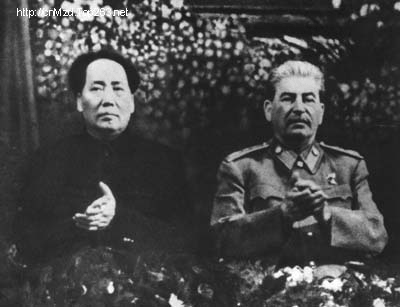
MAO AND STALIN IN 1949
China waits and observes Stalin’s method for rapid industrialization of Russia. Kotkin explains that Stalin gains an intimate understanding of Lenin’s doctrines while Trotsky chooses to compete with Lenin’s philosophical positions. The threat of factionalism accompanies Trotsky’s doctrinal departures.
The irony of the differences between Stalin and Trotsky are crystallized by Kotkin. Stalin’s intelligence is underestimated by both Lenin and Trotsky. Stalin carefully catalogs and memorizes Lenin’s communist beliefs. In contrast, Trotsky chooses his own communist doctrinal path based, in part, on Lenin’s writing. Here, another similarity is drawn with the near religious following of Mao’s Red Book with aphorisms about governing oneself and China.
Kotkin suggests Lenin views Trotsky as a more likely successor than Stalin as leader of the country. Lenin appreciates Stalin’s organizational ability but views Stalin’s temperament as too volatile for long-term government control. In 1922, Lenin is said to have dictated a “testament” saying that Stalin should be removed from his position as General Secretary. Lenin’s “testament” critiqued the ruling triumvirate of the party (Stalin, Zinoviev, and Kamenev) and others like Bukharin, Trotsky and Pyatakov but the pointed suggestion of removal for Stalin is subverted.
After Lenin dies, the triumvirate chooses to ignore Lenin’s “testament” for Stalin’s removal. After all, Stalin is a doer; i.e. he gets things done. Just as Stalin suppresses opposition to his interpretation of Lenin, China suppresses opposition to the Communist Party’s doctrines. Doctrinal differences are successfully suppressed in China until the the failure of “The Great Leap Forward” in the 1950’s. The consequence of “The Great Leap Forward”s failure is the cultural revolution in the 1960’s.
In America’s history the economy slugs along with setbacks and successes. Though 1929 sees the collapse of the American economy, it recovers with government intervention, the advent of WWII, and the push and pull of a decision-making process designed by the framers of the Constitution. That push and pull is from leadership that is influenced by the checks and balances of three branches of government. That same process saves the American economy in 2008. The power and economy of America has grown to become the strongest in the world.
Kotkin’s research suggests young Stalin is something different from what is portrayed in earlier histories. Stalin grows close to Lenin because he is the acting arm of Lenin’s centralized command. Lenin relies on Stalin to get things done. He is Lenin’s executor. At the same time, Lenin turns to Trotsky as an economic adviser to ensure a more comprehensive understanding of what needs to be done to stabilize the revolution. Trotsky believes in the importance of centralized control of the economy.
Both Lenin and Stalin believed in communism but the first acts on a vision of the future; the second acts on the “now”.
China’s Deng and Xi seem to reverse Lenin’s and Stalin’s reasoning. Rather than Deng being like Lenin, he acts on China in the “now”.
Xi seems more like Lenin and looks at China’s future based on the ideals of communism. However, from an American perspective, all autocrats common failing is belief in “rule of one”. The rising dictatorship of Putin is doomed to fail but there is no guarantee that his replacement will either be soon or less repressive.
Glasnost and perestroika fail to overcome that belief.
Kotkin puts an end to any speculation about Lenin being poisoned by Stalin. Kotkin argues that Lenin died of natural causes, strokes from a brain disease. What Kotkin reveals is the internecine war that is waged between Stalin and Trotsky while Lenin is dying. The strokes steadily debilitate Lenin and suspicious written pronouncements are made that may or may not have originated with Lenin. Lenin’s secretary is his wife. Some evidence suggests a missive from Lenin saying Stalin should not be his successor, noting Trotsky as a better choice. Kotkin suggests such a missive is unlikely. Lenin seems to have had his doubts about both men.
Succession in modern China seems less filled with intrigue than communist Russia but the opaqueness of China’s politics makes the rise of Xi a mystery to most political pundits. What seems clear is that China’s rise and fall has always been in the hands of the “…one”.
PRESIDENT XI’S ONE BELT, ONE ROAD PLAN FOR CHINA’S FUTURE
History will be the arbiter for President Xi’s success or failure with a road and belt plan for China’s economic future. The same may be said for President Trump’s focus on the virtue of selfishness for America’s economic future. The fundamental difference between America and China is Xi has no “checks and balances”; American Presidents have the Supreme Court, Congress, and a 4-year-election-cycle to assuage arbitrary government action.
AYN RAND (1905-1982, AUTHOR WHO FIRMLY BELIEVED IN THE VIRTUE OF SELF-INTEREST AND UNREGULATED CAPITALISM.)
In Russia, Trotsky is characterized as an intellectual while Stalin is a pragmatist. In China, Deng is characterized as a pragmatist while Xi seems a doctrinal theorist.
In history, Trotsky is highly opinionated and arrogant. Stalin is street smart and highly Machiavellian. Trotsky thinks right and wrong while Stalin thinks in terms of what works. In China, Deng is Stalin and Xi is Trotsky. In America, Trump is Stalin and his opposition is Trotsky-like do-nothings.
Trump lost the election in 2020 because–from an American perspective, all autocrats common failing is belief in “rule of one”.
Stalin is reputed to be temperamental while Trotsky is aloof. Though Trotsky insists on centralized control, Stalin argues for federalization. Stalin paradoxically argues for federalization because he knows Russian satellite countries want independence, but he will act in the short-term for centralization to get things done. And of course, Stalin clearly adopts centralized economic planning for the U.S.S.R.; i.e., another of Kotkin’s paradoxes of power.
Ironically, though Putin is now showing himself to be as ruthless as Stalin, he is unable to exercise the same level of dictatorial control. Unrest is not quelled in the face of the Russian people’s assessment of Putin’s justification for the Ukrainian war.
There is much more in Kotkin’s powerful first volume about Stalin and the Russian revolution. Germany’s role in the revolution is a case in point. The writing is crisp and informative. The narration is excellent. After listening to “…Volume I”, one looks forward to Kokin’s next which is published this year.
The past is present in Kotkin’s excellent biography of Joseph Stalin.





































































 Further, Haskel and Westlake emphasize Governments continued subsidization and investment in research and development in those areas where near term return is problematic. The example the authors give is DARPA in its early invention as a precursor of the internet, but there are many more examples; e.g. nuclear power, computer hardware, weather prediction, space exploration, etc.










 REVIEWS AND VIEWS OF LIFE