
Audio-book Review
By Chet Yarbrough
(Blog:awalkingdelight)
Website: chetyarbrough.blog
Days of Fire: Bush and Cheney in the White House
By: Peter Baker
Narrated by Mark Deakins

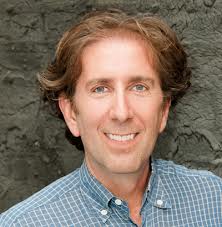
PETER BAKER (AUTHOR, EMPLOYED BY NYTIMES, FORMER REPORTER FOR THE WASHINGTON POST)
Peter Baker’s “Days of Fire” offers a picture of George W. Bush’s administration that compares favorably and unfavorably with today’s American government.
The pain of 9/11 and the wars in Afghanistan and Iraq remain raw for many Americans. Baker’s exploration of George Walker Bush’s administration offers historical information but perspective requires more time.
Baker’s book will not change minds about the success or failure of George W. Bush’s administration. It offers details to supporters and detractors of Bush’s tenure as 43rd President.
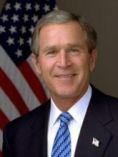
GEORGE W. BUSH (43RD PRESIDENT OF THE U.S., SON OF 41ST PRESIDENT OF THE U.S.)

DICK CHENEY (46TH V.P. OF U.S., FORMER U.S. SECY. OF DEFENSE)
Supporters will admire Bush’s tenacious spirit. Detractors will decry Bush’s obstinate belief in “experts”. Supporters will admire Cheney’s toughness in the face of unexpected problems. Detractors will vilify Cheney for not foreseeing consequences.
Baker shows Bush’s tenacity in following the lead of people hired to do a job. However, Baker infers Bush does not provide enough vetting or oversight of “experts” he hires. When vetting is done, Bush is shown to minimize serious concern about candidate’s faults. When “experts” are hired, Bush prizes loyalty over results in sticking with the chosen.

TRUMP & ROBERT REDFIELD, AN AMERICAN VIROLOGIST AND DIRECTOR OF CDC
There is also a loyalty demand with today’s American President, but it seems one-sided. Mr. Trump expects loyalty from subordinates but undermines associates who report to him. In contrast, George W. stood by Cheney through the worst years of the Iraq war.
Administration turnover is high in Trump’s administration. Too often, Trump chooses image over substance.
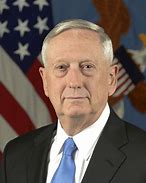
JAMES MATTIS (FORMER U.S. SECRETARY OF DEFENSE)
For Trump, believing in one’s own judgement and being in charge take precedence over collaborative decision-making. The most recent evidence of this willful characteristic of President Trump is the resignation of General Mattis.
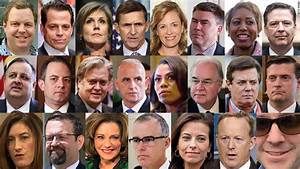
TRUMP ADMINISTRATION DEPARTURES
Baker shows Cheney as a tough-minded, defense oriented protector of American freedom. At the same time Baker reflects on Cheney’s five heart attacks, lack of respect for differing opinions, and single-minded pursuit of simple solutions for complicated problems. Baker suggests multiple heart attacks may have affected Cheney’s view of life. He suggests Cheney’s actions may have been compromised by medical conditions affecting his health. There are some (mostly Democrats) who question the state of Trump’s personal health and his actions.
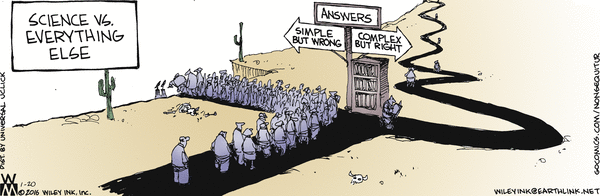
Parenthetically, one might argue Trump views himself as protector of capitalist freedom. An apropos example is Trump’s single-minded pursuit of simple solutions for America’s trade deficit.
Baker leaves little doubt about President “W’s” role as decider. The same may be said of Trump, but their leadership success or failure will be based on history; not on today’s view of their actions and results.

LEADERSHIP SUCCESS OR FAILURE IS BASED ON HISTORY; NOT CURRENT CONCEPTION.

Amy Coney Barrett is confirmed as our next Supreme Court Justice on October 26, 2020.
Barrett describes herself as a strict constructionist, not a legislator. History will determine the quality of Barrett’s appointment. As a Supreme Court justice, one must recognize it is up to Congress to clarify what they mean when they pass legislation.
Barrett’s appointment is today’s reality. Her decisions, just as Trump’s, Obama’s, and W’s actions, have tomorrows’ consequences. The appointment of Barrett needs the perspective of history; not the praise or condemnation of the present.
Barrett, like all high government leaders, brings her own life history of successes and failures. Cheney left a long public life to become CEO of Halliburton, a multi nation oil field services company. Returning to government opens Cheney to conflict of interest questions.
Baker notes that former associates of pre-VP Cheney feel he changed. Pre-VP Cheney was conservative but more open to others opinions and easier to get along with. (Some argue that Trump is not open to other’s opinions.) Pre-VP Cheney served in the Nixon, Ford, and George H. W. Bush administrations. He also served as a 5 time elected representative of the State of Wyoming.
Halliburton receives multi-million dollar contracts from the American government for support in Iraq. Cheney argues that no other American company had equal resource capability. Trump chooses to surround himself with people like Jared Kushner, Wilbur Ross, and Carl Icahn who have Cheney-like commercial conflicts of interest; not to mention hotel and real estate interests of President Trump himself.
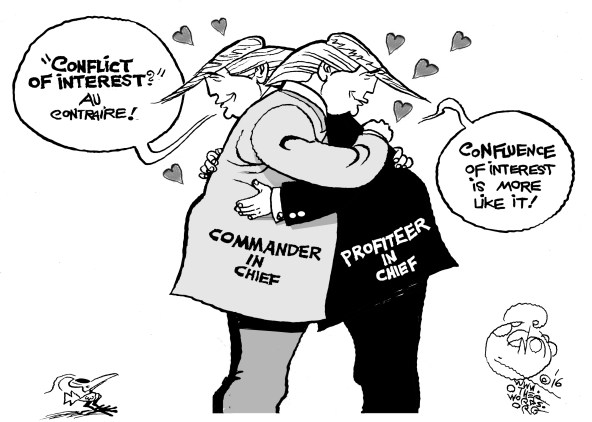
JARED KUSHNER, WILBUR ROSS, CARL ICAHN, AND TRUMP’S SONS AND DAUGHTER–EXAMPLES OF CONFLICT OF INTEREST AND CONFLUENCE OF INTEREST
Baker raises the specter of heart attacks and Halliburton experience affecting Cheney’s personality, demeanor, and actions as Vice President of the United States. The author, like every human being, cannot know what he does not know. The same is true for Mr. Trump. Trump is healthy and highly intelligent because he says he is. As Socrates is believed to have said–“I know something that I know nothing.
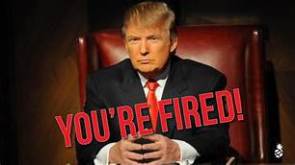
Trump was a showman before he became President. Some suggest he remains a showman today. In today’s view, mage is substance to Mr. Trump.
Cheney was who he was before and after he became V.P. of the United States. Of course, age and experience changes everyone; only time and history will confirm or deny today’s opinions of the George W.’s and Trump’s administrations. Many details of Bush and Cheney’s lives are reported in Baker’s book. The data compilation offers color, if not insight, to Bush and Cheney’s characters. Today’s comments and actions of President Trump are equally colorful (in the worst sense of the term) but insight to his administration remains for history to determine.
Baker’s choice of details endears readers to Bush more than Cheney. Bush interactions with the public after 9/11; his bravado in flying to Iraq to meet with troops, and Baker’s description of Bush’s love for his dying 15-year-old Springer Spaniel, tug at a reader’s heart. Details of Cheney’s emotional life are limited to descriptive interactions with family. Baker describes Cheney’s experience with the twin tower terror, heart attacks, and affection for anyone other than family as fatalistically analyzed incidents.
Baker links Bush and Cheney’s early life experiences. He exposes different consequences of their linked experience. Both men are shown to be smart but Bush’s rebelliousness seems parentally sheltered while Cheney’s rebelliousness seems experience driven. Bush graduates from Yale and Harvard while Cheney flunks Yale, returns to work as a power lineman; returns to Yale, flunks again, and eventually graduates with BA and MA political science degrees from University of Wyoming.
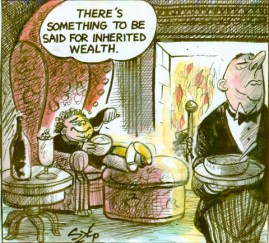
BUSH AND TRUMP SHARE THE GOOD FORTUNE OF A LIFE OF PRIVILEGE
Bush’s silver spooned life is contrasted with Cheney’s stainless steel life. Bush’s parental-rebellion is contrasted with Cheney’s “who gives a damn”’ wilding. Because Bush and Cheney both attended Yale, they had some common experience but Bush graduated; Cheney did not. This detail reinforces the argument that Bush may have respected Cheney but felt more qualified to be the decider; not only by virtue of position but by virtue of accomplishment. Baker infers that possibility, particularly in the second term of Bush’s administration.
Cheney offers his resignation before the second election campaign. The decision to invade Iraq is perceived to be hugely influenced by Cheney and Rumsfeld, the Secretary of Defense. The mistaken intelligence about Iraq’s weapons of mass destruction is a potential re-election killer. Bush considers Cheney’s resignation but chooses not to accept.
Baker suggests that Bush moves away from Cheney toward the end of his first four years in office. Baker reports that some Cheney’ colleagues felt resignation was a Machiavellian-Cheney’ gesture to keep his position; others suggest it was a fall-on-his-sword move to protect the leader; a needed act to get Bush re-elected.
Internal conflicts in “W’s” administration show politics at its best and worst. When Bush pushes for a revision in the Medicare prescription plan for senior citizens, he is stonewalled by his own party on a vote for approval. Baker suggests passage was dead in the water until Bush tacitly agrees, with an Arizona Republican congressman (Trent Franks), to fight any attempt to appoint a Supreme Court Justice that supports women’s rights to abortion. The Medicare prescription plan barely passes, after the meeting.
Bush’s judgment is called into question when he tries to get Harriet Miers appointed to the Supreme Court. Bush believes Miers is qualified without fully vetting her background and education. Ms. Miers, though a lawyer, is shown to be ignorant of basic legal interpretations of practiced law. President Trump has had his share of judgement questions in his foolish twitter comments.
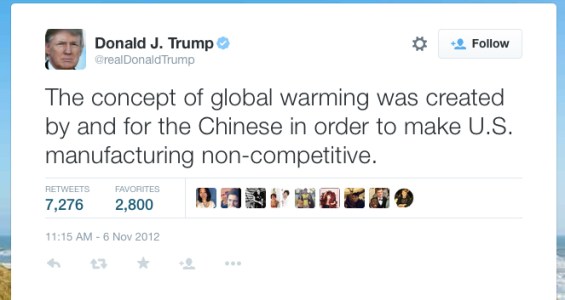
A QUESTION OF LEADERSHIP JUDGEMENT
Baker explores hard feelings between Defense Secretary Rumsfeld and Condoleeszza Rice. Rumsfeld mentored Cheney but was dismissed by President Bush in his second term; in part, because of Abu Ghraib but largely because of pentagon and secret service chafing under Rumsfeld management style. Rice succeeds Colin Powell as Secretary of State in the second administration.
Bush felt Powell was not a team player and that he used the media to get around disagreements with Rumsfeld’s military defense decisions. Rice steers the State Department back to diplomacy from being an adjunct of defense. President Trump’s Attorney General is called out as “not a team player” but not for the same reason as Powell.

BOTH BUSH AND TRUMP ENDORSED TORTURE IN INTERROGATION OF POLITICAL PRISONERS.
Baker reflects on the “torture” memorandum approval by John Yoo, Deputy Assistant U.S. Attorney General, during “W’s” first administration. “Enhanced interrogation techniques” were approved for the CIA by Bush with Yoo’s tortured legal reasoning. Dick Cheney insists torture saved lives after 9/11. Trump endorses water boarding as a justified torture of political prisoners.
Bush’s second term also replaces John Ashcroft with Alberto Gonzales as U. S. Attorney General. Baker infers the change is due to Ashcroft’s refusal to reverse a Justice Department ruling on a part of the Patriot Act regarding privacy. On the other hand, it could have been Ashcroft’s health. With Ashcroft’s refusal to sign Bush’s reaffirmation of the law, Bush chose to overrule Ashcroft and the Justice Department by Executive Order.
Baker shows how and why Americans have become so closely divided over Bush’s war on terror; his belief in democracy as a guarantee of freedom, and the inference that privacy is a privilege, not a right.
Though it is too soon to write an unbiased history of “W’s” time in office, Baker reports some interesting details about the George W. Bush’ years. Both Bush and Cheney survive the days of fire but Cheney appears more scarred than Bush at the end of Baker’s tale. America seems more divided today; not only in regard to the war on terror, but in more ways than realized during George W. Bush’s administration.

In Trump’s administration, the country seems as divided as it was in the Bush/Cheney years. But, of course, views of the Bush and Trump administration are without the perspective of history. History has hugely changed perceptions of Presidents Grant, Wilson, Eisenhower Truman, Kennedy, and Nixon since their deaths.

Some Presidents were considered better; some worse, when they were leaders. One wonders how the 22nd century will look at the George W. and Trump years.

































 Trump’s withdrawal from the Paris Climate Accords is reminiscent of ignorant industrial luddites. Innovators like Musk pursue an opportune future while Trump and others pursue the mythology of the past. Both Musk’s and Trump’s errors are human, but their consequences are hugely different. Vance’s biography of Musk shows releasing dragons can benefit society. Trump’s dragons are only likely to harm society. In history, Musk will be remembered fondly; Trump will be recalled sadly.








 REVIEWS AND VIEWS OF LIFE