POWER OF BELIEF

The power of belief in science or religion both leads and misleads humanity. Humans may not forgive but they often forget.

Blog: awalkingdelight
 Website: chetyarbrough.blog

The Hiding Place

By: Corrie ten Boom, Elizabeth Sherrill, John Sherrill

Narrated by: Wanda McCaddon

This is the life story of Corrie ten Boom and her experience in WWII. It is an autobiography written with the help of the Sherrills who have written or co-authored over 30 books translated into more than 40 languages. Though Ms. ten Boom and the Sherrills have passed, “The Hiding Place” is a paean to religious belief that has sustained civilization.

The belief eulogized in “The Hiding Place” is Christian, but it could be any faith. Whether Islamism, Hinduism, Buddhism, Shintoism, Sikhism, Judaism, Taoism, Confucianism, Caodaism, humanism, naturalism, “…ism” is belief in something greater than oneself.

Corrie ten Boom’s biography illustrates the opposing forces of a human need for belief in something greater than oneself. As noted by other authors, the civilizations that exist today would never have grown without belief in an “…ism” greater than the individual, family, or tribe. Corrie ten Boom is a believer in the Christian Bible and its Word. That belief drew her and her family to protect Jews from the Nazi occupation of the Netherlands.

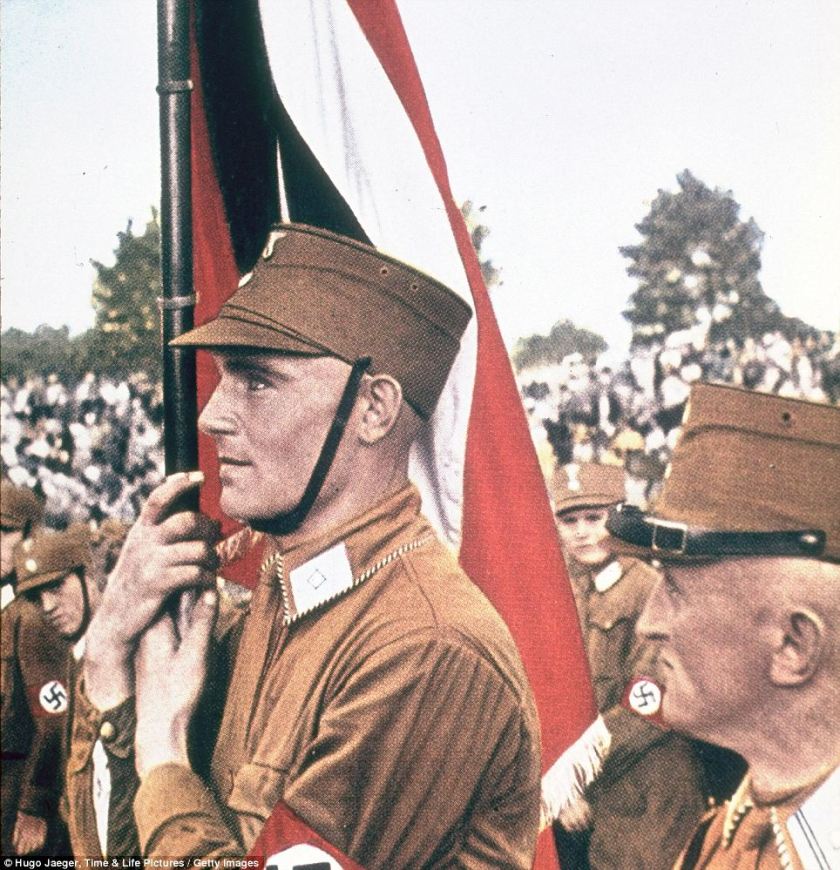
The rise of Nazism in Germany was a political ideology, secular in its origin, and loosely based on belief in science.

Science is a systematic method of gaining knowledge about nature, its causes and consequence. Like every belief system, science is based on human cognition which can lead or mislead humanity. Neither science nor religion have omniscient or omnipresent insight to the nature of the universe because of the human mind’s limitations and interpretations of facts and events. Religion, like science, can lead and mislead civilization because of human limitation and interpretation.

Thankfully, Corrie ten Boom’s family’s belief in the Bible led them to aid Jews when they were persecuted by the false science of German Naziism.

The relevance of “The Hiding Place” resonates today in the conflict between Palestinians and Jews in Israel and Palestine. One can see a conflict between religion and science in the tragedy that is unfolding in Gaza. Both Hamas and the Jews use their religious beliefs and the science of war to kill each other. As in all war, there is no winner. The death of 6,000,000 Jews in WWII and the slaughter of Jews at the festival in Israel are horrid and unforgivable, but can they or should they be used as justification for the horror of what is happening in Gaza?

She follows her religious belief to do what she could to save her Catholic family and Netherland’s Jews from Nazi’s societal and science ignorance. What forgiveness there is in Corrie ten Boom’s book is only in the acceptance of the Word in her Bible. The power of belief in science or religion both leads and misleads humanity. Humans may not forgive but they often forget.

LYRICS & MUSIC

As Orson Welles noted: “We’re born alone, we live alone, we die alone. Only through our love and friendship can we create the illusion for the moment that we’re not alone.” The tragedy of that observation is that Welles infers love and friendship are only an ephemeral illusion.

Audio-book Review
By Chet Yarbrough

Blog: awalkingdelight
 Website: chetyarbrough.blog

Something Wonderful (Rodgers and Hammerstein’s Broadway Revolution)

By: Todd S. Purdum

Narrated by: Todd Purdum

Todd Purdum (Author, former New York Times Journalist, writer for Politico.)

“Something Wonderful” is a refreshing break from recent book reviews about war. Todd Purdum writes and narrates an informative biography of two Broadway legends, Richard Rogers and Oscar Hammerstein and their contribution to New York theatre. Purdum explains their music, comedy, and drama changed the rules of Broadway musicals.

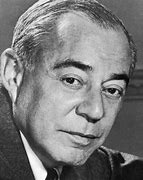
Richard Rogers (L) and Oscar Hammerstein (R).

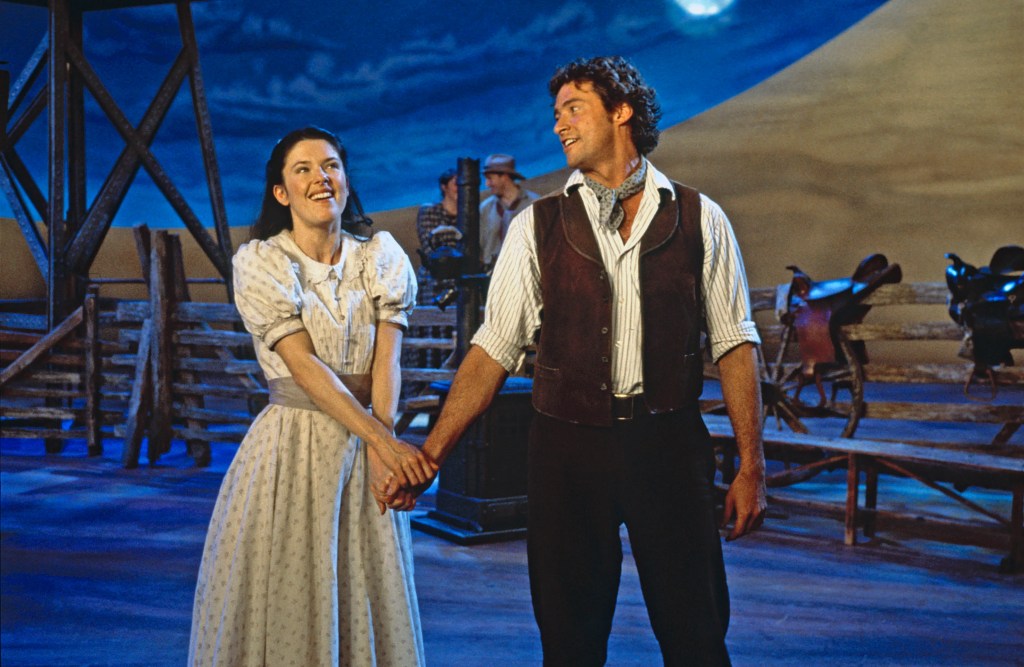
Coincidentally, Rogers’ and Hammerstein’s partnership is in the early years of America’s entry into WWII. Their first collaboration was “Green Grow the Lilacs” which was originally a 1931 one act play, rewritten by Rogers and Hammerstein. It became their first successful collaboration known as “Oklahoma”.

Audiences of today probably remember the movie version starring Gordon MacRae, and Shirley Jones.

However, in the St James Theatre in New York, it ran for five years with 2,212 performances culminating in a Pulitzer Prize in 1944. Not bad, for Rogers’ and Hammerstein’s first collaboration. It was the beginning of a long and storied career for these artists. Purdum notes Hammerstein would write the poetic words (the lyrics) of a song that would be put to music by the genius of Richard Rogers. Purdum explains, though they worked independently, they collaborated in a magical way that changed and broadened the appeal of musicals. The magic came from their work as two independent thinkers within their lanes of expertise. Hammerstein would write the lyrics and Rogers would create the music to fit the words.

The two embarked on a series of hits from 1942 to 1960 with famous works like “Carousel”, “South Pacific”, “The King and I”, and “The Sound of Music”, all of which became successful and entertaining movies for a public that could not afford live productions on “The Great White Way” (the Theater District between 41st and 53rd street in New York). Those of a certain age remember great songs like “If I Loved You”, “Some Enchanted Evening”, “Getting to Know You”, and “My Favorite Things”.

Purdum explains how Rogers and Hammerstein broke many records by changing the rules of musicals. They created memorable melodies by experimenting with different musical styles and performers from opera to folk to jazz. They integrated plot and character to create entertaining, sometimes controversial social commentary, ranging from the comic to dramatic to tragic stories of life.

Rogers and Hammerstein won 34 Tony Awards, 15 Academy Awards, two Pulitzer Prizes, and two Grammy Awards.

After their great run on Broadway, Roger’s and Hammerstein’s attentions turn to the movies and the early beginnings of television. Their theatre productions become films that reach a much wider audience. However, translations from stage to film had a host of drawbacks ranging from casting to censorship that affected audiences’ reactions to what were great and successful Broadway musicals.

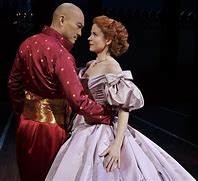
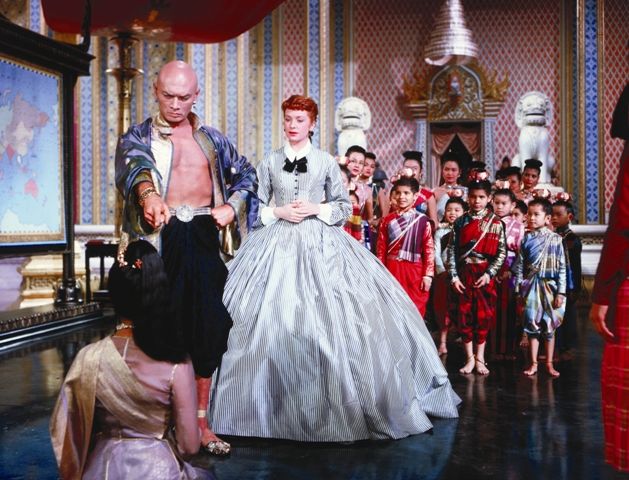
As a movie, who can forget “The King and I” and the brilliant performances of Yul Brenner and Deborah Kerr?

Nearing the end of Purdum’s fine story, these scions of entertainment are nearing the end of their productivity. In 1957, they produced Cinderella for television. An estimated 107 million viewers watched Julie Andrews play the part of Cinderella. The only other Broadway collaboration of note was “Flower Drum Song” that was well received but a commercial flop.

Oscar Hammerstein died in 1960 at the age of 65. The cause of death was stomach cancer.

Purdum notes Rogers’ alcoholism, womanizing and often-suffered bouts of depression greatly affected his last years. In 1957 he was hospitalized. He recovered and lived for another 22 years. He died in 1979 after what was called a long (undisclosed) illness.

After Hammerstein’s death, Purdum notes Rodgers could not reproduce the lyrical success of Hammerstein’s poetic alliteration.

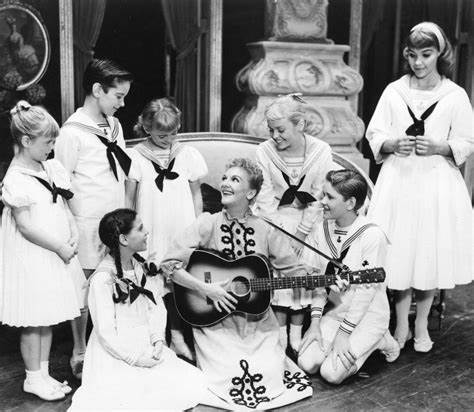
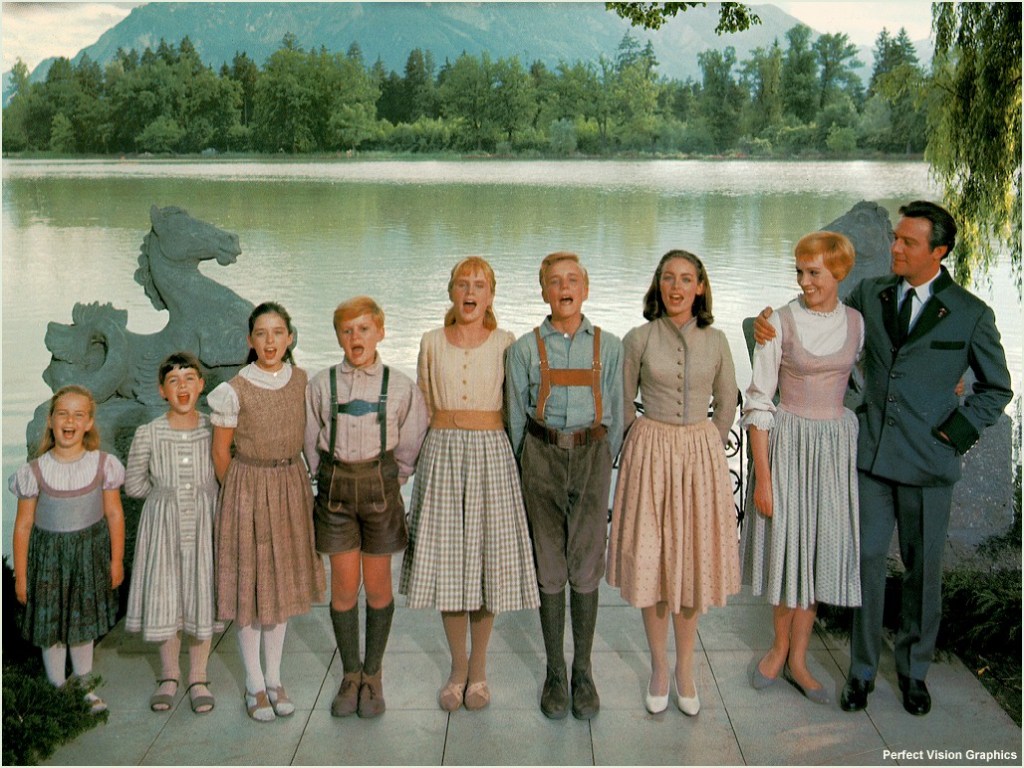
Rodgers greatest success after the death of Hammerstein seems to have been oversight of the movie production of “The Sound of Music”.

The sad thing revealed by Purdum is that Rogers and Hammerstein never seemed to develop a close personal relationship. Each lived in their own worlds and only met in their musical collaborations, not as friends but as ambitious business associates. Purdum wrote of Rogers’ comment about regretting never really getting to know Hammerstein.

As Orson Welles noted: “We’re born alone, we live alone, we die alone. Only through our love and friendship can we create the illusion for the moment that we’re not alone.” The tragedy of that observation is that Welles infers love and friendship are only an ephemeral illusion.

SEPARATE NOT EQUAL

Reflecting on “Blood Brothers”, a listener understands America is a long way from the ideal of equality. Being equal does not mean everyone can be the greatest heavy-weight boxer in the world. Equality means every citizen can choose to be the best version of themselves without being repressed by the society in which they live.

Audio-book Review
By Chet Yarbrough

Blog: awalkingdelight
 Website: chetyarbrough.blog

Blood Brothers (The Fatal Friendship Between Muhammad Ali and Malcolm X)

By: Randy Roberts Johnny Smith

Narrated by: David Drummond

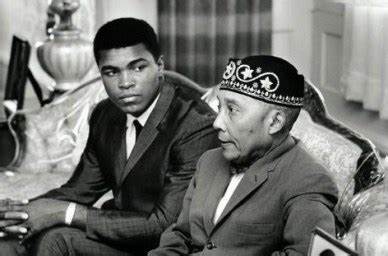
Randy Roberts and Johnny Smith offer a nuanced and well-written view of Muhammed Ali, his fame, his skill as a heavy weight boxing champion, and figure head for the Nation of Islam (NOI). The author’s juxtapose Ali and Malcolm X as “Blood Brothers” who shed light on the unquestionable value and horrendous harm religious belief can impose on society.

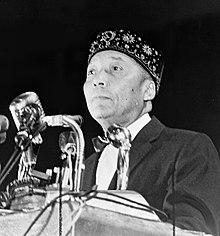
Roberts and Smith show human nature is an unconquerable beast that both leads and misleads humanity. The maturity and personal growth of Muhammed Ali and Malcolm X is revealed in “Blood Brothers”. They both become members of NOI, an American faction of Islam, that preaches Black America can only be equal through separation from non-black people. Elijah Muhammed, a self-proclaimed Messenger of Allah, creates a fellowship of Black Muslims (NOI) who insist on a Black American nation, independent of American governance. Elijah Muhammed insists–in order to become democratically free and equal to non-Black American citizens, an independent Black American nation must be formed.

What Roberts’ and Smith’s history shows is NOI’s flaw is in belief that separate can ever be equal based on race, religion, or color.

Though self-worth and pride can be immeasurably enhanced by exclusionary race, religion, or difference what is missed is the truth of human nature. Human nature is riven with self-interest based on money, power, and/or prestige. Elijah Muhammed and other leaders of religion are human. Religious leader’s self-interest drains the life out of Divinities force. In one sense, NOI offers a sense of pride and equality for Black Americans but in another, it creates further discrimination and inequality with separation and distinction from others.

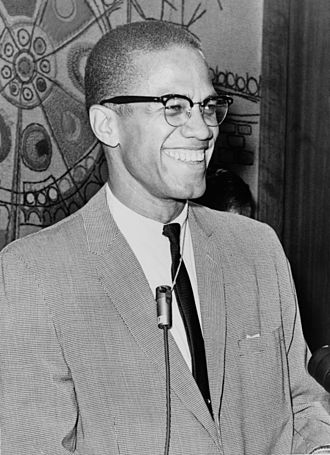
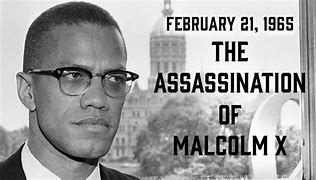
Roberts’ and Smith’s story of Malcolm X, and to a lesser extent, Muhammed Ali’s friendship, show how religion can bring people together, but also tear them apart. Malcolm X evolves from an intelligent street punk to an insightful leader of the Muslim religion. Malcolm becomes a favorite of NOI until he challenges its leader (Elijah Muhammed) for abandoning what he believes is a fundamental tenant of the faith, marriage chastity. Malcolm X exposes extra-marital affairs of Elijah Muhammed as evidence of the leader’s fall from faith. As his disaffection grows, Malcolm X begins to believe separate cannot be equal and that NOI’s belief in separation of the races is a violation of a faith that says Allah or God created all humankind.

Elijah Muhammad (Leader of NOI 1934-1975, Born in 1897 as Elijah Robert Poole, Died at age 77 in 1975.)

Malcolm X is a teacher of Ali before his break with the leader of NOI. Malcolm X appeals to Ali’s innate ability as a fighter and doggerel actor for truth and justice. Ali is put in the position of following Malcolm’s differences with Elijah Muhammed or staying within the Nation of Islam. The authors infer Ali looks at Elijah Muhammed as the father he wishes he had while Malcolm X as a brother who has been led astray.

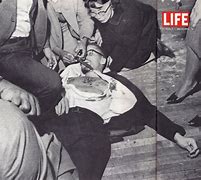
To the authors, the assassination of Malcolm X by NOI’s followers is inferred by Ali to be a threat to his life if he forsakes NOI’ beliefs. When Elijah Muhammed dies, some years after Malcolm’s assassination, Ali revises his view of NOI and leans more toward the teachings of his former friend, Malcolm X. Ali moderates NOI’s anti-white sentiment.

Reflecting on “Blood Brothers”, a listener understands America is a long way from the ideal of equality. Being equal does not mean everyone can be the greatest heavy-weight boxer in the world. Equality means every citizen can choose to be the best version of themselves without being repressed by the society in which they live.

IS GOD DEAD

One presumes Nietzsche’s philosophy is either right or wrong, but its insightful truth lies in the horrors of history and the consequence of forsaking God and human tradition.

Audio-book Review
 By Chet Yarbrough

Blog: awalkingdelight)
 Website: chetyarbrough.blog

I Am Dynamite! A Life of Nietzsche

By: Sue Prideaux

Narrated by: Nicholas Guy Smith

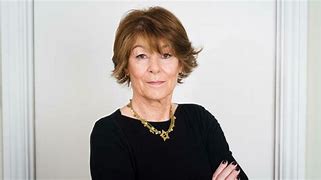
Sue Prideaux (Anglo-Norwegian author, also wrote “Edvard Munch: Behind the Scream”)

Friedrich Nietzsche’s life and philosophy is dissected by Sue Prideaux in “I Am Dynamite!”.

Friedrich Nietzsche (1844-1900, died at age 55.)

As inferred by Prideaux’s title, Nietzsche blows up a number of traditional religious and secular beliefs while battling physical and mental disorders in a complicated and contradictory life.

Nietzsche’s life is one of physical illness that seems to teeter on the edge of madness. In addition to his father’s history of early death from a brain ailment at 35, Nietzsche’s health is challenged by dysentery and diphtheria in 1870 when he is 26.

Nietzche’s last 11 years of life were spent in German and Swiss asylums or in his mother’s and sister’s care in Naumburg.

Some suggest he died from what is called dormant tertiary syphilis at 55 in Weimer Germany, less than 30 miles from Naumburg. Nearing the end of Prideaux’s biography, in Chapter 21, Nietzche’s plunge into madness is completed. One cannot help but think Nietzche’s philosophy and writing is hugely impacted by his ability to cope with recurrent illnesses.

  • The Birth of Tragedy (1871)
  • Early Greek philosophy & other essays (1872)
  • On the Future of our Educational Institutions(1873)
  • Thoughts Out of Season(1874)
  • Human, All Too Human(1875)
  • The case of Wagner-Nietzsche, Contra Wagner, Selected aphorisms(1876)
  • The Dawn of Day(1881)
  • The Joyful Wisdom(1882)
  • Thus Spoke Zarathustra(1883)
  • Beyond Good and Evil(1883)
  • The Genealogy of Morals(1884)
  • The Will to Power(1885)
  • Twilight of the Idols/The Anti-Christ (1886)
  • Ecce Homo(1888)
  • The Antichrist(1895)

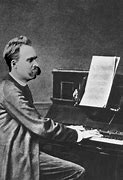
By Prideaux’s account, Nietzsche is an excellent pianist.

She notes his school mates gather around Nietzsche at the piano, particularly during violent weather events, because of his exuberance and creativity in playing well-known classical, as well as his own, music compositions. In his early life, Nietzsche becomes a close friend of German composer, Richard Wagner.

Nietzsche denies both religion and Socratic rationalism (a method of systematic doubt in pursuit of truth) by arguing individuals have a right to determine life’s value and meaning, without resort to religion or tradition.

Nietzsche believes too many false assumptions come from Socratic rationalism. In Socratic rationalism, Nietzsche is saying societal religion and tradition distort the pursuit of truth. To Nietzsche, human beings are on their own. That is the major philosophical point of his philosophy. His famous aphorism is “God is dead”. Morality and the reality of life is a function of man, not God, history, or tradition.

While seemingly destined for a religious life, born to a Lutheran pastor and teacher, Frederich Nietzsche chooses atheism and particular beliefs that offend his family.

Nietzsche believes conscience humans can become Supermen or Superwomen, surrounded by followers, if they have superior ability to choose that role in life. Some argue history reinforces that truth with the rise of leaders like Augustus in Rome, Jesus in Bethlehem, Genghis Kahn in Asia, Hitler in Germany, and other male leaders in history. Early in Nietzsche’s life he might have included women, like Cleopatra in Egypt, but as he aged his view of women changes. (History shows Nietzsche is ambivalent about women as “Super”, which remains a prejudice to this day.)

“Super” does not mean either being right or wrong. A “Superhuman” overcomes worldly influences by recognizing they are their own master.

Super” is meant to connote one who goes beyond God or societies’ good and evil to create value through a Super’s leadership and action in accordance with his/her beliefs. Obviously, the ugliness of this view is in its consequence to human resistors to the “Super” human that chooses a path contrary to the best interests of society or the individual.

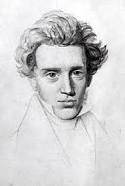
Soren Kierkegaard (1813-1855, existentialist philosopher died at age 42.)

If, as Nietzche infers, humans are on their own, Kierkegaard’s “fear and trembling” is not before God.

To Nietzche,”fear and trembling” is before the Superman, one who rises above the pettiness of self-interest to rule in the best interests of all. To Nietzsche, the human being is alone. One may either take a path to follow the Superman or become their own Superman.

Prideaux offers a comprehensive picture of a man on a mission. His mission is to disabuse human belief in a Supreme Being or societal tradition to solely rely on one’s own consciousness because that is all there is to life.

Nietzsche is shown by Prideaux to be opposed to antisemitism by breaking his close relationship with his sister and the famous composer, Richard Wagner, who was among the most famous antisemites of that era.

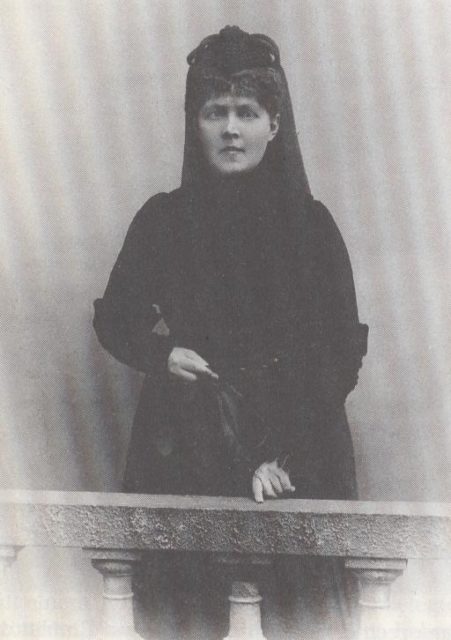
The ugly consequence of Nietzsche’s belief in the “Superhuman” is exemplified by his sister (Therese Elisabeth Alexandra Nietzsche, born in 1846, died in 1935 at age 89) who distorts her brother’s philosophy and endorses antisemitism and Adolph Hitler.

Prideaux’s biography offers details of Nietzsche’s life that allow reader/listeners to make up their own mind about Nietzschean philosophy. Prideaux shows Nietzschean philosophy is indeed “…Dynamite!”.

Nietzsche’s last decade of life is a journey into madness.

Though lovingly cared for by his mother, he is victimized by his sister who controls and distorts his contribution to philosophy. One presumes Nietzsche’s philosophy is either right or wrong, but its insightful truth lies in the horrors of history and the consequence of forsaking God and human tradition.

THE CUT

This is a brave story of a great woman who demonstrates the truth that all humans beings are equal, while a very few are the greatest among us.

Audio-book Review
 By Chet Yarbrough

Blog: awalkingdelight)
 Website: chetyarbrough.blog

The Girls in the Wild Fig Tree (How I Fought to Save Myself, My Sister, and Thousands of Girls Worldwide.)

By: Nice Leng’ete

Narrated by: Nneka Okoye

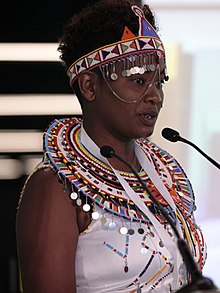
Nice Nailantei Leng’ete (Author at Age of 31 or 32, Graduate of Kenya Methodist University.)

Nice Leng’ete offers the story of her life in “The Girls in the Wild Fig Tree”. A large part of her story is about her life from age 4 to 10 years of age. She is born into a Christian family in Kenya. The final chapters address the lessons of her life and her journey to adulthood. Her father and mother die early in Leng’ete’s life. She explains both her parents died from AIDs. (Auto Immune Disease is first diagnosed in Kenya in 1984. By 1996, it is estimated that 10.5% of Kenyans were living with HIV, the virus that causes AIDs. The virus weakens a person’s immune system by destroying cells that fight disease and infection.)

Leng’ete is born into a blended family of two mothers. She explains the patriarchal Maasai culture is polygamous and her father had children from another wife.

Though her father dies when she is but 6 or 7, she recalls him as a leader of his village. Her father enriches their Maasai community by working with the Kenyan government to establish a natural preserve managed by local young men of their village. Leng’ete’s memory of both her father and mother seem to have formed her character. Her memory of her parents is that they loved each other and raised her to become the woman of this story.

Leng’ete is from southern Kenya, born into an East African tribe of the Maasai people.

Leng’ete shows herself to be an unconventional woman as well as an extraordinary Maasai. She breaks many international misogynist beliefs as well as Maasai traditional roles for women in her native country.

Coming from a rural area of Kenya, she moves to the capitol city of Nairobi, Leng’ete confronts the anonymity of big cities with a mentality to “do what ever it takes” to succeed.

Leng’ete’s poverty, youth and ambition lead her to live with three young men to afford a place to live in Kenya’s capital city. She is at once encouraged by the help she receives. On the other hand, she is surprised by the duplicity of a Nairobi’ con man that dupes her into believing he is an agent for international models. What Leng’ete does not forget is her village and Maasai traditions that suppress women and her village’s potential for cultural change.

Leng’ete returns to her village to work with local leaders to change the tradition of female genital mutilation (FGM). Leng’ete understands her culture and recruits a local male friend to open a door to some of the village elders. That door could not be opened by a woman without the help of her male friend. At the beginning of Leng’ete’s return she notes none of the elders would stay when she began to speak. With the help of her male friend’s participation in the meetings, a few elders began to listen. Without the elders’ understanding, she knows there is little chance for cultural change. The elders power and influence were needed.

Cultural change begins to show promise when a few elders stay and begin to listen to Leng’ete. Her objective is to explain how the the tradition of FGM diminishes Maasai’ culture.

Based on the advice of Leng’ete’s deceased father, she begins by asking questions of the elders to get them to think about the consequence of genital mutilation of women. She asks elders of the village if they think their partners enjoy sex. When they say no, she asks would they like their partners to enjoy sex? They say, yes. These questions open a door to understanding the consequence of women’s genital mutilation.

Leng’ete notes in her book that men are circumcised as a traditional path to manhood but the consequence is rarely death.

There are various reasons for genital cutting in different cultures. In the Maasai, FGM is a rite of passage into adulthood and a pre-requisite for marriage. In men, it is penile foreskin cutting but in females it is removal of the clitoris, a female sex organ that is a source of female sexual pleasure. Leng’ete explains to the elders how genital cutting of women’s genitals often cause excessive blood loss, infection, and high fevers that cause the death of women in their tribe. In the past, such deaths were believed to be unrelated to the cutting but to supernatural causes. In truth, Leng’ete notes many of the deaths are from unsterile instruments and imprecise cutting of the clitoris.

The broader cultural reality of FGM is that it reinforces sexual inequality.

Leng’ete tells the story of her older sister, Soila, who survives FGM and has children but is brutally abused by her husband. Her husband beats her and blames it on his drinking when it is implied to be related to Maasai patriarchal culture. Soila is trapped in the tradition of Maasai culture that says when a woman is married she is married for life. Leng’ete confronts Soila’s husband with the truth of his abuse. Surprising to Leng’ete, the husband gives up the tradition of life-long servitude of a wife by saying Soila is now Leng’ete’s responsibility. He releases Soila from their marriage, contrary to Maasai cultural tradition.

Leng’ete manages to get a college education but on her way she is hired as a social case worker in Kenya. That experience leads to organizational success that leads her to become a public speaker at a Netherlands event about women’s sexual and reproductive rights. She returns to Kenya to give another speech about the same subject to the Maasai, including village elders.

Leng’ete becomes the first woman to ever receive Kenya’s Black Walking Stick award which signifies leadership, respect and power within her community.

This is a brave story of a great woman who illustrates the truth that all human beings are equal, while a very few are the greatest among us.

RISK OF DEMOCRACY

Audio-book Review
 By Chet Yarbrough

Blog: awalkingdelight)
 Website: chetyarbrough.blog

Hubert Humphrey (The Conscience of the Country)

By: Arnold A. Offner

Narrated by: Jonathan Yen

Arnold A. Offner (Author, American historian, president of the Society for Historians of American Foreign Relations.)

Arnold Offner offers a biography of Hubert Humphrey, a former Minneapolis, Minnesota Mayor, U.S. Senator, and Vice President of the United States. Offner notes Humphrey ran for President in 1960 but was defeated by John F. Kennedy.

Hubert Humphrey (1911-1978, died at age 66, V.P. 1965-1969, Senator 1971-78)

What makes this biography interesting is that few American V.P.s are remembered, let alone biographized. The V.P.s who are remembered are only those who become Presidents. Even then, most American Vice Presidents are not remembered. Three exceptions are Theodore Roosevelt, Harry Truman, and Lyndon Johnson.

There are 16 V.P.s to become Presidents of the United States. Out of 46 Presidents, 16 V.P.s (approximately 34%) became President. Eight became President because of a President’s death in office.

  1. John Tyler-Only 1 month as V.P. when William Harrison died from an illness contracted at his inauguration.

  2. Millard Fillmore became President after the death 1.5 years into Zachary Taylor’s presidency.
  3. Andrew Johnson replaced Abraham Lincoln.
  4. Chester A. Arthur replaced James Garfield after he was assassinated by Charles Guiteau, only 6 months after serving as President.
  5. Theodore Roosevelt replaced William McKinley in his second term when he was assassinated by an anarchist.
  6. Calvin Coolidge replaced Warren Harding who died halfway through in first term.
  7. Harry S. Truman replaced Franklin Roosevelt after he had served 3 months in his 3rd term.
  8. Lyndon B. Johnson replaced John Kennedy after his assassination.

The strength of democracy is in a candidates’ skill in representing the will of his/her supporters. The weakness of democracy is in a candidates’ dependence on the wealth of special interests that contribute to their candidacy.

Humphrey’s biography is an interesting example of the strength and weakness of American Democracy. On the one hand, one person can change the course of democratic government.  On the other hand, a candidate for President cannot be elected without the support of people and businesses that contribute a lot of money.

Money comes with strings. The influence of special interests and the power of elected representatives distort objectivity.

Offner shows the choice of running mates for Vice President in an American democracy is based on two qualities. The first is how a V.P. candidate increases voter base for the prospective President. The second is the skill that a V.P. may have in rallying political support for the President’s ticket. V.P.s in their positions as possible President replacements have little visibility to the public. Vice Presidents are forgotten in public memory unless they become President. Even as Presidents, if they fail to become impactful, they are forgotten.

Offner shows Humphrey wished to be President, but he had little chance of achieving that goal for two reasons.

One, he did not come from a wealthy family and two, his political base came from his experience as a mayor of Minneapolis, Minnesota and as a relatively new Senator for the State. Though Offner shows Humphrey had great political skill, his only realistic avenue to the Presidency is by being Vice President.

Offner shows Humphrey as a prime mover in civil rights.

Fight for civil rights is not shown as a singular political maneuver but a lifelong pursuit by Humphrey. Offner shows how Humphrey became a civil rights leader in his home State. After becoming Vice President, Humphrey successfully pushed for the greatest civil rights legislation since Reconstruction after the civil war.

The importance of money in American elections is made clear when Humphrey runs for President against John Kennedy. The wealth of the Kennedy family doomed Humphrey’s chances.

Humphrey is characterized as an indefatigable debater and negotiator in a Congress held hostage by a 2/3’s cloture rule that gave civil rights legislation little chance of passage because of southern opposition. With the help of Mike Mansfield, the Democratic Senate Majority Leader, Humphrey maneuvers the Senate to approve the Civil Rights Act of 1964 despite the 2/3s cloture rule. It prohibited discrimination in public places, provided for integration of schools and other public facilities. It also made employment discrimination illegal.  

Then Offner’s subject becomes the great escalation of American involvement in Vietnam. Offner explains Lyndon Johnson made the decision to turn America’s military role into a pro-active rather than defensive action. Johnson deployed over 23,000 soldiers to Vietnam.

American involvement in Vietnam did not begin with Johnson. America’s entry into Vietnam began soon after WWII because of America’s paranoia over Russian Communist infiltration in Asia and the 1950s growth of the Viet Minh’ guerillas. The Viet Minh were a guerrilla force led by Ho Chi Minh to contest French colonization of Vietnam. The Viet Minh were supported by both Stalin and Mao and their respective communist beliefs.

After Johnson’s American expansion into North Vietnam, Offner notes Ho Chi Minh demanded total withdrawal of America, the right of South Vietnam to vote on whether they wished to be a part of one country, and Vietnam to be left to govern their own territory.

Ho Chi Minh (1890-1969, died at age 79, President of the Democratic Republic of Vietnam.)

These terms were unacceptable to Johnson. Retrospectively, that would have been the best, least costly, and most diplomatic action that could have been taken by America.

Offner explains President Johnson requires his Vice President, above all, to be loyal. Offner shows Humphrey was loyal, at least until 1965, when he sent a memorandum to Johnson recommending an exit strategy. Johnson ignores Humphrey’s memorandum. The rest is history. Therein lies the risk of Democracy in America.

The checks and balances of Democracy fail to protect America from the mistakes of Vietnam, Iraq, and Afghanistan because money and power influence Democratic elections, policies, and Presidents. This is the risk both Republican and Democratic Presidents have noted. (Dwight Eisenhower’s comments about the Military/Industrial Complex, and Barack Obama’s address to the Senate on campaign finance reform.)

The last chapters of Offner’s book recount the race for the Presidency after Johnson’s speech saying he will not run for another term. Humphrey chooses to run for President with Muskie as his choice for V.P. In the end, Humphrey and Muskie are defeated with the return to political office of Richard Nixon and his soon to be revealed corrupt V.P., Spiro Agnew.

As Churchill noted in 1947, “Democracy is the worst form of government, except for all the others.”

SURVIVAL A POSSIBILITY

Audio-book Review
 By Chet Yarbrough

(Blog: awalkingdelight)
 Website: chetyarbrough.blog

The Man from the Future: The Visionary Life of John von Neumann

By: Ananyo Bhattacharya

Narrated by: Nicholas Camn

Ananyo Bhattacharya (Author, science writer based in London, PhD in biophysics from Imperial College London.)

Hungarian-American mathematician, physicist, computer scientist, engineer and polymath.

Another alumnus of the golden era of education in the Austro-Hungarian Empire of the early 20th century is John von Neumann. Ananyo Bhattacharya’s biography recounts Neumann’s giant contribution to mathematics in WWII explosives analysis, atom bomb design, computer functionality, and game theory. Von Neumann is formally educated as a chemist and mathematician.

In von Neuman’s early career, before the war and while still in school (1923), wrote a published paper titled “The Introduction of Transfinite Ordinals”.

The “…Transfinite Ordinals” paper introduces the now commonly defined understanding that an ordinal number is the set of all smaller ordinal numbers. To mathematicians, this concept simplified the concept of transfinite numbers. Von Neumann’s genius is in his uncanny ability to simplify complexity.

A further example of von Neuman’s genius is in a theoretical reconciliation of Erwin Schrodinger’s and Werner Heisenberg’s differing views on quantum mechanics. Von Neuman theorized “hidden variables” could not resolve the reality of indeterminacy of quantum phenomena. (Von Neumann disagreed with Einstein who believed determinacy is only a matter of not having found “hidden variables” in quantum phenomena.)

(Von Neumann disagreed with Einstein who believed determinacy is only a matter of not having found “hidden variables” in quantum phenomena.)

John Stewart Bell backhandedly affirms von Neumann’s conclusion by finding “hidden variables” are unnecessary in proving indeterminacy of quantum phenomena making the difference between Schrodinger’s and Heisenberg’s views moot.

John Stewart Bell FRS (28 July 1928 – 1 October 1990) was a physicist from Northern Ireland and the originator of Bell’s theorem, an important theorem in quantum physics regarding hidden-variable theories. 

Bhattacharya notes von Neumann is asked to lecture at Princeton in 1929. He is appointed as a visiting professor (1930 to 1933) and marries Mariette Koevesi in 1930. The marriage ends in 1937 with one daughter who becomes an economist.

Von Neuman remarries in 1938 to Klára Dán who became a coder for Eniac during WWII.

In 1933, the same year Hitler rises to power in Germany, von Neumann became one of the first professors at Princeton’s Institute for Advanced Study (IAS). One of his famous colleagues is Albert Einstein.

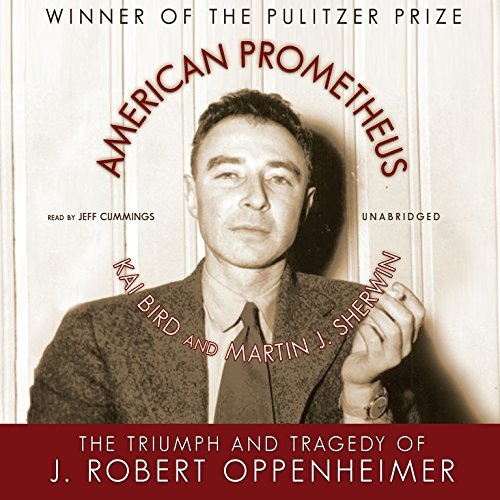
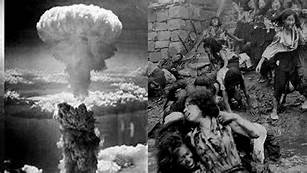
After the beginning of WWII, Bhattacharya notes von Neumann becomes a member of the “Manhattan Project” when contacted by J. Robert Oppenheimer. Because of von Neumann’s help with the British on the physics of shock waves and chemical explosives, Oppenheimer asked von Neumann to analyze the structure and altitude requirements of an atom bomb. Bhattacharya explains the atom bomb is an implosion device that is layered in different metals that have chemical reactions that emit neutrons toward the center of fissionable uranium which is meant to create an explosive chain reaction. The height of the explosion has an effect on the area of damage. Von Neumann’s experience and education are a perfect fit for that analysis. The rest is the history of war’s destruction and the Hiroshima and Nagasaki bombings.

The consequences of the zero-sum game theory of war.

After the war, von Neumann becomes a government and industry consultant. He was acquainted with Alan Turing and viewed the computer as a critical part of the world’s future. His experience with ENIAC made him understand its potential but, at the same time, its design limitations. Von Neuman simplified computer processing by creating the idea of a stored-program computer that led to a cache system of data retrieval that reduces the time it takes to get a computed answer. Von Neumann’s idea turns ENIAC into a library of information rather than a processor. Here is where patent issues are raised by two fellow developers named Eckert and Mauchly. They were working on the same design idea as von Neumann.

J. Presper Eckert and Alfred Eisenstaedt believe they were the first to originate stored-program computers.

Bhattacharya argues von Neumann deserves the credit but Eckert and Mauchly feel they were the true originators of a stored-program computer patent. Some would agree with Eckert and Mauchly. An earlier collaboration between Alan Turing and von Neumann is the basis for Bhattacharya’s belief in von Neumann’s origination.

Von Neuman is recruited in 1948 to work on military doctrine to be used in the event of a conflict between countries. A rather astounding conclusion from von Neuman’s game theory is to use the American nuclear arsenal to eliminate Russia because he felt Russia was an imminent threat to peace. He is alleged to have said “If you say why not bomb them tomorrow, I say why not today?” This became moot when von Neuman found Russia had their own nuclear weapons and would be able to retaliate.

Bhattacharya summarizes von Neumann’s game theory beliefs. Game theory applies mathematics to analyze how decisions are made by people competing to win.

In 1954, von Neumann is appointed to the Atomic Energy Commission but within a year he is diagnosed with bone cancer. One wonders if von Neumann’s exposure to radioactive fallout from the atomic tests he witnessed on the Bikini atoll.

The last chapters of Bhattacharya’s book are terrifying. Nearing death, von Neumann speculates on the valuable discovery of the structure of DNA and suggests it is the missing link for the future of cellular level replication of artificial intelligence.

Bhattacharya reveals the two-dimensional creations of computer game theorists that focus on a replicating code that simulates creation of life. This is a fear that some scientists suggest will create an alternative form of life that will compete with human existence.

A listener who understands life comes from the evolution of DNA over centuries and has resulted in the strengths and weaknesses of who we are today, thinks machine coding that does the same may create a competitor to life as we know it. This is the essence of the concern some scientists have about the growth of artificial intelligence.

Bhattacharya biography of John von Neumann being “The Man from the Future” rings loud and clear. It reminds one of Oppenheimer’s quotes from the Bhagavad Ghita after the first test of the atom bomb–“I am become death, the destroyer of worlds.”

A GOOD LIFE

Audio-book Review
           By Chet Yarbrough

(Blog:awalkingdelight)
 Website: chetyarbrough.blog

A Life of My Own

By: Claire Tomalin

  Narrated by: Penelope Wilton

Claire Tomalin (British author and journalist.)

“A Life of My Own” introduces Claire Tomalin to those who do not know her. Born in London, and educated in English grammar schools, Tomalin graduates from the University of Cambridge to become a writer.

Tomalin meets and marries a fellow Cambridge student named Nicholas Tomalin who becomes a successful journalist. He is killed on assignment while reporting on the Arab Israeli war.

As a listener/reader one appreciates Tomlin’s writing. As a respected biographer, Tomalin illustrates the importance of honesty in writing about one’s life story.

Tomalin writes with candor and detail that make one believe what she writes. Tomalin has written several biographies of famous people like Mary Wollstonecraft, Charles Dickens, Thomas Hardy, Jane Austin, and Samuel Pepys. References she makes to her research for earlier biographies assures listeners of her diligence in revealing her own life. How well we know ourselves is always a question, but the facts Tomalin reveals suggest she, like Bronte’s “Jane Eyre”, is a woman of substance.

As with all who have lived a long life, Tomalin experiences good and bad fortune.

She is raised by a father and mother who love her but divorce. As a child growing up, Tomalin mostly lives with her mother who cares for her. However, as a single mother, the two undoubtedly struggle to make a living. Her father remains a part of Claire Tomalin’s life but seems only later to provide some level of trust and security in their relationship.

There seems a great deal of love but a sense of frailty and insecurity in Claire Tomlin’s life with her mother. Her mother is a musician and unpublished composer who works at odd jobs to support their life together. Most divorced wives recognize how difficult it is to lose one/half (usually more) of a family’s income when divorced.

Claire Tomalin’s life enters a new phase when she marries Nicholas Tomalin. Because of Nicholas’s job, he is away from home on assignments. Claire pursues her own career. They separate. They come back together. Nicholas is tragically killed while on a 1973 news assignment to report on the Arab Israeli war.

At some point in Claire Tomalin’s marriage, the man she married becomes physically abusive. Tomalin explains her husband is a bon vivant who attracts other women’s attention.

Claire Tomalin is left with five children, three daughters and two sons. She publishes her first book in 1974 (“The Life and Death of Mary Wollstonecraft). She becomes the literary editor for the “New Statesman” and “The Sunday Times”. Her mother dies. Her father dies. One of her sons is born prematurely and requires special aid. A daughter commits suicide. She manages through it all and marries the novelist and playwright Michael Frayn in 1993.

She continues to write into her late 80s. Along the way, she meets some of the greatest writers and authors of modern times. As with anyone who lives into their 90s, it seems Claire Tomlin has had an eventful and good life, but it required grit and determination. Something one cannot help but admire is that Tomalin is a woman of substance.

BEING BRILLIANT

Audio-book Review
By Chet Yarbrough

(Blog:awalkingdelight)
 Website: chetyarbrough.blog

You Can’t Be Neutral on a Moving Train: A personal History of Our Times

By: Howard Zinn

Narrated by: David Strathairn

Howard Zinn (1922-2010, died at age 87, Author, Historian, Pacifist.)

Howard Zinn’s personal biography suggests being brilliant does not mean being good. Zinn is a controversial historian who grew up during the depression. He became a famous anti-war activist during Vietnam and wrote a controversial book about American history.

Zinn characterizes his family as poor with a father and mother who were factory workers with little formal education. He tells of his early life and how it influenced his political and social beliefs. He joins the Army Air Force during WWII and becomes a bombardier. That experience reifies Zinn’s early anti-war beliefs that become a consuming passion during Vietnam.

In some ways, Zinn’s enlistment in the Air Force seems a contradiction but the fascist nature of Nazi Germany, subsequent realization of the holocaust, and his Jewish heritage undoubtedly influence his decision to join the military.

Zinn’s role in bombing civilians creates an ambivalence about WWII; particularly when the atom bomb is dropped on Japan.

“You Can’t Be Neutral on a Moving Train” is a codification of Zinn’s ambivalence. Zinn suggests there is no “Good War” (as WWII is sometimes characterized) because bombing of civilians, even in a war against fascism, is a step too far.

One wonders what Zinn would write about the Russia-Ukrainian war?

Howard Zinn’s fundamental objection to WWII is American bombing of innocent citizens of Germany and Japan. Now, it is the indiscriminate bombing of innocent citizens by Russia in Ukraine.

America did not militarily enter WWII when Poland was invaded. Similarly. America has not militarily entered the Russia-Ukraine war. However, in both circumstances America financially invested in a western alliance against war. Eventually that financial investment turned into American military participation. One wonders how Zinn would view America’s financial investment in the Russian-Ukrainian war. Is our investment a prelude to military intervention?

Returning to the biography, the nuclear attack on Japan is considered barbaric and unjustified by Zinn.

Some, like President Truman reason the Hiroshima and Nagasaki bombings avoided loss of thousands of Americans and Japanese that would have been killed in an invasion of Japan.

A question is whether those thousands are different than the thousands killed immediately and later from radioactive fallout? To some Americans, the answer is yes because none of the added deaths would have been American. Presumably, Zinn would say using an atomic bomb is a step too far.

Zinn survives WWII and uses the GI Bill to get a college education. He becomes a professor at Spelman College, a Black women’s college in Atlanta, Georgia.

Roslyn Zinn (1922-2008, Artist, Activist, Social Worker, Teacher)

Howard Zinn and his wife live in a low-income, largely Black neighborhood.

The Zinn’s become political activists for equal rights. In the 50s and early 60s, the Zinn’s become acquainted with SNCC (Student Nonviolent Coordinating Committee) and civil rights activism in the South.

Later, Zinn tells the story of his life as a professor at Boston University. He becomes a tenured professor, having written some novels and a controversial academic book about American history.

In his life at the University, Zinn continues political activism against the war in Vietnam. This is in the 70s. Nixon is bombing North Vietnam and Cambodia in an effort to get Ho Chi Minh to the table for a negotiated peace. Daniel Ellsberg becomes one of Zinn’s acquaintances. Zinn also becomes friends with Reverend Daniel Berrigan and his brother who become jailed activists because of the Vietnam war.

Daniel Ellsberg (analyst who became famous for Pentagon Papers disclosure about American government lies about Vietnam. Shown here at age 91.)

Daniel Joseph Berrigan SJ (May 9, 1921 – April 30, 2016) on the left–an American Jesuit priest, opposed the Vietnam war, (1923-1979 his brother Phillip equally opposed the war.)

A theme of Zinn’s anti-war story is reflected in his experience at Boston University in conflicts with the President of the University. Zinn’s reputation with students is characterized as a highly popular. That popularity and his political activity put him in direct conflict with the President of the University.

John Silber is the seventh President of Boston University. He is from Texas but earned a PhD in philosophy from Yale University. Though Zinn does not mention this, Boston University is having financial problems at the time of Silber’s hiring. Zinn’s story is that Silber is overpaid for his work and disliked by several professors and their staffs.

Zinn characterizes Silber as a misogynist who denies tenure to women professors. A female professor takes Silber to court over denial of tenure. She wins her case, and the Judge requires Silber to give her tenure. The judge fines the University and orders a $200,000 settlement for Silber’s unfair treatment. (Despite Zinn’s proof of Silber’s misogyny, a brief review of Silber’s Boston University’ history suggests the faculty and financial picture of the school substantially improved under Silber’s management.)

The fundamental point made by Zinn is that history is filled with brilliant political, military, and academic leaders but they, like all of us, are flawed human beings.

Misogyny, inequality, and war are unforgivable human tragedies to Zinn and most rational human beings. It seems the smart ones are the greatest perpetrators of these tragedies.

Brilliance takes many forms. No leader of any country is dim witted. Each has their own kind of brilliance, or they would not be leaders.

EDUCATION AND FREEDOM

Audio-book Review
           By Chet Yarbrough

(Blog:awalkingdelight)
 Website: chetyarbrough.blog

Journey to the Edge of Reason (The Life of Kurt Gödel)

By: Stephen Budiansky

Narrated by: Bob Souer

Stephen Budiansky (American writer, historian, and biographer with B.S. in chemistry and S.M. in applied mathematics, Yale and Harvard.)

Stephen Budiansky offers a biography of one of the greatest mathematicians of the 20th century. His name was Kurt Gödel.

Kurt Gödel (Logician, mathematician, philosopher 1906-1978.)

It is the biographic details and good writing that make “Journey to the Edge of Reason” interesting. Budiansky sets a table for what becomes Gödel’s life.

Budiansky explains the history of Austria before WWI and WWII. Gödel’s family lives an upper-middleclass life when their son Kurt is born. That lifestyle is interrupted by WWI and destroyed by WWII. In the mid-19th century, the Austro-Hungarian empire, particularly Vienna, is a center for education and culture in Europe. Unlike much of the continent, equality of opportunity, regardless of religion and ethnicity, were available in the Austro-Hungarian’ capitol of Vienna. For a short time, Vienna became a magnate for Jewish immigrants seeking education and opportunity.

Emperor Franz Joseph I of Austria (Emperor of Austria, King of Hungary 1848-1916)

When the heir to Franz Joseph’s throne, Archduke Francis Ferdinand is assassinated, religious and ethnic difference becomes increasingly disparate and nationalistic. After WWI, it becomes impossible for the empire to stay together, but Vienna remains a cultural and educational center for Europe. It is in this environment that Gödel is born and formally educated.

The culture changed with the death of Emperor Francis Joseph I in 1916. The change began with Austria’s defeat by the German state of Prussia in 1866. Francis Joseph’s leadership required accommodation to hold the empire together, but seeds of discontent and discrimination were sown. The empire’s population is constituted by Austrians, Czechs, Croats, Serbs, Slovenes, and others, with different religious affiliations.

Gödel is an excellent student who attends studies among many who were increasingly discriminated against, particularly Jews. Though not Jewish, Gödel is not infected by growing anti-Jewish sentiment of the times. Budiansky reminds listeners that Hitler grows up in this Austrian Viennese environment.

WWII arrives and the Gödel family falls on hard times. Before the second world war, in 1931, Kurt Gödel develops the “incompleteness theorem” of mathematics. He is only 25. He is soon recognized by leading mathematicians for this foundational theory.

Kurt Gödel developed two theorems of mathematical logic that limit the provability of mathematics. One plus one makes two, but Gödel’s fundamental theories claim its truth is mathematically unprovable. To one steeped in mathematics that may make sense. To this reviewer, it does not.

Budiansky explains how Gödel eventually escapes Vienna at the beginning of WWII. He arrives at Princeton in 1940. Gödel becomes close friends with Einstein and Oskar Morgenstern. Budiansky notes how instrumental other geniuses, like John von-Neumann, were in advancing Gödel’s career.

John von Neumann (1903-1957, Hungarian American mathematician, physicist, computer scientist, engineer and polymath with an eidetic memory.)

A striking fact in Budiansky’s biography of Gödel is how many geniuses came to America from the Austro-Hungarian Empire. Without its education system, the Viennese equal opportunity, and the attraction of western freedom, the advance of science and its role in the world would be diminished.

Gödel’s life story revolves around math and its provability limits. Gödel’s life waivers between paranoia and accommodation with periods of terror and intermittent tranquility. Gödel’s paranoia is relieved at times and Budiansky notes his friends recognized his genius while noting his episodic behavioral abnormality.

A listener begins to believe Gödel’s personal life becomes defined by a consciousness of unprovable actions and intentions of others, exacerbated by events over which he has little control.

A surprising sidelight to Budiansky’s biography is Gödel’s odd marriage to what Budiansky characterizes as an uneducated Austrian woman named Adele.

Budiansky explains Adele saves Gödel’s life by bringing him back to reality when he nearly starves himself to death with a paranoid belief that someone is trying to poison him.

Gödel takes daily walks with Einstein. Their walks are legendary according to Budiansky.  They were frequently seen together at Princeton. Einstein recognizes Gödel’s paranoia for what it is but acknowledges the brilliance of his understanding of mathematics, its logistic continuity, and its limitation.

There often seems a fine line between genius and normality. One is reminded of the unheralded Paul Dirac who is compared by some to Einstein but, because of his isolationist behavior, is largely unknown to the general public.

As a non-mathematician one may not understand the importance of Gödel’s theory, but Budiansky does a great service to the public by writing Gödel’s biography.