

Books of Interest
Website: chetyarbrough.blog
Waste Land (A World of Permanent Crises)
By: Robert Kaplan
Narrated By: Robert Petkoff
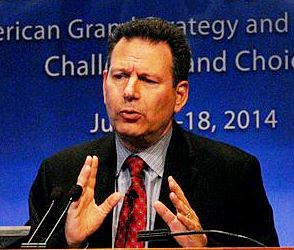
Robert D. Kaplan (Author, writer for The Atlantic, Washinton Post, New York Times, The New Republic, Foreign Affairs, and the Wall Street Journal)
Robert Kaplan’s book makes one pessimistic about the future of democratic government. The wars in Gaza and Ukraine, along with the re-election of Donald Trump, and the economic retrenchment of Xi in China reinforce some of the themes of Kaplan’s “Waste Land”. One who reads or hears national news understands why Kaplan argues there is a growing decline in Russia’s, China’s and America’s governments. He argues the cause of that decline is increased world interconnectedness, and rising government instability. His biggest concern is what he believes is a nascent parallel to the rise of Naziism.

The advent of the internet has been a mixed blessing because it is used to spread false information as well as the truth.
The consequence has been to make societies more polarized. An example is a widespread opinion by Trump appointees that the rise in the number of government employees is wasting taxpayer dollars for public education, science research, foreign aid, veterans’ affairs, the national park service and the IRS. (For example, an estimated 76,000 employees–16% of the work force has been discharged from Veterans Affairs. The VA provides healthcare services for eligible veterans, handles disability compensation, pensions, education assistance, like the GI bill, and home loans to citizens who have honorably served America.) These reductions in workforce are not based on any analysis of work performance but solely to reduce the cost of government. Trump, like Xi and Putin, believe Thucydides’ observation that “The strong do what they can and the weak suffer what they must”.

Trump’s firings are being done by an appointed agent of the President who decimated the work force of Twitter in the same way he is arbitrarily discharging American government employees.
Kaplan argues today’s political atmosphere in America, Russia, and China are similar to the societal condition of Germany before the rise of Hitler. He points to the fragility of authoritarians and the rise of societal polarization in today’s world. He compares economic instability, social discontent, and political extremism of the Weimar Republic to what he implies is a growing condition in both Western democracies and Eastern autocracies. The last chapters of Kaplan’s book focus on urbanization of the world and its consequent polarization of society that is deconstructed governance in a way that reminds him of the Weimar Republic’s deterioration. He infers Trump’s re-election, the dismantling of the American government, and America’s social disruption is similar to what happened in Germany in the early 1930s.
An example of the disruption of which Kaplan writes is the Venezuela immigrants who were flown to El Salvador and frog-walked to an El Salvador prison without adjudication by America’s judicial system.

Kaplan’s argument is that President Trump is destabilizing the American government by violating the Constitution of the United States.
A federal judge ordered a plane full of alleged immigrants (identified as gang members) to be returned to the United States. The plane was in the air when the President in apparent defiance of a direct court order chose to not have the plane turned around. The deported were filmed as they were frog-walked into a foreign jail while being denied any hearing or adjudication of their alleged criminality. The President of the United States appears to have ignored a Federal Court, the Third Branch of American government, designed to balance arbitrary actions of either a President or Congress for denying due process of law.

America re-elected Trump despite his conviction on 34 counts of falsifying business records for paying “hush money” to Stormy Daniels when first elected in 2016.
Though Trump’s conviction does not rise to the level of Hitler’s high treason in the failed Beer Hall Putsch, willingness to lie under oath is a troubling characteristic for a President, let alone, any citizen of the United States. According to news reports, Trump says he did not know he had been asked to turn the plane around by a Federal Judge. One might ask why should America believe what he says?
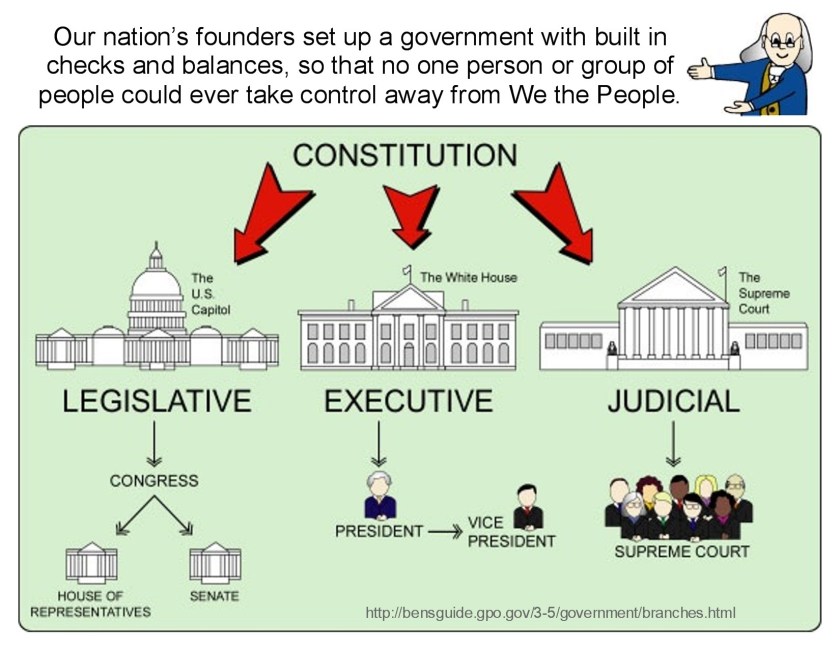
Trump is challenging the authority of Congress and the Judiciary by taking actions without consideration of the Constitution of the United States.
This reminds one of human rights violations in the early days of Hitler’s rise in Germany. Hitler gathered sympathizers from disillusioned veterans, business leaders, the middle class, the German youth, and Far-Right Nationalists. Trump appears to have had similar support in his re-election. Trump decides to pardon all January 6, 2021, U.S. Capitol attackers. Those pardons are a diminishment of American democracy akin to Hitler’s support of Nazi sympathizers.

Attack on the Capitol on January 6, 2021–Trump pardons all attackers on 1/20/25, after being re-elected as President of the United States.
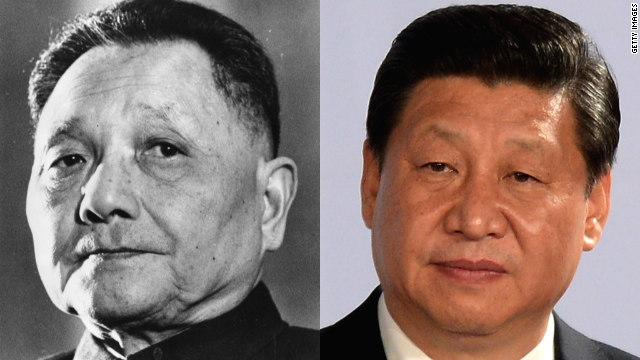
Deng led a transformative change in China’s economy after Mao’s death. With a pragmatic judgement that “It doesn’t matter whether a cat is black or white as long as it catches mice”
In the last third of Kaplan’s book, the incredible success of China under Deng Xiaoping is addressed. Kaplan explains Deng became the leader of China between 1978 and 1989. Though Deng was a contemporary leader during the Mao administration, Deng led a transformative change in China’s economy after Mao’s death. With a pragmatic judgement that “It doesn’t matter whether a cat is black or white as long as it catches mice” he opened China to the pursuit of personal, and individual citizen’ prosperity. The result of Deng’s pragmatism was the unprecedented economic growth and wealth of China. Much of what Deng started has been reversed by the Xi administration. In Kaplan’s opinion, the resurgence of the communist party has led to a reversal of economic growth in China. Kaplan infers a return to collectivism is a reflection of societal interconnectedness with a government-controlled internet that denies freedom of thought and action by China’s citizens.


Kaplan refers to Jane Jacobs (1916-2006) and the urbanization of America. He notes Oswald Spengler (1929-1936) recognized the implication of urbanization is government deterioration as a part of the natural lifecycle of every civilization. The point Kaplan makes is that nation-states have become like the early cities Jacobs refers to but with an interconnectedness that accelerates and shortens government lifecycles. Robert Kaplan’s inference is that all nation-state governments are being challenged by an increasingly polarized society caused by internet connectedness. The question is whether Trump is a symptom or cure for the decline of America.

 REVIEWS AND VIEWS OF LIFE
One thought on “GOVERNMENT LIFE CYCLE”