
Books of Interest
Website: chetyarbrough.blog
Homo Deus (A Brief History of Tomorrow)
By: Uval Noah Harari
Narrated By: Derek Perkins

Yuval Noah Harari (Author, Israeli medievalist, military historian, science writer.)
By any measure, Yuval Noah Harari is a well-educated and insightful person who will offend some and enlighten others with his opinion about religion, spirituality, the nature of human beings, and the future. He implies the Bible is a book of fiction that is historically proven to have been written by different authors with contradictions that only interpreters can reconcile as God’s work.
“Homo Deus” is a spiritual book suggesting humanity is on its own and has a chance to survive the future but only through the ability of human understanding and effort.
To Harari, the greatest threats to society are national leaders who believe in God, heaven and eternal life who discount human existence and use of science to improve human life on earth. The irony of Harari’s belief is that humanist leaders are the only hope for human life’ survival.
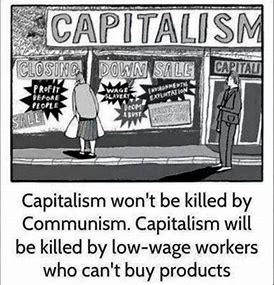
Harari argues science, free enterprise, and the growth of knowledge offer the best hope for the future of human life.
Neither capitalism nor communism are a guarantee of survival because of the increasing potential for error as human beings become more God-like. Advances in engineering, artificial intelligence, and biotechnology may replace the happenstance of human birth. The value of free enterprise is evident in the agricultural, industrial, and technological revolutions of history. However, as science improves the understanding of the mind and body of human beings, the technology of biogenetics offers hope for the future while running the risk of biological error with unforeseen consequences.
Harari’s book is the brave new world written about by Shakespeare in the 17th century and reimagined by Aldous Huxley in his 1932 dystopian novel “Brave New World”.
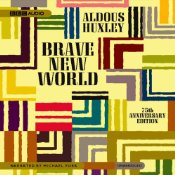
On the one hand, Shakespeare offers a positive spin as his character, Miranda, sees people from outside her experience and says “How beauteous mankind is! O Brave! That has such people in’t”. While Huxley notes a future society that becomes conformist and lacks individuality and human emotion. Which way society will turn is unknown.

The conformist demands of collective ownership of property and means of production by communism impede creativity. Capitalism is more creative and dynamic. However, capitalist incentive raises the specter of human nature that only sees financial gain without any concern for environmental or human cost. On balance, capitalism appears more likely to accelerate technology because communism more often follows than changes scientific direction.
The growth of knowledge comes from science and exploration of the unknown, but its use can be destructive as well as constructive.

Some think A.I. will lead the world to greater knowledge and prosperity while others believe it will destroy human life. A sceptic might suggest both views are wrong because A.I. is only a tool for recalling knowledge of the past to help humans make better decisions for the future. The real risk, as it has always been, is human leadership.

Harari believes, like Nietzsche, that God is dead because belief in God is losing its power and significance in the modern world.
Though many still believe in God, it seems more people are viewing God as a myth. The Pew Research Center reports a median of 45% of people across 34 countries still believe in God. However, the variation is wide with Brazil saying 70% believe while in Japan the percentage is only 20%. Harari implies belief in God is in decline.
Harari explains biophysics illustrates that human thought is algorithmic. He argues our thoughts, decisions, and behaviors can be understood to be a result of patterns created in human brains that are pre-determined. There is no “free-will” in Harari’s opinion. This is not to suggest aberrant behavior does not exist, but that human thought and action is determined by our experientially defined brain in the same way a computer is programmed. Experience from birth to adulthood is just part of a mind’s programming.
Harari implies understanding of brain function will change the world as massively as the Agricultural, Industrial, and technological revolutions.

Harari goes on to suggest humans have never been singular beings, but a multitude of beings split into two brains that mix and match their biogenetic and biochemical programming to think and act in pre-determined ways. Experiments have shown that the way the left half of a human brain sees and compels action is different than how the right brain sees and compels action. Each half thinks and acts independently while negotiating a concerted action when both halves are functioning normally. That negotiation between the two brain halves results in an algorithm for action based on the biochemical nature of the brain. The way two halves of the brain interact multiply the person we are or will become.

Extending Harari’s idea of biophysics research and algo-rhythmic programming suggests a potential for immense changes in society. A singularity that melds A.I. with human brain function and algo-rhythmic programming may be tomorrow’s world revolution. Of course, that capability cuts both ways, i.e., for the good and bad of society. Interestingly, Harari paints a grim picture of the future based on an A.I. revolution.

 REVIEWS AND VIEWS OF LIFE