

Books of Interest
Website: chetyarbrough.blog
The Female Persuasion (A Novel)
By: Meg Wolitzer
Narrated By: Rebecca Lowman

Meg Wolitzer (Author)
Many “sexual awakening” books of the past are about men and boys. Nabokov’s Lolita, Lawrence’s “Lady Chatterley’s Lover, Baldwins “Giovanni’s Room” to name three. “The Female Persuasion” gives listener/readers a glimpse of what “sexual awakening” is for girls. That is not to say “The Female Persuasion” is only about sexual awakening. Wolitzer’s story illustrates there is little difference between young men’s and women’s interest in sex and their ambition for success in an adult world.
“The Female Persuasion” gives voice to the equality of women despite historical misogyny.

Two women roommates at a fictional college talk about their lives and explain their frustration with unequal treatment in society. One has sexual relations with women, the other with men but each feel their opportunities in life are limited by being women in a Mans’ world. Greer Kadetsky complains to the University about a male student who sexually assaults her and is ignored by the administration. She is characterized as an intelligent woman who is eligible for admission to Yale but is rejected because of her parents’ mistakes on a financial disclosure form about scholarship assistance. Her unhappiness about not getting into Yale is compounded by the student assault she reports that is essentially ignored by the local college she attends.
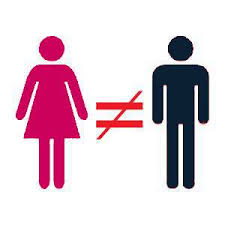
Men and women are equal and should be afforded all the rights and opportunities available to men.
The heroine of the story has a boyfriend, Cory Pinto, whom she met in high school. They became lovers at some point in their relationship. She notes in a college dorm where her boyfriend undresses her and expresses admiration of her body. She appreciates her lover’s comment. The author’s perception of beauty reinforces the similarity between men and women and their sexuality. Beauty is in the eye of the beholder, whether male or female, but every person appreciates positive comment about their appearance.
Another element of interest in “The Female Persuasion” is a reinforcement of the saying “Birds of a feather flock together”. Cory and Greer come from lower middleclass families while showing higher than average intelligence in high school that leads them to a college education. After graduation, Cory and Greer move-in together with Cory finding a job while Greer volunteers at a non-profit while pursuing a writing career. Is it a surprise that a person with a college degree has a hard time finding a job after graduating? No, but it seems men are luckier, or one might conclude men are beneficiaries of a built-in gender bias.
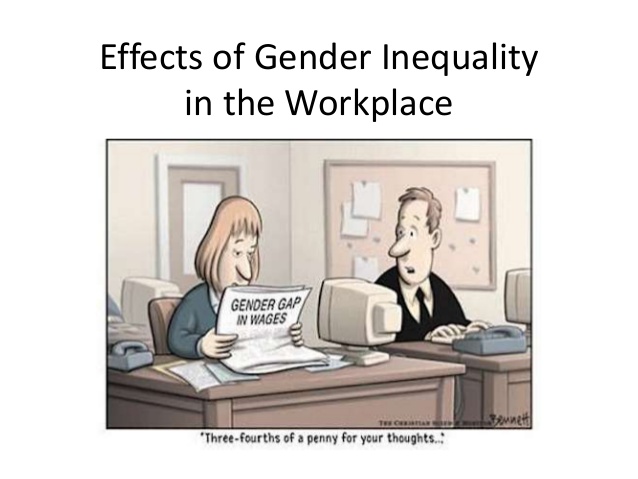
Not to read too much into Wolitzer’s story, it seems most job opportunities are better for men than women.
Greer has a chance meeting with a feminist who speaks at the university she attends. In that serendipitous contact, Greer makes a positive impression on the speaker. After graduation, Greer is contacted by the famous feminist with a possible job interview. However, the potential employer dies, and the interview never happens. Meanwhile, Cory has found a job and is pursuing his career. Greer is living at home with her parents to cut down on expenses.

Greer is contacted by a New York feminist organization and is offered an interview that results in a job in New York.
Cory is working outside the country for his company, but the couple continues a long-range relationship. Greer is gaining some success and experience in her job. An interesting incident is noted that gives listener/readers insight to women’s competitiveness when Greer exhibits reluctance to show a letter to her employer for her former gay friend looking for a job. Greer chooses not to proffer the letter to her employer and lies to her friend about having given it. This seems a petty incident, but it is present in all human beings, i.e., the feeling that a person who has found their step on the ladder of success should care about others when they might be competing with them if they go to work for the same company. This seems a matter of personal ambition, not a gender or sexual orientation issue.
The end of the book offers an unsatisfying “bow tie”. The ending has a fairy tale quality that will appeal to some, but the real world is different. Life happens, jobs change, people’s relationships fall apart; some mend, others do not. The eradication of inequality is in the eyes of beholders. We are mere humans struggling to be better than we are.

 REVIEWS AND VIEWS OF LIFE