

Books of Interest
Website: chetyarbrough.blog
Washinton Black (A Novel)
By: Esi Edugyan
Narrated By: Dion Graham
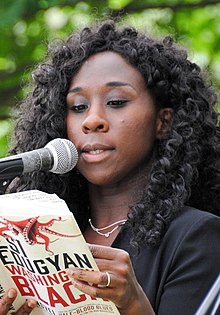
Esi Edugyan (Canadian novelist, two-time winner of the Giller Prize for “Half-Blood Blues” and “Washington Black”, the Giller Prize is a Canadian literary award of $100,000 for the winner.)
“Washington Black” is about a young slave growing to adulthood in the 19th century. It begins on a Barbados sugar plantation and ends in England and Morrocco after a journey that stretches one’s imagination to its limits.
“Washington Black” is an imaginative journey but it steps a bit too far when the author writes of a steerable airship carrying its two passengers into an Atlantic Ocean storm that luckily lands on a slave trader’s vessel instead of plunging into the ocean.
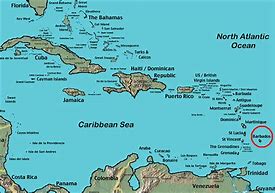
Despite Edugyan’s implausible rescue of Washington Black and his white English protector, there is enough interest in the main characters to keep listeners listening and readers reading. At five years of age, Washington Black who is called Wash, is rescued by a tall black slave named “Big Kit”. None of the slaves on the Barbados sugar plantation mess with Big Kit. Only the “big boss”, the manager of the plantation is powerful enough to bloody her nose without being intimidated. Big Kit becomes Wash’s protector. Wash has no idea who His real mother is, but Big Kit becomes his early guide through life.

When Wash reaches the age of 10 or 11, the plantation is visited by Christopher “Titch” Wilde who is the brother of Erasmus Wilde, both of which are the sons of John Wilde, a famous explorer-scientist who travels the world. “Titch is somewhat of a scientist himself. He meets with Wash and decides it would be good to have Wash as his aide while he pursues his scientific research.
Erasmus Wilde has responsibility for running the plantation which he dislikes but is ordered to because it supports the Wilde wealth for their father’s research. Erasmus and Titch have an older brother named Phillip that comes to the plantation to see his brothers. Phillip kills himself in front of Wash, presumably so Wash can show the brothers where his body can be found. Wash is devastated by the suicide and brings “Titch” to the site where it occurred. “Titch” realizes Wash will be accused of murdering the brother. “Titch” has found Wash to be a natural artist and can produce documentation for some of his science research. He does not want Erasmus to take Wash away and makes plans to escape. The escape is in the dirigible mentioned earlier.
The adventures of Wash accelerate from here.
As “Titch” had expected, Erasmus accuses Wash of murdering their older brother.

Both Wash and “Titch” become fugitives. The suicide of Phillip is a “red flag” that suggests the Wilde family is, at the very least, psychologically troubled. Those troubles revisit the Wilde family with events of the father, mother, Erasmus and “Titch”.

Titch’s father is declared dead because of a mistaken belief that a storm in Alaska killed him. He was not dead but chose to stay in Alaska despite the public reports of his death.
The father makes no effort to correct the mistake of his reported death. “Titch” finds that out and travels with Wash to find his father. His father is glad to see his son but is not inclined to return to civilization because of a comfort he feels in his new environment. “Titch” is pushed over the edge by his father’s lack of concern about others, including “Titch”, his mother, and remaining brother. “Titch” abandons Wash just like his father abandoned everyone in the family. “Titch” disappears in a storm and presumably dies. The father actually dies while Wash is there. Wash chooses to return to civilization and becomes a free man or at least a man who is free of slavery.
More surprises come toward the end of Edugyan’s story as Wash grows to manhood, but the author stretches one’s imagination a little too far for those who will be entertained by her creativity but disappointed by its implausibility.

Edugyan makes one wonder if anyone is truly free. Are we only programed by genetics and our experiences in life?
Every human being has their own story. Are we free if we choose to be free or are we simply programmed?

 REVIEWS AND VIEWS OF LIFE