

Books of Interest
Website: chetyarbrough.blog
Automating Inequality (How Hich-tech Tools Profile, Police, and Punish the Poor
By: Virginia Eubanks
Narrated By: Teri Schnaubelt
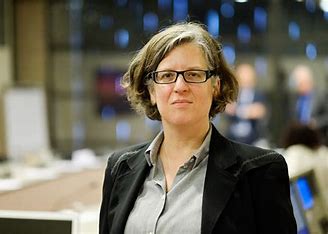
Virginia Eubanks (Author, American political scientist, professor at the University at Albany, New York.)
At the risk of sounding like a “bleeding heart” liberal, Virginia Eubanks assesses the inefficient and harmful effects of technology on welfare, childcare services, and homelessness in America. Eubanks illustrates how technology largely reduced the cost of Indiana’s welfare. However, cost reduction came from removing rather than aiding Americans in need of help. She shows southern California is better organized in the 2000s than Indiana in their welfare reform movement in the 1990s. However, the fundamental needs of the poor and homeless are shown to be poorly served in both jurisdictions.
In the last chapters of the book, Eubanks looks at Pennsylvania’s childcare services (CCW). She argues her research shows digitization of personal information, societal prejudice, and inadequate financial investment as fundamental causes of America’s failure to help abused children. Eubanks implies the cause of that failure is the high-tech tools of the information age.
Eubanks offers a distressing evaluation of Indiana’s, California’s, and Pennsylvania’s effort to improve state welfare programs.

The diagnosis and cure for welfare are hard pills to swallow but Eubank’s research shows welfare’s faults without clarifying a cure. She clearly identifies symptoms of inequality and how it persists in America. Eubank infers America’s politicians cannot continue to ignore homelessness and inequality. America needs to reinforce its reputation as the land of opportunity and freedom. Eubank implies technology is the enemy of a more equal society by using collected information to influence Americans to be more than self-interested seekers of money, power, and prestige.

Eubank explains how Indiana welfare recipients were systematically enrolled in an information technology program meant to identify who receives welfare, why they are unemployed, and how they spend their money.
She argues this detailed information is not just used to categorize welfare recipients’ qualifications for being on welfare. The purported reason for gathering the information is to help those on welfare to get off welfare and become contributors to the American economy. What Eubank finds is the gathered information is used to justify taking citizens off of welfare, not improve its delivery. Poorly documented information became grounds for denying welfare payments. If someone failed to complete a form correctly, their welfare payments were stopped. The view from government policy makers was that welfare costs went down because of the State’s information gathering improvements. In reality welfare costs went down because recipients were rejected based on poorly understood rules of registration. Indiana did not have enough trained management personnel to educate or help applicants. Welfare applicants needed help to understand how forms were to be completed and what criteria qualified them for aid.
From Indiana State’s perspective, information technology reduced their cost of welfare. From the perspective of Americans who genuinely needed welfare, technology only made help harder to receive.

Eubank notes there are three points that had to be understood to correct Indiana’s welfare mistakes:
- information algorithms qualifying one for welfare must be truthful, fair, and accurate,
- the information must reflect reality, and
- training is required for welfare managers and receivers on the change in welfare policies.
Another point made by Eubank is the danger of computer algorithms that are consciously or subconsciously biased. A biased programmer can create an algorithm that unfairly discriminates against welfare applicants that clearly need help. This seems a legitimate concern, but Eubank misses the point of more clearly understanding the need of welfare for some because of the nature of American capitalism and the consequence of human self-interest. Contrary to Eubank’s argument, digitalization of information about the poor offers a road to its cure not a wreck to be avoided.

WELFARE CATEGORY ELIGIBILITY PERCENTAGES IN INDIANA
Eubank tells the story of a number of Indiana residents that had obvious medical problems making them unemployable but clearly eligible for welfare payments. They are taken off welfare because of mistakes made by government employees’ or welfare recipient’ misunderstandings of forms that had to be completed. From the government’s standpoint Indiana’ welfare costs went down, but many who needed and deserved help were denied welfare benefits. The rare but widely publicized welfare cheats became a cause celeb during the Reagan years that aggravated the truth of the need for welfare in America. The truth, contrary to Eubanks opinion, becomes evident with the digitization of information as a basis for legislative correction.

Eubank notes Skid Row in Los Angeles lost many of its welfare clients with gentrification of the neighborhood. The poor were moved out by rich Californians who rebuilt parts of Skid Row into expensive residences.
Eubank explains a different set of problems in the Los Angeles, California welfare system. The technological organization of the LA welfare system is better but still fails to fairly meet the needs of many citizens. The reasons are similar to Indiana’s in that algorithms that categorize information were often misleading. However, the data-gathering, management, and use of information is better. The more fundamental problem is in resources (money and housing) available to provide for the needs of those who qualify for welfare. It is not the digitization of the public that is causing the problem. Contrary to the author’s opinion, digitization of reality crystalizes welfare problems and offers an opportunity for correction.
Homelessness is complex because of its many causes. However, having affordable housing is a resource that is inadequately funded and often blocked by middle class neighborhoods in America. Even if the technological information is well organized and understood, the resources needed are not available. Here is where the social psychology of human beings comes into play. Those in the middle class make a living in some way. They ask why can’t everyone make a living like they have? Why is it different for any other healthy human being in America? Here is where the rubber meets the road and why homelessness remains an unsolved problem in America.
People are naturally self-interested. One person’s self-interest may be to get high on drugs, another to steal what they want, others to not care about how they smell, where they sleep, look, live, or die. Others have chosen to clean themselves up and get on with their life. Why should their taxes be used to help someone who chooses not to help themselves? Understanding the poor through digitization is the foundation from which a solution may be found.

Traveling around the world, one sees many things. In India, the extraordinary number of people contributes to homelessness. In France, it is reported that 300 of every 100,000 people are homeless. Even in Finland, though there are fewer homeless, they still exist.
It is a complex problem, but it seems solvable with the example of what Los Angles is trying to do. It begins with technology that works by offering a clear understanding of the circumstances of homelessness. A detailed profile is made of every person that is living on the street. They are graded on a scale of 1 to 17 based on the things they have done in their lives. That grade determines what help they may receive. Some may be disqualified because of a low number but the potential of others, higher on the scale, have an opportunity to break the cycle of poverty with help from welfare. It is the resources that are unavailable and social prejudice, not gathered personal digital information, that constrain solutions.
With informational understanding of a welfare applicant, it principally requires political will and economic commitment by welfare providers. There is no perfect solution but there are satisficing solutions that can significantly reduce the population of those who need a helping hand. American is among the richest countries in the world. Some of that wealth needs to be directed toward administrative management, housing, mental health, and gainful employment.

Like all countries of the world, as technological digitization improves, human services will grow to become a major employment industry in the world.
America, as an advanced technology leader, has the tools to create a service economy that is capable of melding industrial might with improved social services.
Eubanks travels to Pennsylvania to look at their child services program.

What Eubanks finds in Pennsylvania is similar to what she found in LA and, to a degree, Indiana. Children who are at risk of being abandoned, abused, or neglected are categorized in a data bank that informs “Child Services” of children who need help. The problem is bigger than what public services can handle but the structure of reporting offers hope to many children that are at risk. Like LA, it is a resource problem. But also, it is a problem that only cataloging information begins to address.

Parents abuse their children in ways that are often too complicated for a standardized report to reveal. Details are important and digitization of personal information helps define what is wrong and offers a basis for pragmatic response.
Computerized reports, even with A.I., are only a tip of the reality in which a child lives. This is not to argue child-services should be abandoned or that reports should not be made but society has an obligation to do the best it can to ensure equality of opportunity for all. Every society’s responsibility begins with childhood, extends through adulthood and old age–only ending with death. Understanding the problems of the poor is made clearer by digitization. Without digital visibility, nothing will be done.
Eubanks gives America a better understanding of where welfare is in America. She is wrong to think digitization ensures a future that will create a permanent underclass. The next four years may not show much progress in welfare, but American history has shown resilience in the face of adversity.

 REVIEWS AND VIEWS OF LIFE