
Books of Interest
Website: chetyarbrough.blog
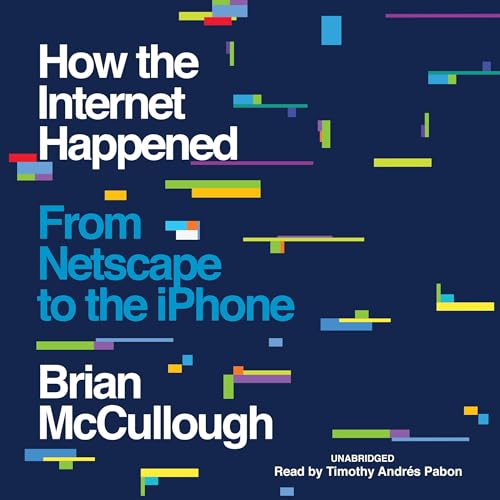
How the Internet Happened (From Netscape to the iPhone)
By: Brian McCullough
Narrated By: Timothy Pabon

Brian McCullough (Author, CEO of Resume Writers.com, entrepreneur.)
A book about the beginning of the internet is such old news, one is inclined to put this book aside. The internet was born in the 1960s and only became recognizable in the 1980s. However, even in 2024, it is interesting to hear about early users who became rich just by organizing information on an easily accessible and free media platform.
Like this blog, it is rewarding to write something that others are interested in reading.

The exercise of book reviews is a reward to one’s education and an ego boost for a writer from an audiences’ clicks. Brian McCullough tells the story of the founders of YAHOO, Jerry Yang and David Filo who were in college and became fascinated by the World Wide Web because of information it offered with clicks on a computer board. This was in the 1990s. Though there were many websites to choose from, they were disorganized and difficult to find if you were looking for specific information. Yang and Filo began organizing the websites by their offered information. YAHOO’S founders were looking for information of interest to them, and presumed others would like to know how they could use a keyboard to find information they might need or want.

Jerry Yang and David Filo were fascinated by what could be found on the internet.
They spent hours, days, weeks, months that grew into years organizing website addresses so others could find what was interesting to them. In these early years, making money was not their primary objective. They did not use their site to advertise products for income. They felt clicks were their reward and that clicks would be lost if advertisers were allowed to use their site. They chose to have users pay a fee to become members of their site. Their use and organization of the internet became an obsession for them and followers steadily increased. Their click numbers and users rose into the millions and advertisers were again knocking at their door. They resisted until they realized their idea could be worth something more than their interest in learning, gathering, and organizing knowledge. They relented, allowed advertising, and the clicks to their site kept on rising. YAHOO went public. The rest is history.

McCulloch goes on to describe the rise and fall of companies that capitalize on the internet.
The companies ranged from behemoth companies like Amazon, Microsoft, Google, Apple, and Ebay that rocketed to the stratosphere while Priceline.com, Netscape, Pets.com, Webvan and others plunged into the abyss. This is not to say today’s behemoths will continue to dominate the market or that some new company will replace their success with even greater appeal. A.I., like the internet, may be a killer discovery that makes or breaks today’s behemoths into tomorrow’s also-rans or hangers-on.

McCulloch’s history is interesting because it explains how winners understood the future better than losers understood the present.
It’s fascinating to find Apple’s Jobs resisted creation of the iPhone but employees worked secretly to refine the idea and Jobs eventually agreed. McCulloch also reveals the monopolistic nature of today’s winners and the threat they present to the future. Killer ideas of today’s tech companies capitalize on the internet’s information ubiquity, and how it can be organized to offer product to the world at a competitive price.
A.I. is a new idea that organizes information on its own with consequences to the public that are yet to be realized. Just as McCulloch’s history shows how the internet changed yesterday, it seems A.I. will change the future.

 REVIEWS AND VIEWS OF LIFE
2 thoughts on “CLICKS”