

Audio-book Review
By Chet Yarbrough
Blog: awalkingdelight)
Website: chetyarbrough.blog
The Long Game: China’s Grand Strategy to Displace American Order
By: Rush Doshi
Narrated by: Kyle Tait

Rush Doshi (Author, founding director of the Brookings China Strategy Initiative and a fellow in Brookings Foreign Policy, fellow at Yale’s Paul Tsai China Center.
Rush Doshi’s review of China’s history in “The Long Game” is enlightening. One cannot deny the truth and logic of Doshi’s explanation of China’s commitment and success in returning to international prominence. Doshi’s proficiency in Mandarin Chinese and his thorough review of China’s history give credibility and gravitas to his assessment.
Doshi explains China’s socialist belief is grounded in Leninist communist theory. Lenin believed in the Marxist principles of history and society that show materialism leads to human exploitation.
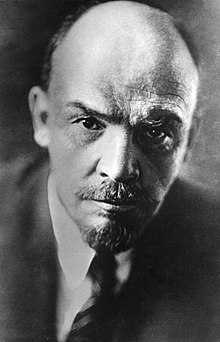
As the Marxist/Leninist argument goes, exploitation (materialist self-interest) will alienate the majority of society which will revolt against a capitalist ruling class. The belief is that a different form of leadership will rise from the ashes of a revolution that will more fairly distribute the riches of life. In China’s history, Mao is the leader of that revolution. The key to Mao’s, and now President Xi’s belief, is top-down leadership by an enlightened ruling class will raise China’s role in the world. Doshi infers President Xi and his 20th century predecessors believe a communist party’s domination will be the basis upon which a fair distribution of life’s riches can be achieved.

Doshi implies the fundamental conflict between China and the U.S. is political.
China believes in Leninist communism. America believes in democracy. The irony is that human self-interest defeats the idealist intent of both political beliefs. Top-down management of a communist party is potentially as damaging to the public as a democratically elected representative government because of self-interest. No communist or democratic government in the history of the world has resisted the lure of money, power, and prestige that accompanies political leadership. This is not to diminish the relevance and importance of Doshi’s book but to disabuse listeners of an undeserved idealization of any form of government.
Doshi gives a clear explanation of why China is suspicious and wary of American power and influence in the world.

Doshi identifies a trifecta of world events in the twentieth century that influence China/American relations; making it unlikely they will ever become allies. The trifecta is the Tiananmen Square massacre, the collapse of the U.S.S.R., and the invasion of Iraq.
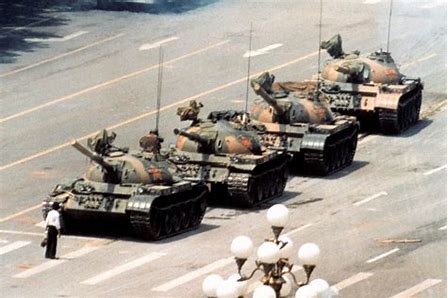
Deng Xiaoping was the Chairman of the Central Military Commission at the time. A secret mission by Brent Scowcroft, President George H.W. Bush’s National Security Advisor, made an effort to calm China/American relations but Doshi explains it failed. China objected to America’s interference and public rebuke of China in their response to the Tiananmen square demonstration.
The second blow to America’s relationship with China is the collapse of the U.S.S.R.
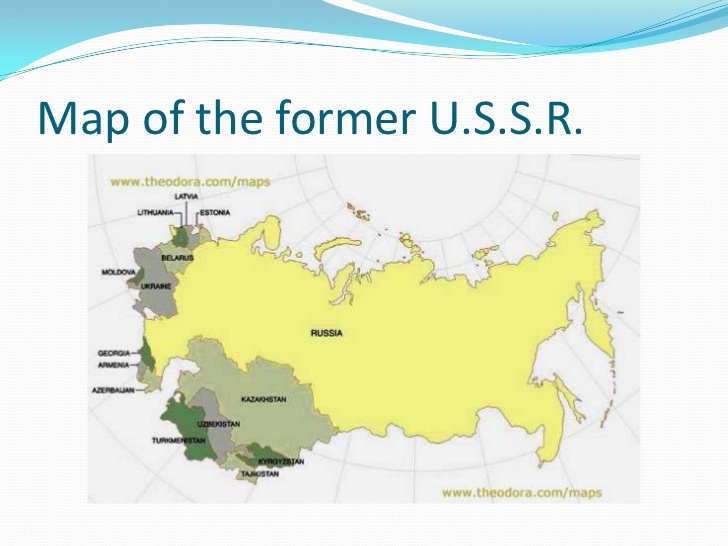
Doshi notes that China and America secretly cooperated in America’s U.S.S.R.’ containment policy that was recommended by American diplomat George Kennan in 1947. When the U.S.S.R. collapsed in 1991, China reassessed their relationship with America. Without a common enemy, China perceived America’s intent is to be hegemon of the world, not just the West. Doshi explains, China’s view of America becomes an imminent threat to its sphere of influence.

With President George W. Bush’s defeat of Saddam Hussein’s army in less than a month and a half, China recognizes how far they were from being the hegemon they wished to be. Doshi suggests this became the third blow of the trifecta that China perceived as an imminent threat to China’s position as hegemon of Asia, if not sole hegemon, of the world.
The irony of Doshi’s history is that no form of government has been found that fairly mitigates self-interest inherent in human beings.
Just as American leaders who have put their personal interest above the interests of their country, Chinese communist leaders have been found to be corrupt and more concerned about themselves than the lives of their country’s people. Both China and America have a history of discrimination and unfair treatment of their citizens.

History has many examples of the graft and corruption that exists in both communist and democratic forms of government.
China’s history and society is unique and much older than America’s. However, each country is struggling with their governments to be better stewards of their citizens. What all national governments of the world forget is that we live on one space ship. Without better international relations, the ship is headed for oblivion. Governments can continue to argue and fight over who is captaining the ship but no government seems to know how to steer.
Sadly, Doshi ends his scholarly work with details of how America can use the same methods as China to block its hegemonic ambition. Perceived self-interest, once again, chooses opposition over cooperation to achieve comity, not peace.

The evolution of political governance offers a kernel of hope for world peace. Until a form of government equitably manages human self-interest, periodic wars and social unrest will continue. Neither China nor America have found an answer. The answer is neither “Big Brother” nor unregulated freedom.

 REVIEWS AND VIEWS OF LIFE