
Books of Interest
Website: chetyarbrough.blog
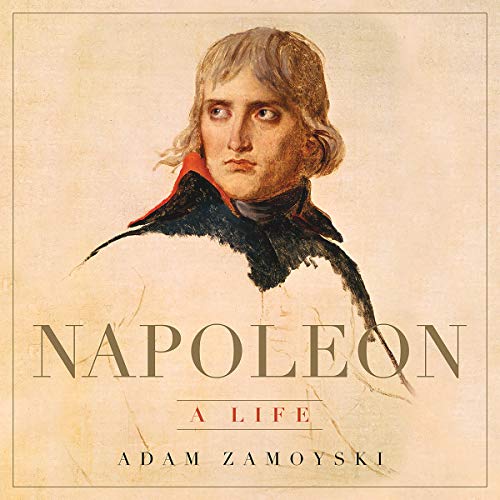
Napoleon (A Life)
By: Adam Zamoyski
Narrated By: Leighton Pugh

Adam Zamoyski (Author, British historian, descendant of Polish nobility.)
Adam Zamoyski overwhelms reader/listeners with Napoleon’s military campaign details which tempt amateur history buffs to put his book aside. Yes, there was the French revolution but understanding the role of Napoleon’s many military campaigns is too complex for an amateur’s understanding of France’s history. Napoleon’s relationship with famous movers and shakers of his time are important, but Zamoyski’s military campaign details are too much. Napoleon’s break with Paoli and Corsica’s ambivalent relationship with France is interesting but Paoli is a largely unknown person to the general public. International relations between France, Great Britain, Poland, Germany, Prussia, and Russia are left to history buff’s inadequate knowledge of history.
In a number of ways, Zamoyski’s biography of Napoleon is disappointing. It is a definitive biography of a legend, but Zamoyski’s history of Napoleon’s life is too complex for a lay audience.

To a historian, Zamoyski’s book is undoubtedly important but to an amateur it is too detailed. For a dilatant of history, the best one gets from the author is that Napoleon was a tactical genius, a great leader who oddly eschews domestic or war-related violence, while becoming among the greatest conquerors of nations in history. After his many campaigns, he turns his genius into a micro-manager of household concerns, international relations, and France’s disorganized governance. Without a military campaign, his tactical brilliance is wasted on vendettas, extra-marital liaisons, and personal expenditures. On the other hand, Napoleon creates a French financial system that supports a massive miliary force with over 60% of its national budget while reorganizing its government’ inefficiencies.
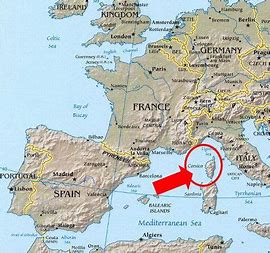
Napoleon descends from a royal family that endeavors to confirm its paternal and landed interests in Corsica. Not clearly coming from royalty is an obsession that follows Napoleon throughout his life. Since, 1769, Corsica is recognized as a region of France, but it is geographically closer to Italy with a rich history of Italian influence.
There is much in Zamoyski’s biography that one learns about Napoleon Bonapart. The young Napoleon is noted as well-educated self-confident, shy-with-women’ person who has interest and understanding of mathematics and a genius for military tactical plans and maneuvers. Napoleon eventually overcomes his shyness with women but only after becoming a leader of men. His extramarital affairs are noted throughout Zamoyski’s book.
At the age of 9, Zamoyski notes Napoleon is sent to a military academy at Brienne-le-Chateau, and later to the Ecole Milita ire in Paris. In his younger years, Napoleon is characterized as a Corsican patriot who admired Paoli, a leader of Corsican independence from France. However, he chooses to follow France and eventually breaks with Paoli and the history of Corsica. Paoli never gives much attention or respect to Napoleon despite his effort to endear himself.
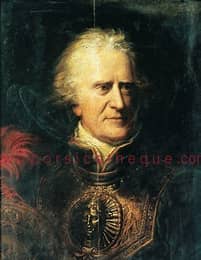
Pasquale Paoli (1725-1807, Corsican patriot, statesman, and military leader who flees to London after failing to rid Corsica of French rule.)
Bonaparte first develops a relationship with the Robespierre brothers (Maximilien and Augustin) in 1793. Great Britain and Spain were allied with French rebels in southern France and Bonaparte met the brothers in opposition to Royalist rebels. Bonaparte’s tactical brilliance routs southern France rebels and forces the Anglo-Spanish fleet to depart. This became the beginning of Napoleon’s rise to prominence in the French military. He is 24 years of age.
Maximilien Robespierre, a friend of Napoleon. (1758-1794, leader of the Jacobin republican movement in France, is condemned and beheaded on July 28, 1794,)
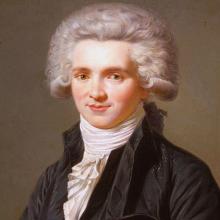
The Robespierre’ brothers, of which Maximilien is the best known, are associated with the Jacobins, an extreme egalitarian group that fomented a French revolution in 1793-94. Maximillian Robespierre instituted the Reign of Terror with mass executions for which he is eventually guillotined in 1794. With the seeds of rebellion planted by the Jacobins, the French Revolution occurs in 1789 through 1799. Napoleon distances himself from the brothers and the Jacobin movement in 1794. He became a “blue-blooded” Frenchman and abandoned his Corsican roots.

Charles Maurice Camille de Talleyrand-Périgord (1754-1938, French clergyman, statesman, and leading diplomat. Died at age 84.)
Another interesting relationship noted by the author is between Napoleon and Charle Maurice de Talleyrand-Perigord, more commonly known as Talleyrand. Talleyrand and Napoleon had a close relationship between 1799 and 1807. Talleyrand acts as France’s Foreign Minister negotiating many treaties that increased Napoleon’s power in both France and Europe. However, Talleyrand becomes critical of Napoleon’s aggressive expansionist policies. He is eventually removed from his ministerial position in 1807.
Czar Alexander I (1777-1825)
In 1805, Czar Alexander joins Russia with Austria in the battles of Austerlitz against Napoleon. However, he switches sides to join Napoleon after Napoleon’s success in Austerlitz. He switches sides again to defeat Napoleon with the British at Waterloo in 1815.
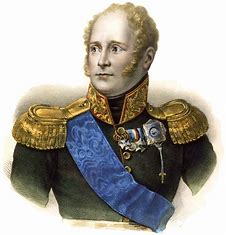
The author notes Talleyrand speaks to Czar Alexander about his concern over Napoleon’s ambition and is alleged to have said he would collude with the Czar to defeat Napoleon. Talleyrand by any measure is a traitor to Napoleon, if not his country. Not surprisingly, Talleyrand (though he remains in Napoleon’s government) had a role in the Bourbon restoration in France after Napoleon’s abdication in 1814.
The diminutive Napoleon next to Czar Alexander I.

One might argue Napoleon did not restore a traditional monarchy but created the First French Empire in 1804. However, this Empire led to the return of the Bourbon monarchy in 1814. Louis-Napoleon Bonaparte, Napoleon’s nephew, became Emperor Napoleon III in 1852, and remained so, until his defeat in the Prussian War of 1870. France did not truly become a Republic until 1870.

Considering the origin of the Bonaparte family, it comes as little surprise that Napoleon decides to return France to monarchy by another name by becoming an emperor.
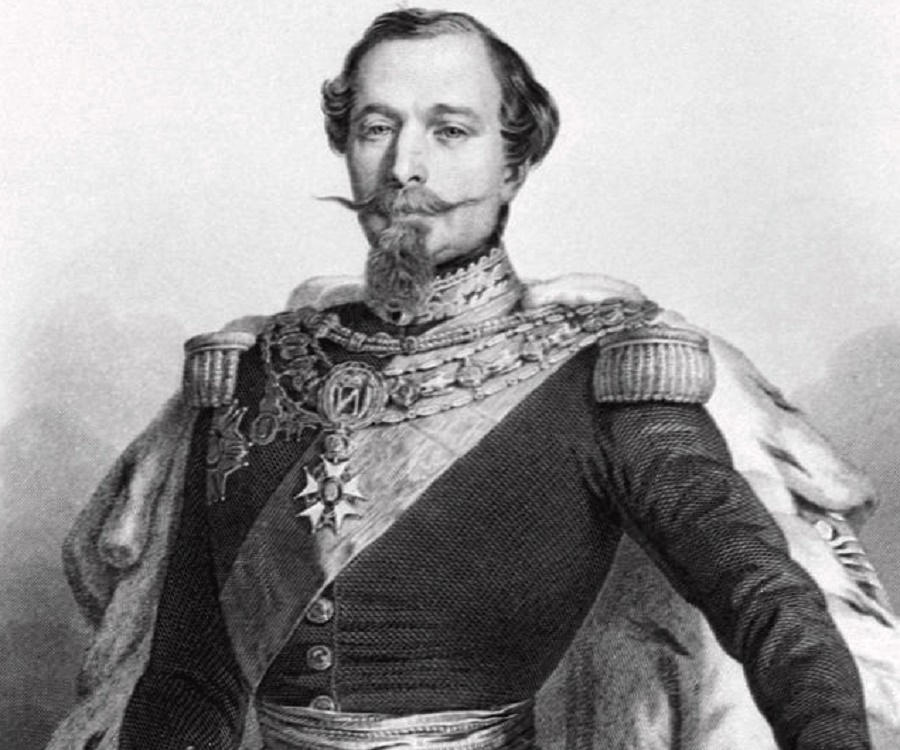
Louis-Napoleon Bonaparte (1808-1873, initially became the first president of France in 1848 but became its second Emperor in 1852. He was deposed in 1870.)
Despite Napoleon’s predilection for royalty, Zamoyski notes numerous improvements made by Napoleon’s new role in the governance of France. He established the Napoleonic Code that provided a government framework designed to ensure equal treatment by law, protection of property rights, and individual freedom. He centralized government functions within departments to streamline governance. He instituted educational reforms by establishing secondary schools to train future government employees and military officers. He established a banking system to stabilize the economy. Though Napoleon detained the Pope for interfering with French governance, he liberalized control of church appointments by allowing the state some control.
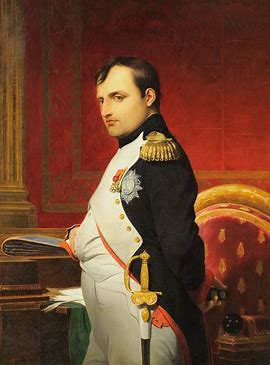
One comes away from Zamoyski’s Napoleon biography with a deep appreciation of a legend in his time and for all time. As a tactical genius, Napoleon sometimes failed to look beyond an immediate problem, but when it came to understanding what is needed to manage a huge organization, Zamoyski shows Napoleon to be a visionary.
As is well known, Napoleon is defeated at the Battle of Waterloo in 1815. Zamoyski notes Napoleon is exiled to Elba where he escapes and is then interned on Saint Helena where he dies in exile from what is believed to be stomach cancer. He died at the age of 51. Napoleon’s confinement at Saint Helena is a sad end to an incredibly brilliant life.
Much knowledge is provided by Adam Zamoyski’s biography of Napoleon Bonaparte, but too much detail about specific battles makes the book much too long for non-historians.
 REVIEWS AND VIEWS OF LIFE