LIBRARIES’ EVOLUTION

The well-made point of Orlean’s history of the Los Angeles Central Library is that a listener/reader can learn a great deal about the world and other people’s life experience from books. The loss of a book is not like human death, disease, or disability. A book is a liberation and broadening of life’s narrowness.

Books of Interest
 Website: chetyarbrough.blog

The Library Book 

By: Susan Orlean

Narrated By: Susan Orlean

Susan Orlean (Author, American journalist, tv writer, staff writer for The New Yorker.)

“The Library Book” is not a thriller, but it is an appreciation of a public service available in nearly every community of the United States. Libraries can be found in communities of less than 8,000 people or megalopolises of millions. Susan Orlean focuses her book on the great fire in 1986 at the Los Angeles Central Library where over 400,000 books were destroyed, and an estimated 700,000 were damaged. Though this was not the largest library in America, it was the largest library fire in U.S.’ history. Orlean’s research suggests the arsonist was a Wanna-Be actor named Harry Peak. However, there is no concrete evidence to confirm his guilt. No one is convicted for the library’s alleged arson. The cause remains undetermined.

It is interesting to note that Orlean admits there were electrical problems in the old building that had been recorded by building inspectors, but fire inspectors concluded it was arson.

It seems somewhat disingenuous for the City or Orlean to accuse Peak as an arsonist but that is not the primary message of her book. Her message is that many, including this reviewer, love the knowledge and experience of others who write books. Arguably, public libraries are one of the greatest public services in America, and at a cost much less than most public services in America.

The last chapters of her book address the history of the creation and renovation of the Los Angles Central Library. It reaches back to the 19th century. She recalls the liberal leaning of librarians and their early adoption of women in the workplace. Two women became Library’ managers in the 1800s. Orlean notes in a joking conversation with a manager of the library about the unlikely promotion of a political conservative as a head librarian.
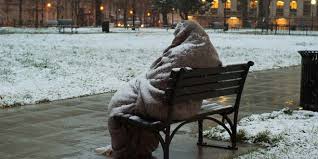
An interesting note from the author is that the Los Angeles library has historically been a haven for the homeless, a problem that has dramatically risen in the 21st century. Some librarians have expanded their services to help the homeless. It seems noteworthy that the libraries in Las Vegas and those visited in other cities do not lock their bathroom doors the way private businesses like Starbucks choose to do.

The Los Angeles Library took six years to rebuild while workers carried on during the course of reconstruction. She notes that a new book generally requires a week before it hits the shelf because of time needed for proper cataloging. A somewhat distracting habit Orlean uses is recitation of a book’s Dewey Decimal’ number that begins most of the chapters. An interesting note from the author is that the library has historically been a haven for the homeless, a problem that has dramatically risen in the 21st century. Some librarians have expanded their services to help the homeless. It seems noteworthy that the Los Angeles Central library and libraries in Las Vegas do not lock their doors the way private businesses like Starbucks have chosen to do.

The Los Angeles Library is rebuilt to be better than it was before the fire.

Orlean explains library managers in LA are pushing to expand services their libraries provide. Having personal experience of traveling the world, countries like Finland show they have modernized libraries with a concept highly recommended in Orlean’s history of the Los Angeles’ library. Helsinki, Finland’s state-of-the-art library is a dramatic example of the services a library can provide. Everything from music instrument rentals, to recording studios, to sewing machine tables, and cooking kitchens are added to the library’s book inventory. All of these features have been created in Helsinki’s modernly designed library. It is a multi-purpose building that serves both children and adults.


The well-made point of Orlean’s history of the Los Angeles Central Library is that a listener/reader can learn a great deal about the world and other people’s life experience from books.

The loss of a book is not like human death, disease, or disability. A book is a liberation and broadening of life’s narrowness.

Many of the Los Angeles Library books were recovered but the process of recovery required the help of many of LA’s businesses. The books that got wet needed to be frozen to keep them from molding. City businesses made room for soaked books in their commercial freezers. The Los Angeles Central Library is rebuilt to be better than it was before the fire. Many of the books survived with the feint smell of smoke. The library continues to expand and enlighten Angeleno’s lives.

CYCLE OF ABUSE

“The Beauty in Breaking” is about life as an eternal recurrence that offers some peace of mind in a world troubled by its inhumanity.

Books of Interest
 Website: chetyarbrough.blog

“The Beauty in Breaking” (A Memoir)

By: Michele Harper

Narrated by: Nicole Lewis

Michele Harper (Physician, Author, Public Speaker.)

Leaves fall from the tree to expose the bark and bite of life. Michele Harper’s memoir shakes the tree of American life. Relying on the veracity of Harper’s story, she is raised in a family with a physically abusive father who divorces her mother, an art dealer.

Harper notes her paternal father was physically abusive.

After Harper’s paternal father leaves Harper’s mother, Harper notes he offers some financial assistance to Harper in college. Harper explains she passes some of that assistance on to her mother while attending Harvard. Harper earns a BA in psychology. She goes on to acquire a medical degree from a New York university to become an emergency room physician.

Harper’s story touches on the complexity of life as a Black American. She marries a white man while at Harvard, but they divorce at his choice. The failure of their marriage is shown to be hard for Harper, but she is driven to succeed and moves on to educate herself in her chosen field of work.

Harper’s experience of childhood abuse, her personal marriage break-up, and work as a physician in three different emergency room positions, are lessons for life and living.

Her focus is on overcoming her trials to be good at her job even though much is beyond her control. The notion of not knowing what crises you will face in a medical emergency room, let alone a doctor’s experience as a Black American, offers a unique perspective to Harper’s memoir.

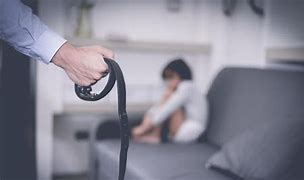
Abuse comes in many forms.

There is child abuse that occurs in many homes throughout the world. There is being a minority in a culture controlled by a majority that discriminates against those who are different. There is inequality of opportunity that creates an underclass that is trapped in an eternal cycle of poverty. Harper is denied promotion to Administrator in her first hospital job because she is a woman. Her supervisor notes a woman, let alone a Black woman, has never had the Administrator’ job in that hospital. Misogyny triumphs once again.

Harper chooses to leave the hospital that denied her the promotion.

As an administrator in another hospital Harper sees the consequence of poverty. Poverty seeps into nearly every culture in the world with its accompanying violence, compounded by weak to non-existent gun control laws in the United States. Harper writes about her encounter with a young boy who has his sneakers stolen by a bully at school.

Harper interviews the young Black grade school child who is thinking about getting his shoes back with a gun.

Harper calls a child services employee to explain her concern about the child’s access to a gun at his home. The child service’s person explains she sees this in many children’s homes where poverty is one lost job away from a family being on the street. This young boy’s parents both work to keep the family housed and fed. The social services person explains gun accessibility and violence are common in poor black neighborhoods. Where poverty is a fact of life, child services can only go so far to change what is toxic in a child’s environment. Gun availability is beyond the control of Harper or child service’s employees. The extent of Harper’s intervention is limited to raising the issue with the young boy’s parents–with the hope that they will act to be sure no gun becomes available.

Harper finds a third job as a VA hospital administrator. She interviews a female patient seeking psychological help. In the interview, Harper is told by the patient she had been raped by her supervising sergeant and another soldier in Afghanistan.

She became pregnant and decided to have an abortion. That experience continues to traumatize her life. She seeks help to overcome its affects. Harper becomes the patient’s lifeline for the counseling she needs to overcome her abuse.

There seems no “…Beauty in Breaking” as one nears the end of Harper’s memoir but one begins to realize the “Beauty…” is “…in Breaking” the cycle of abuse.

The cycle can be broken with exposure, rehabilitation, caring, and acting to remove the causes of abuse. Harper’s memoir shows how it is done. Breaking the cycle of abuse is a long, laborious process that begins with people focusing on incidents of abuse and acting to mitigate its causes and consequences. “The Beauty in Breaking” is Harper’s way of exposing abuse and illustrating what can be done about it.

Harper’s ultimate theory for the resolution of human abuse is belief in Lifes’ recurrence. Her theory is that every life is eternal. When one dies, they will be reborn into another life. Harper comes to grips with her life as it is and makes it better through meditation. Her belief about life as an eternal recurrence offers her peace of mind about the people she saves or loses in a hospital emergency room.