EVIL’S PERSONIFICATION

One asks oneself, what leaders in the world today have remorse for the incarcerations, torture, and killings for which they are responsible? What remorse is there in Putin’s, Ayatollah Ali Khamenei’s, Prime Minister Netanyahu’s, and even our American President’s thoughts?

Books of Interest
 Website: chetyarbrough.blog

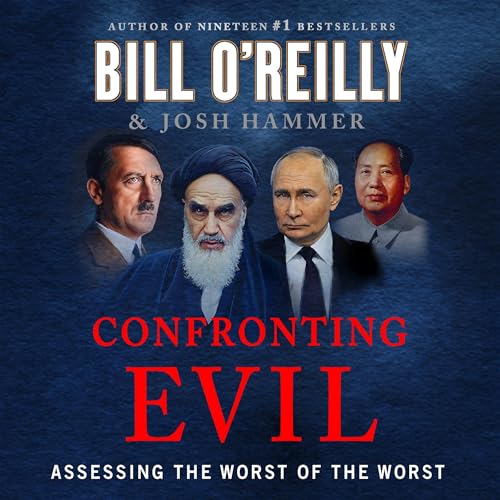
CONFRONTING EVIL (Assessing the Worst of the Worst)

Author: Bill O’Reilly, Josh Hammer

Narrated By: Robert Petkoff

Bill O’Reilly, American conservative commentator, journalist, author, and television host. Josh Hammer, American conservative commentator, attorney, co-author, and columnist.

History taken out of the context of its time often distorts the reality of the past.

“Confronting Evil” is an interesting if not nuanced history of the most notorious leaders in the world. They were responsible for the torture, incarceration, and death of millions. As is true of most if not all histories of famous and infamous leaders, historians and pundits choose facts that reinforce their view of world’ history. Even the best historian is influenced by the time in which they write and their choice of facts.

Nathan Bedford Forest (1821-1877, General in the Confederate States of America during the Civil War.)

One is appalled by the truth of Nathan Bedford Forest’s view of slavery during America’s Civil War. Forest directed the slaughter of people based on the color of their skin. Forest condoned the murder of all who believed in equality of human beings. Forest is considered a hero to some but with the passage of time and a growing belief in human equality, Forest is recognized as a despicable human being by those who know the history of his life and profession. The evidence of science and human accomplishment show that the color of one’s skin is no measure of intelligence or capability. Forest’s mistreatment of slaves and the wealth he created from trading in slaves is reported in this history. By many measures, Forest is shown as an evil person by O’Reilly and Hammer.

The rule of Genghis Kahn is said to have caused the death of 40 million people, an estimated 11% of the global population at his time in history.

Presumed image of Genghis Kahn (1162-1227, Founder and first Khan of the Mongol Empire.)

By some measures, Mao doubled that 40 million number with his “Great Leap Forward”, the “Cultural Revolution”, his labor camp creations, and political purges. Hitler is estimated to have caused the death of 17 million with his genocidal policies while casualties from WWII are estimated at 85 million. Hitler’s antisemitism is born of the same stupidity exhibited by Nathan Bedford Forest in America’s Civil War. The contribution of Jewish society to the world is incalculable.

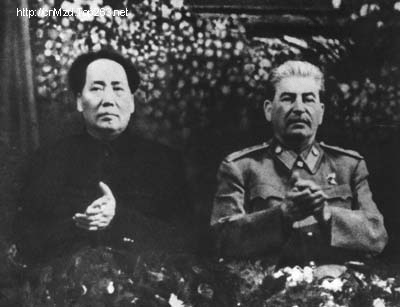
Mao Zedong (1893-1976) Father of the Peoples Republic of China)

Mao’s great leap forward is estimated to have caused the death of 35 to 45 million citizens. The rule of Stalin is estimated to have caused the death of 20 to 60 million U.S.S.R.’ citizens. Stalin’s takeover of Poland, and the Baltics after WWII and his cruelty is remembered by survivors of his rule.

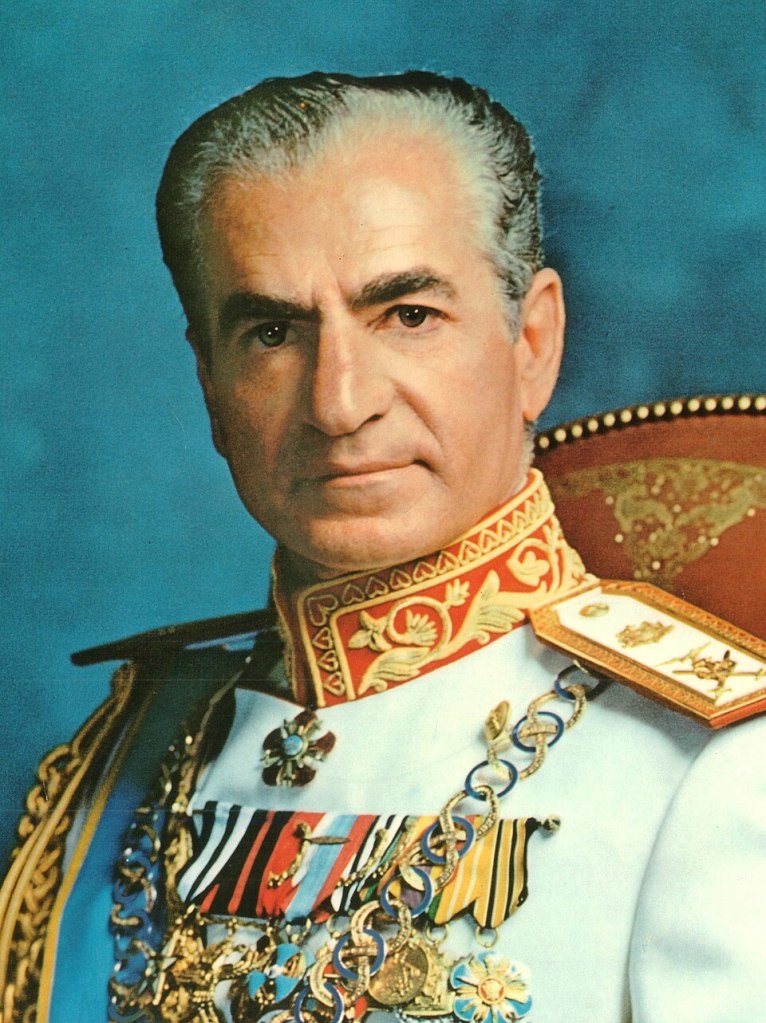
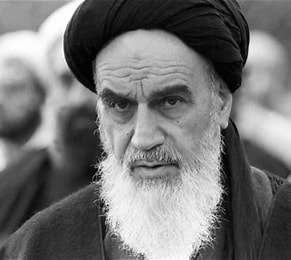
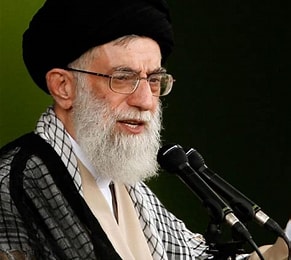
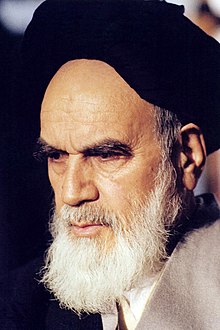
There are many other evil characters in “Confronting Evil”. In the mind of westerners, the current leaders of Iran and Russia are evil. The leader of Iran, Ruhollah Khomeini is estimated to have ordered deaths of Iranians that exceed 250,000 since his takeover in 1979. Though he has passed, the succession of Ayatollah Ali Khamenei has carried on with tens of thousands who have died in Iran’s involvement with Hamas in Palestine, Syria, Iraq, Yemen, and Lebanon. The predecessor of the religious leaders of Iran was Mohammad Reza Shah Pahlavi who reigned from 1941-1970. Pahlavi is estimated to have murdered 3,000 to 20,000 during his reign. These leaders ruled over an impoverished state but incomes per capita fell from $34,660 during the Shah’s reign to $3,150 under Khomeini’s rule. An irony is that income inequality hugely increased in Iran during Khomeini’s rule. Nuanced reality is that poverty and victimization of Iranians is more widely spread under Khomeini than under the former Shah. On an economic scale it appears Khomeini’s evil as a leader exceeds the Shah’s rule. Added to the economic difference is the religious zealotry of Khomeini which widened the gap of sexual inequality in Iran.

Ruhollah Khomeini (1st Supreme Leader of Iran, 1979-1989)

Ayatollah Ali Khamenei (Current leader of Iran.)

The authors address the illicit drug industry and the evil of Pablo Escobar in Columbia and “El Chapo” Guzmán in Mexico. Escobar was killed in 1993 when pursued by drug enforcement officers while Guzmán is serving a life sentence in the U.S. The drug industry continues to thrive despite the harm it is doing to America and the world. The leaders of the criminal drug industry care nothing for the consequence of their actions because of the wealth and power the illicit trade offers.

Pablo Escobar (now deceased) noted on the left with “El Chapo”(arrested and imprisoned in America) on the right.

The last two chapters of “Confronting Evil” offer a pithy definition of evil. Evil is defined as doing harm without remorse. One doubts any of the leaders noted by the authors have or had any remorse for the atrocities they have committed. Whether they rationalize their behavior for the good of their people, their religion, or their country—they are evil by O’Reilly and Hammer’s definition. One doubts any of the leaders noted in “Confronting Evil” are remorseful.

One asks oneself, what leaders in the world today have remorse for the incarcerations, torture, and killings for which they are responsible? What remorse is there in Putin’s, Ayatollah Ali Khamenei’s, Prime Minister Netanyahu’s, and even our American President’s thoughts?

CULTURAL CONFLICT

How could America expect to occupy Iraq for a mere 8 years and 8 months and resolve cultural differences? It could not and did not.

Books of Interest
 Website: chetyarbrough.blog

The Iraq War 

Author: John Keegan

Narrated By: Simon Vance

John Keegan (Author, 1934-2012, English historian, lecturer, and journalist died at age 78. A recognized authority on warfare.)

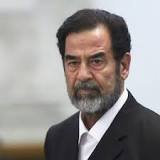
John Keegan reflects on the history of Iraq with an analysis of the rise and fall of Saddam Hussein. With the collapse of the Ottoman Empire in 1922, British control of Baghdad, Basra, and Mosul led to the formation of Iraq by the League of Nations under the supervision of the British. Great Britain offered nation-state independence to Iraq in 1932. Keegan explains early Iraqi leaders failed to centralize control of the newly formed country of Iraq. He argues that failure allowed an authoritarian, unscrupulous, and brutal leader named Saddam Hussein to take control of the country from Ahmed Hassan al-Baker in 1979. Saddam used fear, violence, and murder to eliminate rivals to create a cult of personality that made him look strong and defiant in the eyes of his countrymen and the world.

Saddam Hussein (1937-2006)

Keegan argues Saddam instinctively combined his brutality with the pragmatism of “might makes right” to take control of Iraq’s fragmented leadership. Not since Hitler, Keegan suggests, has a leader managed to combine tyranny with fear to take command of a nation. Saddam magnified regional instability and created international disorder with ruthless brutality, reinforced by a military that chose to follow him out of fear and reward that is gathered from rapine.

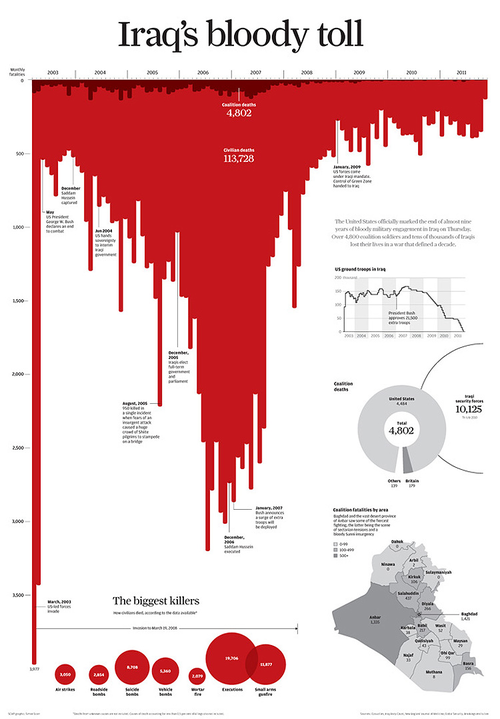
Iraq death statistics.

Keegan explains Saddam maintains his position through force but ultimately loses it because of his brutal rule, lies, and poor judgement. Saddam dramatically murders or tortures political rivals to create fear among Iraqi citizens and military henchmen who fear his rath. He initiates a war with Iran in 1980 with the intent of toppling the Shah because he viewed him as a threat to his regime. His plan was to install the Ayatollah Khomeini which seems counter intuitive in view of Khomeini’s religious zealotry; particular considering Saddam’s earlier offer to assassinate him while he lived as an exile in Iraq. Keegan implies Saddam’s decision to support Khomeini as Iran’s leader is similar to the lie Saddam creates about Kuwait slant-drilling into Iraqi oil fields to steal billions in oil. One doubts he ever intended to promote Khomeini to rule Iran. As history shows, the majority of the international community did not believe Saddam’s lie about oil theft and were opposed to Iraq’s invasion of Kuwait. A disastrous and unresolved eight-year war was fought with Iran and eventually Saddam lost any significant support for occupation of Kuwait.

Saddam rules Iraq for nearly 24 years. One wonders how he ruled as long as he did, just as many Americans wonder how Trump could be re-elected by a majority of American voters.

Considering Saddam’s poor judgement in regard to Khomeini’s power and his belief that Iraq could take over another country without international opposition shows how deluded a dictator can be. Keegan suggests Saddam made too many miscalculations. First among them is the weaknesses he created by presuming that fear of him among his own military force would maintain support of Iraq’s 400,000 soldiers. Saddam is essentially abandoned by his military leaders when Iraq is confronted by an international force to oppose Iraq’s invasion of Kuwait (73% were American soldiers but 34 other countries participated). Not surprisingly, bridges were not destroyed by Saddam’s military as they retreated, and Saddam’s military leaders abandoned their posts.

Keegan explains Saddam’s fall came from a collapse of the illusions, fears, and myths that surrounding his rise to power.

One wonders if the same may happen in Iran in the 21st century. It seems dependent on Iranian people deciding on whether the governance Khomeini insists upon is illusory and the fear Khomeini’s ordered murders, incarcerations, and beliefs have alienated enough Iranian citizens. Because Iran’s governance may be more about religious belief and integrity rather than arbitrary rule, one becomes skeptical. Iran may remain as it is but with a new religious ruler.

Keegan tries to explain America’s mistakes in Iraq without being too partisan.

Keegan offers a clear understanding of Saddam’s rule of Iraq. America made many mistakes because of not understanding the culture of Iraq and presumed their culture would accept Americanization. Tribalism scented with religion exists in Iraq. Without engaging that reality, America could not constructively influence change. The dismantling of Iraq’s military negatively impacted a critical infrastructure that understood the indigenous culture and may have aided American influence in Iraq. By ignoring the dignity of the Iraqi people and the importance of tribe loyalties and religious beliefs, America stubbled through years of destructive occupation. Other authors have noted how tribalism influenced how Iraqi informers had their own agendas for accusing Iraqi tribes of fomenting conflict. Iraq unraveled into insurgency and chaos from which it is still trying to recover.

It has taken nearly a quarter of a century for American government to begin healing the relationship between Indians and 1776 settlers of this country. The possibility of changing Iraqi society in a less than 10 years seems unlikely and, for that matter, inappropriate. Cultural difference is not a disease.

Change is difficult and nearly impossible when cultural differences are not clearly understood and taken into account when a foreign country occupies a native country’s territory. How could America expect to occupy Iraq for a mere 8 years and 8 months and resolve cultural differences? It could not and did not.

HUMAN EQUALITY

Darznik’s novel is based on a woman who believed and acted on a conviction that men and women are created equal.

Books of Interest
 Website: chetyarbrough.blog

Song of a Captive Bird

By: Jasmin Darznik

Narrated By: Mozhan Marno

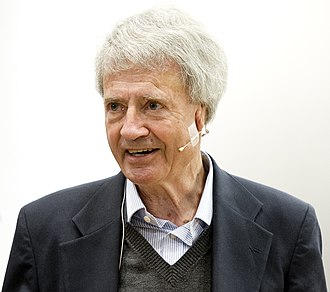
Jasmin Darznik (Iranian born American author with a BA from the University of California and a PhD in English literature from Princeton.)

“…Captive Bird” is classified as a novel. However, it is loosely based on the life of Iranian poet, Forugh Farrokhzad, who defied the traditions of mid-twentieth century Iranian culture. Today’s Iranian culture would undoubtedly be as anti-Farrokhzad as the 1950’s culture in which she lived.

Forugh Farrokhzad

Iranian poet and painter born in Tehran in 1934, died at age 32 from a car accident in 1967.

If even a small part of Darznik’s novel is based on true events, Forugh Farrokhzad was an extraordinary human being who symbolized the truth of sexual equality. In one of the most patriarchal countries in the world, Ms. Farrokhzad rebelled against a conservative and myopic view of women’s rights.

Jasmin Darznik characterizes Farrokhzad as a trailblazer who believed and lived a life of sexual equality.

The story Darznik tells is of a human being choosing to livelife in whatever way her mind and emotions led. Darznik’s heroine fought the restrictions of women’s inequality in a country riven with militant patriarchy. Farrokhzad’s history is one of rebellion against her father, a colonel in the Iranian army, and the societal taboos of Iran, many of which are resurrected in today’s Iranian government.

Darznik’s story is of a woman who acts like a free man, chooses her sexual partners, leaves her husband and only child, and seeks fame as a poet in a land renowned for poetry.

Like a man or any human being, Farrokhzad has sexual desires and ambitions to be something more than a footnote in history. Like husbands who leave their children through divorce or separation, Farrokhzad leaves her son. It is the same habit of many absent fathers who may love their children, but choose, like Farrokhzad, to pursue life beyond being a mother or father.

The world is beginning to understand women and men are 99.9 percent the same with fractional differences for conception, and strength.

The desire for sex, money, power and/or prestige are the same for all human beings. What is remarkable about Farrokhzad life is that she seems to have recognized that belief in one of the most patriarchal countries in the world. The way Farrokhzad lived her life, as reflected by the author, shows why men and women should be treated equally.

This is not a lesson many men or women are willing to learn because it challenges societies definitions of masculinity and femininity. The value of learning that lesson is in the liberation of humanity.

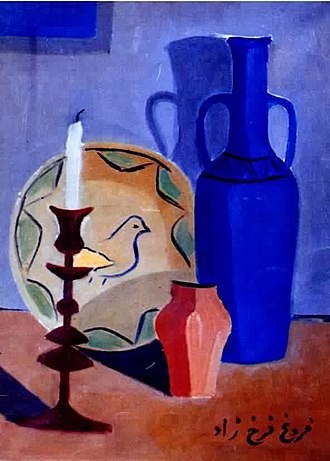
What is not mentioned in Darsnik’s novel is that Farrkhzad was also an artist.

This is a painting done by Farrokhzad despite her principal feminist reputation as a poet in the conservative culture of Iran in the 1950s.

The author’s story suggests Farrokhzad’s father commits her to an asylum after estrangement from her family and her rejection of female inequality. In the asylum, Farrokhzad is heavily sedated and subjected to shock treatments that make her catatonic. She is rescued with her father’s decision to allow her to leave the asylum in the care of a rich Iranian woman. This benefactress is a fellow traveler in Farrokhzad’s belief about women. Farrokhzad eventually recovers from her catatonia and continues her liberated life.

Though the dates Farrokhzad’s real life do not match historical events in Iran, Darznik captures the essence of a remarkable Iranian woman.

The shah of Iran, Mohammad Pahlavi is deposed in 1979. The author conflates the history of the oil industry’s unfair monopolization by Great Britain, the King’s departure and Farrokhzad’s storied life. She tragically dies in a car accident in 1967 at the age of 32. (Some suggest the car accident is suspicious.)

Darznik’s novel is a compelling argument for sexual equality. It is based on a woman who believed and acted on a conviction that men and women are created equal. The author’s story is particularly impactful because the woman she alludes to is born in a country that is among the most patriarchal in the world.

RELIGIOUS DIFFERENCE

Is belief in God worth it? Cook’s history of Muslimism and knowledge of Christianity makes one wonder.

Books of Interest
 Website: chetyarbrough.blog

“A History of the Muslim World From its origins to the Dawn of Modernity” 

By: Michael Cook

Narrated By: Ric Jerrom

Michael A. Cook (British historian, scholar of Islamic History)

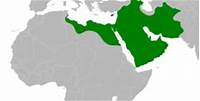
Professor Cook overwhelms one with a voluminous examination of the Muslim World. His history really begins before the birth of the Arab prophet, Muhammad (570-632). However, it is after Muhammed’s revelations and his departure from Mecca in 610 CE, when he and his followers settle in Medina (622) that a more documented history is revealed. Arabs are identified as a nomadic tribe who occupied the Arabian Peninsula, Syrian Desert, North, and Lower Mesopotamia in the mid-9th century BCE. However, notable territorial regions first appeared in the 14th century BCE with the Assyrian and Neo-Assyrian Empires. Cook suggests it is in the 7th century CE that Islam became a force in the Middle East. After the Prophet Muhammad’s death in 1632, the Rashidun Caliphate established itself (632-661 CE).

The Rashidun Caliphate boundaries.

The messenger of Allah is Muhammed. Muhammed was an Arab. Born in 540 CE in Mecca, Arabia (now Saudi Arabia), Muhammed is considered by Muslim’s the last messenger of Allah. Though Muhammed could neither read nor write, his counsel with scribes resulted in the equivalent of the Christian Bible, called the Quran, which is alleged to reflect the word of the Supreme creator of life, the world, and the hereafter. This is different than the scribes of the Christian Holy Bible. However, the Holy Bible’ and Quran’ texts offer the same confusion about their meaning because these holy books have first, second, third, and later-hand writings of scribes.

(REVIEWER’S NOTE: Scribes recreated fragmentary writings and legends of long-dead contemporaries of Christ in the case of the Holy Bible, just as the thoughts of the “last messenger of Allah” were recorded by scribes. Modern science experiments explain human minds do not precisely record or recall the past. The human mind recreates the past and fills any gaps that may arise to complete the mind’s imprecise memory. That is why scribes of biblical or unbiblical history are interpretations of facts of the past, and not necessarily accurate facts of the past.)

With the Ottoman Empire’s dissolution, Turkey, Greece, Serbia, Bulgaria, Romania, Albania, Montenegro, and Macedonia were formed. Three Arab nation-states came out of the Ottoman Empire’ dissolution. They were Syria, Iraq, and Transjordan (now Jordan).

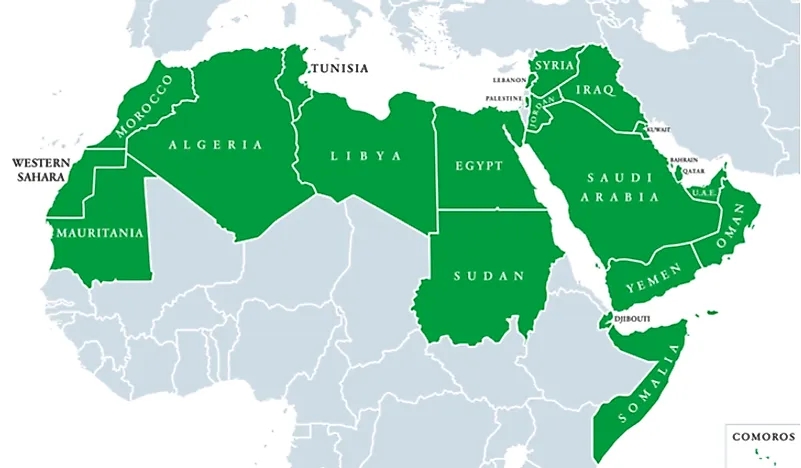
Interestingly, modern states with the highest number of Arab speaking residents are Egypt, Sudan, Algeria, Iraq, Morocco, Saudi Arabia, and Yemen. Only Egypt and Sudan have more than 10% of their population who use Arabic as their primary language. The point of this realization is that Professor Cook is writing a history of the Muslim religion, not Arab culture.

However, there seems little doubt that the 6 major Arab tribes of earlier centuries were the vessels of change for Muslim’ belief and practice. Arab tribes existed as far back as 6000 BCE. By 1200 BCE, they had established settlements and camps that formed into Kingdoms.

Arab tribal land extended from the Levant to Mesopotamia and Arabia.

Cook infers Arabs spread the Muslim religion to northern Africa and throughout the Asian continent while crossing the Mediterranean to influence, but not convert, southern Spain. Cook illustrates how Muslim’ belief shaped human history and culture. An estimated 55% of the world population identifies itself as Christian, or Muslim. Hinduism constitutes 15%, Buddhism 7%, with the remaining religions in lower single digits.

What Cook shows is how Muslim belief (24% of the world population) impacted the world.

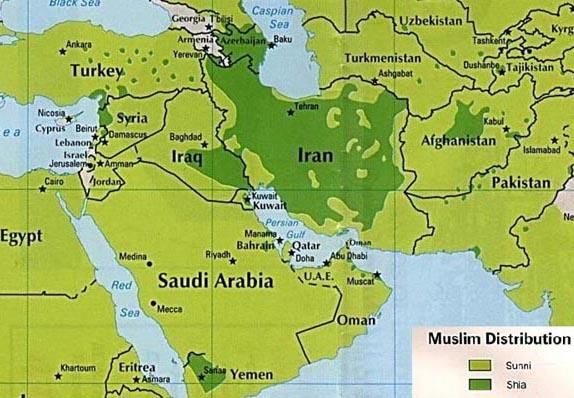
Cook begins to explain the split between Sunni and Shia religious belief. In the modern world, only Iran, Bahrain, Yemen, and Iraq have Shia-majority populations with a significant Shia community in Lebanon and Afghanistan. Sunni religious belief is practiced by a majority population in nearly 20 countries with a mixture in Egypt, Turkey, Pakistan, Saudi Arabia, Yemen, Eritrea, Syria, Afghanistan, Lebanon, Turkmenistan, and Azerbaijan.

A surprising observation by Cook is the impact of a language change in the Middle East. Persian (aka Farsi) became a bridge connecting the diverse communities and histories of the Middle East. This change largely took place between the 9th and 11th centuries. It significantly impacted Muslim cultural beliefs and Iranian culture in general.

Cook implies the colloquialization of translations by Farsi (the language of Persia) of Arab Caliphate’ triumphs and failures molded beliefs of Middle Eastern nation-states. Countries like Iran either adopted or rejected Farsi’ stories of accomplishments and failures by Arab Caliphates. Some failure is associated with moral turpitude, a falling away from Qur’anic teaching, translated into Farsi language.

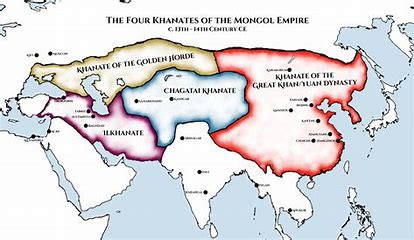
Cook’s next step in the history of Islam is to reveal the impact of Turkey and the Mongol empire’s spread of the Muslim religion. There is a confluence of tribal association and acceptance of the Islamic religion in the military campaigns of Genghis Kahn (1162-1227) followers, some of which were Turkish.

(Genghis Khan’s sons establish four kingdoms in the Middle East that lasted until 1368.)

Though none of the kingdoms practiced a particular religion, each influenced the course of religious acceptance. The environment they created allowed Christian religion to spread from Russian territory, while Turkish influence leaned toward Islam. Cook explains how young rebel leaders gained followers by successfully defeating and pillaging villages that had poor defenses. With each successful raid, more young people would join the raiders. This incremental growth led to the spread of Christian and Islamic religious influence, depending on the religious leaning of raiding parties.

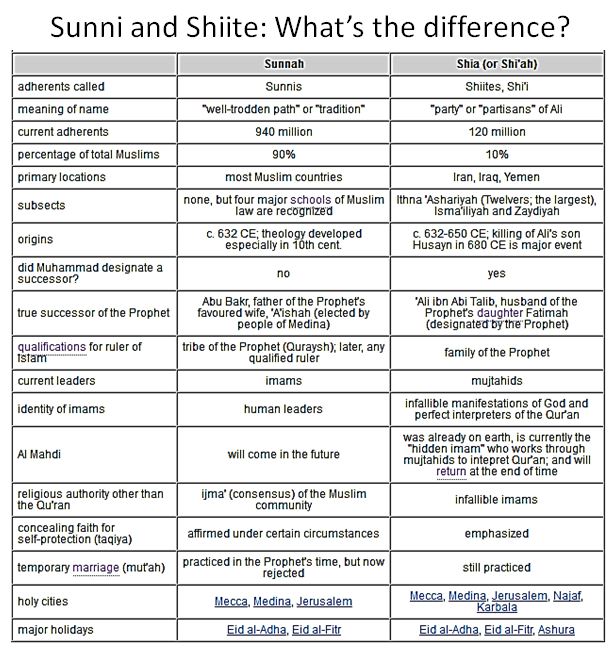
Cook clearly illustrates how Arab culture lies at the heart of Islamic religion despite its nomadic existence. From the first madrasas (Islamic schools) in the Abbasid Caliphate in the 9th century, the teachings of the last messenger of Allah began with Arabs. Cook explains the religion is unlikely to have flourished without other cultures adoption. Without Persian, Turk, Uzbek, and Mongol societies adoption, the spread of Islam would have been minimized. Muslim belief evolved in a cauldron of conflict with Christianity, Judaism, and other indigenous religions but prevailed as a religion with two faces, i.e., the Suni and Shia Divide.

Like the schism between Catholics and Protestants, Sunni and Shia believe in one God but differ in ways that have roiled the world. In the case of Catholics and Protestants, there is the French wars of 1562-1598, the European thirty years war of 1618-1648, and the Troubles in Ireland in 1968-1998. In the case of Sunni and Shia, there was the battle of Karbala in 680 CE, the Safavid-Ottoman wars in the 16th-17th centuries, the Lebanese Civil War of 1975-1990, the Iraq War of 2003-2011, and the Syrian Civil War that began in 2011 and continues through today.

The forgoing were only human deaths within the two major religions of the world, while neglecting the atrocities incurred between Christianity and Islam. There were the Crusades between the 11th and 13th centuries, the Battle of Lepanto in 1571, The Siege of Vienna in 1683, and the Lebanese Civil War between 1975-1990.

Later chapters of Cook’s history reveal the conflicts between the Islamic religion and other major religions in the Middle East, besides Christianity. Many leaders are identified for historians who will be interested in knowing more, but the names become a blur to a dilatant of history.

Is belief in God worth it? Cook’s history of Muslimism and knowledge of Christianity makes one wonder.

UNITY IN SEPARATION?

Civil wars are a lesson to the world.

Books of Interest
 Website: chetyarbrough.blog

“The New Naturals”, A Novel

By: Gabriel Bump

Narrated by: Robin Miles

Gabriel Bump (Author, MFA in fiction from the University of Massachusetts, grew up in Chicago, Asst. Professor U of M.)

In “The New Naturals” Gabriel Bump shows why societal unity with racial separation is unlikely to be achieved. Without the power and influence of money, leadership is not enough. Bump’s story reminds one of Hamas in Palestine and their deluded belief that they can unify the Palestinian people by creating an underground movement to unify Palestine. Hamas fools themselves just as the leaders of “The New Naturals” show unity fails when the influence and power of money is lost. Of course, the two issues are different because Middle Eastern religion is an element of the fundamental difference between Palestine and Israel. However, money’s influence and power are a major contributor to the Middle East’s conflict.

Bump writes of a Black American movement to create an independent society financed by a donor with great wealth. The donor finances the vision of two Black academics who choose a mountain in Massachusetts to create a literal underground community for Black American citizens. The dream of “The New Naturals” disappears when the financial backer quits her support of the movement. As the donor’s financing disappears, a “smash and grab” mentality infects the movement’s leadership. Loss of financing criminalizes the movement. What could not be achieved with the influence and power of money, led to “smash and grab” criminalization of the movement.

The vision of “The New Naturals” founders is a hope to educate and establish a group of like-minded Black Americans, independent of America’s white dominated culture.

Like the waste of money in building the Hamas’ tunnels in Palestine, these Black separatists choose to use their financial support for tunnels and rooms bored into a mountain. The Black movement is peopled with relatively well-educated Black families wishing for a better life. It devolves with its loss of funding into a group of thugs who insist on separation.

In America, the political choice has been made, i.e., regardless of race, religion, or ethnicity, all who have citizenship in America are Americans.

America has been one nation since 1776. American unity among its citizens is sorely challenged during America’s civil war but it remains the law of the land. Bump’s story explains why, despite continued American inequality, all who have citizenship are Americans. Equality in America is a work in progress. What informs our future is that American identity is a socially and legally enforceable fact.

As noted in 1954 by the U. S. Supreme Court in “Brown v. Board of Education”, the idea of “separate but equal” perpetuates injustice and inequality.

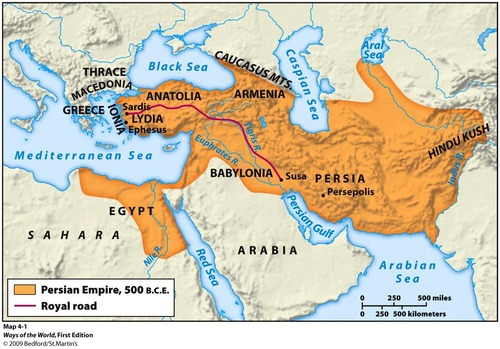
Palestine is considered the birthplace of Ancient Egypt, Israel and the Persian Empire. Though Palestine’s independence was not recognized until 1988, Israel only became a nation-state in 1948. Both societies have a long history as nationalist movements with their own beliefs. Israel and Palestine have earned a right to their own identity. The holocaust was a turning point for the right of a Jewish nation to be created. The current slaughter of innocents in Palestine may be the turning point for Palestine’s right to nationhood.

Civil wars are a lesson to the world. One hopes both Israel and Palestine come to an agreement to either create two nations or one; with unity as separated or as one unified nation-state.