
Books of Interest
Website: chetyarbrough.blog
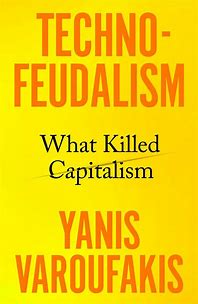
“TECHNO-FEUDALISM” (What Killed Capitalism)
By: Yanis Varoufakis
Narrated by: Yanis Varoufakis
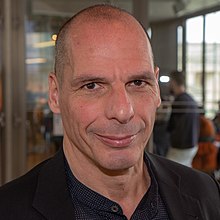
Yanis Varoufakis (Author, Greek economist and politician, Minister of Finance of Greece for 7 months in 2015, launched Diem25, the “Democracy in Europe Movement 2025” in February 2016.)
Yanis Varoufakis’s “Techno-Feudalism” argues the advance of technology is killing capitalism. Varoufakis’s argument is that democratic capitalism is either dying or dead. He suggests a survival plan in the last chapter of his book. This misguided book reminds one of Mark Twain’s response to news of his illness, i.e., “The reports of my death are greatly exaggerated”.

Varoufakis argues the advance of technology and its intrusion into private lives of citizens will destroy freedom of the individual and result in a government ruled by authoritarian, undemocratic, feudal oligarchs.
Varoufakis infers technology is the cause of the rise of new robber barons that have struck it rich in the internet era. He largely disparages the great wealth accumulation by the founders of Amazon, Google, Microsoft, Apple, and other tech leaders in the 21st century. His argument is based on belief that these new robber barons became rich without the hard work of laborers like those during the industrial revolution. The error in his argument is that labor is adjusting from work with one’s hands to work with one’s mind.

Freedom is the keystone of democracy.
Freedom and democracy have been limited and abused over the centuries but have ultimately led to the wealthiest countries in the world. When freedom is overregulated by democratic leadership, economic progress is diminished. Democracy has historically mitigated mistakes of overregulation with human nature’s desire for freedom. There is no reason to believe human nature will change.
In one sense, Varoufakis’s argument is correct. There is a greater risk of loss of freedom with the advance of technology, i.e., particularly with the rise of artificial intelligence. The evidence of that risk is seen in China and North Korea’s surveillance capabilities today.

As inferred by Varoufakis, authoritarian risk is greater in the 21st century because of surveillance technology and the predictive power of artificial intelligence. Surveillance does not change the nature of humankind. Democratic government only becomes more important. The juggernaut of technology will not be stopped, and our lives will be more intimately understood by strangers than ever before. That truth only means democracy, freedom of choice, and equal opportunity are made more consciously recognized as important.

All forms of government have winners and losers. What democracy does is level the playing field. It is a raucous governing system that leaves some out of success, but it beats any known alternative for broader human opportunity. Democracy will always be a work in progress. America needs better health care for all citizens. America needs improvement in equal rights and opportunity for all citizens. No Americans should be homeless or hungry. Few countries, if any, have adequate health care, equal rights, and opportunities for all its citizens. Most realize, America must do better.
The resurgence of labor unions in America is a good sign for American peace and prosperity.

Varoufakis suggests democracy can be saved by bringing it down to an individual level within companies that generate wealth for the country. In one sense, he is right but his idea of giving one vote to every employee in determining wages, and the direction of a company are a step too far. Labor is a critical part of yesterday’s, today’s, and tomorrow’s economic prosperity. Owners and managers of companies need to include union representation in their corporate decisions. Neither labor nor management have all the answers, but all have money, commitment, and labor in the game. Each should have their say. That is a part of Democracy’s success in the world.

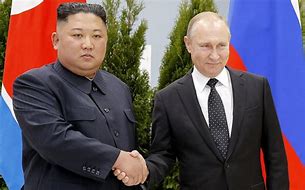
The intimate knowledge of personal behavior is a valid concern in the modern world. In the hands of authoritarians, the risks of surveillance technology are multiplied. In democracy, risks are not eliminated but can be judiciously regulated. Democracy has the best chance of determining how a surveillance economy needs to be handled. Democracy will continue to make mistakes, but historically, its successes outweigh its failures.
Citizens should worry about what others know about their personal lives, but the advance of technology will not be stopped. Democratic capitalism is the most likely form of government to assuage our worry and find a rational solution for our right to privacy. Varoufakis’s “Techno-Feudalism” is more wrong than right, but he makes one think about our future.
 REVIEWS AND VIEWS OF LIFE