

Books of Interest
Website: chetyarbrough.blog
Brain Myths Exploded (Lessons from Neuroscience)
Lecturer: Indre Viskontas
By: The Great Courses
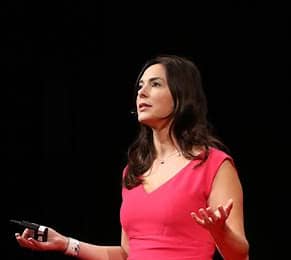
Indre Viskontas (Ph.D. in cognitive neuroscience from UCLA, performed at Cafe Royal Opera in San Francisco, studies neural basis of memory and creativity, Lecturer at USF.)
Dr. Indre Viskontas offers interesting facts and theories about the brain in her Great Courses lectures. Her educational and musical accomplishments are remarkable examples of brain’ flexibility, human intelligence, and life-long potential. Her lectures show cognitive improvement may occur throughout one’s life while recalling incidents of brain damage and discoveries of science experiments that reveal how the brain works.
Viskontas suggests the belief that humans use only 10% of their brain is a myth.

The brain is made of eight distinctive structures which are interconnected and work together for our thoughts, feelings, and movements. A network of neurons sends electrical and chemical signals between parts of the brain that generate human thought and action; some of which are automatic and others cognitively reasoned. Viskontas explains how interconnections allow continued mental and physical functioning even when a part of the brain is damaged. Experiment and human accident have proven that the brain can adapt to loss of normal thought and action by retraining healthy parts of the brain. Retraining the brain can improve lost function. This may not return the perfect function of an undamaged brain, but it will improve function.
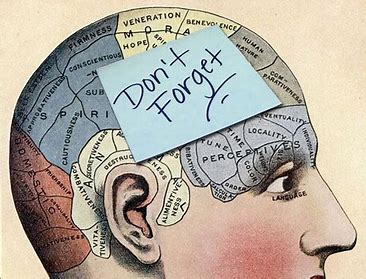
Viskontas explains human memory is a reconstructive process with varying degrees of accuracy.
There are people who have nearly perfect recall of their past. However, experiment has shown that even those few who can recall their personal history in detail are affected by emotion that distorts its accuracy. Furthermore, Viskontas explains personal history’ memory is limited to personal experience rather than any measurement of IQ. Of course, there are a few people who are said to have eidetic memories that can recall images with precision. They have so-called “photographic memories”, but IQ is based on problem-solving abilities that, at best, would be enhanced by a photographic memory. It is the application of recalled information to problem solving abilities that make one a genius like John von Neumann and Nikol Tesla who were alleged to have eidetic memories.
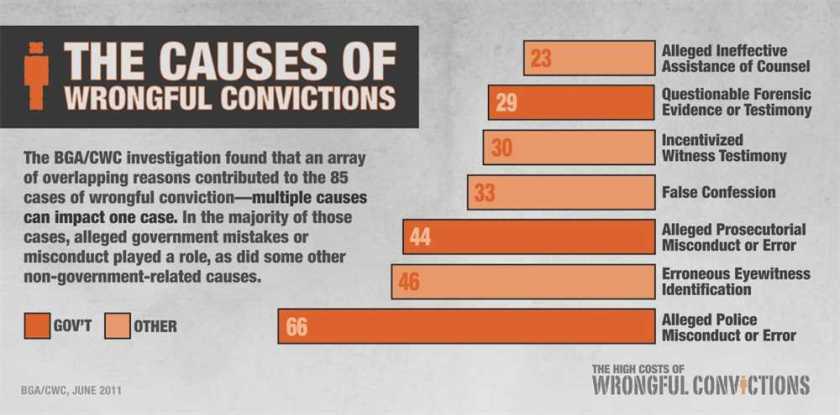
Scientific experiment has proven memory is a reconstructive process. With DNA analysis, a number of convicted murderers have been found innocent despite many eyewitnesses that identified them at scenes of crime. One is reminded of the gorilla experiment where eyewitnesses are distracted when a gorilla is sitting in a chair just as a human action scene is created in the same room. They do not see the gorilla and are surprised when it is pointed out to them later.

In the era of quantum computing, the concept of reality is evolving at a rate that boggles the mind.
The idea of a probabilistic rather than concrete reality reminds one of the differences between the science of Newton and Einstein. Newton thought of things as concrete reality. Einstein takes steps toward relativity with less emphasis on the concreteness of reality. What we see today is not reality, but our minds’ interpretation of the material world. It seems that everything in the world is process, e.g., gravity, or time relativity, or quantum unpredictability. Life and human beings may only be a pile of atoms in an atomic process of birth, life, death, and whatever comes after death.

As human beings grow older, new things take longer to learn but Viskontas explains it is commitment that makes a difference in learning something new.
Taking piano lessons as an older adult, deciding to become an opera singer after graduating from college as a neuroscientist, or reading/listening to books about science when you are not educated as a scientist takes more time as you get older, slower, and less inquisitive. Dr. Viskcontas’ lectures infer it is never too late to learn something new. It just takes longer for it to become a part of who you are.


 REVIEWS AND VIEWS OF LIFE