DARWIN’S THEORY

To Carl Woese, Darwin’s theory of evolution was, at the least, horribly misleading.

Books of Interest
 Website: chetyarbrough.blog

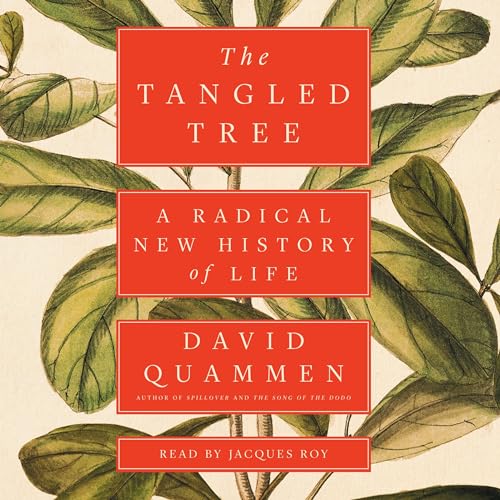
The Tangled Tree” A Radical New History of Life

By: David Quammen

Narrated By: Jacques Roy
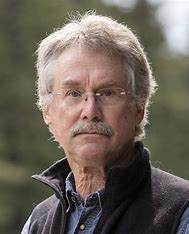
David Quammen (Author, Yale University graduate, Rhodes scholar, fiction and non-fiction nature and science writer and historian.)

Quammen’s history of the discovery of a new form of life is interesting and enlightening. Archaea cells are not discovered until 1977 at the University of Illinois. Archaea are neither animal nor vegetable but resemble bacteria, a single-celled prokaryote. Archaea are prokaryotic (without a nucleus), like bacteria. There seem to be two differences between Archaea and bacteria. Archaea often thrive in extreme environments by using ether-linked lipids while bacteria only use ester-linked lipids. The difference has to do with how these prokaryotes bond to lipid molecules.

Archaea are believed to have set a boundary for evolutionary diversity in earth’s early extreme environment.
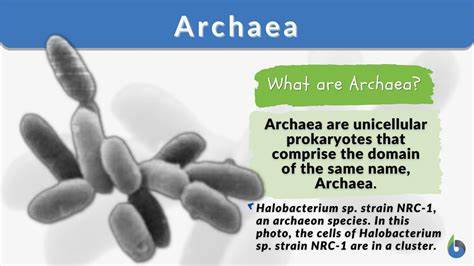
Archaea are believed to have played a role in the transition and adaptations that allowed life to change and flourish. The suggestion is that archaea were instrumental in creating a “The Tangled Tree” of life. Archaea, like bacteria, are everywhere in the soils and water of earth. Through chemical processes, they moderate global carbon and nutrients that exist in the world’s ecosystem. Some suggest life would have evolved without archaea but their role in earth’s early existence seems especially relevant because of early earth’s extreme environments.
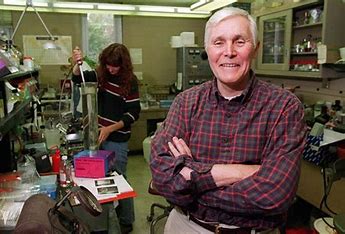
Carl Woese (1928-2012, American microbiologist and biophysicist.)

Quammen introduces Carl Woese, the evolutionary biologist who revealed archaea as a third form of life. Woese challenges Charles Darwin’s theory of evolution because this third domain of life, alongside bacteria and eukaryotes, fundamentally changed representation of life as a branching tree. Archaea are similar to bacteria in that they are procaryotic (singular cells with no nucleus). However, archaea have cell wall differences. Archaea cannot perform photosynthesis, they reproduce by fission, and interact with DNA and RNA differently. What is discovered about archaea is that like bacteria, they can transfer genetic information horizontally, i.e. directly affecting the evolutionary characteristics of species.

The idea of descendent inheritance is not overturned but hugely expanded with archaea becoming a part of the process of evolution.
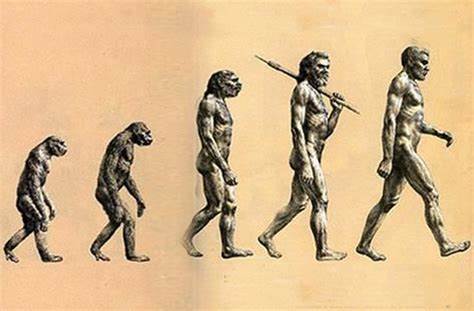
Archaea, like a bacterium can infect living things but as a genetic cell, archaea can initiate inheritance. To stretch one’s imagination, archaea might be transmitted between a human and a pet like a bacterium but with the potential of inheritable characteristics. Like learned behavior, the inference is there is a possible exchange of archaea cells between humans and pets that may change behavior of one or the other. The inference is that a pet dog may exhibit the behavior of its owner, not only because of learned behavior, but because of archaea transfer.
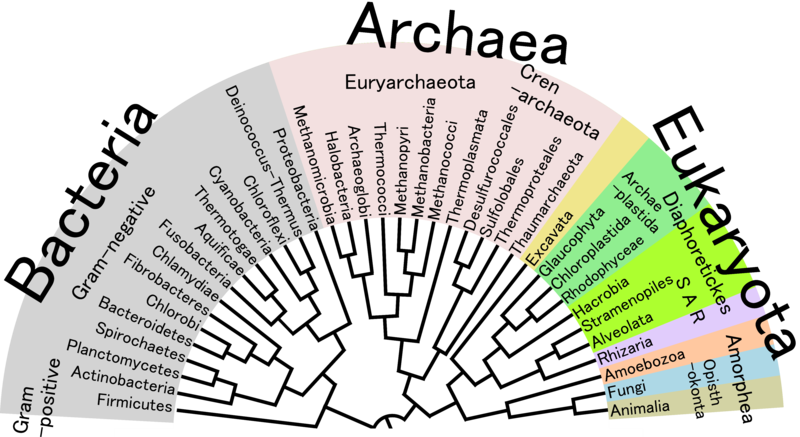
The idea of horizontal gene transfer (HGT) by archaea tangles the tree of life in ways that make natural selection a lottery as well as a parental inheritance.

Quammen touches on discovery of CRISPR (clustered regularly interspaced short palindromic repeats) which is a powerful technology that allows precise gene editing of an organism. As science discovers the genetic origin of disease and animal kingdom vulnerability, gene editing has the potential of saving or destroying life.

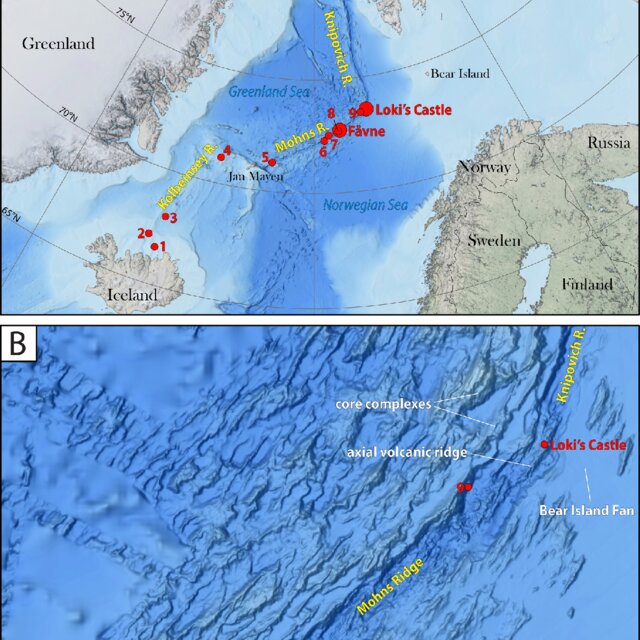
Quammen turns back to the age-old question about the beginning of life on earth. What came first and how did eukaryotes evolve into sentient beings? A suggestion made by some and recalled by the author is Loki’s Castle, a hydrothermal vent in the mid-Atlantic Ocean. Here, a thermophile, which is an archaeon, may have been life’s trigger that began evolution.
To Carl Woese, Darwin’s theory of evolution was, at the least, horribly misleading. Today, Darwin’s “Origin of Species” remains a seminal work of evolutionary science. Darwin’s work was based on observations during the voyage of the Beagle in the 1830s. Admittedly, natural selection from a common ancestor was not the whole story but it opened the door for further investigation and scientific proof.
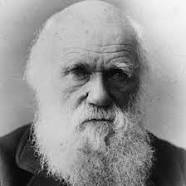
CHARLES DARWIN (1809-1882) FOUNDER OF THE THEORY OF THE ORIGIN OF SPECIES.

Woese and other biologists owe much to Darwin’s early observation and theory of evolution. Science begins with theory and evolves with proof, demonstrated by repeatable experimental results. Darwin gave the world the theory. Biologists have been working on the proof ever since.

BIODIVERSITY

Human population growth is slowing, and awareness of biodiversity is improving but is the trajectory of global warming outpacing human action?

Books of Interest
 Website: chetyarbrough.blog

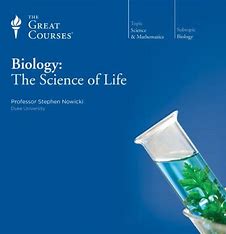
Biology: The Science of Life

Author: Great Book Series

Narrated By: Professor Stephen Nowicki

Stephen Nowicki, Ph.D. (Bass Fellow and Professor of Biology @ Duke University, Associate Chair of the Dept. of Biology and Neuroscience.)

This is a dauting series of lectures with a theory of the beginning of life. It addresses living things in general but more specifically what is known about human life. Not surprisingly, it is immensely complicated.

There may have been an Adam and Eve in history, but Science infers any garden of Eden had to have been long after the beginning of life on earth.

Nowicki explains how Stanley Miller conducted an experiment in 1952 that simulated conditions of the early days of earth’s formation. Methane, ammonia, hydrogen, and water were present in those early days. These ingredients were used in a controlled environment, with the help of energy (primordial lightening), to combine into amino acid compounds that are essential to life. These basic chemicals were present in the early days of earth. These amino acid compounds are the building blocks of life.

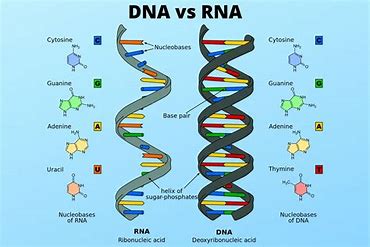
With amino acids, it became possible for DNA and RNA formation. DNA and RNA are shown to synthesize proteins leading to cellular process and organic development.

From these early beginnings, a natural selection process is initialized, i.e. evolution began which led to complex organisms like viruses, bacteria, animals, and eventually humans. Nowicki goes on to explain the complex biology of science. This is a point at which understanding by a lay reader/listener becomes difficult and only partially comprehensible. He begins with a detailed discussion of genetics, the study of genes, their discovery and function.

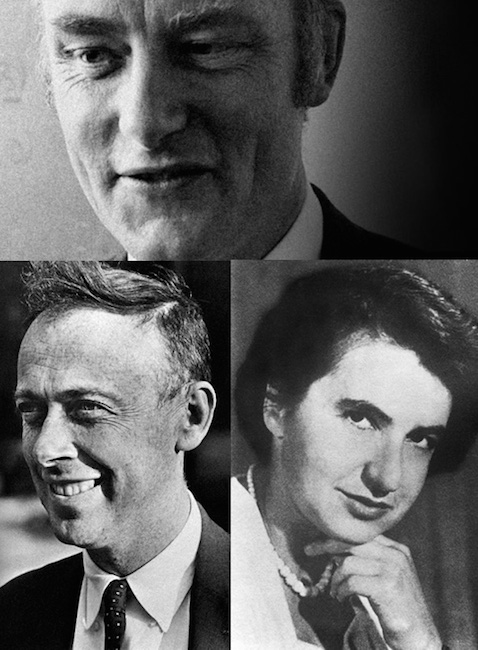
With the help of Rosalind Franklin (lower right), Watson (lower left) and Crick came up with the double helix model made of deoxyribose sugar that alternates with phosphate group strands.

The most famous pioneers of genetics are James Watson and Francis Crick. The genetic model they created reveals the backbone (organizational structure) of genes. With addition of nucleotides (adenine, thymine, guanine, and cytosine) to the gene backbone, genetic instructions are encoded by single strands of RNA into double strands of DNA. RNA’s single strands direct ribosomes that prevent mutation and maintain genetic integrity.

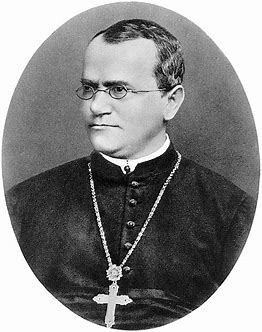
Nowicki jumps back in history to explain Darwin’s theory and proof of evolution. In addition, he recounts Gregory Mendel’s discovery of genetic inheritance. (Though Darwin and Mendel were contemporaries, it is not believed they ever met.) Mendel found, in breeding pea plants, that pea plants inherited certain traits of their parent plants with first generation plants having one color flower while second generation had 1/3rd to 2/3rd color differences that experimentally suggest inheritability of appearance. Mendel had no knowledge of genetics but was aware of Darwin’s writing. Ironically, Mendel discovered that inheritance had distinct genetic units of dominant and recessive characteristics explained how second-generation pea plants had mixed colors. This inheritable element of a gene became known as an “allele”, a word coined by British geneticist William Bateson in the early 1900s.

A listener/reader is only 1/4 of the way through Nowicki’s lectures at this point. Many of the remaining lectures delve into the details of gene function that will be interesting to biology students but only confuse and tire a dilettante.

To this reviewer, the two most enlightening features of Nowicki’s lectures are his views on the origin of human life and the ecological loss of biodiversity that threatens human existence. Nowicki challenges religious belief in the origin of life with a convincing argument for nature’s creation of human existence. His last lecture addresses global warming, reduced biodiversity, and the consequences of a loss of earth’s laboratory of medicinal cures for human ailments.

Nowicki leaves listener/readers with belief in humanity’s and earth’s environmental correction but with reservation. Human population growth is slowing, and awareness of biodiversity is improving but is the trajectory of global warming outpacing human action?

UNENDING PURSUIT

Science is an unending pursuit of knowledge that is refined and advanced by new techniques of examination.

Books of Interest
 Website: chetyarbrough.blog

“Gene Machine

Author: Venki Ramakrishnan

Narrated By: Matthew Waterson

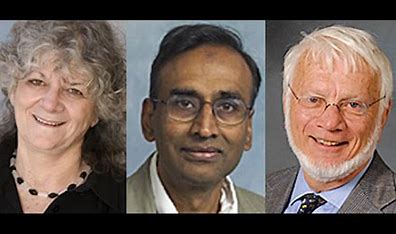
Venki Ramakrishnan (Author, British-American structural biologist, shared 2009 Nobel Prize in Chemistry with Thomas A Steitz and Ada Yonath.)

“Gene Machine” tells reader/listeners of the discovery of the structure of ribosomes. Ribosomes are elemental cellular organisms (organelles) made up of proteins within living cells. They are genetic factories that process protein within the body. Without ribosomes, life as we know it, would not exist. Ribosomes repair cellular damage, maintain cell structure, and direct chemical processes within the body.

In the 20th century, after years of research, Ada Yonath, Venki Ramakrishnan, and Thomas Steitz discover clues to the structure of Ribosomes. Ramakrishnan story is about the complex process of scientific discovery. He reveals how scientists are motivated by the same desires of all humanity; namely money, power, and/or prestige. This is “the way” of the world, whether its religion, science, or society.

To the lay reader/listener, Ramakrishnan’s story is most interesting because it illustrates science research is more than a quest for knowledge. Curiosity and thrill of discovery are important, but it is the reward of being first and the accompanying money, power, and prestige that are scientists’ greatest reward.

Ramakrishnan somewhat ambivalently acknowledges Ada Yonath is the first scientist to recognize the critical role of ribosomes in genetic engineering. Ms. Yonath pioneers the use of crystallization in studying the elusive ribosome existence. However, Yonath fails to reveal a clear picture of the ribosome because of repeating the same chemical means of freezing the image of the elusive organelle. Ramakrishnan and his team of graduate students manage to come up with a chemistry formula that clears the image enough to make the structure of ribosomes more accurate.

Thomas Steitz helped perfect x-ray crystallography to more clearly map the structure of ribosomes.

Steitz’ work justified his inclusion in the Nobel award. The significance of Ramakrishnan’s story to a non-scientist is his unabashed and self-effacing humility when explaining his role in discovering the structure and purpose of ribosomes.

One wonders if Ramakrishnan harbors an opinion that Yonath’s pioneering of ribosome research is overblown.

Ramakrishnan criticizes Ada Yonath for being too verbose when participating in public conferences by recalling a conference that limited presenters to 15 minutes. Ramakrishnan explains Yonath went on for over 30 minutes despite the audiences expressed discontent. In the end, he acknowledges Yonath’s role in being among the first to suggest ribosome research was important. She was the first to use crystallography to identify its structure. Ramakrishnan notes those two facts justify her Nobel’ selection.

Ramakrishnan suggests winning a Nobel opens doors to opportunities that are unjustified in ways that have little to do with the specific work or a particular discovery.

Ramakrishnan explains much of the public think a winner of a Nobel could talk about any scientific subject with expertise. He notes the Nobel Prize is a great honor but is proffered to scientists that have achieved a finite discovery in a specific discipline, not a general understanding of all science. He goes on to explain how his country of birth (India), the country of England, and one suspects America, wish to claim him as representative of their countries–when, in fact, he is an individual who achieved success by dint of hard work, the help of others, and personal discipline. Ramakrishnan’s story explains how he pursued understanding of crystallography because it could help him achieve a goal. His point seems that the hard work of many scientists, not nationality or Nobel recognition, are keys to successful science research.

Ramakrishnan story is about science as an unending pursuit of knowledge that is refined and advanced by new techniques of examination.

In today’s science research, chemistry of crystallography is made less valuable with the invention of the atom-level microscope that offers direct, firsthand observations of the structure of human organelles like the ribosome. Ramakrishnan suggests science is an eternal search for knowledge.