MORAL FRAGILITY

Audio-book Review
By Chet Yarbrough

(Blog:awalkingdelight)
Website: chetyarbrough.blog

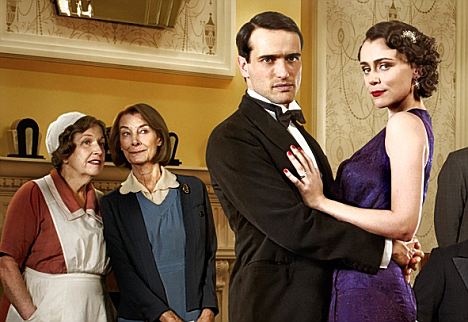
The Age of Innocence

By: Edith Wharton

Narrated by Lorna Raver

Edith Wharton (American novelist, playwright, and designer, Pulitzer Prize winner, 1862-1937.)

Wharton’s “The Age of Innocence” exposes false notions of equality of the sexes in America and reflects on the human frailty and strength of men and women.

Edith Wharton lived through the turn of the 19th and 20th century in America.  She lived an adult life of luxury in New York, and later in France. 

Wharton writes about American society; i.e. she exposes New York’s “upstairs, downstairs” snobbery in the early 20th century.


Newland Archer is engaged to be married to May Welland when a childhood friend comes to visit relatives in New York.

In telling the tale, Wharton sharply defines the battle of the sexes, duplicity of romance, and folly of youth.  Though writing of a sliver of wealthy American’ society in the early 20th century, Wharton’s story rings as true about men and women today as it did when she won the Pulitzer Prize.

The battle of the sexes is repeated today in the Gates’ divorce. Their wealth and notoriety make them news. News that is invisibly repeated in many American households.

This is Wharton’s story, maybe a fiction, but as true to life yesterday as it is today. A childhood friend is Ellen Olenska, a 30-year-old married countess that left New York in her youth.  Newland begins to question his love for May Welland.  His reasons for questioning are not clear to himself.  Wharton infers the reasons are idealized romance and lust.

Archer idealizes Olenska.  His idealization comes from unrequited lust.  Olenska is a married woman.  She is not available.

Archer knows his soon-to-be wife, May, is committed to him and takes her for granted.  Archer’s lust for Olenska conflicts with Archer’s morals. The nature of unrequited lust is that the thought or idea of sex is perfect.  In Archer’s mind, Olenska becomes an objectified sex object (a perfect fantasy), and May will never be good enough.  Archer is psychologically prepared to abandon May and pursue a “perfect” relationship with Olenska.

Olenska, in one respect, is Archer’s alter-ego.  She views Archer as a perfect companion because Archer is not available.  Archer is committed to another woman.  Olenska lusts for Archer but with better insight to the truth.  Her life experience tells her to resist infatuation.  She knows that once lust is satisfied, social reality returns.

Archer views May as a complacent woman that will make a boring wife.  In contrast, Wharton shows May to be a perceptive woman that understands Archer’s and Olenska’s relationship.  May correctly diagnoses Archer’s false idealization and subtlety maneuvers Archer to quash the burgeoning affair with Olenska.

In the end, Wharton shows Archer to be morally shallow.  Archer chooses to keep his innocent memory; i.e. his deluded vision of romance, commitment, and love.

Governor of New York–Andrew Cuomo

Cuomo reflects much of what Edith Wharton illustrates in “The Age of Innocents”. Power and inequality distorts the relationship between men and women today, just as it did in the early 20th century.

May and Olenska are shown to understand the difference between lust and romance; commitment, and love.  Archer never does.  Archer never gets over “The Age of Innocence”.

CHAUVINISM

Audio-book Review
By Chet Yarbrough

(Blog:awalkingdelight)
Website: chetyarbrough.blog

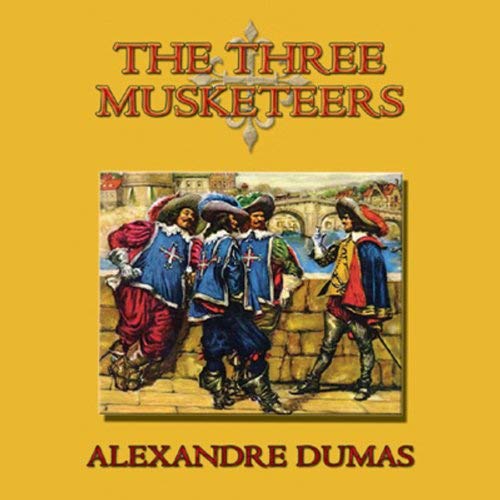
The Three Musketeers

By Alexandre Dumas

Narrated by Simon Vance

Alexandre Dumas (1802-1870, French Author)

“The Three Musketeers” is a character driven story loaded with romantic heroes and riven with specters of evil.  In the context of today’s “me to” movement, it is a female bashing and debasing tale wrapped in a male chauvinist delusion.

“The Three Musketeers” reinforces histories’ misshapen view of women’s rightful place as hero and/or villain.

In “The Three Musketeers” women are the cause of war, heart ache, and most maladies of humankind.  In that view, Dumas joins the pantheon of writers that demean women.

On the other hand, Dumas creates a female character that is an equal to diabolical protagonists in other famous novels. There is no villain more devious, complicated, and scarily drawn than Milady de Winter.

Alexandre Dumas is one of France’s most well-known writers. At the risk of being identified as a fellow misogynist, “The Three Musketeers” is a fiction writer’s tour de force and a joy to listen to when narrated by a master story teller. 

Meeting d’Artagnan for the first time and learning about Athos, Porthos, and Aramis, his three gallant and inseparable friends, is a guilty pleasure. There are no male heroes more brilliantly defined than Athos, Porthos, Aramis, and d’Artagnan.

Dumas writes the story of d’Artagnan, a 19 year old romantic that leaves his homeland with a letter of introduction to Monsieur de Treville, the Captain of the Musketeers.  The hero, d’Artagnan is unknowingly pitched into the middle of a jealous rivalry between the French King’s Musketeers and Cardinal Richelieu’s competing cadre of French protectors. 

Dumas cleverly interlaces facts of history with stories of Musketeer bravery, hi-jinks, and romance that reminds humans of their best and worst qualities. 

Cardinal Richelieu (1585-1642).


England and France are on the verge of war in the early 1600s.  The jealous rivalry of the King’s Musketeers and Cardinal Richelieu’s nationalists roil the relationship between the King of France and its Cardinal. 

The Musketeers walk a fine line between their support of the King and Queen and Richelieu’s defense of the country. 

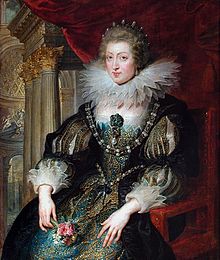
Queen Anne of Austria (1615-1643, Louis XIII’s wife).


Richelieu is painted as a powerful French nationalist and a venal schemer who lusts for Queen Anne.

Duke of Buckingham (1592-1628).


The dastardly Cardinal goes to great lengths to expose the Queen’s affection for the English Duke of Buckingham; partly to save France from England’s covetousness, but also (in Dumas’s fiction) to break the relationship between King and Queen.

Dumas suggests Richelieu’s plan is to soil the Queen’s reputation with an already jealous King.

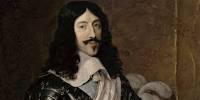
King Louis XIII (1601-1643).


A principal cause for the war between England and France is purported to be the Duke of Buckingham’s immoral advances toward France’s Queen Anne and Queen Anne’s suspected cuckolding of King Louis the XIII. 

Women are unceasingly characterized as fickle, conniving, gullible, or duplicitous. 

Dumas describes d’Artagnan’s infatuation with the married Constance Bonacieux. It is not unlike Richelieu’s alleged lust for Queen Anne. Dumas adds d’Artagnan’s dalliance with Milady de Winter, a wily protagonist, and her sometimes associate Richelieu. Neither men nor women seem entirely chaste in Dumas’s tale, but women are characterized less gallantly.

Listening to Vance’s narration of “The Three Musketeers” is an addictive pleasure in spite of Dumas’s fickle characterization of women. 

The words from Milady de Winter vividly portray human nature at its worst.  Both the Cardinal’s, d’Artagnan’s, and Milady de Winter’s virtues leave much to be desired. Generally, women in “The Three Musketeers” are characterized as objects, more than equals to men. How much has changed since the 19th century?

Nevertheless, “The Three Musketeers” ending is thrilling and satisfying to many deluded misogynists among us.

CATHOLIC GUILT

Audio-book Review
By Chet Yarbrough

(Blog:awalkingdelight)
Website: chetyarbrough.blog

A Portrait of the Artist as a Young Man
By James Joyce

Narrated by John Lee

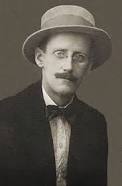
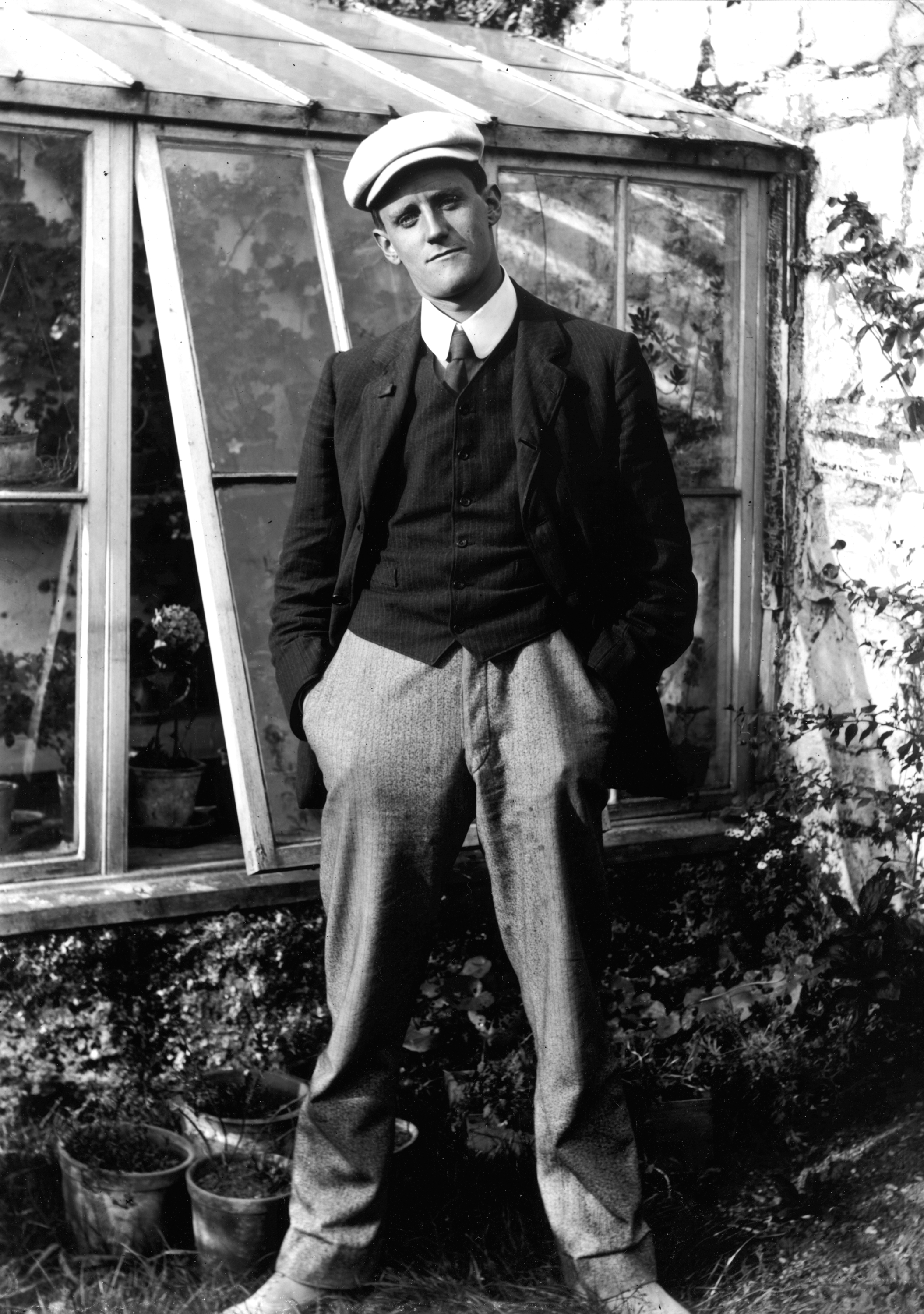
James Joyce (1882-1941, Irish novelist, poet, teacher, and literary critic.)

James Joyce gives us a picture of Catholic Ireland in the early 20th century.  He describes an Irish home; i.e. riven with Catholic guilt and ambivalent beliefs about God and Ireland’s place in the Gaelic world. 

Joyce’s main character, Stephen Dedalus, is born into an upper middle class Irish family that falls on hard times.  Dedalus graduates from a Jesuit school and moves on to college but his life steers away from God and Ireland in his journey to manhood.

Stephen chooses his own path in life but like all humankind he carries the genetics of family and circumstance that compel life’s decisions.  Like his father, Stephen is drawn to agnosticism, bordering on atheism, because of worldly pleasures and pains.  The pleasures of sexual adventure and the pains of Irish conflict (about religion and statehood) drive Stephen’s escape from Catholicism and his father’s fall from grace.

The fragility of the Catholic Church is evident in James Joyce’s “…Portrait…”  Dedalus is portrayed as a top of his class student that is coveted by the Church hierarchy that wants Stephen to become a Jesuit priest.

The strength and allure of the Church at that time is clearly evident in Joyce’s description of the Catholic Priesthood’s power to attract the best and the brightest of its brethren.  However, Dedalus, after a day contemplating the Church’s offer, chooses to pursue a broader life.

Even though the Church offers a vocation of prominence and security, Stephen rejects it.  The irony of the rejection is that Stephen’s Catholic guilt propels him away from a life of Catholicism. Stephen realizes that he cannot resist worldly temptation.

To Stephen, the mechanism of Catholic forgiveness of sins seems formulaic and inadequate for the purpose of cleansing one’s soul.

The prescience of Joyce’s insight is fully realized in today’s Catholic Priesthood and its failure to protect Catholicism’s children.

Theodore McCarrick (Former cardinal and bishop of the Catholic Church–disgraced after found to be a pedophile after being appointed by Jean Paul II, ignored by Benedict, and finally revealed by today’s Pope Francis.

And so, Stephen Dedalus is cast adrift.  He is a teacher and poet; highly regarded by most of his peers and recognized by many as an intellectual superior.  He wishes to escape Ireland; to see the world.  This is “A Portrait of the Artist as a Young Man”.

At best, one sees Stephen Dedalus as a burgeoning Humanist; at worst, a hedonistic life traveler. A great read; well told by John Lee.

Truth

 Audio-book Review
By Chet Yarbrough
(Blog:awalkingdelight)
Website: chetyarbrough.com

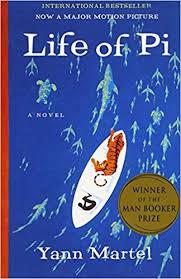
Life of Pi
By Yann Martel
Narrated by Jeff Woodman

Yann Martel (Author, Spanish-born Canadian)

News of Irrfan Khan’s passing reminds all who saw “Life of Pi” or “Slumdog Millionaire” of his gifts as an actor. He died at the age of 53 from a neuroendocrine tumor on April 29, 2020.

Symbolism is a part of “Life of Pi” but it makes little difference to a reader or listener who is looking for an enjoyable fictional adventure. Most listeners will be fascinated and absorbed by Yann Martel’s writing and Jeff Woodman’s narration.

Pi’s father sells his business. He owns a zoo in Mumbai. By ship, he is transporting his family and the zoo animals to North America when disaster strikes.

Martel successfully suspends disbelief in a story about a boy from India who survives a ship wreck in a life boat with a tiger, a zebra, a hyena and an orange orangutan.

As with all ship wreck and life boat stories, the immediate concern is food and water for survivors, of which there is only Pi and four zoo animals.

Survival of the fittest becomes a suspenseful part of the story. The orangutan’s name is Orange Juice. Names for the hyena and zebra fall into the fog of a listener’s memory. The tiger’s name is Richard Parker.

This odd menagerie winnows down to the boy and the tiger but, along the way, one learns something about truth and relationship.

Martel describes Pi’s early life as the son of a zoo keeper and owner in Mumbai, India before a fateful voyage to Canada. By telling of Pi’s early life, Martel creates a background that makes Pi’s successful management of his crowded life boat believable. 

Pi is born a Hindu but becomes interested in Christianity and Islam to the extent that each allows him to love God.

Pi’s concatenation of faiths is a foretelling of how Pi handles the loss of his family, survival in a hostile environment, and tolerance for life’s ambiguities.

Fascinating tales of survival of the fittest are followed by an equally interesting story of how Pi gains respect and control of an increasingly hungry and thirsty tiger.

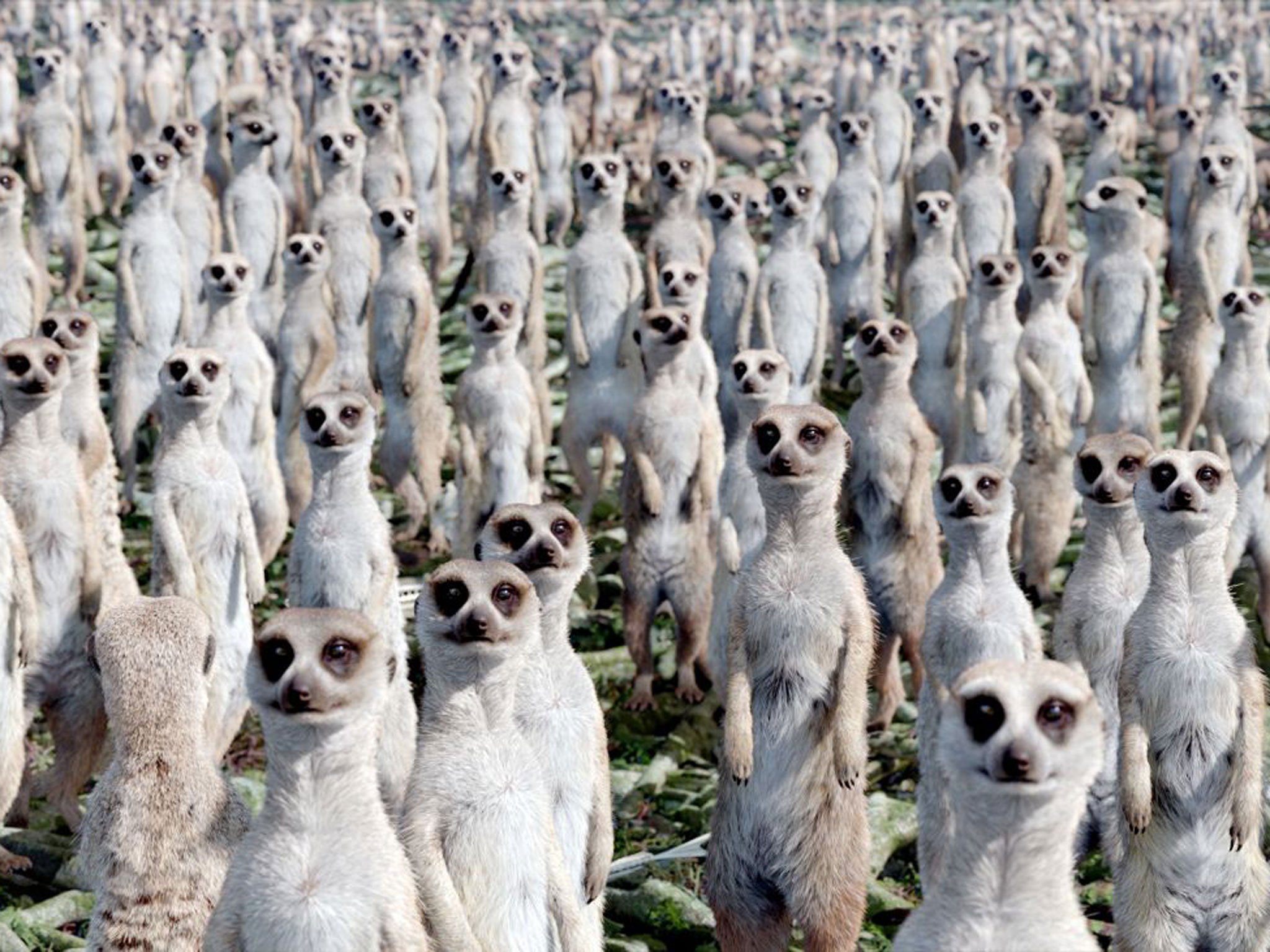
In the course of the story, Richard Parker and Pi find an island populated with meerkats and flesh eating plants. They eventually escape the island, and–well, you have to read the story.

Pi is obviously rescued–after all, he is telling the story.

The Japanese government interviews Pi to determine what happened to the ship that was lost and how Pi survived 227 days on the high seas. Pi tells an incredible story. Naturally, the government officials disbelieve him.

Pi creates another less interesting story. This new story becomes the official record.

A listener is left to believe the unbelievable, in the “Life of Pi” story. Like Trump’s lie about a stolen election–Pi’s report is given by one person when there is no proof and no witnesses.

“Life of Pi” is a fun ticket to entertainment. Many are entranced by Trump for the same reason; however, governing is not about entertainment.

OVERCOMING

Audio-book Review
By Chet Yarbrough

(Blog:awalkingdelight)
Website: chetyarbrough.blog

The Count of Monte Cristo
By Alexandre Dumas

Narrated by John Lee

Alexandre Dumas (1802-1870, French Autor)

Alexandre Dumas is a French Charles Dickens and a writer of “Dostoyevsky light” stories.  The narrator, John Lee. magnifies “The Count of Monte Cristo” characters with an exotic voice that markedly enhances Dumas’s story.  

Charles Dickens (1812-1870, English Author and soicial critic.)

Like Charles Dickens, Dumas creates interesting characters. And, like Dostoevsky, he creates emotionally driven protagonists. 

Fyodor Dostoevsky (1821-1881, Russian novelist, essayist, journalist, and philosopher.)

Dumas writes a story of revenge with twists of fate that have Dickens’ coincidences and “Dostoevsky-like” motivations.

The hero is Dante, the wrongfully accused, convicted, and secretly incarcerated prisoner. The heroine is Mercedes, the love of Dante’s life that mourns his disappearance on their wedding day. 

Dante is unjustly imprisoned for being a Bonopartist based on inadvertent collusion by Danglars, Villifort, and Fernand.  They all have different motives for jailing Dante. 

The jealous and greedy merchant, Danglars wants to rid himself of Dante because he is a commercial rival.  An ambitious, duplicitous, and sycophantic, politician, Villifort, wants to hide his family’s involvement with the Bonapartists.  Fernand wants to remove Dante from his wedding to give himself an opportunity to marry Mercedes himself.

(Bonapartism is the political ideology of Napoleon Bonaparte. In government speak, it is a dictatorial executive with a weak and ineffectual legislative body, filled with sycophants.)

Luck and fate mix into Dante’s imprisonment. Dante escapes and becomes fabulously rich.   Dante travels the world after his escape and searches for information about people in his life before imprisonment. 

A cloak of mystery surrounds Dante as he appears in the lives of his friends and enemies.  The cloak is removed at perfect moments in each episode.  He endeavors to understand his friends and enemies strengths and weaknesses. 

Dante rewards his friends and punishes his enemies.  Plans for revenge and exposure of his enemies’ misdeeds are cleverly woven into the story.  Each colluding villain is defeated by his own human weakness. 

Danglars’ greed becomes his destruction.  Villifort’s lies lead to madness.  Fernand’s false accusation, and the loss of Mercedes’ love drive him to commit suicide.

The story is a tangled web of relationships, guilts, and crimes that are satisfyingly resolved by the end of the book.  Overcoming life’s adversity and justice’s triumph are the appeal of “The Count of Monte Christo”.

Who among Dumas’s three villains in “The Count of Monte Cristo” reminds one of America’s Bonapartist President?

FREE WILL

Audio-book Review
By Chet Yarbrough

(Blog:awalkingdelight)
Website: chetyarbrough.blog

The Brothers Karamazov
By Fyodor Dostoevsky

Narrated by Walter Covell

Fyodor Dostoevsky (Russian Novelist, 1821-1881)

Twenty years before Sigmund Freud’s “…Psychopathology of Every Day Life”, Fyodor Dostoevsky penetrates man’s subconscious to reveal unnamed frames of mind that influence human behavior. 

Sigmund Freud was an Austrian neurologist and the founder of psychoanalysis (1856-1939)

All of Dostoevsky’s writing probes the human mind allowing listener/readers to hear unspoken thought and vicariously experience the consequence of singular deliberation.

Human aggression, compassion, love, and hate possess “The Brothers Karamazov”.  The origins of these feelings are nakedly exposed in the murder of “The Brothers…” hedonistic father.

One of four brothers is suspected to be a murderer.  The oldest brother is a student intellectual, a middle brother is an effusive pleasure seeker, and the youngest is a pious seminarian.  A lurking illegitimate fourth son (aged somewhere between the oldest and youngest) adds to Dostoevsky’s tale of parricide.

The irony of isolated thought and deliberation is that it can lead to genius or horrendous crime. The first might be a Paul Dirac or Volodymyr Zelensky; the second a Ted Bundy or Vladimir Putin.

Theodore Robert Bundy was an American serial killer, kidnapper, rapist, burglar, and necrophiliac (1946-1989) Electrocuted–1989 in a Florida prison.

“The Brothers Karamazov” introduces Ivan Karamazov, an intellectual agnostic. Ivan’s agnosticism and misanthropy contrasts with his younger brother, Alyosha.  Alyosha is a character reminiscent of an earlier Dostoevsky’ work (“The Idiot”) who exemplified man’s goodness in a life lived in contemplation and moderation.

“The Brother’s Karamazov” illustrates life’s contrasts with Alyosha, a saintly hero and Ivan, a deluded manipulator of human events. Both live lives of contemplation but one chooses to become a monk; the other an intellectual misfit.

God, free will, lust, innocence, guilt, and responsibility play out in thoughts and actions of the four brothers.  If free will exists, where does it begin and end?  Are we free?  Are we driven by human nature or by God’s plan to become who we are; and to do what we do? 

If you teach someone to hate as Ivan teaches Smerdyakov, his illegitimate brother, are you innocent of actions taken by those whom you teach?  Does a teacher have any guilt; any responsibility for bad actions of the student? 

As an intellectual, Ivan explains he does not believe in God.  And later, he denies any responsibility for his father’s murder.  His beliefs lead him to despair when he realizes Smerdyakov is the murderer. 

Ivan eventually takes moral responsibility for his father’s death.  At the end, Ivan seems on the verge of reassessing his belief in God; i.e. an assessment dear to Dostoevsky’s life and a subject espied in all his work.

The question of free will is challenged by the history of the Karamazov family.  Every characteristic of the brothers is reminiscent of a part of their father’s strengths and weaknesses. 

All of the brothers in varying degrees are molded into who they are by their paternal father and their Holy Father.  The evidence of their Holy Father’s role is exhibited by the guilt ridden consciences of everyone but Smerdyakov. Finally, with Ivan’s final acceptance of responsibility for his father’s murder, Dostoevsky concludes an argument against free will.

Fyodor Dostoevsky brilliantly expands the value of literature with his insight into the relationship between thought, instinct, and action. Ivan’s broader intellect, and Smerdyrkov’s lesser intellect informs their actions. Instinct informs Mitya’s action. Religious belief informs Alyosha’s action.

The characters in Dostoevsky’s imagination are incarnations of religious belief. In “…Brothers Karamazov” each character’s life is prescriptive. Life is either designed by genetic inheritance or fulfillment of God’s plan. One suspects Dostoevsky believes the second more than the first.

ROBERT FROST

Audio-book Review
By Chet Yarbrough

(Blog:awalkingdelight)
Website: chetyarbrough.blog

Fall of Frost


By Brian Hall
Narrated by Dick Hill

BRIAN HILL (AMERICAN AUTHOR)

If you are not presently an Audio book fan, this is a book that might expand your literary horizon.  Without any intent to diminish Brian Hall’s skill as a novelist, “Fall of Frost” is a better book to listen to than read. 

ROBERT FROST (AMERICAN POET 1874-1963)
“Fall of Frost” is a fictional portrayal of “four time” Pulitzer Prize winning American poet, Robert Frost.  Dick Hill’s narration smoothly transitions from prose to poetry in his beautiful presentation of Brian Hall’s fascinating rendition of Robert Frost’s life.

This is not a biography.  It is a work of fiction grounded in historic events of a poet’s life.  It is an author’s projection of what Robert Frost thought when he wrote a poem; when he met world movers and shakers, or when he gave speeches at famous gatherings.

Hall escapes tedious fact reporting by capturing moments of Frost’s life.  When Frost meets with Khrushchev in 1962, he is nearing the end of his life. 

The story makes a listener feel Frost’s age by describing a long flight and revealing ruse’s of old age; i.e. like saying “what did you say” when what you really want is more time to think of a response.

Hall speculates on what might be going through Frost’s mind.  When Frost offered a poetry reading at Kennedy’s inauguration, he missed a line of his own poem; Hall writes like he knows Frost’s thoughts showing Frost’s frustration over his mistake.

“Fall of Frost” entertains and informs by revealing events in Frost’s life that influenced his poetry.  By shedding the category of non-fiction, Hall manages to create believable circumstances of a life that created famous poems like “The Road Not Taken” and “Stopping by Woods on a Snowy Evening”.

No, this is not a biography but it gives a context to events in Robert Frost’s life that can be found in history books.

The prose of Hall and poetry of Frost are wonderful to hear, regardless of the precise facts of Frost’s life.

Amanda Gorman seems a youthful replacement for Robert Frost–her poetic presentation at the Biden/Harris Inauguration is beautifully rendered on a page of the WSJ in 2021.

After listening to Fall of Frost, an audiophile or bibliophile will have a better appreciation of who Robert Frost was and what he represented in America and the world.

NIHILISM

Book Review
By Chet Yarbrough

The Winner Stands Alone


By Paulo Coelho

PAULO COELHO (BRAZILIAN AUTHOR, WRITER, LYRICIST)

Every life is a world.  Paulo Coelho’s The Winner Stands Alone magnifies the ephemeral nature of money, power, and fame.  After reading “The Winner…” one might conclude–in life, we stand alone; in death, we die alone.

However, Coelho suggests something different, i.e., we stand or die but are accompanied by either a good or bad angel.  It seems Coelho believes human existence is a fulfillment of destiny. Coelho implies there is no free will.

The Winner Stands Alone is a love-it or leave-it experience.  If it is a first exposure to Coelho, a reader will likely leave it.

Coelho also wrote “The Alchemist” which is a preordained destiny story but it is more hopeful in the sense that when one dreams, dreams can become reality. It speaks to the power of conviction, self-understanding, and never giving up.

“The Winner Stands Alone” is a dark tale, cleverly written about the world of glitz, glamour, fame, and fortune.  Set in Cannes during Festival, the vacuity of a nihilist’s life is stripped bare.

In “The Winner Stands Alone” Coelho cleverly reveals an evil protagonist’s nihilism.


Coelho’s “Winner…” is a nihilist who believes that existence has no objective meaning or intrinsic value. His belief inures to nothingness. 

Coelho’s main character, Igor, is a Russian millionaire.  Igor is a “Heisenberg-like” character with skills of a killer, passions of a romantic, and intelligence of a savant.  Igor lives by instinct, like a viper with a human brain.  He creates a demented plan to recover the love of his ex-wife. 

Igor’s plan is to destroy worlds (the lives of others) to demonstrate depth of love for a woman who has abandoned him.  Igor murders several of Cannes’ rich attendees and one poor shop girl with each victim losing their personal world of experience and existence. 

Igor sends IMs to his ex-wife at the end of each murder.  Each destroyed world punctuates Igor’s arrival and pending reunion with his lost love.  The reunion caps Coelho’s story.

NIHILISM : THE BELIEF THAT ONE LIFE, OR ANY LIFE IS MEANINGLESS.

“So last year 37,000 Americans died from the common Flu. It averages between 27,000 and 70,000 per year.

Trump’s nihilist view of life & the economy–Earlier this year, there were 3,428,462 confirmed cases of Corona Virus, with 137,613 American deaths. Today, over 1,000,000 Americans have died.

What is Vladimir Putin’s destiny? He and Donald Trump seem fellow travelers.

U.S. President Donald Trump and Russian President Vladimir Putin shake hands as they hold a joint news conference after their meeting in Helsinki, Finland, July 16, 2018. REUTERS/Leonhard Foeger

An aspiring Cannes’ police detective, like Hercule Peoirot, recognizes a serial murderer is at work before Igor’s reunion takes place.  The detective recounts former serial murderer cases to reveal common threads of intent.  Igor’s intent is seen by the detective as a message that, once delivered, will stop the serial killing at the Cannes’ festival.

What may keep a reader reading “The Winner Stands Alone” is the desire to know how the story will end.  Will Igor be caught?  Is human existence a fulfillment of destiny or life lived by instinct? Is there a difference?

BEING AND NOTHINGNESS

Audio-book Review
By Chet Yarbrough

(Blog:awalkingdelight)
Website: chetyarbrough.blog

Major Pettigrew’s Last Stand

By Helen Simonson

Narrated by Peter Altschuler

Helen Simonson (English author)

“Major Pettigrew’s Last Stand” is Helen Simonson’s literary debut.  The book begins like a locomotive chugging up hill but ends as a journey well taken.

This is a love story. It is also a story about an age demographic inelegantly described as a “pig in the python”; i.e. baby boomers that are born after the end of WWII (between 1946 and 1964).  Major Pettigrew is a fictional father of a baby boomer. 

Pettigrew believes in an internalized moral code and endeavors to live by it.  Emulation comes from one who sees a person act with reasoned opinions based on lived life.  Denigration comes from “boomers” that see a person trapped in the past and unwilling to change with the times.

Though Major Pettigrew is a retired English military officer, widowed and living in a small town in England, he represents what human’s emulate and denigrate. 

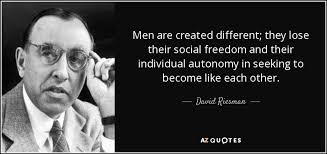
Pettigrew’s adult son is what David Reisman, in “The Lonely Crowd”, calls an “other directed” person that lives by a code based on perceived values of the day.  The code is highly malleable.  It is created by friends, family, business and societal influence.  The son’s conduct changes with his perception of other’s beliefs.  In contrast, the Major lives by an internalized code based on personal life experience. This difference creates conflict. 

One of Simonson’s examples of father/son conflict is in the sale of a matched set of antique guns.

The son wants to sell; the father does not.  The son acts from consciousness of societal norms that value things in dollars and cents.  The father acts from consciousness of what the guns mean to him in life experience.

Simonson creates a love story that makes the same point.  Jasmina Ali comes into Major Pettigrew’s life.  She is a Pakistani widow at age 50, several years younger than the Major.  The son is shocked by his father’s dalliance with a non-English widow.  His son is more concerned about how the village views the relationship than how his father feels. 

Simonson elaborates on this view of love by showing the son engaged to a young American woman that idealizes the English countryside.  She envisions having an idyllic country refuge, away from the city, to emulate English aristocracy.  The American asks the son to co-purchase a cottage near his father.  Major Pettigrew sees that the purchase is based on an image of English nobles oblige; not the substance of a home.

The son compounds “boomer” generation “other directness”. He changes his mind based on what society may think of him. He distances himself from his American fiancé to court an English aristocrat. The aristocrat offers higher social and financial reputation.  Major Pettigrew is mystified by his son’s fickle change of heart.


The climax of this story is skewed toward an appreciation of the “inner directed” nature of Major Pettigrew.  Major Pettigrew acts with courage and conviction to save a life, though it costs one of his beloved personal possessions.  He also rescues his paramour from the refuse of English and Pakistani prejudice.  Pettigrew makes his “…Last Stand”.

In 1950, David Reisman writes in “The Lonely Crowd” that “other directness” is a symptom of a civilization’s incipient decline.

FAULTS OF HUMANITY

Audio-book Review
By Chet Yarbrough

(Blog:awalkingdelight)
Website: chetyarbrough.blog

The Illustrated Man
By Ray Bradbury

Narrated by Paul Michael Garcia (this version not available at Audible)

Ray Bradbury (1920-2012, American Author and screenwriter)

Flights of imagination sparkle and spin in this updated 1950s classic by Ray Bradbury, “The Illustrated Man” and its accompanying short stories.

Bradbury writes stories that remind one of late night re-runs of Rod Serling’s “Twilight Zone”.  (Serling died in 1975.) Every episode sparkles with stars and planets, habitable by man but riddled with fear, death, and destruction. 

Bradbury grasps human nature and turns it against itself by writing stories that illustrate man’s selfishness, insecurity, wantonness, and aggression.

Tattoos come alive on rippling skin to act out a series of plays about mankind’s future.  Everyone fears the illustrated man because his tattoos expose the worst in man. 

Bradbury writes a story showing nuclear cataclysm will end life on earth.  Traveling to other planets changes mankind’s environment but man’s nature remains the same.

These are not happy stories but they are great flights of imagination.  Bradbury tells a story of human exile and deprivation that heightens human selfishness.

When personal reward is dangled in front of exiled and deprived human beings, the dangled reward is stolen by one to keep it from the many. In the end the reward is destroyed by the selfishness of each against the other.  

As the psychologist Erich Fromm notes: Greed is a bottomless pit which exhausts the person in an endless effort to satisfy the need without ever reaching satisfaction. 

Insecurity and envy are devouring beasts in the story of a planet blessed by an appearance of a Visitor (presumably Jesus) just before a rocket ship lands on the planet that has been visited.

The ship’s captain disbelieves it has happened. The captain who lives here is living in paradise. He is driven to track down this Visitor rather than settle in the secure surroundings of a blessed world.  The captain is left to wander the universe, never to arrive in time to actually see the Visitor. 

Wantonness is illustrated by the husband that is unhappily married.  He duplicates himself.  His duplicate takes his place beside his wife so so the real husband can buy a ticket to Rio to exercise his fantasy. 

The duplicate is so perfect it becomes as human as the husband.  When the wanton husband returns from Rio, the duplicate puts him in a box to die. The duplicate then buys a ticket for the wife to accompany him to Rio. 

Human kind is aggressive.  Humans conquer and destroy civilizations.  Bradbury creates a world of the future invaded by humans. The humans destroy its civilization.
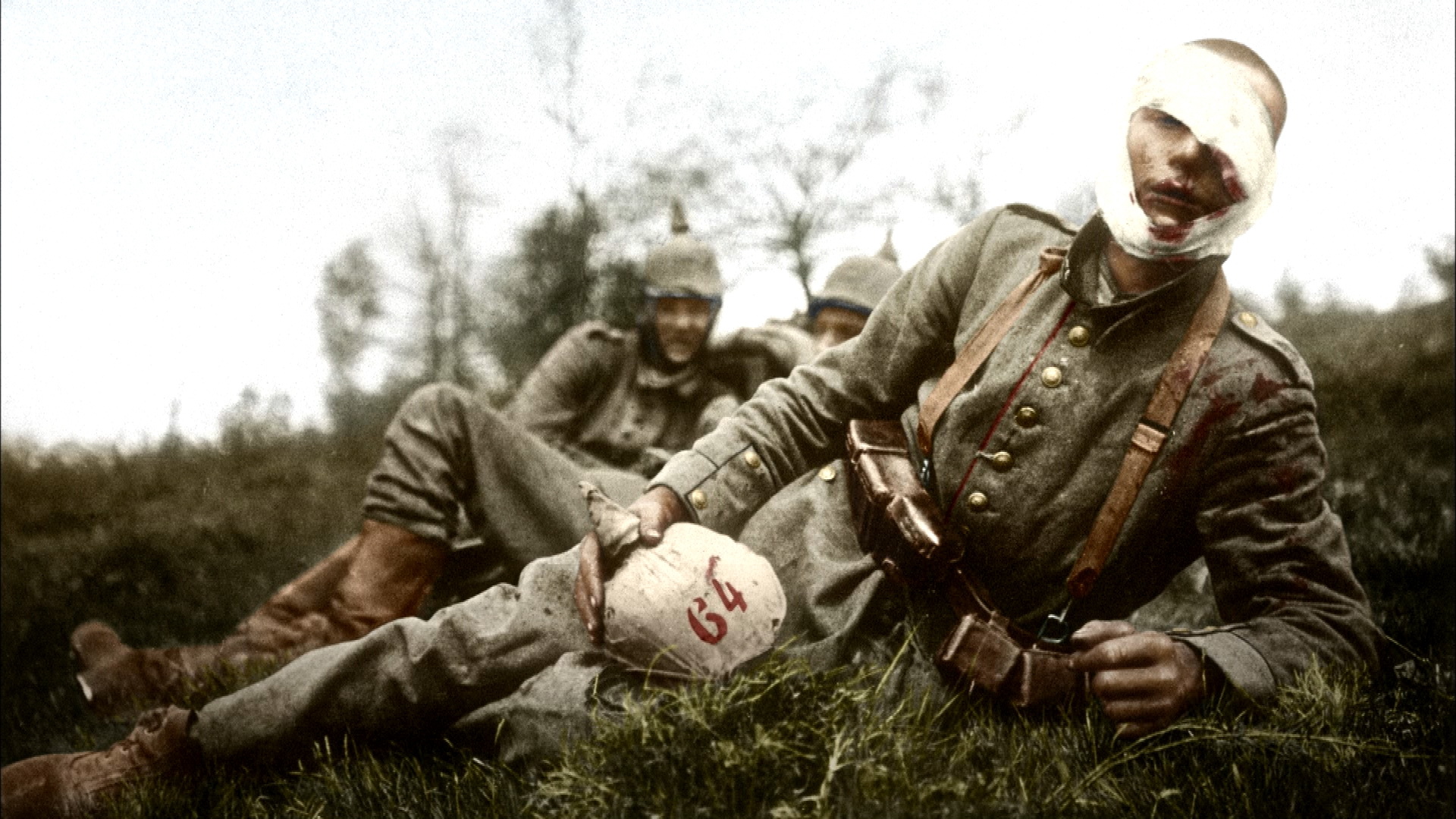
The remnants of the destroyed civilization prepare for a second visit from mankind. The remnants of the city devour the humans of the second visit and assume their bodies. These doppelgangers plan to return to earth to destroy those who had destroyed them.

Bradbury is a master story teller.  Paul Michael Garcia’s narration is a tribute to Bradbury’s skill.