

Books of Interest
Website: chetyarbrough.blog
Alexander Hamilton
Author: Ron Chernow
Narrated By: Scott Brick

Ron Chernow (Author, biographer of Alexander Hamilton, George Washington, Ulysses Grant, and Mark Twain.)
Though this critic did not care for Chernow’s biography of Washington, his examination of Alexander Hamilton is of some value. Chernow’s attention to detail is impressive. Considering the detail of Chernow’s biographies, it is quite an achievement for Chernow to have had the time to fully research and write histories of one, let alone four, important American’ leaders and influencers.

Traditionally, Alexander Hamilton’s father has been identified as James A. Hamilton, a largely unsuccessful Scottish trader in the British West Indies (approximately 1,000 miles from the American’ continent–made up of the islands of Cuba, Jamaica, and the Lesser Antilles.)
However, Chernow suggests James Hamilton may not have been the father of Alexander because his mother, Rachel Faucette, may have had sexual relations with other men. Ms. Faucette had become James’ lover while being married to Johann Lavien. Faucette had become unhappy and left Lavien in 1750 to take up with James Hamilton. Lavien had Faucette imprisoned for adultery. Lavien eventually divorces Faucette in 1759.
Chernow suggests Faucette, at some point, may have had an affair with Thomas Stevens, a successful merchant and landlord, while living with James Hamilton.

Chernow’s evidence is primarily from reports of Alexander’s close physical appearance to a son of Thomas Stevens. These two young men, Alexander and Thomas Steven’s son, Edward, were about a year apart in age with Edward being the older. Alexander and Edward became close friends, and Thomas Stevens played an important role in Alexander’s life when his mother died. Stevens took Hamilton into his household on St. Croix. Alexander became part of the Stevens’ family.

In Hamilton’s time with the Stevens family, he became educated by reading books and being employed in the mercantile trades of the West Indies.
By any measure, whether Alexander is the son of Stevens or Hamilton makes little difference. By definition, Alexander’s paternity is illegitimate. One asks oneself–so what? Alexander’s genetic inheritance from Faucette and either father leads him to become one of the most important historical influences in the creation of the American Constitution.
Hamilton arrives in New York City in 1772. Hamilton is only 17. The American Constitution is adopted, signed and ratified on September 17, 1787, and implemented on March 4, 1789.


Hamilton’s influence as a representative of New York is to create a centralized government with taxation authority.
This national government is to have the right to enforce national laws that apply to all citizens according to enumerated powers of a federal government under the direction of a President and Congress elected by American citizens. Chernow notes that George Clinton, the governor of New York, is opposed to the strengthening of the federal government because of his interest in maintaining his power as Governor of New York. Hamilton is one of the three representatives of New York at the convention, two of which were opposed to strengthening the federal government.
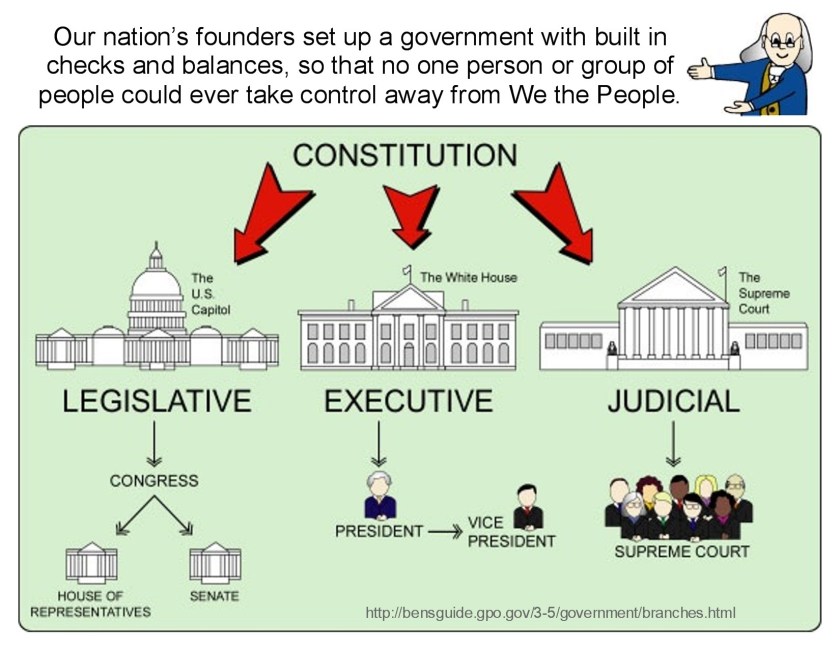
Chernow explains how the convention succeeded in strengthening the federal government.

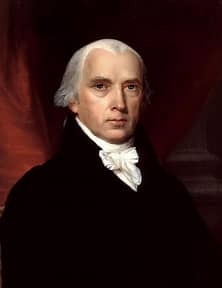
The two framers that are shown to have the greatest impact on the draft of the Constitution are Alexander Hamilton and James Madison. Chernow explains Hamilton pushed for a strong centralized government with broad powers to tax, regulate commerce, and enforce laws. Madison supports a strong federal government but argues for states’ rights and strict limits on federal authority. Hamilton wishes for broad flexibility for the federal government in the interpretation of implied powers while Madison insists on an explicit statement of the powers of the federal government to limit its implied powers. Hamilton looks to America as an industrializing nation that should be supported by a national bank with federal support for infrastructure improvements while Madison sees America as the agrarian breadbasket for the world with limited banking and industrial’ support by the federal government. Hamilton believes in rule by an educated elite while Madison is concerned about concentration of power in an elitist aristocracy. In the end, Madison takes on the role as the principal author of the Constitution which is intended to limit Hamilton’s expansive interpretation of federal government control of State governance.

It is interesting to be reminded of the danger of a strong executive branch and the consequence of rule by an authoritarian President.
Trump shows loyalty to his beliefs, rather than competence, as the primary qualification for appointment to America’s federal government bureaucracy. Chernow successfully reminds listener/readers of the history of early American government creation, but “Hamilton” is not a page turner like his biography of Mark Twain.

 REVIEWS AND VIEWS OF LIFE
How Error progresses throughout the course of Human history.
Israel Information Center Ithaca
internationalscholars·israelinformationcenterithaca.wordpress.com
Once the focus is the connection between The Torah and the real necessity for the endowed title of an existing National Israeli State, Karaites are an unity opportunity .
There is no presumptions of against the family circles of the Cohens which evolved into the various, and even those names of Levy, assuming all efforts to reestablish their…
_______________________________________________
_______________________________________________
Historical Narrative: Timeline of Key Events and Figures
Tzeddukim (Sadducees): A Jewish sect active during the Second Temple period, known for their rejection of oral law and emphasis on the written Torah.
Karaites: Emerged in the 8th century, rejecting rabbinic authority and relying solely on the Hebrew Bible for religious practice.
Saadia Gaon (882–942 CE): A prominent Jewish philosopher and legal scholar who integrated Jewish thought with Islamic philosophy and emphasized rationalism.
Rambam (Maimonides, 1135–1204 CE): A key figure in Jewish law and philosophy, known for his works like the Mishneh Torah and Guide for the Perplexed.
Shlomo (Solomon): Often refers to King Solomon, known for his wisdom and contributions to Jewish thought, particularly in the context of the Hebrew Bible.
David: King David, a central figure in Jewish history, known for uniting the tribes of Israel and establishing Jerusalem as the capital.
Philosophical/Jurisprudential Argument: Key Concepts
Pardes vs Greek logic:
Pardes: A method of interpreting Jewish texts that includes four levels: Peshat (literal), Remez (hint), Drash (interpretative), and Sod (mystical).
Greek Logic: Refers to the rational and philosophical frameworks established by Greek philosophers, emphasizing deductive reasoning and empirical evidence. Saadia Gaon and Rambam, though themselves deeply engaged with rediscovered Greek thought, fiercely opposed the Karaites and placed them under excommunication, just as the ancient P’rushim did to the Tzeddukim.
Common Law vs. Statute Law:
Common Law: A legal system based on judicial decisions and precedents rather than written statutes, allowing for flexibility and adaptation.
Statute Law: A legal system based on written laws enacted by a legislative body, providing clear and codified rules. Both Tzeddukim and Karaites denied the Sanhedrin’s legislative review authority.
Both prioritized “belief systems” over the Torah’s demand for judicial justice—restoring damages, making peace between Jews.
The Karaim, while not as radical as Samaritans, still rejected the prophetic mussar of NaCH as binding precedent.
Theological Critique: Key Issues
Assimilation: The process by which Jewish communities adopt elements of surrounding cultures, potentially leading to a dilution of Jewish identity and practice. Karaites, like the ancient Tzeddukim, reject the revelation of the Oral Torah at Horev. This rejection undermines the core of Jewish law as a judicial common law system. Both movements embraced Greek deductive logic over Rabbi Akiva’s Pardes inductive method—the loom that weaves warp and weft to form Talmudic law.
Avoda Zara (Idolatry): The worship of foreign gods or practices that contradict Jewish Oath brit alliance which continuously creates the chosen Cohen people through the dedication of tohor time-oriented Av commandments throughout the generations, often critiqued in the context of historical interactions with other cultures and religions.
______________________________________________
______________________________________________
First let’s address the Title of this piece. Karaites like the Tzeddukim reject the revelation of the Oral Torah which the After meal blessing remembers the Tzeddukim attempt to cause Israel to forget the Oral Torah. Both the ancient Tzeddukim of the Lights of Hanukkah ignoble disgrace of that pre-New Testament Civil War; and the Karaites who relied upon Greek deductive logic to determine that a mezzuzza on the door post must include the 10 commandments – neither the ancient nor the stupidity of the Middle Ages from about 900 CE which aroused the indignation of:
Saadia Gaon (882–942 CE) and the even more famous Maimonides (1135–1204) heretics – both men highly assimilated to the rediscovery of the recently rediscovered ancient Greek texts which had dominated the ancient Tzeddukim to originally reject the revelation of the Oral Torah at Horev; nonetheless both scholars absolutely rejected the Karaite heretical movement and placed the Karaite supporters into a charem excommunication just as did the ancient P’rushim to the Tzeddukim sons of Aaron.
Both Saadia and the Rambam violated the Torah commandment not to duplicate how the Goyim worship their Gods. Commonly referred to today as “ASSIMILATION”. The re-discovery of the ancient Greek texts by the Muslim invasion of Spain re-opened the Tzeddukim Civil War can of worms – some thousand years after the P’rushim lit the Hanukkah lights, the Rambam embraced Roman statute law which effectively abandoned the study of Talmudic common law. Cults of personality rabbinic personalities, like for example Yosef Karo, dominated the determination of halacha rather than Sanhedrin courts room common law jurisprudence.
The revelation of the Oral Torah at Horev, 40 days following the Sin of the Golden Calf, on Yom Kippur: rabbi Akiva’s kabbalah known throughout the Talmudic and Gaonic Midrashim literature as “PARDES” p’shat, drosh; remiz, sod. This logic format radically differed from the ancient Greek deductive reasoning based upon the model of the 3-Part syllogism. The Talmudic codification of the kabbalah of rabbi Akiva’s 4-Part Pardes inductive logic, Ordered both the 6 Orders of the Mishna and its Gemara commentary thereon based upon the working model of a LOOM.
A loom as warp & weft opposing threads. The codification of Oral Torah common law into the written Talmud seeks to employ Pardes inductive precedent based learning as the basis to shape and determine the Jewish, chosen Cohen people, cultural identity as a people. The Talmud prioritized judicial common law as the basis of the revelation of the Torah at Sinai. Tzeddukim and Karaism rejected the definition of faith as the righteous pursuit of judicial common law justice which dedicates, think korban, the sanctification of common law courtrooms/Sanhedrins making fair restoration of damages inflicted by Jews upon other Jews as the WAY to make shalom among the divided and conflicting Jewish people.
Both the Tzeddukim and Karaim instead embraced the Goyim assimilation which defines faith as belief in some theologically determined God belief-systems. The Rambam would write his ‘Mishna Torah’ statute law code based upon Greek and Roman statute law which organizes law into judicial categories like farmers sell eggs by the dozen. T’NaCH & Talmudic common law bases itself upon rabbi Yechuda Sha’s common law upon the Book of D’varim having a second Name: Mishna Torah. The latter means “Common Law”. Rabbi Yechuda’s Mishna, a common law judicial system. The D’varim judicial mandate empowers the Sanhedrin Federal Court-room system to have Legislative Review (A second interpretation of Mishna Torah) over all governments, kings, or Tribal Prince lead governments.
Both the ancient Tzeddukim and Middle Ages Karaim rejected the prioritization of common law Sanhedrin courtrooms as having the mandate power of Legislative Review. Both the Tzeddukim and Karaim rejected the common law basis of law that later court Judicial ruling stand upon prior Sanhedrin common law courts judicial rulings – like as codified in the 6 Orders of rabbi Yechuda’s Mishna.
The later Karaim did not go as far as did the ancient Samaritans. The latter rejected the Oral Torah prophetic mussar as codified throughout the NaCH prophets and Holy Writings! None the less, the Karaim rejected the masoret of the NaCH as prophetic mussar precedents which make a Mishna Torah common law re-interpretation of Written Torah based on positive/negative commandment precedents & T’NaCH prophetic mussar. The much later Talmudic common law codification employs a 70 faces to the Torah blue-print diamond facet re-interpretation of employing halacha contained within Gemara sugyot as the precedents by which to view the language of the Mishna based upon a different Gemara halachic perspective.
Hence the Baali Tosafot common law commentary to the Talmud likewise jumps off the dof of any given Gemara to re-interpret a given Gemara sugya views from a wholly different sugya perspective. Much like and similar to a building contractor reads a blue-print which contains a front/topside views. Ancient Greek deductive reasoning logic – basically flat or two-dimensional. Hence 19th Century Hyperbolic Geometry refuted Euclids 5th Axiom of plain geometry.
Both the assimilated Tzeddukim, Dark Ages Karaim, and Middle Ages Rambam – they all rejected or did not grasp the Pardes Kabbalah of logic. The warp/weft loom of the Talmud’s most essential definition of Oral Torah as judicial common law Mishna Torah – Legislative Review. This conflict even dates back to kings David and Shlomo! The prophet Natan warned David not to copy the ways of the Goyim and build a massive Cathedral like church/Temple. The Jerushalmi Talmud carries this 3 opposed by 3 Tannaim dispute over the issue whether king David after conquering Damascus established that city as a City of Refuge with its own small Sanhedrin Federal Capital Crimes Courtroom.
Just as king Shlomo’s son at Sh’Cem rejected the advise given by king Shlomo’s elder advisors, so too young king Sholomo likewise rejected the prophetic mussar of the prophet Natan; king Shlomo decided to construct a grand duplication of how Goyim civilizations worship their Gods; king Shlomo worshipped avoda zara when he ordered the construction of the First Temple and failed to judge the Capital Crimes case of the two prostitutes dead baby before a Great Sanhedrin Federal court in Jerusalem.
The Talmud refers to this error as “Descending Generations”. This idea starkly contrasts with Calvin’s theology known as “Predestination”. The descending generations idea views down stream generations comparable to ripples consequent to a stone striking a pond. Once a powerful influential leader, such as either king Shlomo or the Rambam, made their respective decisions. Shlomo prioritized duplicating who the goyim worshipped their Gods by constructing a grand Temple; while Rambam embraced the sh’itta of the T’zeddukim and sought to convert the Talmud not into a polis city state but rather into a statute law syllogism Greek logic belief system which perverted faith away from judicial justice which makes fair restitution of damages unto a belief system theology which prioritizes the Ego ‘I believe’ avoda zarah which perverts the God of Israel unto just another treif Av Tuma monotheisist god. Monotheism, by definition profanes the 2nd Sinai commandment.
LikeLiked by 1 person
Peace a noun, while shalom a verb. The verb requires trust. No trust No Shalom. The noun simply a nice name and nothing more. Hence political rhetoric employs continuously the Pie in the Sky bull shit of “Peace”.
Learning out to discern like from like defines “understanding. Another example:
Distinguishing between Mercy from Pity
johncoyote·john-coyote.com
Have mercy.
Have mercy Pretty girl, she told me. Chameleons faces we do have. We have become strangers to our self, forgot who we were. Once we were whiskey drinking people, who ….
___________________________
___________________________
John mercy not the same as pity. Mercy the 4th tohor middah of the Oral Torah revelation at Horev which the church categorically denies. Torah law, something which the NT writers systematically refused to define. Torah law a legal judicial common law jurisprudence and determination of government rule – known as “Legislative Review”. Wherein the Sanhedrin common law courts not only can declare a law passed by the Legislative or Executive Branches as unconstitutional. Legislative Review takes Judicial government one step further. The Great Sanhedrin court re-writes the questioned constitutionality of a law passed by Congress or the Executive and thereafter re-introduces this court re-written law. This process known as “Mishna Torah”.
The 4th middah of the Oral Torah stands separate and distinct from pity. Torah common law stands upon precedents. Torah commandments qualify as legal precedent in this common law legal system. Three precedent by which a person can interpret the middah of Mercy: 1. The commandment to slaughter all inhabitants of Canaan Man, Woman, and child. 2. The commandment to make eternal war against Amalek. 3. The commandment to kill the stubborn and rebellious child.
The Torah oath brit alliance – actively entails blessing and curse polarities. If actions have their consequences like the ripple effect of a stone thrown into a pond, then these 3 negative commandments listed above they prevent a Torah curse to curse the people of Israel. No pity shown not to the people of Canaan, nor to Amalek, nor to the child who qualifies as a rebellious son. Herein distinguishes the tohor middah of Mercy from the notion of taking pity upon someone or something.
LikeLike
Irreconcilable differences?
Sent from the all new AOL app for iOS
LikeLiked by 1 person