

Books of Interest
Website: chetyarbrough.blog
They Made America (From the Steam Engine to the Search Engine: Two Centuries of Innovators)
Author: Harold Evans, Gail Buckland & 1 more
Narrated By: Harold Evans
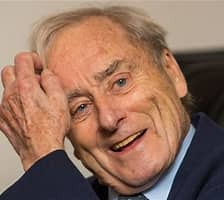
Harold Evans (Author, 1928-2020, British journalist died at age 92.)
“They Made America” is partly about inventions but mostly about innovations that transform society. He writes of America but his explanation of making any successful economy requires innovation. Invention may be a beginning while innovation has no end. He writes of mostly American men whose imagination leads to innovations that transform America’s economy. The generation of power, and advances in communication, transportation, finance, and culture are the consequence of innovation that may or may not be based on original invention. Some of a nation’s economic and social advancement is from unique invention but all of a nation’s success is a result of innovation.
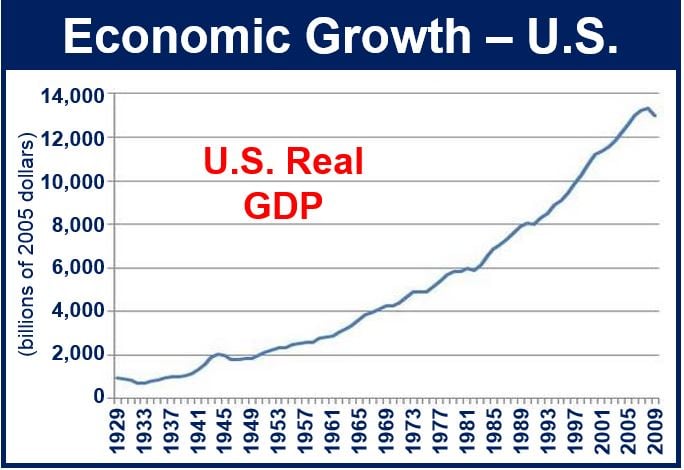
During the Obama administration, America’s economic growth began to decline and accelerated with the Covid 19 pandemic.
Evans and his co-authors identify many who have contributed to the success of America’s economic growth. Most of those he identifies are Americans but a few like Leo Baekeland, Reginald Fessenden, and Herbert Boyer show that innovation is not just an American phenomenon. Baekeland is a Belgian who invented Bakelite and became a U.S. citizen. Bakelite is the first fully synthetic plastic that revolutionized design and manufacture of consumer goods. Fessenden was a Canadian who pioneered radio transmission technology and Herbert Boyer and Robert Swanson were Americans who collaborated with many international scientists to create Genetech, the first biotech firm in the world that commercialized recombinant DNA for life-saving medicines like insulin.

Though British innovator, James Watt, did not invent the steam engine he radically improved it by adding a separate steam condenser.
The invention and innovational changes of the steam engine led innovators like Robert Fulton to see how a steam engine could power a steamboat. The invention of the automobile led to Henry Ford’s innovations in assembly line work that reduced the cost of production to make cars available to almost every working American. Ford also increased wages of his workers so they could buy Ford products. The founder of Bank of America, A.P. Giannini, innovated lending with idea of consumer banking giving workers a way to secure their paychecks in a bank that could provide a means to pay for services and possible credit based on accumulated wealth in their checking account. Innovations in communication by Ted Turner, Page and Brin, and Jobs and Wozniak changed the media communications industry.
Thomas Edison (1847-1931).

The recounting of the many American innovators in “They Made America” is not a picture of idealized human beings. Thomas Edison, who is among the greatest innovators in America, created a team of experimenters at Menlo Park in New Jersey. Edison created an “Invention Factory” that led to the electrification of the world. Though he did not believe in alternating current (AC) as an improvement over direct current (DC) in the use of electricity, he envisioned an electrical system that would light the dark streets of the world. Edison is a perfect representation of inventor and innovator in Evans’ American story. Edison’s belief in himself, his drive for accomplishment, and risks he was willing to take, exemplify the best an American entrepreneur can be.
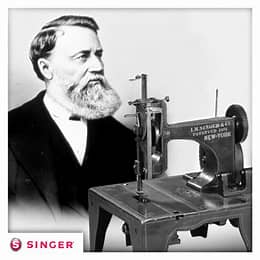
Isaac Merritt Singer (1811-1875).
Isaac Singer innovated sewing machine manufacturing and sale but led a profligate life as a seducer of women with a volatile reputation that often erupted in anger toward others. Singer is alleged to have fathered 24 children from wives and girlfriends. Like his name, Singer was a showman who demonstrated his machines and built a brand that remains popular today. He was flamboyant and accused of bigamy and adultery but is noted to have created a global sales and service company with an installment purchasing plan for his machines. He carries the same force of nature as Edison but with the development of a singular product.
John D. Rockefeller (1839-1937).
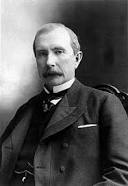
In contrast to either Edison or Singer, Rockefeller is primarily focused on increasing his wealth and power. He revolutionizes the oil industry through monopolization while raising prices of oil to increase his wealth. He brands his product, reduces his costs of operation by building oil pipelines to reduce delivery costs and develops a corporate strategy to eliminate competition. His focus is on creating an industrial empire.


Evans notes other innovators like Ted Turner and Malcolm McLean and their innovations in media and global shipping. The lesser-known McLean introduced and launched the first container ship in 1956 that dramatically reduced loading times, labor costs, and cargo theft in the shipping industry. Ted Turner created CNN and TBS to revolutionize the news and entertainment industries. Page and Brin, and Jobs and Wozniak unleashed the internet to offer wider knowledge to the world but also provided a network that spread lies and misrepresentations of truth.

Dr. He Jiankui is an example of human blind spots. (Jiankui claims to have conducted the first human genome-editing of a human embryo with no oversight and a botched process that embarrassed the scientific community.)
The common denominator of these and many more innovators described in Evans’ book (though Jiankui is not mentioned) is their ambition, ego, and human blind spots. Edison is domineering and ruthlessly competitive. Ford’s antisemitism is reflected in his support for Adolph Hitler and being the only American cited in “Mein Kampf” as a model of antisemitism. Rockefeller shows the same traits as Edison as a corporate hegemon while using his innovative skill to dominate competitors and corner the market price for oil. Singer improves the utility of sewing machines through innovation and salesmanship while living life as though his personal ego is all that matters.
A not surprising irony in “They Made America” is that great innovators (like all of us) are flawed. Ford is widely considered an antisemite, Edison is too opinionated to countenance differences of opinion, Rockefeller is an elitist, Singer is a misogynist, Jiankui is a scofflaw, and so and so on. On balance however, innovators make a contribution to the success of America while most of us go along to get along.

 REVIEWS AND VIEWS OF LIFE
One thought on “HUMAN FLAW”