

Books of Interest
Website: chetyarbrough.blog
The Iraq War
Author: John Keegan
Narrated By: Simon Vance

John Keegan (Author, 1934-2012, English historian, lecturer, and journalist died at age 78. A recognized authority on warfare.)
John Keegan reflects on the history of Iraq with an analysis of the rise and fall of Saddam Hussein. With the collapse of the Ottoman Empire in 1922, British control of Baghdad, Basra, and Mosul led to the formation of Iraq by the League of Nations under the supervision of the British. Great Britain offered nation-state independence to Iraq in 1932. Keegan explains early Iraqi leaders failed to centralize control of the newly formed country of Iraq. He argues that failure allowed an authoritarian, unscrupulous, and brutal leader named Saddam Hussein to take control of the country from Ahmed Hassan al-Baker in 1979. Saddam used fear, violence, and murder to eliminate rivals to create a cult of personality that made him look strong and defiant in the eyes of his countrymen and the world.
Saddam Hussein (1937-2006)
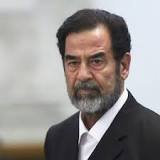
Keegan argues Saddam instinctively combined his brutality with the pragmatism of “might makes right” to take control of Iraq’s fragmented leadership. Not since Hitler, Keegan suggests, has a leader managed to combine tyranny with fear to take command of a nation. Saddam magnified regional instability and created international disorder with ruthless brutality, reinforced by a military that chose to follow him out of fear and reward that is gathered from rapine.
Keegan explains Saddam maintains his position through force but ultimately loses it because of his brutal rule, lies, and poor judgement. Saddam dramatically murders or tortures political rivals to create fear among Iraqi citizens and military henchmen who fear his rath. He initiates a war with Iran in 1980 with the intent of toppling the Shah because he viewed him as a threat to his regime. His plan was to install the Ayatollah Khomeini which seems counter intuitive in view of Khomeini’s religious zealotry; particular considering Saddam’s earlier offer to assassinate him while he lived as an exile in Iraq. Keegan implies Saddam’s decision to support Khomeini as Iran’s leader is similar to the lie Saddam creates about Kuwait slant-drilling into Iraqi oil fields to steal billions in oil. One doubts he ever intended to promote Khomeini to rule Iran. As history shows, the majority of the international community did not believe Saddam’s lie about oil theft and were opposed to Iraq’s invasion of Kuwait. A disastrous and unresolved eight-year war was fought with Iran and eventually Saddam lost any significant support for occupation of Kuwait.

Saddam rules Iraq for nearly 24 years. One wonders how he ruled as long as he did, just as many Americans wonder how Trump could be re-elected by a majority of American voters.
Considering Saddam’s poor judgement in regard to Khomeini’s power and his belief that Iraq could take over another country without international opposition shows how deluded a dictator can be. Keegan suggests Saddam made too many miscalculations. First among them is the weaknesses he created by presuming that fear of him among his own military force would maintain support of Iraq’s 400,000 soldiers. Saddam is essentially abandoned by his military leaders when Iraq is confronted by an international force to oppose Iraq’s invasion of Kuwait (73% were American soldiers but 34 other countries participated). Not surprisingly, bridges were not destroyed by Saddam’s military as they retreated, and Saddam’s military leaders abandoned their posts.
Keegan explains Saddam’s fall came from a collapse of the illusions, fears, and myths that surrounding his rise to power.

One wonders if the same may happen in Iran in the 21st century. It seems dependent on Iranian people deciding on whether the governance Khomeini insists upon is illusory and the fear Khomeini’s ordered murders, incarcerations, and beliefs have alienated enough Iranian citizens. Because Iran’s governance may be more about religious belief and integrity rather than arbitrary rule, one becomes skeptical. Iran may remain as it is but with a new religious ruler.

Keegan tries to explain America’s mistakes in Iraq without being too partisan.
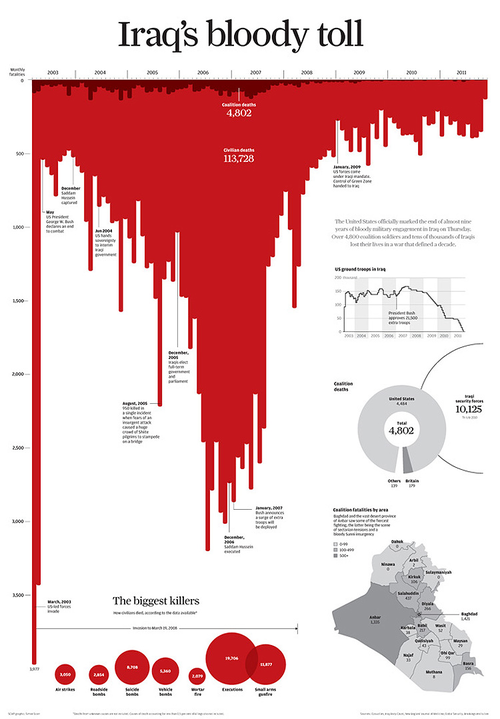
Keegan offers a clear understanding of Saddam’s rule of Iraq. America made many mistakes because of not understanding the culture of Iraq and presumed their culture would accept Americanization. Tribalism scented with religion exists in Iraq. Without engaging that reality, America could not constructively influence change. The dismantling of Iraq’s military negatively impacted a critical infrastructure that understood the indigenous culture and may have aided American influence in Iraq. By ignoring the dignity of the Iraqi people and the importance of tribe loyalties and religious beliefs, America stubbled through years of destructive occupation. Other authors have noted how tribalism influenced how Iraqi informers had their own agendas for accusing Iraqi tribes of fomenting conflict. Iraq unraveled into insurgency and chaos from which it is still trying to recover.
It has taken nearly a quarter of a century for American government to begin healing the relationship between Indians and 1776 settlers of this country. The possibility of changing Iraqi society in a less than 10 years seems unlikely and, for that matter, inappropriate. Cultural difference is not a disease.

Change is difficult and nearly impossible when cultural differences are not clearly understood and taken into account when a foreign country occupies a native country’s territory. How could America expect to occupy Iraq for a mere 8 years and 8 months and resolve cultural differences? It could not and did not.

 REVIEWS AND VIEWS OF LIFE