
Books of Interest
Website: chetyarbrough.blog
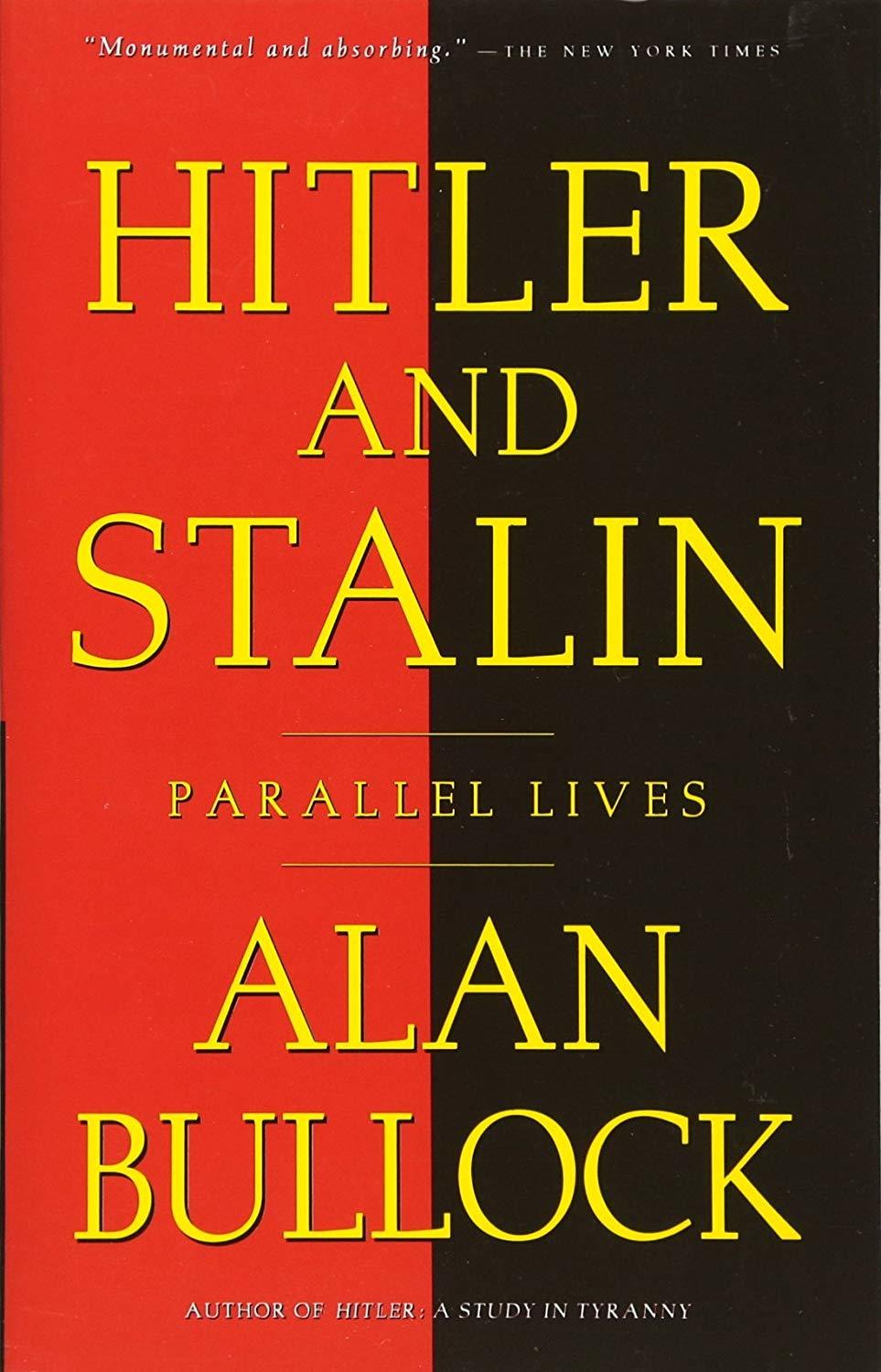
Hitler and Stalin
By: Alan Bullock

Alan Bullock (1914-2004, Author, British historian, died at age 89.)
Alan Bullock was one of Britain’s leading historians. His most renowned work was “Hitler: A Study in Tyranny”, published in 1952. At a book sale, Bullock’s “Hitler and Stalin” is purchased because of a recently reviewed history of Stalin and an interest in Bullock’s comparison of Stalin to Hitler.

Bullock reflects on the two dictators’ differences which in some ways are greater than their similarities. Bullock’s history is an informative history of WWII and the failed alliance of two of the most reviled leaders of the 20th century. Stalin and the Russian military are justifiably praised by Roosevelt and the Allied powers for his contribution to Nazi Germany’s defeat. Later in the twentieth century, the West’s view of Stalin changes.
At first glance, Hitler and Stalin are more different than alike in Bullock’s characterization.

Hitler is a master orator that enlivens Germany with a preternatural ability to influence and motivate his audience. Stalin is a communist influencer but holds his opinions to himself in addressing an audience or convincing the Communist Polit bureau of his legitimacy and intent. Stalin rules the Communist Party with an iron fist by exiling or executing anyone who becomes an influencer of the Party. Stalin creates fear among Party members while creating an image of strong leadership and infallibility among the Russian people.


Both Roosevelt and Harry Truman are initially impressed by Stalin’s personality, if not his leadership. Stalin is not a dynamic speaker who motivates an audience of followers. However, as Russia becomes an ally of the West, he develops a personable relationship with both WWII’ American Presidents. Churchill has reservations about Stalin’s political objectives but becomes reconciled to Stalin’s influence on Roosevelt to smooth the relationship among the three national leaders.
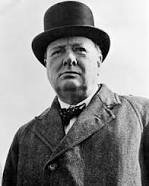
Truman eventually comes to understand Stalin’s true nature as Churchill’s “iron curtain” speech is given in 1946.
When Roosevelt dies, just before the end of the war, Stalin endears himself to Truman. Truman responded to Stalin’s insistence on splitting Germany by authorizing the Berlin Airlift in 1948. With the help of the UK and France 2.3 million tons of supplies are delivered to West Berlin between 1948 and 49. Germany is split between two spheres of interest, the U.S.S.R. and Europe, in 1949 that lasts until 1990.
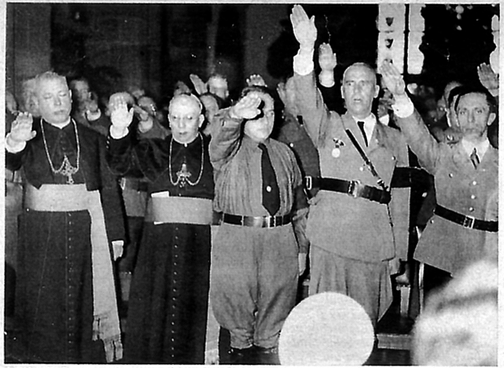

Bullock explains how both Hitler and Stalin depend on a cadre of enforcers that align with their leadership. Hitler has Nazi Party members while Stalin has Communist party members. Both have military leaders in their respective parties. In contrast to Stalin, Hitler gains the support of industrialist and business leaders while Stalin relies on the intelligentsia and workers. Both used propagandas to support their positions but Stalin backs up propaganda with constant disruption of party leadership with often false accusations that end with exile or assassination. Hitler uses the SS for his enforcement but limits leader disruption while creating a cult of personality by presenting himself as the savior of Germany. Stalin is highly paranoid about usurpers of power while Hitler becomes more paranoid as the war begins to turn against him. Neither leader plans for leadership succession.
Hitler’s industrial and business leaders willingly choose to support rearmament of the military.

Because of Germany’s weakened condition after WWI’s punishing demands for war reparations, Hitler’s industrial and business leaders willingly choose to support rearmament of the military. In contrast, Stalin’s close association and identification with Leninist Communism garners support of non-professional Russian citizens who commit themselves to industrialization of Russia.
A cult of personality helps both Hitler and Stalin but the basis upon which the cult is formed is different. Hitler’s cult is internalized by industrial and business leaders who, along with Hitler, believe Germany has been unfairly treated by reparations and poorly ruled after WWI. In contrast, Stalin’s cult is based on Russian peasant beliefs in the ideals of communism by a leader who is perceived as a Leninist successor. Stalin systematically exiles or murders any Party leaders who are intent on rising in the Party.

Both Hitler and Stalin exercise centralized control.
Both Hitler and Stalin exercise centralized control, but the internal motivation of their citizens is different. Germany’s citizens identify with the unfairness of reparations and the rearmament of the country. Russian citizens identify with modernization and improved productivity based on the ideals of communism. Most citizens of both countries seem to internalize motivation to industrialize and modernize their countries but for different reasons.
Bullock shows both Hitler and Stalin are antisemitic.

The nature of failure is to have someone to blame. The only difference in these leaders’ antisemitism is that Hitler more systematically than Stalin incarcerated and murdered Jews. Hitler codifies his antisemitism in “Mein Kamph” and chooses to use his power and influence to create the holocaust. As the war ends, Stalin looks for excuses for the hardship of Russian citizens and uses antisemitism as an excuse for communism’s failures. The atrocious treatment of Jews is an unforgivable guilt for humanity which explains why the Balfour recommendation is made by the UK. The ramification of that decision lives in the world today.
Germany’s invasion of Russia is a surprise to Stalin because of their non-aggression pact.
Bullock does not spend much time with a report of Stalin’s reaction. However, some historians suggest Stalin retired to his Dacha when the invasion became known and only returned to lead Russia when a delegation of Party members came to ask him to return.
The author suggests Lavrentiy Beria, a brutal enforcer of Stalin’s dictatorship, is at his side when he dies and expresses disgust with Stalin’s leadership while leaving the room with intent to seize power. Beria was executed by the Soviet Union on December 23, 1953.
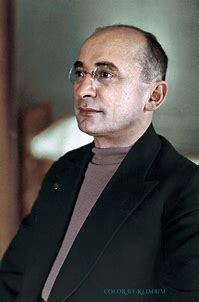
As is well known, Hitler committed suicide in his underground bunker on April 30, 1945. Bullock suggests Hitler’s remains were found by the Russian Army and taken back to Russia. Since Bullock’s book, forensic evidence confirms Hitler’s remains were taken to Moscow. The last days of Stalin were in 1953. Bullock notes Stalin had a stroke but had for months, if not years, lost much of his memory and forceful personality.

 REVIEWS AND VIEWS OF LIFE