
Books of Interest
Website: chetyarbrough.blog
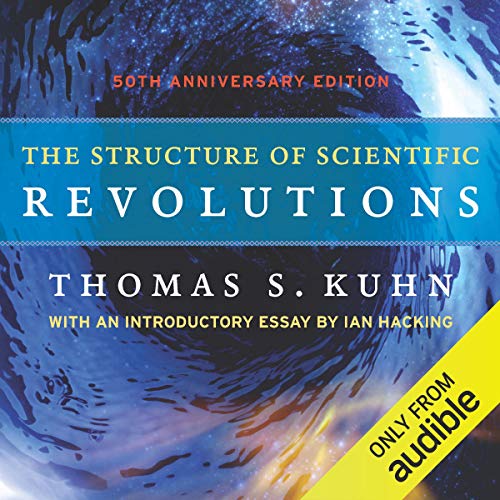
The Structure of Scientific Revolutions
By: Thomas S. Kuhn
Narrated By: Dennis Holland
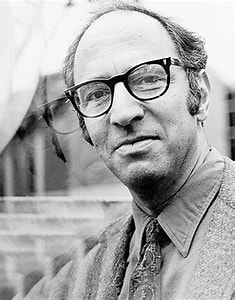
Thomas Kuhn (Author, 1922-1996 died at age 73, American historian and philosopher of science at Harvard and the University of California, Berkeley.)
This is a tough ten-hour listen. It does offer an overview of the evolution of science and how new discoveries have changed human understanding of the physical universe in a revolutionary way. Kuhn suggests every revolution in science begins with a paradigm, a model or framework that offers a clearer understanding of the physical universe.
Kuhn suggests every revolution in science begins with a paradigm.
The momentous discoveries of Newton, Einstein, Darwin, and Galileo are a few of the revolutionary leaders that Kuhn offers as examples. Newton developed a paradigm of earth’s laws of motion and universal gravitation that revolutionized understanding of forces and momentum on earth. Einstein developed a paradigm of the universe by introducing theories of special and general relativity that revolutionized our understanding of space, time, and gravity. Darwin developed a paradigm of animal evolution and natural selection that revolutionized biology and life’s diversity. Galileo developed a paradigm of our universe that revolved around the sun that revolutionized our view of the cosmos and humans place in it.



All of these geniuses created new, often more comprehensive, paradigms than predecessors like Aristotle, Ptolemy, and Democritus. New paradigms about air, the planets, and atoms improved predictability of results from new paradigms of thought, and experimentation that became more comprehensive and accurate than thoughts and experiments on older paradigms. Kuhn argues new paradigms foment science revolutions.

Kuhn explains how a new paradigm is challenged because of generally predictable results from older science discoveries.
The argument is made that the older discovery is better because it did have predictable results and the only reason there is an aberration is because of an undiscovered anomaly that will be discovered and explained by further thought, observation, and experimentation. However, as evidence from experiment grows to show older science discoveries are not as comprehensively predictable of results as the new paradigm, the new paradigm replaces the old one and a revolution ensues.
This is an insightful story but one gets bogged down by the number of examples that repeat similar revolutions.

The objections from old paradigm believers, failed old paradigm predictions, and ultimate revolution by new paradigms are repeated too many times.
The point of “The Structure of Science Revolution” is that a paradigm begins science exploration, new paradigms challenge old paradigms, old paradigms persist, new paradigms demonstrate improved knowledge over old paradigms, old paradigms are overturned, and a new paradigm begins further search for knowledge.

 REVIEWS AND VIEWS OF LIFE
One thought on “PROGRESS IN SCIENCE”