

Books of Interest
Website: chetyarbrough.blog
Say Nothing (A True Story of Murder and Memory in Northern Ireland)
By: Patrick Radden Keefe
Narrated By: Mathew Blaney

Patrick Radden Keefe (Author, American writer and investigative journalist.)
“Say Nothing” is an attempt to give listener/readers an understanding of Ireland’s “Troubles”. Patrick Radden Keefe helps one understand but it remains a complicated and confusing history because of its mix of religion and national sovereignty. From the 1960s to the late 1980s, there were violent clashes between unionist/loyalists, who were largely protestant and wanted to be part of Great Britain; while Unionist/loyalists, who were largely Catholic wanted independence as the Republic of Ireland.
Bombings, sniper attacks, and violent confrontations caused an estimated 3600 deaths and tens-of-thousands injuries during the “Troubles”.

Not until 1998, with the “Good Friday Agreement” did the deadly conflicts cease. However, Great Britain’s Brexit, periods of political deadlock with the Northern Ireland Assembly, and debates over details of the “…Agreement” have occurred. Keefe tells a story of the build-up to the “…Agreement” in “Say Nothing”.

The Irish Republican Army that wished for Irish independence murdered Jean McConville, a mother of ten, in 1972.
The murder is puzzling because McConville is Catholic which suggests her death was either a mistake or that some Catholics were union/loyalists. Some in the IRA suggested she acted as a spy for the UK. That is a mystery Keefe fails to unravel while giving listener/readers some historical perspective on Ireland’s Troubles. Some say Marian Price was the murderer, but Keefe demurs and argues there is no concrete evidence.
Northern Ireland is over 40% Catholic while the Republic of Ireland is over 60% Catholic.

Ireland’s troubles date back to the 16th and 17th centuries when English and Scottish Protestant settlers chose Ireland as their new home. The native population of Ireland was Catholic and religious differences and land acquisition by Protestants set the table for conflict. In 1921, Ireland was split in two with Northern Ireland remaining a part of the UK but with a 40% minority who remained Catholic. A Catholic movement for civil rights in Northern Ireland began in the 1960s. Violence and political conflict ensued with the formation of paramilitary groups like the IRA (Irish Republican Army) that began bombing and shooting Protestant followers. The IRA wished to end British rule, unify Ireland, accommodate religious difference, and create an independent nation.
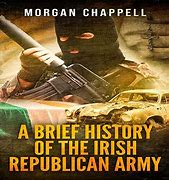
Over the years, there were several leaders of the IRA. Michael Collins, Cathal Brugha, Liam Lynch, Sean Stiofain, Gerry Adams, and Martin McGuinness. Gerry Adams is the leader most often referred to in Keefe’s book.
The IRA never admitted to ordering the abduction and murder of Jean McConville. The author directly asks Adams if he ordered the murder, and his response is that he has no blood on his hands. Some suggest, her murder was a collective decision by leaders of the IRA.
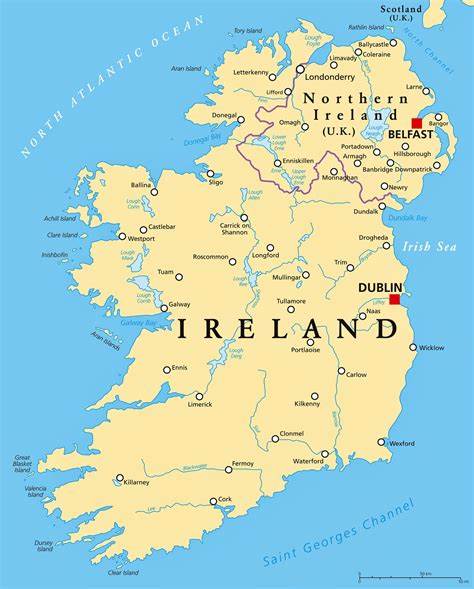
Both Northern Ireland and the Republic of Ireland were ambivalent about Brexit and chose to neither entirely agree with separation from the EU nor entirely agree with the UK in its rejection of membership.
There remains a great deal of ambivalence about unification of Ireland as an independent nation but “The Good Friday Agreement” allows for a referendum on unification because of what appears to be a majority wishing to create one nation. However, Northern Ireland’s majority wishes to remain part of the UK while the Republic of Ireland wishes to remain independent. Unification seems unlikely because of their differences about being part of the UK.
It is interesting to note that the Catholic religion is the largest religious group in both Northern Ireland and the Republic of Ireland, but that Northern Ireland Catholics constitute 42.3% while the Republic of Ireland is 69.1% Catholic. Keefe’s story triggers an interest in understanding the history of Ireland, but it is too long in its telling to offer clarity.

 REVIEWS AND VIEWS OF LIFE