
Books of Interest
Website: chetyarbrough.blog
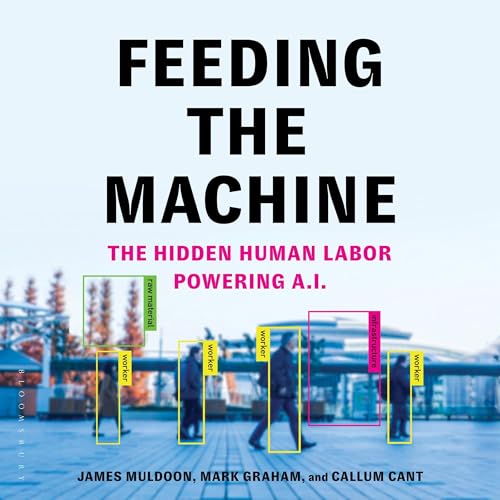
Feeding the Machine (The Hidden Human Labor Powering A.I.)
By: Mark Graham, Callum Cant, James Muldoon
Narrated By: Orlando Wells



Graham, Cant, and Muldoon have backgrounds that offer an educated opinion about the impact of artificial intelligence on the world labor market. Graham is a Professor of Internet Geography affiliated with the University of Oxford’s School of Geography and the Environment. Cant is a researcher and labor rights advocate for workers in the gig economy. Muldoon is an Associate Professor in Mangement and Head of Digital Research at a think tank on modern technologies.

“Feeding the Machine” reminds one of the Industrial Revolution in its early stages.
The fear of loss of jobs because of machine replacement led to the Luddite movement that destroyed machines manufacturing products. The quality of machine-produced product may not have met craftsman standards, but production cost was so much less, the public preferred the lower-cost product. As the industrial revolution grew, the quality of production improved, and many craftsmen lost their jobs. Many of these craftsmen had to find new jobs. Some became users of machines to produce product. The transition was undoubtedly difficult because it required changes in the way people work. Rather than working for themselves, they had to work for manufacturers that produced products with machines. Craftsman had to work regular hours for a wage rather than sell product based on their exclusive labor. Karl Marx in “Das Kapital” explained that capitalism devalued worker’s contribution to society because they were not compensated fairly for their work based on profits earned by company’ owners.
Workers began to unionize to increase their political power and influence on managers of companies owned by entrepreneurs.

The results of unionization have been to begin equalizing wages and company profits. That equalization is a battle between corporate profit needed to stay in business, reasonable return to company owners, and livable wages for workers. When any of these three are out of balance, companies either go bankrupt, or find an acceptable balance that serves the needs of all.
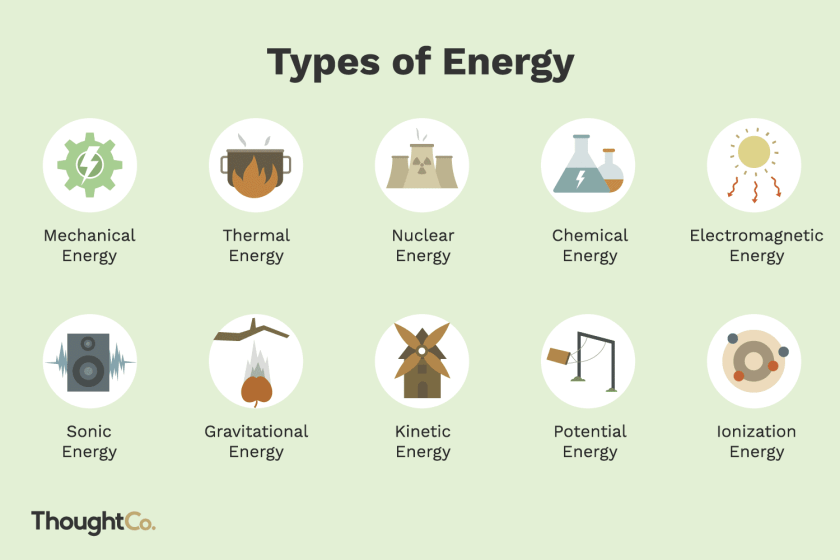
Information is energy in today’s A.I. world., just as steam was in the industrial revolution.
As one listens to “Feeding the Machine” which claims A.I. produces poor quality energy is like early steam engines that provided inadequate energy. Who can say that A.I. “energy” will not improve just as steam engines improved? One becomes skeptical about the authenticity of the authors’ opinion. It seems too soon to believe A.I. power will not improve human life, just as steam engine power improved product quality and lowered consumer prices.
The authors make valid points about the impact of A.I. on workers.

Workers are often paid a pittance for repetitive work that is mind numbing because of the need to monitor digital information for its accuracy and quality. Is that significantly different than the repetitive motions needed by workers on a production line for manufactured goods? Henry Ford changed the way cars are produced by creating assembly line work that gave repetitive jobs to workers. Is that repetitive work much different than digital inspection by workers of A.I. production?
The many examples the authors give of remote workers’ wages for digital accuracy in Africa and other poverty-stricken areas of the world is heart rending. These new laborers are paid small wages that assure continued poverty. Economic inequality is a crime against humanity. Improving education seems the only sure way of defeating economic inequality. Education is a long road to travel but there seems no solution for economic insecurity without it.

Having traveled to Africa, seeing firsthand a dedicated teacher in a class of school children, one feels there is hope that the world’s economic insecurity will end.
Ford was a conservative right-wing businessperson by any measure. He supported Hitler because he was an authoritarian that resurrected a faltering German economy. However, Ford recognized workers were consumers and despite low wages for automobile workers of his time, he chose to raise wages. Ford recognized workers were also consumers. That remains true today. It seems reasonable to presume, unlivable wages will rise for digital workers around the world for the same reason the conservative Ford raised his worker’s wages.

This is not to say, what the author’s write is wrong about workers in Africa that are exhausted from repetitive work at an A.I. company but that the world is at a crossroad similar to the industrial revolution.
The world will change based on the weight of people’s discontent. The greatest threat of A.I. is that information ubiquity will turn people and countries against each other. The result may be a nuclear holocaust that changes the world and societies in a way that is impossible to predict.
The war in Ukraine.

The authors go on to explains how A.I. dehumanizes society. Creating a world-wide’ assembly line for product production allows companies to reduce their production costs by hiring workers around the world who are eager to have an income to improve their lives. The consequences to companies in the host country are improved profits. The consequence to host countries’ workers are layoffs and loss of income. A country of wealth has tools to mitigate worker layoffs, poorer countries do not. Laid off workers have better chances of finding new jobs in wealthy countries. This is not to minimize the consequence but to suggest the world is benefited more than harmed by A.I.

A point made by the authors that played out in the actor strike in America is that actors should be compensated for any work generated by A.I. images or voices of actors.
A.I. that generates false images should be penalized for misrepresenting real people without their consent. Another caution suggested by the authors is that A.I. can recreate art that is equivalent to todays and past literary and visual artists. That seems somewhat hyperbolic but if it is true, society has the tools to penalize those who choose to use A.I. to deceive the public. A.I. is only a tool of society. It is a source of energy that can destroy but also improve the lives of humanity. The authors note only minds are truly creative. A.I. is a recreator of the past, not the future. The use of A.I. by humans improves creative potential.


 REVIEWS AND VIEWS OF LIFE
3 thoughts on “A.I.s’ CROSSROAD”