

Books of Interest
Website: chetyarbrough.blog
“The Dogs of Riga” A Kurt Wallander Mystery
By: Henning Mankell, Laurie Thompson-translation
Narrated By: Dick Hill
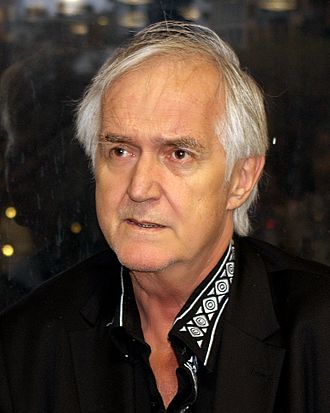
Henning Georg Mankell (1948-2015, deceased Swedish author, social critic, and playwriter.)
We are planning a trip to the Baltics in October of 2024. As in previous trips, this blog has been used to memorialize former travel experiences and this American’s view of other countries. Prior to traveling, some books are recommended by tour guides as introductions to other cultures. “The Dogs of Riga” and “The Lilac Girls” are two that offer some information about the Baltics. “The Lilac Girls” is a history of incarcerated women at Ravensbrück concentration camp in Germany during WWII. The Nazis were researching the efficacy of drug treatment and prosthesis for injured soldiers by amputating arms and legs of imprisoned women to study regeneration of bone and the utility of prosthesis for lost arms or legs. Many of these young women were from the Baltics, though the largest number came from Poland.
Having heard of Henning Mankell’s mysteries (of which there are many), Kurt Wallander is a reoccurring character as an investigative Swedish detective.

The relevance of “The Dogs of Riga” is in the transition that was occurring when Latvia, Lithuania, and Estonia achieved independence from the U.S.S.R. The Baltics had been a part of and controlled by the U.S.S.R. since 1940. Mankell’s book was first published in 1992, one year after the 1991′ dissolution of the U.S.S.R.

Riga Technical University (Engineering Center in the Baltics)
It is interesting to find in “The Dogs of Riga” that Wallander’s daughter chooses to go to Riga for her college education which makes one wonder why Riga would be chosen. Is it because of the quality of education or just to be further away from family? In any case, the reason these books are recommended is to give some perspective to new visitors of other countries. An interesting observation one makes about “The Dogs of Riga” is a sense of resentment from the Latvians about Russia and their former domination of the Baltic States.

Season 3, Episode 2 of “The Dogs of Riga” on Masterpiece Theater.
Going back to the story, two Russians were shot in the heart, and set adrift on a raft in Swedish waters. Autopsy shows the Russians were well dressed indicating wealth. It was found they had high concentrations of amphetamine in their bodies. In investigating the murders, Wallander finds they came from Riga, the capitol of Latvia. An officer from Latvia goes to Sweden to talk to Wallander. After the visiting officer returns to Riga, he is murdered and Wallander is asked to come to Riga to investigate his death.

With the opening of Latvia to the western world, freedom from communist controls is a mixed blessing.
Mankell begins to tell listener/readers something about Latvia and its suspicion of Russian residents in their country. Along with more freedom to pursue economic growth is the rise of a drug trade and criminal activity. Mankell’s story infers illegal activity is exacerbated by Russians who resent Latvia’s independence from the U.S.S.R. However, with greater freedom comes crime as well as improved economic opportunity. One reserves judgement about whether Russians are the primary cause of drug activity in Latvia because breaking the law is characteristic of all nationalities under all forms of government. The characterization of Russians as the cause of the illegal drug trade in Riga is possible. However, it is the same question one must ask themselves about America and the origins, causes, and persistence of its drug trade.
Freedom entails the pursuit of what one wants out of life. Money, power or prestige are goals of most (if not all) human beings.

However, those goals need to be based on equal opportunity. This is not to say those goals should include criminal activity, but only education offers a chance for all to understand the difference between right and wrong. When equal educational opportunity is available to every person in the world, they may pursue what they think is in their interests. This, of course, is not a world that exists or can exist because personal interest is not the same for everyone.

Getting back to Mankell’s story, Latvia is challenged by its new freedom from the U.S.S.R. The suspicion of Russians is undoubtedly a truth about Latvian culture based on Latvia’s former life as a part of the U.S.S.R. Whether Russians are the criminal master minds of the drug trade is not the point. The point is that human nature requires a reason for everything that happens in a culture. The bad experience of repression by the U.S.S.R. may make Latvians suspicious of every Russian in Latvia. It is similar to Trump’s vilification of immigrants and how that ignorance resonates with some Americans.
Mankell and the author of “The Lilac Girls” are worth reading or listening to if you plan a trip to the Balkans. Traveling to other countries is more interesting because of what writers of fiction and history have to say.

 REVIEWS AND VIEWS OF LIFE
2 thoughts on “THE BALTICS”