

Audio-book Review
By Chet Yarbrough
Blog: awalkingdelight)
Website: chetyarbrough.blog
A History of Russia: From Peter the Great to Gorbachev
By: Mark Steinberg, The Great Courses
Narrated by: Mark Steinberg

Mark David Steinberg (History Professor at University of Illinois specializing in the cultural, intellectual, and social history of Russia.)
Professor Mark Steinberg’s history of Russia is an informative tour of Russian history that gives some context to the perplexing, contradictory, and murderous behavior of Vladimir Vladimirovich Putin. Though Steinberg’s history focuses on Tsarist Russia, a little research reveals why Putin argues Ukraine is historically a part of Russia.

Russia is an ancient nation that reaches back to the year 862.
The northern and southern lands were combined in 882 by Prince Oleg of Novgorod upon the seizure of Kiev in what is today the capital of Ukraine. Kiev becomes the capital of the combined lands. Eastern Christian religion is adopted from the Byzantine Empire by Russia in 988. Upon the Mongol invasion in 1237-1240, Russia’s size diminishes, and Russia’s capital moves to Moscow.
The first leader to be titled Tsar of Russia is Ivan the Terrible in 1547.

Ivan IV (Called Ivan the Terrible’s visage is forensically reconstructed by Mikhail Gerasimov)
Ukraine emerges as a nation in the mid-18th century, but large portions of the country remain under the control of Russia.
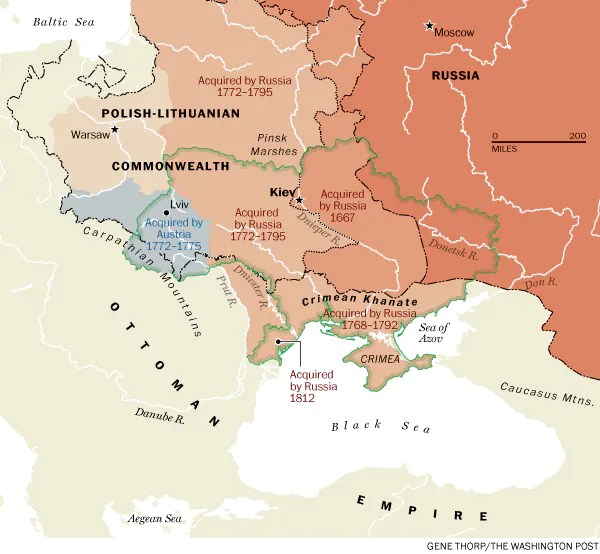
It is not until 1991, that Ukraine’s independence is recognized by America, Poland, and Canada.

Steinberg’s history addresses the time of Peter the Great through Mikhail Sergeyevich Gorbachev. What one hears from the lectures is the vacillation of Russian leadership from Europeanization to de-Europeanization. The primary interest of non-aristocratic Russians is in the political principle of socialism.
Autocracy is a common thread in Steinberg’s history of Russia. However, beginning with Peter the Great, that thread is frayed by changes that modernize Russian government management of its citizens. It remains autocratic but recognizes the country is behind Europe in its economic and cultural improvement.
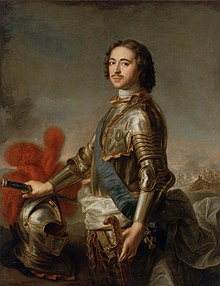
Tsar Peter the Great (As Tsar from 1682 to 1721, Pyotr I Alekseyevich leads Russia as a harsh autocrat with the goal of defeating Ottoman and Swedish control of the Sea of Azov and the Baltic.
Steinberg explains Peter the Great’s objective is to create a new Russia by replacing its traditionalist and medieval social and political systems with enlightened public policies. He plans to modernize Russia by promoting education and industrialization. His objective is to emulate and compete with European modernization. The Russian Academy of Science and Saint Petersburg State University are founded in 1724. Peter the Great creates a governing Senate in 1711 and other institutions to improve the administration of the Russian autocracy.
Peter the Great dies unexpectedly and fails to designate an heir to the throne. Succession founders for several years with little progress toward modernization until Catherine II becomes Catherine the Great, empress of Russia from 1762 to 1796.
Catherine the Great II (Born 1729, dies in 1796 at age 67.)

Catherine the Great marries the grandson of Peter the Great who died months after becoming Emperor of Russia. Catherine the Great is of the same mind as Peter the Great in modernizing Russia. New Russian cities, universities, and theatres are created by Catherine the Great. With the help of fellow nobles, Grigory Orlov and Grigory Potemkin, and Russia’s generals of that time, Russia expands their territory and continues its Europeanization. Western philosophers like Voltaire become friends of Catherine the Great.
After Catherine the Great, her son Tsar Paul I takes control of the Russian government. Steinberg characterizes Paul I as a despotic ineffectual leader who projects an authoritarian and patriarchal image and reverses many of the liberal policies initiated by Catherine the Great. He is assassinated by the elite guards of the Russian military and his son, Alexander I, becomes Tsar.
With the rise of education, Steinberg explains the creation of what is called the “intelligensia”, a class of younger Russians interested in social change. Some were largely self-educated like Vissarion Belinsky, the son of a rural physician and Nikolai Gogol, born into the Ukranian family gentry (a class below aristocracy). Others were from the aristocratic class like Alekasndr Pushkin.


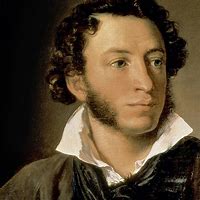
From left to right, Belinsky, Gogol, Pushkin–associated with the Russian Intelligesia in the early and mid-19th century.
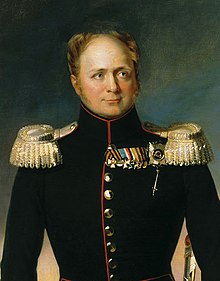
Alexander I (reigned 1801-1825) is described by Steinberg as a leader of two minds that on the one hand reestablishes many of the reforms of his grandmother, Catherine the Great.
On the other hand, Steinberg suggests Alexander I resists revolutionary movements that were roiling Europe during his reign. Alexander, I joins Britain in 1805 to defeat Napoleon Bonapart. Alexander switches sides and forms an alliance with Napoleon in the Treaty of Tilsit in 1807. However, in 1810, Alexander abandons Napoleon over disagreement on Polish territory. Napoleon’s invasion of Russia in 1812 is a disaster for the French and Russia gains territory in Finland and Poland.
Nicholas I (Reign 1825-1855, Grandson of Catherine the Great.)

Serfdom is a troubling social problem in Russia that is acknowledged by Catherine the Great but not resolved until after an 1861 decree for abolition by Alexander II. Though Catherine and Allexander II are not related, it is Alexander II who initiates what Catherine the Great recognized as the iniquity of Russian inequality. Though it is many years before the reality of abolition of Serfdom is truly addressed, Alexander II is the first to begin its reversal. His predecessor, Nicholas I did nothing to eliminate serfdom and in fact tried to re-establish aristocratic privilege.

Mid-day meal for peasants in 1860s Russia
Inequality in Russia, just as is true in America, remains a work in progress. Steinberg offers more detail of Russia’s drive toward modernity, but the next great change is of course the revolution of 1917. Steinberg explains Russia’s growing interest in socialism and its conflict with patriarchal rule. He notes the two major factions that wished to change the course of Russian history. One is the Bolshevik movement. The other is the Menshevik movement. But, before we get to 1917, it seems the 1904-1905 Russo-Japanese war is important because of its relevance to Putin’s decision to invade Ukraine.
The last Tsar of Russia is Tsar Nicholas II. Nicholas II’s reign is from 1894 to 1917, after which his entire family is murdered by Bolshevik revolutionaries.
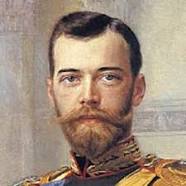
A precursor to the 1917 revolution is the 1905 uprising of Russian citizens who are unhappy with Tsar Nicholas II’s leadership. Growing inflation, poverty and hunger, a defeat in the Russo-Japanese War, and widespread discontent lead to a revolt. A workers demonstration leads to “Bloody Sunday”. An estimated 1,000 to 4,000 Russian citizens are murdered by Russian soldiers.

Of particular interest is the loss of the Russo-Japanese war. Both Russia and Japan want warm-water ports in the Pacific Ocean. A port that served that purpose is on the Korean peninsula, either off Manchuria or Korea. Tsar Nicholas’s inept management and the superior military actions of the Japanese defeat Russia.
The relevance of that defeat is the position Putin has put the Russian government in with the invasion of Ukraine. The question is whether Ukraine will be as successful as Japan in defeating Russia. The west must ask itself whether they have a dog in this fight or let Ukraine bear the brunt of an unjust war.
Tsarist Russia is ripe for revolution. Unhappiness of the general population of Russia is fertile ground for Vladimir Lenin and Julius Martov. A key difference between the two in creating committed followers, according to Steinberg, is that Lenin made joining his movement an exclusive opportunity based on the background of interested revolutionaries. In contrast, Martov allowed anyone interested the right to join his Mensheviks. To Steinberg, this is a key to the success of Lenin’s control of the revolution. The commitment of Lenin’s followers eventually took over the revolution. Though not suggested by Steinberg, one wonders if Martov’s Jewish religion might not have also contributed to Lenin’s success in taking over the revolution.
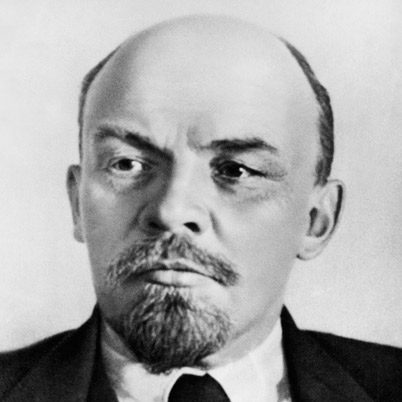
The exclusiveness of being a member of Lenin’s red party undoubtedly aided the ultimate success of the revolution because it required committed enforcers to rally the Russian people.
Steinberg explains Lenin clearly understood that authoritarian force would be required for communist’ socialism to succeed. The future of the revolution became dependent on a leader like Stalin who exemplified a party member that understood the importance of authoritarian command. The test of that truth comes in 1924 when Lenin dies from a brain hemorrhage.
Joseph Stalin (1878-1953, died at age 74, ruled Russia from 1929 to 1953.)

Authoritarian leadership, with its history of competent and incompetent Russian Tsars, is not new to the Russian people. With an improved education system in the 18th century, Steinberg explains even the intelligentsia accepted authoritarian rule. Adding to Russian’ acceptance of authoritarian rule is the belief that something had to change because life in Russia during Tsar Nicholas II’s rule is abysmal for the majority of Russian people.

Mikhail Gorbachev (1931-2022, died at age 91. Ruled the U.S.S.R. from 1985-1991 and served as President of Russia 1990-1991.)
Nearing the end of Steinberg’s lectures, the rise of glasnost with Mikhail Gorbachev is addressed. Between the death of Stalin and the rule of Gorbachev, 5 men ruled the U.S.S.R. Gorbachev wishes to keep the U.S.S.R. together but fails. His failure, in part, seems related to Steinberg’s history. Rather than glasnost, the U.S.S.R. seems to have needed a more authoritarian leader. Not in the sense of repression but in a demand to keep the U.S.S.R. together until the government’s effort at reform has time to be enacted. America had a civil war to prove it is one nation. That may have been a possibility with a more authoritarian Russian leader but that appears not to have been in the nature of Mikhail Gorbachev.
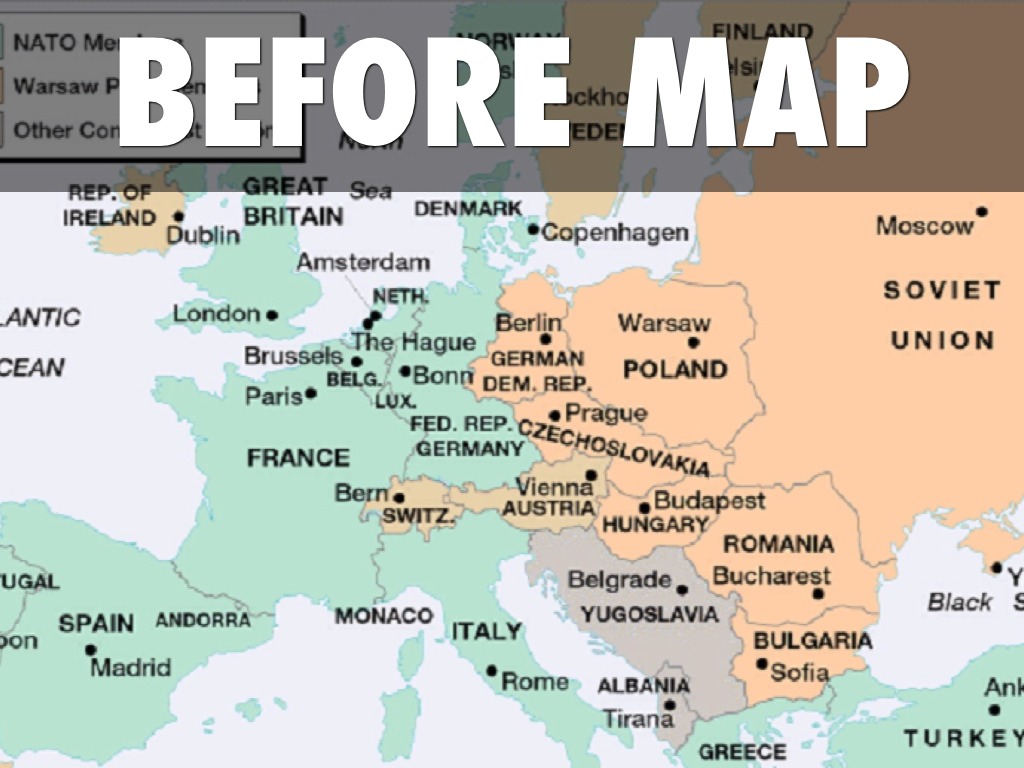

The U.S.S.R. dissolves in 1991. Since that dissolution, Russia has occupied some of the eastern territory of Ukraine and Crimea.
Though Steinberg does not fully address Vladimir Putin in his history of Russia, he sets the table for understanding why a reader/listener might think there is no way out for Vladimir Putin. The history Steinberg suggests Putin in one sense is the perfect transitional leader of the territorially reduced Russia. The firm hand of a secret police officer, with 16 years’ experience as a former KGB agent, and a position as Deputy Mayor of St. Petersburg’s seems an apt formula for success for a future President of Russia. Putin did well in his first years as President of Russia but seems to have made a career, if not life ending, error in his invasion of Ukraine.
Steinberg illustrates how Russia’s leaders range from enlightened to repressive managers of government. At different times in history, that management style served Russia’s economy and citizens, sometimes well and sometimes poorly. It is up to Russian citizens to decide which government actions and leaders best serves their needs.
From a western perspective, both Gorbachev and Putin served Russia well.

Gorbachev freed the Russian economy and Putin capitalized on that freedom. However, both reached beyond their grasp and damaged Russia’s standing in the world. With the invasion of Ukraine, Putin threatens Russia’s future. Today, there seems no way out for Putin. Russia without the countries that left the U.S.S.R. will never return without an economic incentive that can only be achieved with the advance of the Russian economy. If Russia wishes to be a successful socialist country, it needs a leader who cares about what the Russian people need, not what an authoritarian’ thinks.

 REVIEWS AND VIEWS OF LIFE